Rocky Gerung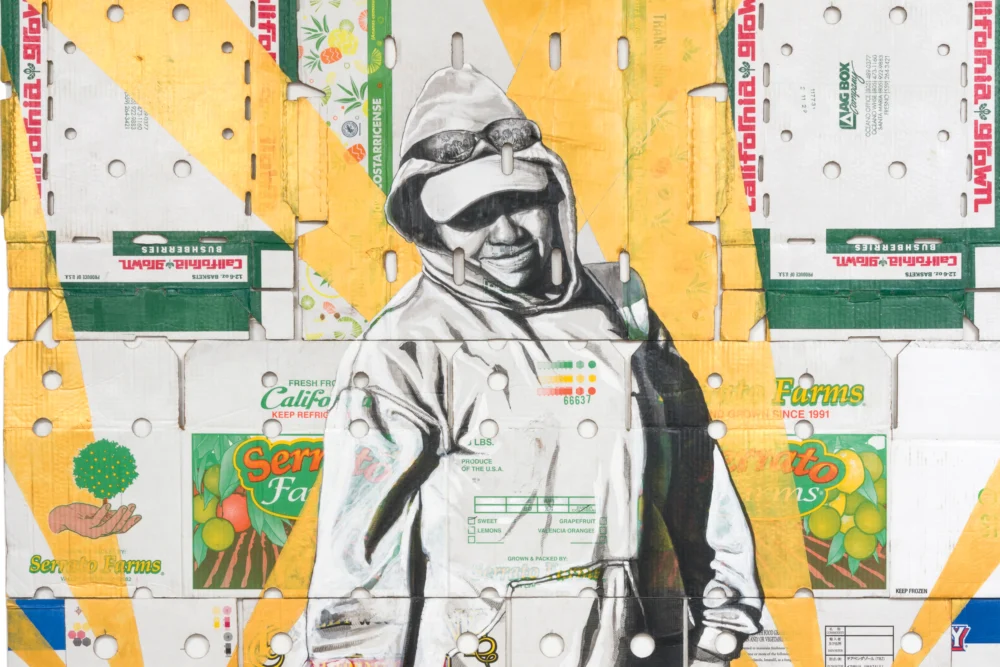
Narsiso Martinez, a contemporary artist born in Oaxaca, Mexico, in 1977, has carved a unique niche in the art world by transforming discarded produce packing materials into powerful visual narratives. Immigrating to the United States at the age of 20, Martinez pursued higher education, earning a master of fine arts degree in drawing and painting from California State University, Long Beach. His distinctive artwork, which has garnered international acclaim and is held in the collections of prestigious institutions such as the Hammer Museum, the Amon Carter Museum of American Art, and the Santa Barbara Museum of Art, speaks volumes about the often-overlooked contributions of agricultural laborers. Speaking from his Long Beach studio, Martinez shared insights into his artistic journey and the profound messages embedded within his creations.
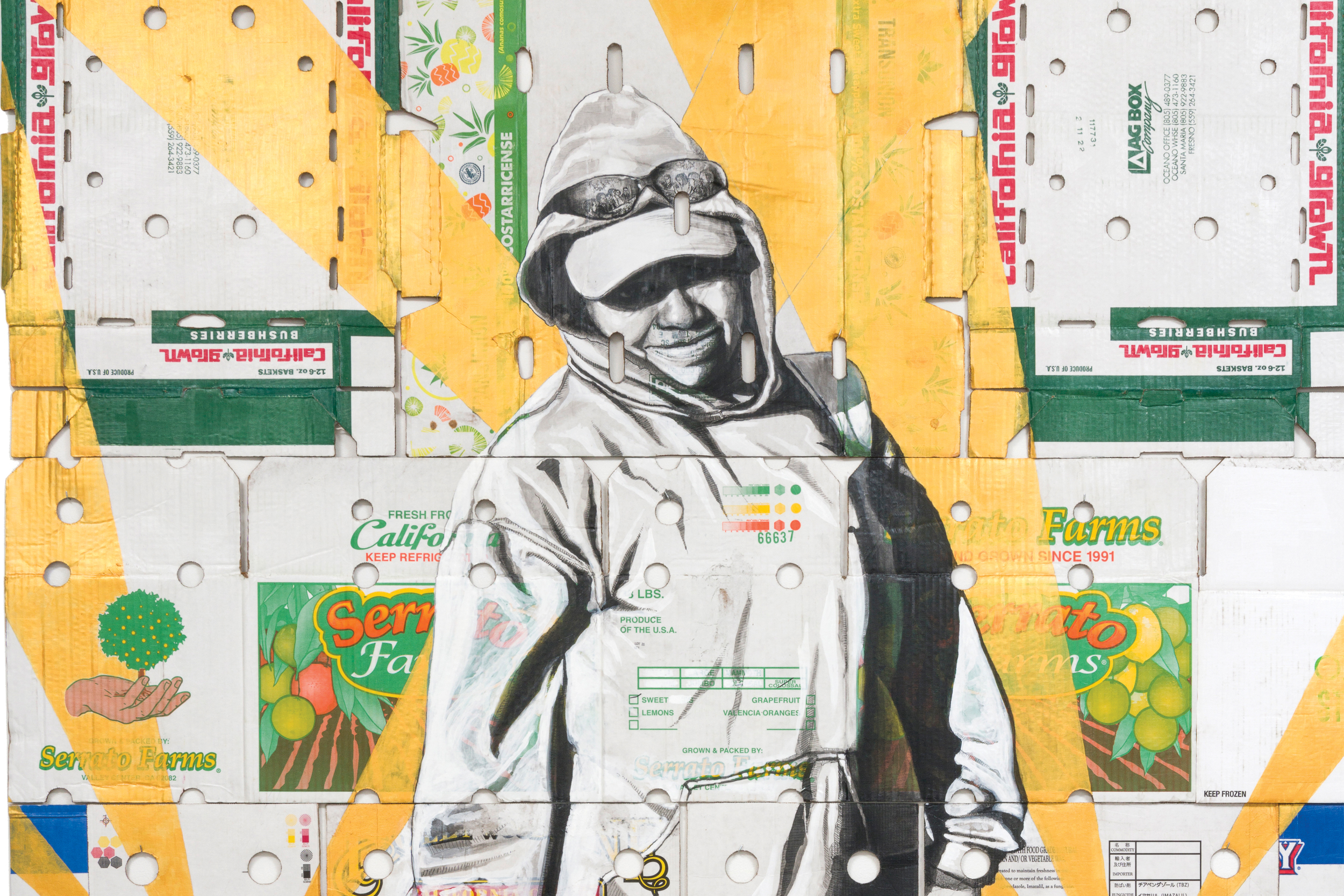
Martinez began his artistic exploration with discarded produce packaging in late 2016 or early 2017. His initial forays into using cardboard for artistic studies occurred while he was between undergraduate and graduate school, working in the fields of Washington state and living with his sister. He utilized produce boxes, often sourced from Costco, for drawing and sketching, primarily using the plain interior surfaces. It was only later, during his graduate studies at Cal State Long Beach, that the potential of the printed labels and the boxes themselves began to dawn on him. A pivotal moment arrived when he collected a banana box from a Costco in Los Angeles and spontaneously drew a "banana man" on it, not for an assignment, but from a personal creative impulse. This seemingly simple act, when presented to his classmates and faculty committee, led to a profound realization: his art was a vehicle to depict the working class, specifically focusing on agribusiness and the lives of farmworkers, using the very materials that symbolized their labor.
His direct experience working in agricultural fields, which spanned approximately nine years from 2009 through his graduate studies, deeply influenced the evolution of his art. Facing financial challenges with tuition, Martinez followed his family’s footsteps into the fields. He dedicated himself to saving his paychecks, working seasonally in Washington state during his undergraduate years and then full-time for three years before returning to graduate school. This immersion in the physically demanding and often harsh realities of farm labor provided him with an intimate understanding and profound empathy for the individuals he now portrays. He recalls the difficulty of picking asparagus, a task that required constant bending under the sun with no shade, and the varied harvests of cherries, apples, peaches, and blueberries. This firsthand experience instilled in him a desire to use his art as a platform for advocacy and awareness.

Martinez’s artistic practice is deeply rooted in his personal experiences and his commitment to social justice. He describes himself as initially shy, finding solace and expression through art. Discovering art’s power to communicate and raise awareness, he recognized its potential to shed light on the lives of farmworkers, his community, and his own journey. His work aims to bring visibility to the individuals who are instrumental in producing the food that sustains society, highlighting their contributions, their humanity, and their often-neglected presence throughout history. The overarching goal of his art is to "dignify farmworkers."
The response from farmworkers themselves to Martinez’s art has been deeply moving. Having worked alongside many of them, he developed personal connections, with many expressing a desire to be captured in his sketches and drawings. He notes that being acknowledged through art makes individuals feel valued, contributing, and part of a larger community, reminiscent of the sense of belonging he felt upon receiving his first identification card. Exhibitions specifically curated for farmworker audiences have elicited powerful emotional responses, fostering shared stories and a sense of mutual recognition. Martinez hopes his art allows them to see themselves and the significant role they play in the nation’s sustenance.

When discussing the power dynamics within the food system, Martinez points to the inherent vulnerability of farmworkers, often drawn from marginalized communities, who form the backbone of food production. He observes that the existing economic and political systems in the U.S. have historically perpetuated a cycle of oppression for these laborers, denying them a dignified existence despite their crucial role. He views farmworkers as frequently being used as political scapegoats, lamenting that a truly dignified life for them has remained elusive throughout history. Martinez advocates for public support of legislation that would foster a more equitable and just future for agricultural workers.
A common misconception Martinez seeks to address is the perception of farmworkers as solely laborers. He emphasizes their full humanity, asserting that they possess goals, dreams, aspirations, and experience the full spectrum of human emotions, including joy and sorrow. He believes it is time for society to recognize their multifaceted identities beyond their contributions to the food supply.

The current socio-political climate, particularly concerning agricultural workers being targeted by immigration policies, deeply troubles Martinez. He finds the persecution of individuals who harvest the nation’s food to be unacceptable and driven by political expediency. He draws parallels to the historical struggles of the United Farm Workers movement, initiated by figures like Larry Itliong, Cesar Chavez, and Dolores Huerta, who fought for better conditions and dignity for farmworkers. Martinez expresses gratitude for organizations actively supporting farmworkers, educating them on self-defense against deportation and other threats. He describes witnessing unsettling images of military presence in agricultural areas as a stark and unbelievable reality of the present day.
Martinez has expressed surprise at the widespread reception and inclusion of his work in major museums. As an immigrant artist of Indigenous descent, he finds it gratifying that his art, which addresses often-marginalized communities, resonates with diverse audiences, including farmworkers, academics, researchers, and museum patrons. This widespread appreciation is a testament to the universal power of his narrative.

His initial impressions of the United States upon arriving as a young adult were marked by culture shock, stemming from his upbringing in a small Oaxacan village. The overwhelming scale of cities, the prevalence of cars and freeways, and the diverse cultural landscape presented a significant adjustment. He acknowledges and appreciates the multicultural environment and the availability of diverse cuisines. Learning English through adult education was a crucial step in navigating these differences and fostering self-belief, which in turn propelled him to pursue higher education. This educational journey provided him with a broader perspective, enabling him to understand his place within a larger historical context, including the colonization of both his ancestral lands in Mexico and the land he now inhabits. He views this as an ongoing struggle for equity, particularly for Indigenous peoples who often feel excluded.
Martinez sees a strong connection between his current artistic practice and the rich tradition of sociopolitical and labor-focused art in Mexico, notably the muralist movement. He was profoundly influenced by Mexican muralists during his studies, and the process of collaging diverse images for his larger works reflects the muralist approach to connecting elements on a grand scale. He specifically cites the impact of David Alfaro Siqueiros’s "América Tropical" mural, particularly powerful given his Zapoteca heritage, for its depiction of struggle. Martinez aspires to create similarly impactful images that provoke thought and emotion in viewers.

Looking ahead, Martinez plans to expand his artistic exploration to encompass the experiences of farmworkers globally. Recognizing that the struggle for dignified labor is a worldwide phenomenon, he intends to visit and potentially work in orchards in other countries. This endeavor aims to draw connections between the challenges faced by farmworkers in the United States and those in places like Nicaragua or Colombia, seeking to understand the common threads that perpetuate their struggles. He believes that by documenting and depicting these interconnected experiences, he can further amplify the voices and stories of agricultural laborers across the globe.