Johny Prima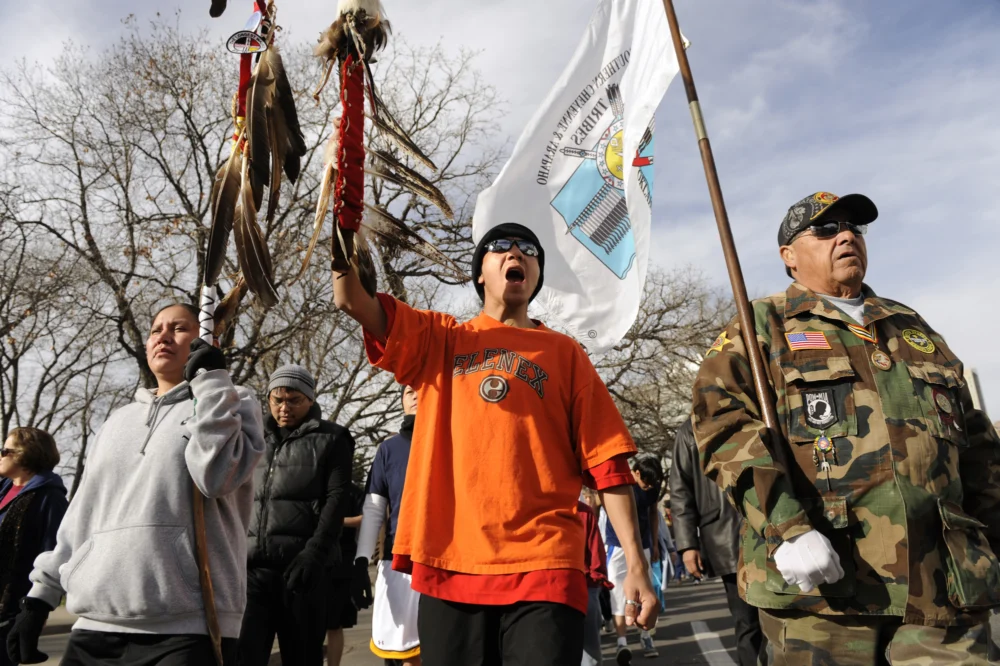
The soul wounds of history do not heal on their own; they demand diligent tending, a truth powerfully embodied each year as descendants of the Sand Creek Massacre conclude their Spiritual Healing Run at the very steps of the Colorado State Capitol, the heart of the state’s governance. It is precisely this profound understanding that compels many, including myself as a descendant, to view the empty pedestal on the Capitol’s west plaza not as a void, but as a symbolic placeholder for the most crucial step yet in Colorado’s arduous journey toward genuine reconciliation. This space, once a site of historical revisionism, now awaits a monument designed to acknowledge a brutal past and forge a path toward collective healing, a testament to enduring Indigenous resilience and the universal call for peace.
On November 29, 1864, a peaceful encampment of Cheyenne and Arapaho people, who had sought and been promised U.S. military protection under the American flag, suffered an unimaginable betrayal. Colonel John Chivington’s Colorado Territory militia troops descended upon their village at Sand Creek, unleashing a horrific slaughter that claimed more than 200 lives, predominantly women, children, and elders. This act of unprovoked violence, driven by expansionist fervor and a climate of anti-Indigenous sentiment during the nascent Colorado Gold Rush, shattered trust and echoed a pattern of broken treaties and escalating conflicts across the American West. While swift military and congressional investigations unequivocally condemned the atrocity as a massacre, labeling it a "foul and dastardly massacre" and "without parallel in the records of Indian barbarity," Colorado’s nascent government and much of its populace celebrated it as a decisive victory for decades, cementing a false narrative that perpetuated the trauma for generations.
This egregious historical distortion was starkly embodied by a plaque on a Civil War monument that stood prominently on the Capitol grounds, erroneously listing Sand Creek among Colorado’s legitimate Civil War battles. This monument, for too long, represented a public denial of the truth and an implicit endorsement of the violence. Its recent removal marked a pivotal moment, clearing the way for a powerful and necessary replacement: the "Peace Keepers" memorial. This bronze sculpture is conceived not merely as a statue but as a sacred acknowledgment, designed to honor the courageous and peaceful Cheyenne and Arapaho leaders, such as Chief Black Kettle and Chief Left Hand, who steadfastly clung to the promise of peace even in the face of escalating aggression and ultimately, their final breaths. It will also pay tribute to the incredible resilience of survivors like Medicine Woman, who endured the massacre with eight bullet wounds, symbolizing the indomitable spirit of her people.

In 2025, a landmark moment in Colorado’s history unfolded as the state Legislature and Governor Jared Polis unanimously endorsed the "Peace Keepers" memorial. This legislative affirmation is more than a bureaucratic approval; it represents a profound declaration that the truth about Sand Creek, its victims, and its lasting impact must no longer be hidden or sugarcoated. This historic act of remembrance serves as a public call for governmental forgiveness for the institutional betrayals of the past, a commitment to truth-telling, and a solemn pledge to honor the innocent lives lost. Such gestures are crucial components of restorative justice, acknowledging historical wrongs and setting a foundation for genuine reconciliation, not just within Colorado but offering a model for other regions grappling with similar legacies of colonial violence.
However, the real work, the hardest work, lies beyond legislative endorsements and bronze castings—it is the arduous, continuous process of healing. Healing, in this context, is not about forgetting the past or achieving a comfortable, convenient closure; rather, it is about a profound recognition that historical trauma is not confined to the annals of history. The deep, pervasive soul wound of the Sand Creek Massacre continues to shape the lives of the Cheyenne and Arapaho people today, manifesting as intergenerational trauma that impacts mental health, cultural identity, and societal well-being. The "Peace Keepers" memorial is therefore not simply a statue for Indigenous communities; it is envisioned as a vital public space for all Coloradans—Indigenous and non-Indigenous alike—to collectively confront this trauma, understand its enduring legacy, and actively participate in the painstaking work of repairing the foundational trust of this state. It is a shared responsibility to ensure that the lessons of the past guide the future, fostering a more inclusive and just society.
This historical narrative, particularly the tragic events of Sand Creek, serves as a powerful and immediate cautionary tale for our current global moment. The massacre itself was not an isolated incident but the culmination of a toxic mixture of fear, pervasive hysteria, and a willful rejection of conscience. Colonel Chivington’s brutal attack was explicitly fueled by opportunistic politicians and a sensationalist press that systematically dehumanized the Cheyenne and Arapaho tribes, portraying them as an existential threat and encouraging violence. This created an environment where diplomatic engagement was abandoned in favor of brute force and treachery, leading to catastrophic human suffering.
Today, across the globe and within national discourse, we witness disconcerting echoes of these same dangerous conditions. Rampant political polarization, the strategic spread of fear and disinformation, and the increasing temptation to view political opponents as existential enemies to be vanquished rather than fellow citizens to be negotiated with, mirror the divisive rhetoric that preceded Sand Creek. When societies replace constructive dialogue with demagoguery, and diplomacy with dismissal, they inadvertently lay the same perilous groundwork that allowed such an unfathomable atrocity to occur. The global rise of nationalism, xenophobia, and identity politics further underscores the urgency of learning from such historical precedents, reminding us that the dehumanization of any group can pave the way for horrific outcomes.

The enduring story of the "Peace Keepers" chiefs—Chief Black Kettle, Chief Left Hand, and others—reminds us that even in the face of violent dehumanization, overwhelming odds, and the ultimate betrayal, they chose the path of peace. Their profound sacrifice and unwavering commitment to dialogue call upon all of us, irrespective of our backgrounds, to stand resolutely for humanity, truth, and genuine dialogue, especially when the national and global atmosphere tempts us toward anger, division, and the demonization of others. Their legacy serves as a beacon, illuminating the moral courage required to uphold principles of peace and understanding amidst chaos.
This commitment to truth and healing now faces a critical deadline. The "Peace Keepers" memorial is scheduled for its dedication on November 29, 2026, a date that poignantly coincides with Colorado’s 150th anniversary of statehood. This confluence of anniversaries presents Colorado with a unique and profound opportunity to declare, at the highest governmental and societal levels, what kind of history it chooses to commemorate and what kind of future its citizens aspire to build. It is a moment to publicly reconcile with a painful past and commit to a more equitable future.
The Sand Creek Massacre Memorial Committee is diligently working to raise the final funds necessary for the bronze casting and installation of this pivotal memorial. The recent securing of a generous matching gift is a powerful indication that the community is ready to stand in solidarity with this vital effort. Should we allow this sacred pedestal to remain empty for another year, it would signal that our collective commitment to historical truth and reconciliation is merely theoretical, a gesture rather than a genuine transformation. By actively supporting the swift completion of the "Peace Keepers" memorial now, we are unequivocally declaring that healing, restorative justice, and the honest reckoning with history are paramount priorities for Colorado. We are choosing to fill the void of a false, violent past with a permanent, visible testament to the courage, the enduring spirit of peace, and the profound resilience of the Cheyenne and Arapaho people. This is more than a civic project; it is a moral imperative, a decision that not only honors the past but is absolutely essential for the future health, integrity, and collective healing of the state of Colorado and its diverse communities.