Roger Danuarta
The delicate balance of wildlife management in the American West reached a critical juncture on December 11, 2025, when Colorado Parks and Wildlife (CPW) officials successfully captured and repatriated a gray wolf that had ventured into New Mexico, returning it to Grand County, Colorado. This incident underscores the profound complexities and inherent challenges of reintroducing a apex predator into a landscape crisscrossed by administrative boundaries and diverse ecological needs. Since their initial reintroduction to Colorado in late 2023, these gray wolves have demonstrated an innate propensity for extensive travel, quickly pushing the limits of their designated territories and sparking a regional debate over conservation strategies and genetic integrity.
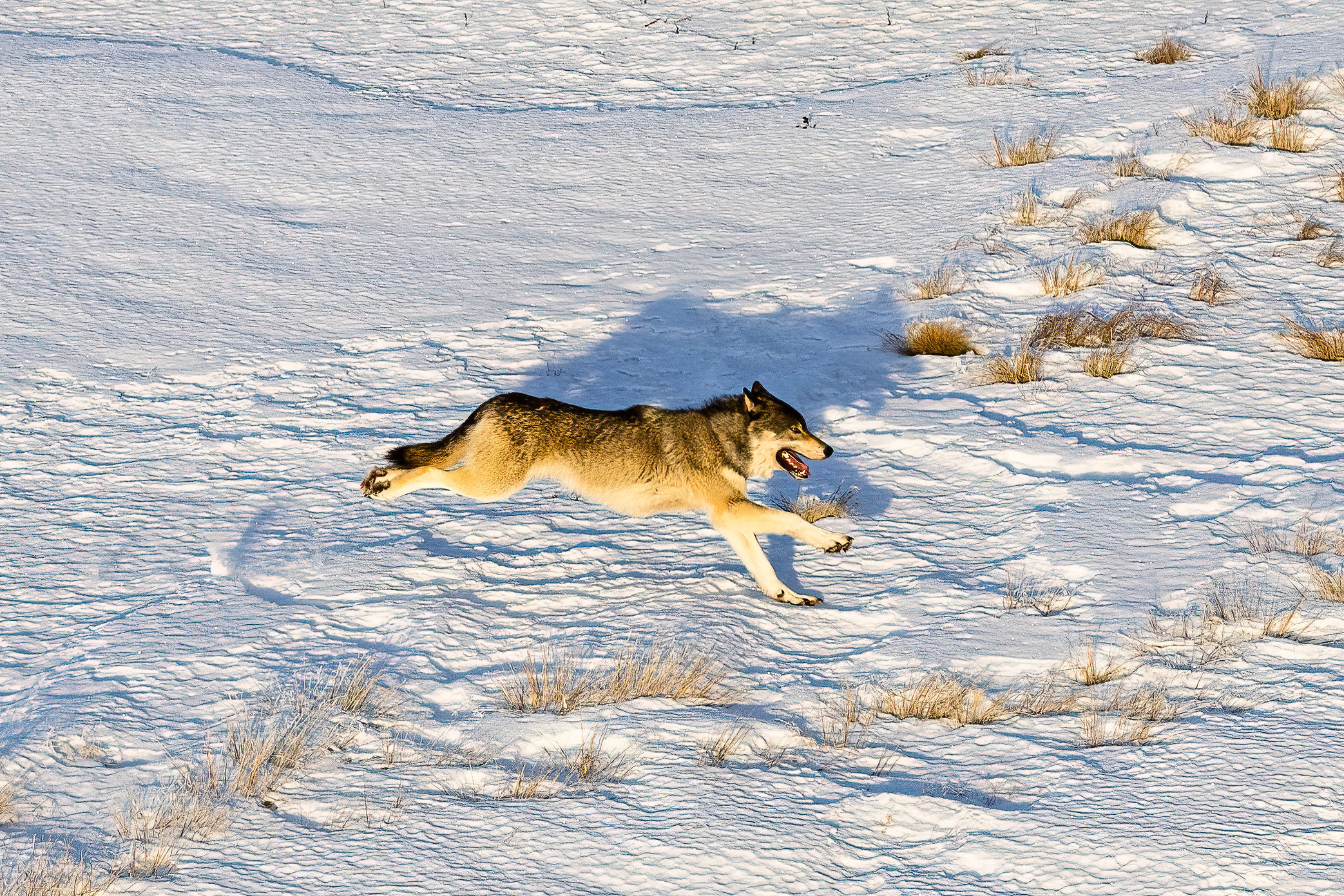
Tracking data from collared animals reveals the remarkable dispersal capabilities of these canids. An activity map released by Colorado Parks and Wildlife in October 2025 indicated that wolves were already nearing the state’s southern and western frontiers. This map, which cautiously delineated watersheds where at least one collared wolf was present without divulging precise locations, showed activity in Archuleta, Conejos, and Costilla counties—all bordering New Mexico. Wolves are renowned for their endurance, capable of traversing up to 30 miles in a single day, a testament to their evolutionary design as highly mobile hunters. One particular collared female, since her release in January 2025, has logged an astonishing journey of approximately 4,000 miles, illustrating the species’ natural imperative to explore and establish new territories.
While state lines hold little meaning for a dispersing wolf, they represent significant hurdles for wildlife managers grappling with a mosaic of jurisdictional regulations and conservation objectives. Colorado’s reintroduction program, uniquely mandated by a voter-approved ballot measure in November 2020, aimed to restore a crucial ecological component to the state’s high country. However, this initiative immediately raised concerns among neighboring states, particularly Arizona and New Mexico, whose wildlife officials expressed apprehension that Colorado’s expanding gray wolf population could inadvertently jeopardize the painstaking recovery efforts for the Mexican gray wolf, Canis lupus baileyi. This subspecies stands as the rarest of all gray wolves in North America, its survival hanging by a precarious thread.
To mitigate this potential conflict, a landmark memorandum of understanding (MOU) was signed in 2023 by wildlife management agencies from Colorado, Utah, Arizona, New Mexico, and the U.S. Fish and Wildlife Service (USFWS). This unprecedented agreement explicitly aimed to maintain a clear separation between the newly introduced northern gray wolves in Colorado and the imperiled Mexican gray wolves to the south. Signatory parties committed to a reciprocal notification system should any wolf stray beyond its designated population area—Colorado for the gray wolves, and south-central Arizona and New Mexico for the Mexican subspecies. The accord further stipulated the capture and relocation of any such wandering individuals back to their established ranges, effectively creating a theoretical "wolf-free zone" across northern Arizona and New Mexico. This collaborative, yet restrictive, approach reflects the complex political and ecological tightrope walked by conservationists in the modern era.
Despite the collaborative intent, the November 2025 update to Colorado’s wolf movement map showed a temporary decrease in southern activity, but experts remain convinced that further border crossings are inevitable. As new generations of pups mature, they will naturally disperse in search of mates, prey, and suitable territories, a biological imperative that often disregards human-imposed boundaries. The stark reality is that the fate of wolves, more so than many other species, is often dictated by these artificial demarcations. Gray wolves venturing from Yellowstone National Park into neighboring states, for instance, can face hunting pressure, just as Colorado wolves straying north into Wyoming might. Eric Odell, Colorado Parks and Wildlife’s wolf conservation program manager, acknowledged the singular nature of the MOU, stating, "It is very unique." This uniqueness stems directly from the critically endangered status of the Mexican gray wolf.
The Mexican gray wolf’s history is a poignant tale of near extinction and arduous recovery. Driven to the brink in the 1970s, it was reintroduced to the Southwest in 1998, albeit within a carefully defined experimental population area spanning south-central Arizona and New Mexico. For decades, governors of Colorado, Arizona, New Mexico, and Utah have voiced strong opposition to Mexican gray wolves establishing populations north of Interstate 40, a major east-west highway perceived as a natural, albeit artificial, boundary. Yet, some wolves have repeatedly challenged this line. A Mexican gray wolf, famously known as "Taylor," was discovered north of I-40 this past fall, outside the designated experimental population area. Despite being captured and transported south, Taylor demonstrated a remarkable instinct for return, reappearing north of the interstate just weeks later.
These movements, both of Colorado’s northern gray wolves southward and occasional Mexican gray wolves northward, have reignited a passionate and often divisive debate among wildlife managers, scientists, and environmental advocacy groups: Would interbreeding between the subspecies ultimately benefit or harm the Mexican gray wolf’s long-term survival? Eric Odell voiced a common concern among wildlife agencies, predicting that the larger northern gray wolves would "swamp" the genetic distinctiveness of the smaller Mexican subspecies, eventually eroding their unique identity. "It’s definitely a concern," Odell emphasized, "It was something we want to protect against happening."

However, a compelling counter-argument suggests that genetic exchange could be a vital lifeline for the Mexican gray wolf. The current population suffers from critically low genetic diversity, a direct consequence of its historic bottleneck and subsequent inbreeding. This manifests in observable physical traits such as fused toes, indicating a weakened gene pool. Bryan Bird, Southwest Director of Defenders of Wildlife, unequivocally stated, "The bottom line is, we think it would be a good thing." Doug Smith, a renowned wildlife biologist and former leader of the Yellowstone Wolf Project, echoed this sentiment, calling the arrival of wolves from other areas "the age-old solution" for low genetic diversity. Smith articulated a fundamental ecological principle, asserting, "Evolutionarily, ecologically, species didn’t have boundaries. That’s just an irrefutable fact. You can’t put a line on the exchange of genes. That’s been unbounded for millions of years."
Despite the multi-state agreement, monitoring every wolf movement across vast, rugged terrain remains an imperfect science. While Colorado’s adult wolves are collared, their pups currently are not. As the state’s wolf population expands, biologists plan to collar at least two wolves in each pack, an admittedly "imperfect" method, according to Odell, for comprehensive tracking. To his knowledge, Colorado’s wolves have not yet definitively established themselves in neighboring states, but Bird’s prediction resonates widely: "These wolves will mingle at some point. It’s inevitable." The intrinsic dispersal behavior of wolves, coupled with the difficulty of comprehensive monitoring, suggests that the concept of an impermeable "wolf-free zone" may ultimately prove to be an ecological fiction in the face of biological reality.
In the immediate term, Colorado’s nascent wolf reintroduction program faces pressing internal challenges. Of the initial 25 wolves reintroduced, a concerning 10 have already perished, falling victim to mountain lions, poachers, and, in some instances after repeated livestock depredations, even state wildlife managers. The most recent fatality, occurring in late October 2025, remains under investigation. Despite these setbacks, the program anticipates further bolstering its numbers. The third and final scheduled release of wolves into Colorado is slated for the upcoming winter, building on a prior agreement with British Columbia to relocate an additional 10 to 15 wolves.
However, this plan encountered an unexpected federal hurdle. On October 10, 2025, U.S. Fish and Wildlife Service Director Brian Nesvik issued a letter to Jeff Davis, then-director of Colorado Parks and Wildlife, mandating that any future wolves for reintroduction must be sourced from northern Rocky Mountain states, rather than Canada. This directive cited concerns that importing Canadian wolves would violate federal guidelines for experimental populations of listed species under the Endangered Species Act. This decision is particularly problematic given that these very northern Rocky Mountain states have previously declined Colorado’s requests for wolves. Odell expressed the profound frustration this intervention caused, stating, "It’s frustrating to the effort of trying to restore wolves," as efforts to identify alternative suitable source populations continue. Yellowstone’s Doug Smith emphasized the importance of numerical strength for effective management, noting that a larger wolf population would provide Colorado with greater flexibility to address problematic individuals. "To stop them midway through recovery hurts more than it helps," Smith argued.

Despite the ongoing challenges and federal intervention, Odell maintains that Colorado’s recovery effort has, to date, been successful, with approximately 20 collared wolves and at least 10 pups on the ground as of December 2025. He affirmed that the program has adhered to all appropriate rules and regulations. "I think it gets characterized as a failure in a lot of ways, but it’s not," Odell contended, though he conceded the recovery effort currently occupies a "tenuous position." The prospect of a stalled reintroduction looms large. "If we don’t get another batch of reintroductions this year, is it a failure?" Odell pondered, expressing a hopeful, "I hope not." The unfolding narrative of wolf reintroduction in Colorado thus becomes a microcosm of larger conservation dilemmas, highlighting the complex interplay of ecological imperatives, scientific debate, political will, and the enduring challenge of human-wildlife coexistence in a rapidly changing world.