Roger Danuarta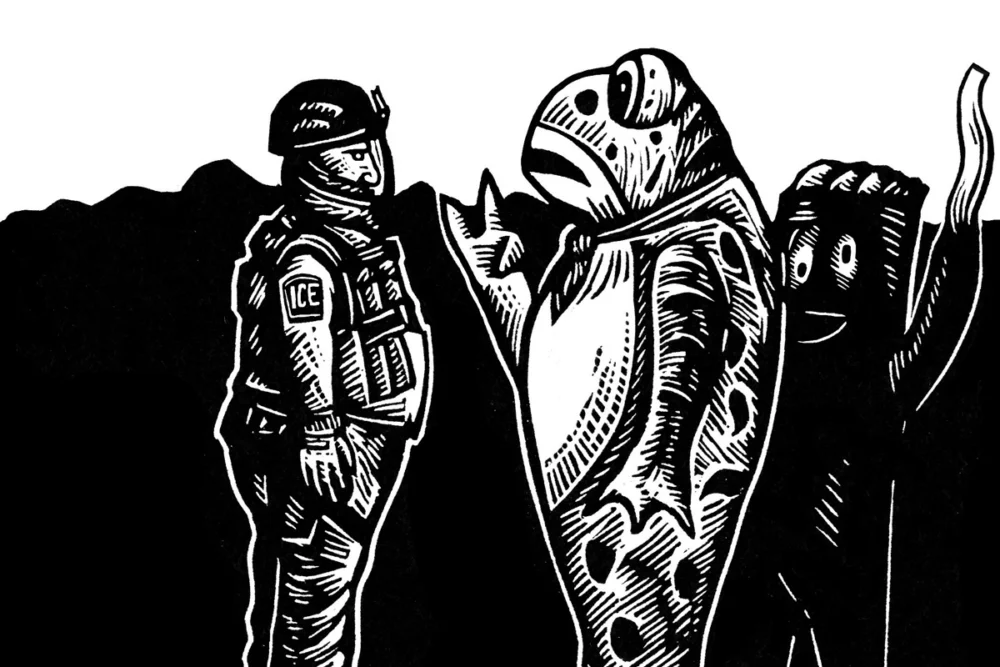
Across the diverse landscapes of the American West, from the bustling streets of Portland, Oregon, to the sun-drenched shores of Southern California, narratives of defiance, pioneering innovation, and the intricate balance between humanity and nature are unfolding. In Portland, a city long celebrated for its distinctive culture, a unique form of civil disobedience has taken root, transforming local costume shops into unlikely arsenals for political satire. Lippman Co., a venerable 77-year-old party supply store nestled in Portland’s Central Eastside, has experienced a surge in demand for its inflatable costumes, becoming an unexpected hub for protesters. These whimsical, oversized outfits – ranging from inflatable frogs and dinosaurs to chickens, retailing between $60 and $70 – are now iconic symbols in demonstrations outside the Immigration and Customs Enforcement (ICE) building in the South Waterfront area. Protesters, donning these buoyant disguises, have gathered to vocalize their opposition to what they perceive as authoritarian policies, particularly those implemented during the Trump administration, which critics often characterized as a "war on the city." This sartorial choice offers a vivid counterpoint to the heavily armored federal officers, often equipped with riot gear, gas masks, and firearms, creating a surreal tableau that encapsulates Portland’s "Keep Weird" ethos.
The effectiveness of this unconventional protest strategy lies in its ability to disarm and draw widespread attention. Robyn Adair, Lippman’s manager, noted the immediate media impact, recounting how customers purchasing Garfield and banana costumes were later spotted on national news broadcasts. One protester, clad in a banana suit and holding a sign proclaiming "This is bananas," articulated the sentiment to Reuters, stating, "We’re in the silliest timeline, so I thought, why not be silly with it?" This sentiment resonates deeply with the broader strategy of employing humor and absurdity as tools of resistance, a tactic that can both lighten the mood for participants and highlight the perceived absurdity of the policies being protested. The visual spectacle of SpongeBob SquarePants, Pikachu, a shark, and a mushroom character bopping alongside demonstrators amplifies the message, making it highly shareable on social media platforms and thereby extending its reach far beyond the immediate protest site. The satirical undercurrent was perhaps best captured in a parody of Kermit the Frog’s "Rainbow Connection," as featured on Stephen Colbert’s Late Show and reported by The Oregonian. The lyrics, "Why are there so many Trump thugs in ski masks? / And why do they have to hide? / You can spray us with pepper, but we won’t surrender, / We’ll respond with a naked bike ride. / So march through our city, we’ll stand up to fascists / The chicken, the T. rex, and me," perfectly encapsulate the defiant, yet whimsical spirit of these demonstrations, framing the inflatable costumes not just as props, but as symbols of resilience and creative pushback against perceived overreach. This method of protest, while seemingly lighthearted, taps into a rich history of using performance and humor to challenge authority, often proving more memorable and impactful than traditional forms of dissent.
Further south, in California, a different kind of innovation is challenging conventional notions of materials and sustainability. Sam Shoemaker, a self-described "mushroom nerd," has embarked on an extraordinary journey across the Catalina Channel in a kayak he meticulously crafted from mycelium material. Mycelium, the root-like structure of fungi, is a burgeoning biomaterial celebrated for its versatility and sustainability, already finding applications in diverse products from packaging to "fungi faux-leather" for high-fashion accessories. Shoemaker’s endeavor represents a significant leap in demonstrating the structural capabilities of this natural material. He cultivated the specific Ganoderma polychromum mycelium from wild specimens in his home laboratory, propagating it on a hemp hurd substrate packed within a custom two-part fiberglass mold. The entire vessel, weighing 107 pounds, took six weeks to grow and several months to meticulously dry before it was deemed seaworthy.

On August 5th, Shoemaker launched his unique craft from Two Harbors, Catalina Island, at 6 a.m., embarking on a 26-mile paddle across the challenging channel. His journey was not without peril; he described the experience in the middle of the channel as "almost psychedelic," battling nausea and even experiencing hallucinations, though emphatically not from hallucinogenic mushrooms. Concerns about his experimental boat snapping under the strain were constant companions. Yet, amidst these challenges, he found an "unlikely guardian" in the form of a whale that accompanied him for a portion of the trek, adding a mystical element to his scientific endeavor. After an arduous 12 hours, Shoemaker safely landed on San Pedro’s Cabrillo Beach, completing a feat that underscores the immense potential of biomaterials. His primary motivation, as he shared with the Orange County Register, is to inspire others to explore and experiment with fungi. He passionately advocates for the broad utility of fungi, stating, "There’s really nothing that you can’t apply fungi to… they’re food, they’re medicine. They’re used in therapeutic practices." Beyond these well-known applications, Shoemaker highlighted fungi’s critical role in environmental remediation, noting, "We’re addressing heavy metals and oil spills with fungi." This pioneering work in mycoremediation offers a sustainable and eco-friendly approach to tackling some of the planet’s most pressing environmental challenges, positioning fungi as a powerful, untapped resource for future innovations.
Meanwhile, in a more cautionary tale of human-wildlife interaction, the tranquil community of San Rafael, California, experienced an unusual series of "attack squirrel" incidents last September. The alarming encounters prompted resident Joan Heblack to distribute flyers warning her neighbors: "Attack Squirrel Beware!!!!!! This is not a joke more than 5 people have been attacked by a very mean squirrel." At least three individuals required emergency room treatment for cuts, raising public safety concerns. Fortunately, Marin County animal experts quickly reassured the public that squirrels rarely carry rabies, alleviating fears of a widespread health crisis. Allison Hermance, director of marketing for WildCare, a local wildlife rehabilitation center, explained that this aggressive behavior, dubbed "squirrels gone wild," is not unprecedented. It often stems from well-intentioned but misguided human intervention. When baby squirrels fall from their nests, people sometimes take them home to raise them, inadvertently habituating them to human care and a consistent food supply.
The critical issue arises when these hand-raised squirrels are later released back into the wild. Having learned to associate humans with sustenance, they struggle to forage independently and often grow desperate when their expected human-provided meals are not delivered promptly. This dependency can lead to frustration and aggression, as the squirrels perceive humans as their food source and react violently when denied. This phenomenon serves as a stark reminder of the delicate balance in urban ecosystems and the often-unforeseen consequences of human actions. Wildlife experts universally advise against feeding wild animals, emphasizing that it disrupts their natural behaviors, diminishes their innate foraging skills, and can lead to dangerous encounters for both animals and humans. While adorable and seemingly harmless, wild animals, including squirrels, retain their instincts and can pose a threat when their natural behaviors are altered by human interaction. This principle extends globally, with public education campaigns in urban centers worldwide advocating for minimal human interference with wildlife to ensure the safety and well-being of both species. The imperative to allow wild creatures to thrive naturally, without human dependency, remains a cornerstone of responsible coexistence.