Joko Susilo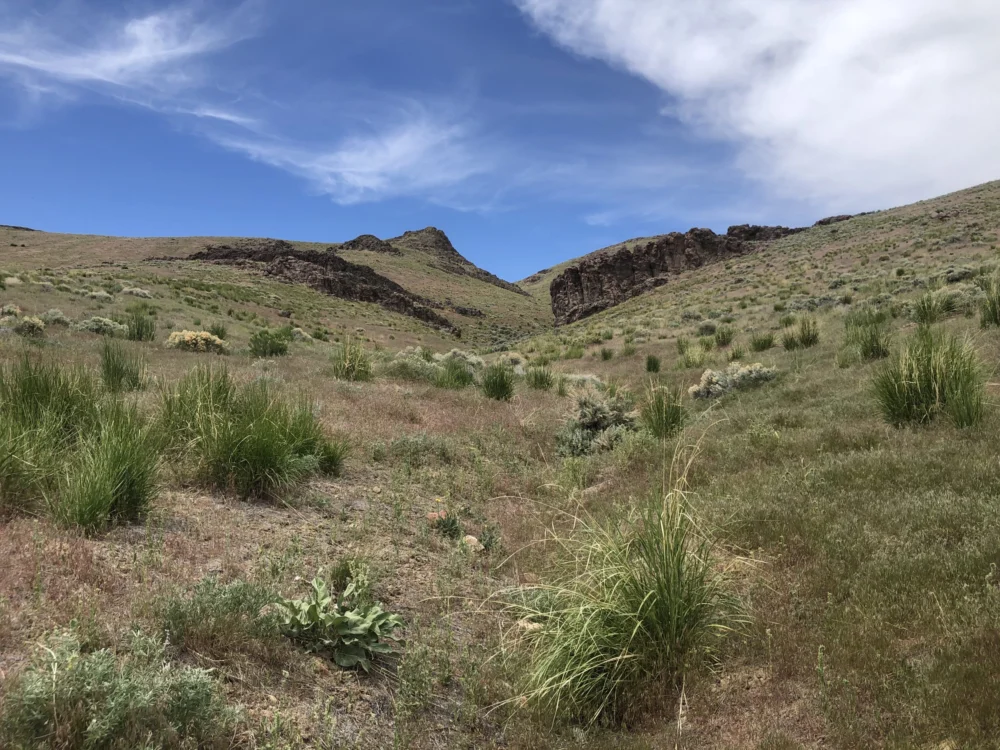
Karen Budd-Falen, a high-ranking official within the Department of the Interior, is facing intense scrutiny following revelations of her family’s financial interests in the contentious Thacker Pass lithium mine project in northern Nevada, a venture actively fast-tracked by the Trump administration during its initial term and poised for further support. Recent disclosures indicate that the administration has also acquired an equity stake in both the mine and its parent company, amplifying questions about potential conflicts of interest at the highest levels of government.
Budd-Falen’s financial disclosure, obtained after an unexplained delay, reveals extensive land holdings by her family, including Home Ranch LLC, a Nevada ranching operation valued at over $1 million. Public records from Nevada’s business database confirm Frank Falen, Karen Budd-Falen’s husband, as the manager of Home Ranch LLC as recently as February 2022, directly linking the family to the property. This connection became particularly salient when, in November 2018, shortly after Budd-Falen assumed a top legal position at the Interior Department, Home Ranch LLC entered into an agreement to sell crucial water rights to Lithium Nevada Corporation, the subsidiary of the Canadian mining giant Lithium Americas responsible for developing the Thacker Pass mine. The specific financial terms of this water rights sale remain undisclosed, though an SEC filing explicitly names Frank Falen on the document, cementing the family’s direct involvement.

Further reinforcing these ties, planning documents submitted by Lithium Nevada to federal regulators during the Trump administration’s first term feature Home Ranch. A monitoring plan for Thacker Pass, dated July 2021, explicitly outlines the company’s intention to utilize existing stock water wells owned by Home Ranch LLC to "monitor potential drawdown impacts" from its extensive mining operations. This arrangement raises significant ethical questions regarding the impartiality of decision-making within the Interior Department, particularly given Budd-Falen’s influential role.
Budd-Falen’s career trajectory and influence within the federal government further compound these concerns. Appointed in March to the role of associate deputy secretary to Interior Secretary Doug Burgum, a position that notably bypasses the requirement for Senate confirmation, she also held a prominent legal official post at the Interior Department during President Trump’s first term. It was during this earlier tenure that her official calendar, a public record, listed a November 6, 2019, meeting slated as "lunch with Lithium Nevada," at a time when Lithium Nevada was aggressively pursuing swift federal approval for its project.
The Thacker Pass project, an ambitious $2.2 billion open-pit mine, holds immense strategic importance for the burgeoning electric vehicle (EV) battery industry and the broader transition to renewable energy. Lithium, often dubbed "white gold," is a critical component in advanced battery technologies, essential for everything from smartphones to grid-scale energy storage. The global demand for lithium is projected to skyrocket in the coming decades, driving a fierce international competition for resources. The United States, keen to secure its domestic supply chain and reduce reliance on foreign sources—particularly China, which currently dominates lithium refining—has prioritized the development of domestic lithium deposits like Thacker Pass.

Despite its national strategic importance, the mine has ignited fervent opposition from a coalition of area tribes, environmental organizations, and local communities. They argue that the project poses an existential threat to vital water resources in an arid region, jeopardizes endangered species like the greater sage-grouse and rare desert fish, and desecrates sites of profound cultural and historical significance. To the Fort McDermitt Paiute and Shoshone people, Thacker Pass is known as Peehee Mu’huh, a sacred ancestral land tragically scarred by an 1865 massacre of at least 31 Paiute individuals by U.S. cavalry. This historical trauma, coupled with contemporary environmental degradation, forms the bedrock of tribal resistance, which includes ongoing legal challenges aimed at halting the mine’s construction.
The approval of the mine itself came swiftly in January 2021, in the final days of the first Trump administration, when the Bureau of Land Management (BLM) issued a record of decision greenlighting the project, which encompasses approximately 5,700 acres of public land. This rapid approval process, despite widespread protests and unresolved concerns, further fueled accusations of favoritism and insufficient environmental review.
The ethical implications of Budd-Falen’s family ties are particularly sharp given her past stance on conflicts of interest. During President Trump’s first term, she was reportedly considered to lead the BLM, the very agency responsible for overseeing public lands and mineral leases. However, she famously declined the directorship after learning that such a position would necessitate the divestment of her and her husband’s interests in their family ranches to avoid potential conflicts. This prior decision underscores the inherent conflict present in her current situation, where her family’s financial well-being is directly tied to a project under the purview of the department she helps lead.

Since her return to the Interior Department, Budd-Falen’s activities have largely remained behind the scenes, with little public information available on the specific issues she has been tasked with. Crucially, her ethics agreement, which would detail any recusal obligations for companies or projects where conflicts might arise, has yet to be publicly released. This lack of transparency is a major point of concern for watchdog groups and environmental advocates.
Kyle Roerink, executive director of the Great Basin Water Network, a prominent water conservation organization in Nevada, articulated these anxieties, stating, "Did she have any oversight of the environmental review process regarding Thacker Pass? It is a big question. If she didn’t recuse herself, it would fly in the face of the impartial decision-making that Americans expect from government officials." The fundamental principle of government ethics dictates that public servants must avoid situations where their personal financial interests could influence official duties, thereby undermining public trust and the integrity of federal agencies.
The Trump administration’s ongoing commitment to the Thacker Pass project became even more pronounced in September, when it announced a deal with Lithium Americas to acquire a 5% equity stake in both the mine and the company. This significant move was made in exchange for the release of loan money from the Department of Energy, signaling a deep governmental investment in the project’s success and raising further questions about the intersection of public policy and private financial interests, especially when officials with potential conflicts are involved. The global push for critical minerals, while vital for national energy goals, must navigate a complex landscape of environmental protection, Indigenous rights, and robust ethical oversight to ensure sustainable and just development.