Roger Danuarta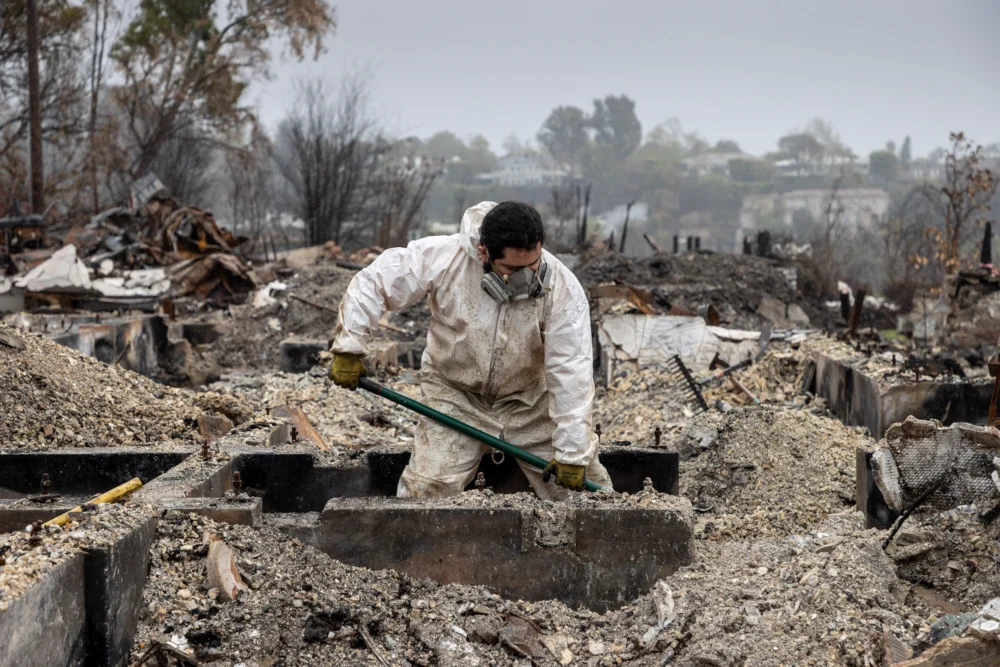
Early March 2025 painted a desolate canvas across the affluent enclaves of the Pacific Palisades, barely a month after the last embers of the devastating Palisades Fire had finally succumbed. The journey into this scorched landscape, marked by a National Guard checkpoint at the junction of Amalfi Drive and Sunset Boulevard, felt less like entering a familiar Los Angeles neighborhood and more akin to crossing the mythical River Styx into a somber underworld. A chilling, persistent drizzle mingled with a blue-green mist, clinging to the chaparral foothills of the Santa Monica Mountains like ghostly tendrils of smoke. The air itself hung heavy with the acrid scent of ozone and scorched chemicals, a palpable reminder of the inferno that had raged. For many, including this observer who battled bronchitis and unsettling dreams, the immediate aftermath was a visceral experience of profound loss and environmental trauma.

The sheer scale of destruction was almost incomprehensible, a stark contrast to the nearby community of Altadena, where a pilgrimage to a former residence revealed a miraculous survival from the equally fierce Eaton Fire. That conflagration, burning concurrently with the Palisades Fire for a relentless 24 days, had turned miles of westward landscape into a scene reminiscent of an atomic blast, obliterating most of Altadena just blocks from where houses once stood. The twin fires had collectively scarred the region, demonstrating the escalating threat of climate-fueled infernos across California’s vulnerable wildland-urban interface.

Wandering through the charred remains of what were once opulent mansions, now reduced to teetering, abstract sculptures, the cold penetrated bone-deep. An N95 mask, retrieved from a pandemic-era stash, offered meager protection against the lingering airborne particulates. It was amidst this surreal devastation that Brayan emerged, a spectral figure in a white hazmat suit descending from the cab of an excavator, his respirator momentarily lowered to ask a poignant question: "Was this your house?" Brayan, a skilled digger operator and one of thousands engaged in the monumental task of debris removal, articulated a sentiment common among his colleagues. While the physical dangers of inhaling toxic ash — a cocktail of heavy metals, asbestos, and various chemicals from incinerated modern building materials and household goods — were ever-present, he spoke of "the little things." This referred to the profound psychological toll of witnessing and toiling within the ruins of shattered lives, a constant reminder of what residents, and by extension, society, continue to lose in an era of escalating climate disaster.

Brayan’s poignant observation underscored a deeper, troubling reality. Debris can be cleared, structures can be rebuilt, and landscapes may eventually heal, but the pervasive grief and an underlying dread of future climate catastrophes persist. Over subsequent months, the burn zone became a tableau of relentless human effort, where dozens of men like Brayan labored to shore up a broken world. Their stories, often overlooked amidst the focus on property loss, illuminated a critical societal imbalance. These workers, many of them Latino immigrants, were undertaking the most dangerous and physically demanding jobs, often operating with consumer-grade gardening tools to meticulously clear every crevice of every foundation before excavators could scrape up the piles for transport. This essential labor unfolded against a backdrop of increasing anti-immigrant sentiment and brazen persecution, including notorious ICE raids in their communities, raising urgent questions: Were these men being asked to sacrifice too much for the restoration of one of the city’s wealthiest neighborhoods? What indelible scars, both physical and psychological, would they carry from this arduous endeavor back into their own lives?

Luis, another demolition worker, was among the first to arrive in the Palisades Fire burn zone in late February 2025. He had witnessed similar devastation before, having worked on the Woolsey and Thomas Fires in 2018, both significant events in California’s escalating wildfire crisis. His experience lent a chilling perspective: "I never expected the fire was going to take the whole city. I saw the fire on TV and thought: ‘This is crazy.’ But I never expected that the whole town was gonna be gone. When I saw it for myself, I felt sick. Then I had to get to work." His words encapsulated the shock and the immediate, urgent call to action that defined the recovery efforts.

The U.S. Army Corps of Engineers spearheaded the Phase-2 debris removal operation, a critical stage in disaster recovery typically funded by FEMA. This involved contracting a complex network of private companies to manage the demolition, cleanup, and debris removal for an estimated 8,000 structures damaged or destroyed by the fire. The workforce largely consisted of Latino immigrants, individuals with extensive expertise in construction and demolition trades, many of whom are integral to disaster recovery efforts across the nation. Reynaldo, a jobsite foreman in July 2025, passionately defended his crew, highlighting their dedication and resilience: "These guys have been dealing with this for years, bro. They don’t call in sick. They don’t not show up, you know what I mean? These guys give 100% every time. They’re not criminals. They don’t have any probation or parole going on. These guys work. These guys dedicate to their family, working and providing." His statement resonated with a particular poignancy as work halted one day due to an infamous ICE raid at an agricultural operation in Camarillo, an event that tragically resulted in the death of farmworker Jaime Alanis Garcia and the detention of 200 others. This incident starkly illuminated the precarious balance many of these essential workers navigate daily.

Ernesto, another worker observed in March 2025, echoed a common sentiment of empathy: "It’s hard to see these people lose everything." His words reflected the profound human cost of the disaster, a tragedy he and his colleagues were physically immersed in. The challenging terrain of some properties, particularly those difficult for heavy machinery to access, forced workers like Ernesto to carry out ash and debris by hand, utilizing 5-gallon buckets and wheelbarrows, often navigating precarious slopes.

Miguel, a recent arrival from Michoacan, exemplified the informal yet critical labor channels employed in the aftermath. He shared his story: "I’m from Michoacan. The owner hired me when I was at Home Depot in the parking lot looking for work, and I’m just out here saving whatever I can for them. Right now I’m breaking these bricks apart and stacking them over there. Maybe they can reuse them." Miguel’s situation, working directly for property owners who opted out of the Army Corps program, often meant operating without the mandated protections against the physical and environmental hazards of the burn zone, a concerning reality for a segment of the workforce.

Angel, laboring on one of the most hazardous demolition sites, highlighted the demanding nature of the work. Despite being well-paid by construction and demolition standards, the jobs were physically grueling and carried significant immediate and long-term health risks. Many workers, driven by the need to support their families, chose to work for weeks without a single day off to maximize overtime pay, pushing their bodies to the limits.

The Palisades Fire, ignited by an arson fire that rekindled after initial suppression, was fueled by powerful seasonal Santa Ana winds. These dry, hot winds, a notorious feature of California’s fire season, propelled the flames with ferocious speed, consuming 37 square miles, destroying or damaging 8,000 structures, and claiming 12 lives. The fire tore through residential neighborhoods and commercial buildings, reaching all the way to Malibu Beach, leaving an indelible mark on the region’s landscape and psyche. In the months following, a staggering one million tons of toxic ash and debris were removed and transported to landfills and salvage yards spread across the LA Basin, including Calabasas, Corona, Granada Hills, Long Beach, Los Angeles, Oxnard, Simi Valley, Sun Valley, and Sylmar.

By mid-July 2025, approximately six months after the fire’s eruption, most properties whose owners opted into the free Army Corps Phase-2 program had been cleared. Only a few hundred "opt-outs," properties where owners chose private remediation, remained. However, the cleanup process was not without its challenges; between February and mid-May 2025, the Army Corps addressed 350 complaints from homeowners regarding the quality or thoroughness of the work, indicating the immense logistical and quality control hurdles inherent in such a massive operation.

The post-fire landscape was a testament to the inferno’s indiscriminate power. Amidst the ash and rubble, certain objects stood as eerie sentinels: solitary chimneys, the skeletal frames of cars, swimming pools, remnants of stone walls, barbecue grills, and, most reliably, resilient garden statues. Durable cement foundations bore the blackened scars of flammable objects long since incinerated and removed. While the immediate wreckage was largely cleared, the unquantified long-term impacts on the delicate ecosystems of this sensitive wildland-urban interface, along with ongoing environmental remediation efforts, continued to pose significant challenges. The physical rebuilding had begun, but the deeper societal questions about climate resilience, equitable labor practices, and the profound human cost of these increasingly frequent disasters would continue to resonate long after the last truckload of ash departed.