Johny Prima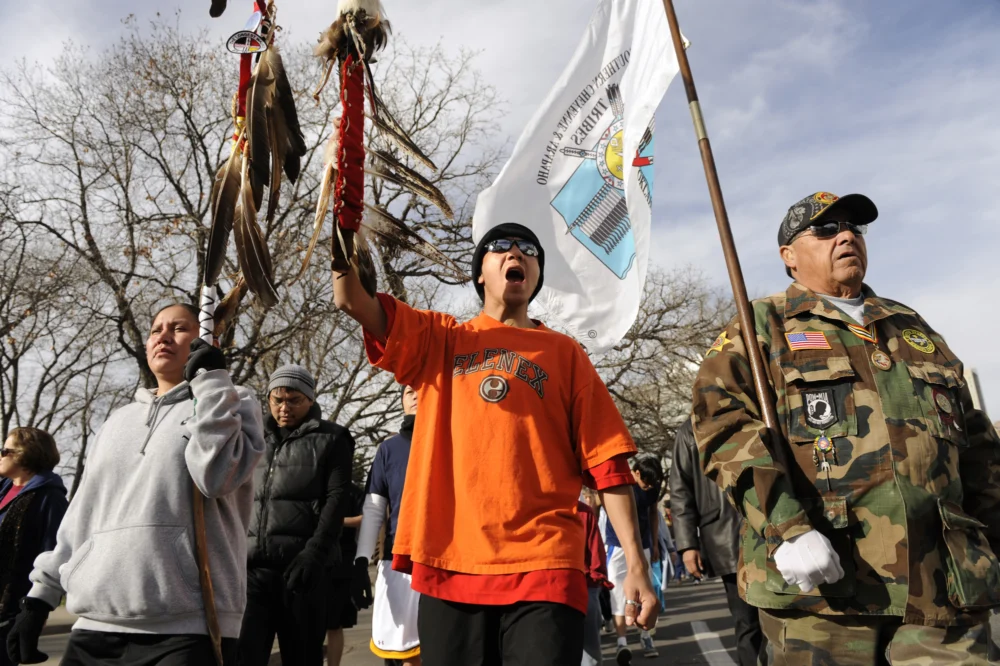
The profound soul wounds inflicted by history demand careful tending, a truth powerfully exemplified by the annual Sand Creek Massacre Spiritual Healing Run, where descendants of the massacre victims conclude their poignant journey at the steps of the Colorado State Capitol. This pilgrimage to the very heart of state government underscores an ongoing commitment to acknowledge and heal historical trauma. As an empty pedestal now stands on the Capitol’s west plaza, it symbolizes not an absence, but a future yet to be fully realized – a critical juncture in Colorado’s path toward genuine reconciliation.
On November 29, 1864, a devastating act of betrayal unfolded on the plains of southeastern Colorado. A peaceful encampment of Cheyenne and Arapaho people, who had sought and been explicitly promised U.S. military protection under the authority of Fort Lyon, were brutally attacked by Colonel John Chivington’s Colorado Territory militia. The morning raid, characterized by its barbarity, claimed the lives of more than 200 individuals, predominantly women, children, and elders, who were flying American flags and white flags of surrender. This egregious event, swiftly condemned by multiple military and congressional investigations as a massacre, represented a profound breach of trust that sent shockwaves across the nation and continues to echo through generations, yet for decades, Colorado controversially celebrated it as a significant military victory.
For too long, this narrative of false heroism was etched into the physical landscape of the state. A commemorative plaque, prominently displayed on the Capitol grounds, erroneously listed Sand Creek among Colorado’s Civil War battles, perpetuating a historical untruth that glossed over the unspeakable suffering of innocent Indigenous people. That plaque has now been removed, making way for a necessary and powerful replacement: the “Peace Keepers” memorial. This bronze sculpture will stand as a permanent tribute, honoring the courageous Cheyenne and Arapaho leaders, such as Chief Black Kettle and Chief Left Hand, who clung to the promise of peace even in the face of escalating violence, until their final breaths. It will also honor survivors like Medicine Woman, who endured the massacre with eight bullet wounds, embodying the resilience of her people.

In a pivotal and historic move in 2025, the Colorado Legislature and Governor Jared Polis unanimously endorsed the creation and installation of this vital monument. This collective affirmation signifies a profound shift, acknowledging that the painful truth about Sand Creek can no longer be obscured or denied. It represents a formal act of remembrance, a call for governmental forgiveness for the institutional betrayals of the past, and a public, tangible commitment to honoring the innocent lives lost. Such actions resonate with a broader global movement towards historical reckoning, where nations and communities worldwide are confronting difficult aspects of their past, from colonial legacies to human rights abuses, in an effort to forge more equitable futures.
However, the endorsement of a monument, while crucial, marks only the beginning of the journey. The true, and often hardest, work lies in healing. Healing is not about forgetting the past or seeking a convenient, comfortable closure. Instead, it is about recognizing that trauma is not confined to history books; it lives on, profoundly shaping the lives of the Cheyenne and Arapaho people today through intergenerational trauma. The "Peace Keepers" memorial is far more than a mere statue for Indigenous communities; it is designed to be a sacred space, a focal point for all Coloradans to confront this enduring trauma, understand its complex legacy, and collectively begin the arduous process of repairing the foundational trust that underpins the state’s identity. It serves as a stark reminder that acknowledging injustice is the first step towards building a more just society.
The history of the Sand Creek Massacre offers a powerful and immediate cautionary tale for our current moment. The massacre itself was born from a toxic confluence of fear, widespread hysteria, and a deliberate, cynical rejection of conscience. Colonel Chivington’s brutal assault was not an isolated incident but rather the culmination of a climate cultivated by opportunistic politicians and a sensationalist press that systematically dehumanized Indigenous tribes, portraying them as an existential threat. This rhetoric actively encouraged violence, effectively replacing diplomatic engagement and peaceful negotiation with brute force and calculated treachery. The infamous order attributed to Chivington, "Kill and scalp all, big and little," chillingly illustrates the depth of this dehumanization and the state-sanctioned violence that followed.
Today, across our national discourse and indeed, in many societies globally, we witness the insidious re-emergence of these same dangerous conditions. Rampant political division, fueled by the strategic spread of fear and sophisticated disinformation campaigns, increasingly tempts us to view political opponents not as fellow citizens with whom to negotiate, but as existential enemies to be vanquished. When open dialogue is replaced by demagoguery, and diplomacy is dismissed in favor of confrontation, we are, consciously or unconsciously, laying the same perilous groundwork that allowed atrocities like the Sand Creek Massacre to occur. The lessons of history implore us to recognize the fragility of peace and the imperative of respectful engagement.

The inspiring story of the "Peace Keepers" chiefs serves as an enduring reminder that even when confronted with violent dehumanization and the ultimate betrayal, they, the Cheyenne and Arapaho leaders, steadfastly chose peace. Their profound sacrifice and unwavering commitment to a peaceful path call upon all of us to stand resolutely for humanity, truth, and genuine dialogue, especially when the prevailing national and global atmosphere tempts us toward anger, polarization, and destructive division. It is a testament to the power of principled leadership and the enduring human spirit in the face of unimaginable adversity.
Colorado now faces a critical deadline for this vital commitment. The "Peace Keepers" memorial is scheduled for its dedication on November 29, 2026, a date that will powerfully coincide with Colorado’s 150th anniversary of statehood. This dual commemoration presents a unique and profound opportunity for Colorado to declare, at the highest echelons of government and public life, precisely what kind of history it chooses to commemorate and, more importantly, what kind of future its citizens aspire to build. It is a chance to redefine the state’s narrative, moving from one marred by historical injustice to one defined by courageous truth-telling and reconciliation.
The Sand Creek Massacre Memorial Committee is diligently working to secure the final funds necessary for the bronze casting and expert installation of this monumental sculpture. Their efforts have been significantly bolstered by a generous matching gift, a clear indication that the wider community is ready and willing to stand in solidarity with this crucial endeavor. Allowing this pedestal to remain empty for another year would send a detrimental signal that Colorado’s commitment to historical truth and Indigenous healing is merely theoretical, a performative gesture rather than a deeply held value. By actively supporting the swift completion of the "Peace Keepers" memorial now, the state of Colorado, and all its citizens, are unequivocally declaring that healing is not just an aspiration, but an immediate and urgent priority. We are choosing to fill the void of a false, violent past with a permanent, visible testament to the courage, the enduring pursuit of peace, and the indomitable human spirit of the Cheyenne and Arapaho people. It is a decision that not only honors the past with integrity but also lays an essential foundation for the future health, healing, and moral compass of the state of Colorado.