Johny Prima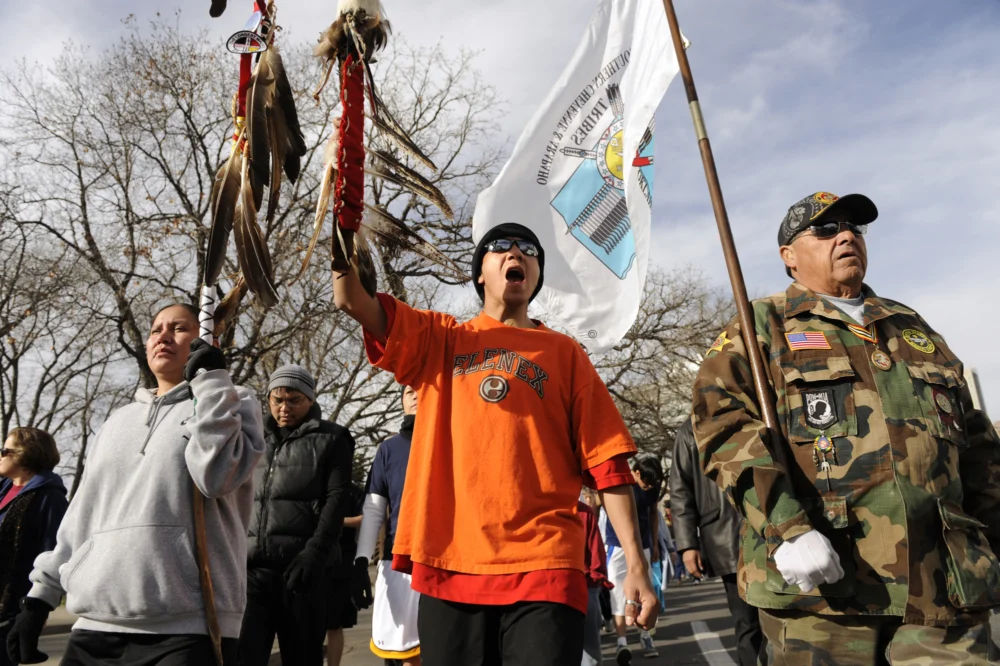
The enduring scars of history, often referred to as "soul wounds," refuse to mend themselves; they demand dedicated, compassionate tending. This profound truth resonates each year as descendants of the Sand Creek Massacre conclude their Spiritual Healing Run on the very steps of the Colorado State Capitol, the architectural and symbolic heart of the state’s governance. It is within this powerful context that the empty pedestal on the Capitol’s west plaza stands not merely as a blank space, but as a stark symbol of a crucial, yet unfulfilled, step in Colorado’s arduous journey toward genuine reconciliation. This void represents a past still grappling with its narrative and a future yearning for authentic healing.
The tragic events of November 29, 1864, remain a harrowing stain on American history. On that fateful day, a peaceful encampment of Cheyenne and Arapaho people, who had been explicitly promised U.S. military protection and had raised both an American flag and a white flag of truce, were brutally attacked and slaughtered by Colonel John Chivington’s Colorado Territory militia. More than 200 lives were extinguished in this horrific act – predominantly women, children, and elders – in a betrayal so profound that its reverberations continue to echo across generations, shaping the identities and experiences of descendants today. While swiftly condemned as a massacre by both military and congressional investigations in its immediate aftermath, the atrocity was, for decades, paradoxically celebrated as a victory by many in Colorado. This historical revisionism allowed a false narrative to persist, obscuring the truth and perpetuating the trauma.
The lie was physically embodied by a bronze plaque on a monument that once stood proudly on the Capitol grounds, listing Sand Creek among Colorado’s Civil War battles. This egregious misrepresentation served to legitimize the violence and deny the suffering of the Cheyenne and Arapaho. Now, that contentious space is reserved for a powerful and necessary replacement: the "Peace Keepers" memorial. This bronze sculpture is conceived as a testament to the extraordinary courage and unwavering commitment to peace demonstrated by Cheyenne and Arapaho leaders, such as Chief Black Kettle and Chief Left Hand, who clung to the promise of peace until their final breaths. It also honors survivors like Medicine Woman, who miraculously endured the massacre despite sustaining eight bullet wounds, embodying the resilience of her people.

In 2025, the Colorado Legislature and Governor Jared Polis took a critical, unanimous step by officially endorsing this monument. Their affirmation marks a pivotal moment, declaring unequivocally that the truth about Sand Creek must no longer be hidden or distorted. This is more than a mere legislative act; it is a historic gesture of remembrance, a public acknowledgment of governmental complicity in past institutional betrayals, and a solemn commitment to honoring the innocent lives lost. Such a formal acknowledgment by state authorities is a vital component of any genuine truth and reconciliation process, mirroring efforts seen in nations like Canada, Australia, and South Africa, where confronting historical injustices is deemed essential for national unity and healing.
Yet, legislative endorsement, while crucial, only scratches the surface. The real work, the hardest work, lies in the journey of healing. Healing, in this context, is not about forgetting the past or seeking a comfortable, convenient closure. Instead, it is about profoundly recognizing that trauma is not confined to the historical record; it is a living entity that continues to shape the lives of the Cheyenne and Arapaho people in the present day. The profound "soul wound" inflicted by the Sand Creek Massacre manifests as intergenerational trauma, impacting cultural identity, mental health, and community well-being. The "Peace Keepers" memorial, therefore, transcends its role as a mere statue. It is envisioned as a sacred space—a crucible for all Coloradans, regardless of their background, to confront this trauma, understand its enduring legacy, and collectively begin the arduous process of repairing the foundational trust upon which this state was built. It is a tangible invitation to engage with a difficult past to forge a more equitable future.
The history of Sand Creek offers an immediate and powerful cautionary tale for our current global moment. The massacre itself was not an isolated act of barbarism but rather the culmination of a toxic mixture of pervasive fear, widespread hysteria, and a willful rejection of moral conscience. Colonel Chivington’s attack was systematically fueled by opportunistic politicians and a sensationalist press that relentlessly dehumanized the indigenous tribes, painting them as existential threats. This rhetoric actively encouraged violence and systematically replaced diplomatic engagement with brute force and treachery. The parallels to contemporary national and international discourse are stark and unsettling. We witness today the same dangerous conditions: rampant political polarization, the strategic and often deliberate spread of fear and disinformation, and the increasing temptation to view political opponents, or even entire communities, as existential enemies to be vanquished rather than fellow citizens to be engaged with and negotiated alongside. When societies replace nuanced dialogue with inflammatory demagoguery, and thoughtful diplomacy with dismissive rhetoric, they are, wittingly or unwittingly, laying the very groundwork that allowed atrocities like the Sand Creek Massacre to occur. This historical echo serves as a powerful reminder of the fragility of peace and the profound responsibility of leaders and media alike.
The narrative of the "Peace Keepers" chiefs stands as a beacon of resilience and moral fortitude. It reminds us that even in the face of violent dehumanization, even when their trust was shattered and their lives threatened, these Cheyenne and Arapaho leaders chose peace. Their ultimate sacrifice calls upon all of us, in an era often defined by anger and division, to stand resolutely for humanity, for truth, and for open dialogue. It underscores the universal imperative to seek understanding and common ground, particularly when the prevailing atmosphere tempts us toward animosity and discord. This memorial offers a tangible lesson in the power of moral courage in the face of overwhelming adversity, urging a reflection on how we navigate our own societal challenges.

Colorado now faces a critical deadline for this profound commitment. The "Peace Keepers" memorial is scheduled for its dedication on November 29, 2026, a date that poignantly coincides with Colorado’s 150th anniversary of statehood. This is not just an arbitrary calendar marker; it is Colorado’s unparalleled opportunity to declare, at the highest level of its governance and public consciousness, what kind of history it chooses to commemorate and, by extension, what kind of future its citizens aspire to build. The choice to fully embrace this memorial is a declaration of intent, a public reckoning with a painful past, and a clear signal of the values that will guide the state forward.
The Sand Creek Massacre Memorial Committee is working diligently, tirelessly, to raise the final funds necessary for the bronze casting and installation of this pivotal monument. Their efforts have already secured a generous matching gift, a clear sign that the broader community is ready to stand in solidarity with this crucial endeavor. Should the empty pedestal remain for another year, it would send a troubling signal that Colorado’s commitment to truth and reconciliation is merely theoretical, a performative gesture rather than a deeply felt imperative. By actively supporting the completion of the "Peace Keepers" memorial now, Colorado emphatically declares that healing is not just an aspiration but an immediate priority. It is a conscious decision to fill the void left by a false and violent past with a permanent, visible testament to the courage, peace, and enduring human spirit of the Cheyenne and Arapaho people. This decision is not just about honoring the past; it is an essential investment in the future health, integrity, and profound healing of the state of Colorado, paving the way for a more just and truthful legacy.