Rocky Georgio
With a critical federal deadline for states to submit a unified water management plan for the Colorado River passing on November 11th, negotiations remain stalled, casting significant uncertainty over the future water supply for tens of millions across the American West. The lack of an agreement raises the specter of federal intervention or prolonged legal battles as the current operating guidelines for the river’s reservoirs are set to expire in the fall of 2026.
As the deadline approached, the prospect of a breakthrough seemed increasingly remote, fueling frustration and concern among negotiators and stakeholders deeply invested in the outcome. For over two years, the seven basin states—Arizona, California, Colorado, Nevada, New Mexico, Utah, and Wyoming—have grappled with the immense challenge of devising a comprehensive plan to reduce water consumption and revise the operational rules governing the Colorado River’s crucial reservoirs. This protracted struggle unfolds against the backdrop of a quarter-century of unprecedented heat and persistent, severe drought, which has significantly diminished the river’s flow, reducing its average volume by approximately 20% compared to the previous century. With projections indicating a continuation of hotter, drier conditions, the states are not only contending with the dwindling water supply but also with the limitations of aging infrastructure, a predicament exacerbated by low water levels and lingering legal ambiguities.
"There’s very little to no resiliency built into the river system right now, because the system is very depleted," observed J.B. Hamby, California’s representative in the ongoing negotiations. This sentiment underscores the precarious state of a system engineered for an era of greater abundance, now confronting the stark realities of a changing climate.
The complex web of water management falls under the purview of the U.S. Bureau of Reclamation, the federal agency tasked with overseeing a vast network of dams and water infrastructure across 17 Western states. Should the Colorado River Basin states fail to forge a consensus, the federal government has signaled its intention to impose its own management strategy. Regardless of who ultimately crafts the plan, it must grapple with escalating legal uncertainties, the deeply entrenched water rights of Indigenous tribes who are the river’s original stewards, and infrastructure conceived for an age of plenty, not the scarcity now defining the region.
The legal framework governing water allocation in the Western United States, a system rooted in the doctrine of prior appropriation, was not designed to withstand prolonged and intensifying drought. This legal principle dictates that in times of shortage, those with more recent water rights—often referred to as junior rights—must curtail their usage before senior rights holders. Over the past two decades, this has resulted in a cycle of unpredictable water access for communities holding junior rights, with some facing the complete cessation of river water for the foreseeable future during the most extreme dry periods.

"The Western legal system was designed to encourage development. The prior appropriation system is really about rewarding those that develop their water the fastest," explained Jason Hauter, a representative of the Gila River Indian Community and a partner at the Akin law firm. "But you can only keep developing water if there is plenty of water in the system—and right now there is no more water to develop." This fundamental constraint is driving the current urgency in negotiations.
As the pressure mounts, the foundational Colorado River Compact of 1922, which established the initial framework for water division within the basin and underpins much of Western water law, is now being scrutinized. "Previous negotiations did not address core issues. They either delayed them or worked around them, making do based on the circumstances of the time," noted Hamby. This current moment, however, is distinct. "It’s really about much deeper roots that all fundamentally get back to the compact and what it means or doesn’t mean," he added.
At the heart of the dispute lie differing interpretations of a few key sentences within the legal agreement. The Lower Basin states—Arizona, California, and Nevada—contend that the compact mandates a specific water delivery from the upstream states. Conversely, the Upper Basin states—Colorado, New Mexico, Utah, and Wyoming—assert that their obligation is not to cause water flows to fall below a certain threshold. This disagreement, largely academic during periods of higher flows, has become critically relevant as ongoing shortages push the river’s output closer to the compact’s stipulated delivery levels. Upper Basin legal experts argue that climate change, rather than their water usage, is the primary driver of the diminished flows, a claim contested by their Lower Basin counterparts.

Historically, when Western water users have failed to reach agreements, litigation has served as the default recourse. "I really think it is worthwhile to consider whether litigation is the best way for states to deal with managing conflicts," remarked Jason Robison, a law professor at the University of Wyoming. He pointed to the protracted legal battle between Arizona and California over water rights and their differing interpretations of the compact. Arizona v. California, a case that spanned more than four decades, became one of the longest-running disputes in Supreme Court history. "Over time, as is often the case with litigation, the case morphed like a river," Robison observed. "It changed form, it changed identity, and the legal issues that ended up being resolved were not the original ones that had been posed." The prospect of similar lengthy and unpredictable legal entanglements now looms over the current impasse.
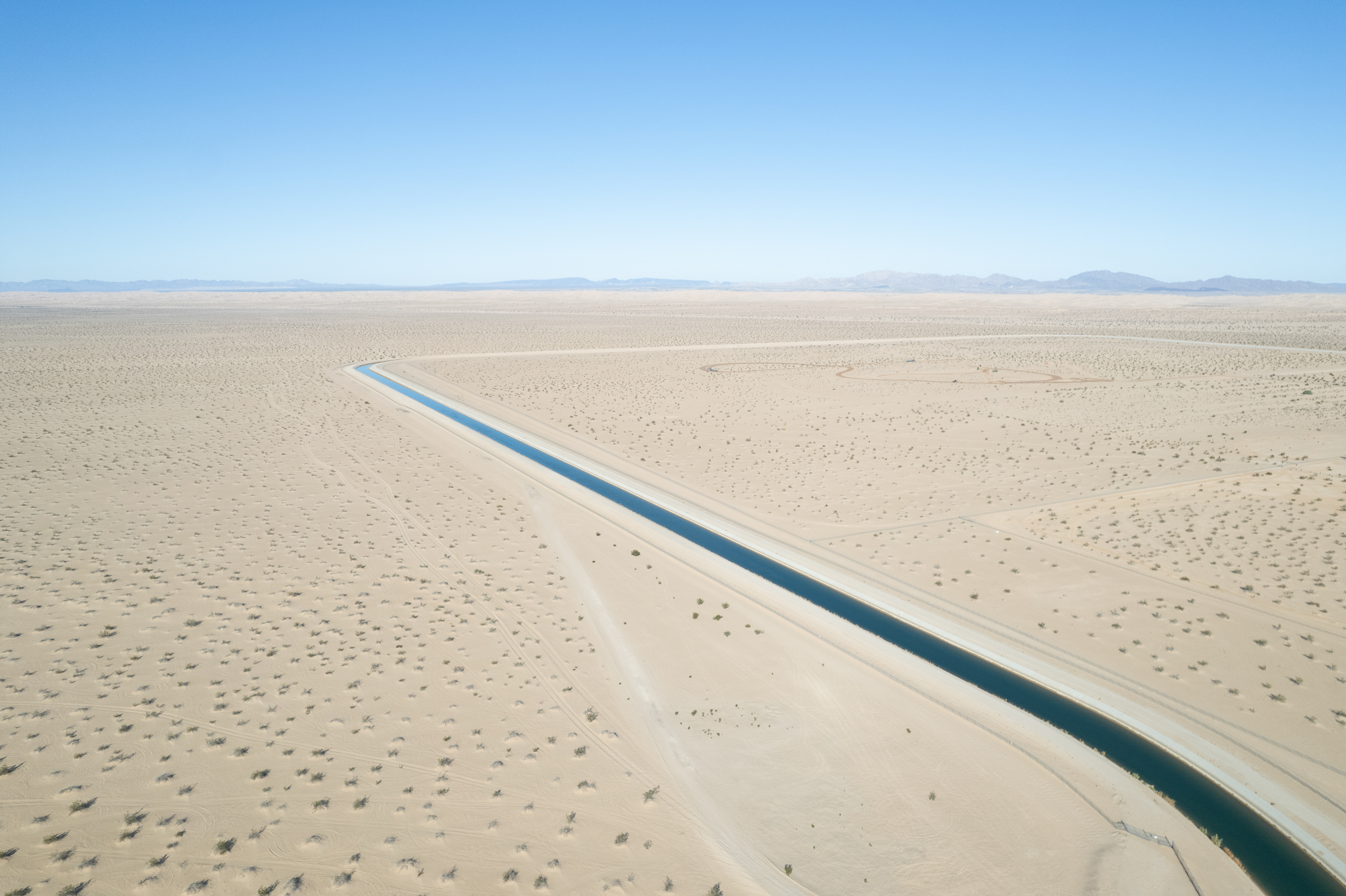
Any future agreement must also comprehensively address the water rights of the 30 federally recognized tribes within the basin, who hold rights to approximately 25% of the river’s flow. For too long, tribal nations were largely sidelined in negotiations and the development of water infrastructure, leading to significant physical and legal complications. The Gila River Indian Community in the Lower Basin, for example, possesses substantial water rights. Under the terms of their settlement, the tribe relies on a portion of its water supply through the Central Arizona Project, a vast system of canals, dams, and aqueducts. However, a Supreme Court interpretation in the enduring Arizona v. California case established that the entire Central Arizona Project is junior to California’s water rights. Consequently, under severe shortage scenarios, any agreed-upon cuts to the Central Arizona Project’s allocation would significantly reduce the water reaching the Gila River Indian Community, obligating the federal government to find an alternative, albeit unspecified, source.
The Gila River Indian Community’s leadership has historically been instrumental in the success of past basin-wide agreements, demonstrating a willingness to implement water cuts. Yet, the nature of the proposed reductions in the current negotiations has deeply frustrated tribal leadership. "What is being contemplated is a major disruption to half of our water supply, and we will not be cut without our consent. This is water we are currently putting to use and have long-term plans to use," stated tribal Governor Stephen Roe Lewis via email. "We remain opposed to all current proposals at this time because our concerns have not been adequately addressed." Reconciling these complex legal issues is a critical challenge for the tribal nation, the federal government, and the state of Arizona. Governor Lewis added, "We hope to be able to say yes to a consensus approach if the Basin States can reach agreement and our concerns are addressed."

Parallel to the legal complexities, the physical infrastructure of dams and canals designed to store and transport Colorado River water was not engineered to cope with the scale of long-term shortages now confronting the region. The major reservoirs, largely constructed in the early to mid-20th century, were primarily built for irrigation, hydroelectric power generation, and flood control, with limited provisions for managing water levels falling below critical operational thresholds. At Colorado’s Morrow Reservoir, for instance, extremely low water levels can trigger concerns about landslides. Similarly, at Arizona’s Glen Canyon Dam, a point exists below which water can only flow through four 8-foot-wide tubes, severely restricting downstream delivery.
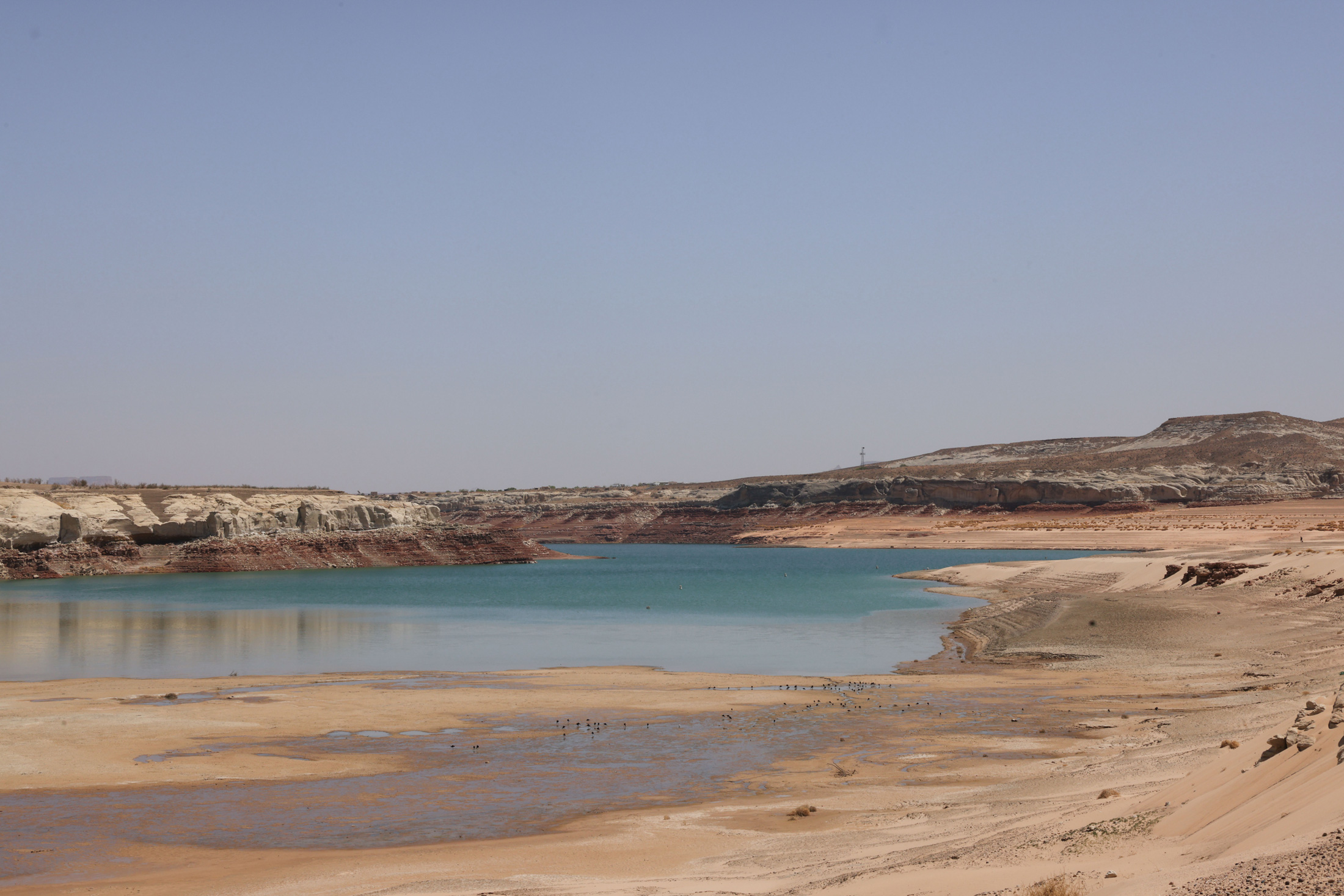
These infrastructure limitations were not a significant concern when reservoirs like Lakes Mead and Powell, which together hold 90% of the river’s stored water, were at or near capacity. However, with these vital reservoirs now less than one-third full, the physical constraints on maintaining water flow through the extensive dam system add a palpable urgency to the ongoing negotiations. Water managers must ensure that each dam maintains a minimum operational water level. If shortages persist and reservoir levels approach these critical points, water may need to be diverted from smaller upstream reservoirs to sustain minimum levels at Glen Canyon Dam, the crucial demarcation point between the Upper and Lower Basins, or water usage will inevitably require further curtailment. In 2022, such measures were necessary when releases from Flaming Gorge and Blue Mesa Reservoirs were used to bolster Lake Powell’s levels. With this "banked" water depleted, communities no longer have reserves from previous years to draw upon, forcing them to rely solely on the water available in the current year.
For a century, the Colorado River Basin states have largely managed their water resources independently, each developing plans for their allocated share. Now, the region is confronted with profound philosophical differences, unresolved legal questions, and ambiguities that in some cases trace back to the very inception of the 1922 compact. Negotiators are wrestling with issues of equity, meticulously assessing risk scenarios, and navigating the immediate impacts of climate change. Fundamentally, they are confronting a central question: after a century of competitive water development, can all stakeholders forge a unified vision for the sustainable management of the Colorado River?

So far, the answer appears to be a hesitant "no," or at least, "not yet." Scott Cameron, acting leader of the Bureau of Reclamation, has indicated that the federal government anticipates a finalized plan by May or June 2026, providing a window for state legislative approval and implementation before the next water year begins in the fall. However, should the states fail to produce a joint agreement, he has stated that federal authorities will intervene. The specifics of such federal intervention remain unclear, and recent reductions in federal funding, coupled with a perceived dismissal of climate change impacts by some, have added layers of uncertainty regarding the extent of future federal support.
It is within this atmosphere of profound uncertainty that the seven states continue their complex negotiations. "Every state is having to make decisions that may set precedents—not just for 20 years, or the run of new operating guidelines, but for generations," commented Kathy Sorensen, a water policy expert at the Kyl Center for Arizona State University. She offered a cautious perspective: "The good news side of this story—if there is one—is water managers have long known this day might come and have been preparing. So, we’re not talking about taps running dry. We’re talking about things like water might become a hell of a lot more expensive, or there might be massive litigation. Things that are distinctly unpleasant, but we can withstand." The coming months will determine whether these unpleasant but manageable outcomes can be averted through collaboration or if a more contentious path lies ahead.