Roger Danuarta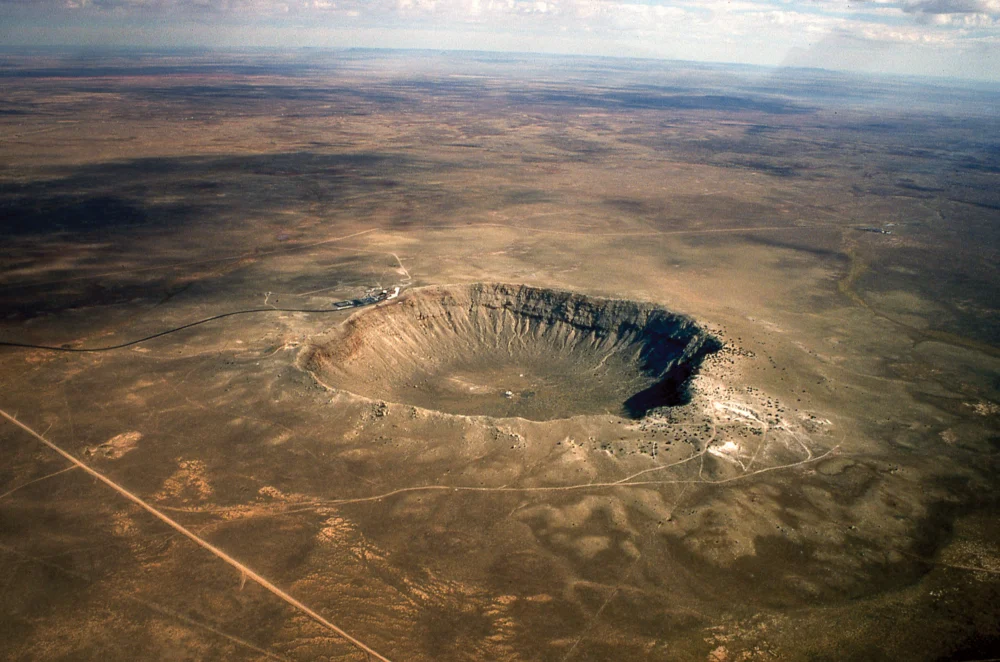
The vibrant jade plumes of the Colorado River carve a majestic path through Marble Canyon, a dramatic prelude to the deeper Grand Canyon, where towering terracotta cliffs silently guard secrets of an Earth far removed from human comprehension. This seemingly tranquil stretch, often the starting point for intrepid rafters embarking on journeys through one of the world’s most iconic geological wonders, once lay submerged beneath a vast, ancient lake, a dramatic transformation now attributed to a celestial impact nearly 56,000 years ago. This revelation, detailed in a recent study published in Geology, paints a vivid picture of a landscape profoundly altered by an event far beyond human scale, showcasing the dynamic and often violent forces that have sculpted our planet over "deep time."
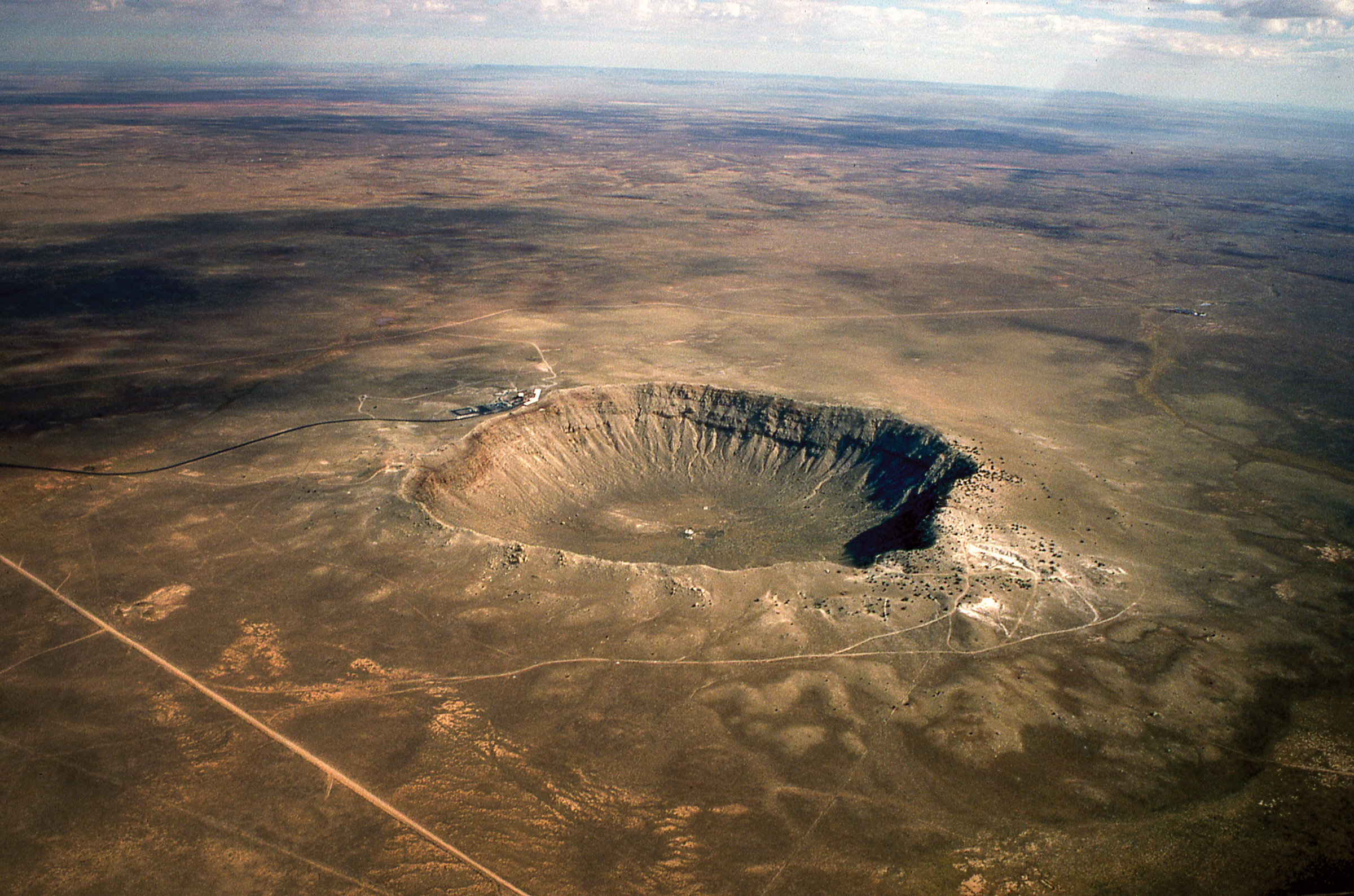
Imagine this serene canyon 56 millennia in the past, a time when the very ground beneath your feet might have trembled violently as a colossal asteroid streaked across the sky. This extraterrestrial projectile ultimately slammed into the Arizona desert approximately 100 miles southeast of the canyon, leaving behind the immense, perfectly preserved scar known today as Meteor Crater, or Barringer Crater. Now, retired University of New Mexico geologist Karl Karlstrom and his team propose a compelling connection: the seismic shockwaves from that distant impact reverberated through the Earth’s crust, destabilizing the canyon walls and triggering a massive landslide that plunged into the nascent Colorado River. This deluge of rock and debris formed a colossal natural dam, an ephemeral barrier that would reshape the canyon’s hydrology for an unknown period.
The consequences were profound. Behind this newly formed barrier, the mighty Colorado River began to back up, its waters swelling to create an enormous paleolake. This ancient body of water stretched for over 50 miles, reaching almost to the site of present-day Lees Ferry. Its surface rose nearly 300 feet above the modern river level, inundating countless side canyons and subterranean caves, leaving behind distinctive sediment layers and stranded driftwood that would baffle geologists for decades. The scale of this prehistoric impoundment was comparable to today’s Lake Mead, a critical modern reservoir in the region, offering a stark reminder of nature’s capacity for engineering on a grand scale. The initial reaction from seasoned geologists, such as Kyle House of the Arizona Geological Survey, encapsulated a widespread sentiment: "No way. How could it have taken this long to figure this out?" The idea seemed too monumental to have remained hidden.
The seeds of this groundbreaking discovery were planted much earlier. In the 1960s, a team including Karlstrom’s father, also a geologist, explored Stanton’s Cave, a cavern located approximately 32 miles downstream from Lees Ferry. Inside, they encountered deposits of loose sediment and fragments of driftwood perched almost 150 feet above the contemporary riverbed. Richard Hereford, a geologist with the U.S. Geological Survey, later put forth a hypothesis: these findings indicated that the river must have been dammed at some point, forming a significant lake. However, with limited corroborating evidence beyond Stanton’s Cave and a highly speculative ancient dam site near Nankoweap Canyon, 20 miles further downstream, the younger Karlstrom admits he "never believed [Hereford’s] story, frankly." The puzzle pieces simply did not fit convincingly enough.
The true breakthrough arrived in 2019, driven by advancements in analytical techniques. Researchers in Australia and New Zealand re-analyzed the driftwood samples collected decades earlier from Stanton’s Cave. Using state-of-the-art radiocarbon dating methods, they recalibrated its age from the previously estimated 43,700 years to approximately 56,000 years old. This new figure immediately captured attention. One of the collaborating scientists, who had recently visited Meteor Crater, recalled that its formation was also dated to around 56,000 years ago. The uncanny temporal alignment sparked intense curiosity, prompting the international team to invite Karlstrom, with his decades of intimate knowledge of the canyon’s geology gained from both academic research and guiding river trips since the 1970s, to join their investigation. As they meticulously sifted through the canyon’s myriad caves, many of which Karlstrom knew intimately, he began to embrace the ancient lake hypothesis. The sediment-choked nooks and crannies, found at elevations that could only be explained by a dramatically higher water level, provided compelling evidence. However, establishing a definitive causal link between the lake and the distant meteor impact remained the critical, and most challenging, next step.

Unraveling Earth’s deep past demands a rigorous, multi-faceted scientific approach, akin to building an intricate legal case where evidence must align perfectly across different timelines. Geologists employ a diverse toolkit of dating methods, each calibrated for specific temporal windows in Earth’s history. Radiocarbon dating, a cornerstone technique, reliably dates organic materials up to approximately 50,000 years old. Karlstrom noted, "We were pushing the limits" with the driftwood samples. To bolster their findings and extend their temporal reach, the team incorporated luminescence dating of cave sediments. This technique measures the time elapsed since sediment grains were last exposed to sunlight, providing another independent clock. Crucially, the ages derived from both radiocarbon and luminescence dating, when accounting for their inherent margins of error, exhibited a remarkable overlap with the independently established age of Meteor Crater, which itself had been dated using multiple complementary methods. This convergence of evidence from disparate sources forms the bedrock of their argument.
Ryan Porter, a geologist at Northern Arizona University not directly involved in the study, acknowledges the compelling nature of the findings. "They do make a pretty strong case," he commented, while also wisely noting that aligned ages alone cannot definitively exclude other potential triggers for the landslide, such as a major earthquake or even an unusually large, naturally occurring cliff collapse. However, when pressed on whether a meteor impact of that magnitude could realistically have caused a landslide in the Grand Canyon at that distance, Porter’s response was unequivocal: "Oh, 100%. There’s no question about that." This expert consensus underscores the immense energy released by such an extraterrestrial event and its far-reaching geological consequences. Karlstrom himself articulated the fundamental principle guiding such investigations: "In geology, you don’t absolutely prove. You eliminate other possibilities." This iterative process of hypothesis testing and elimination is central to advancing our understanding of Earth’s complex history.
Piecing together the evidence, a dramatic sequence of events emerges. When the asteroid, estimated to be roughly 50 meters in diameter, slammed into the Kaibab Limestone formation — the same geological layer that forms the prominent rim of the Grand Canyon — it unleashed an explosive force equivalent to a magnitude 5.4 earthquake. This colossal impact generated powerful seismic waves that radiated outward, gradually weakening but still retaining significant destructive potential as they reached Marble Canyon, approximately 100 miles away. Here, the ground shaking would have registered at roughly magnitude 3.5, a level still potent enough to dislodge massive blocks of the brittle Kaibab Limestone and other debris. This catastrophic cascade created the natural dam at Nankoweap Canyon, transforming the Colorado River’s flow, causing it to slacken, and initiating the formation of the immense paleolake that would temporarily redefine the canyon’s aquatic landscape.

The discovery of this ancient, asteroid-triggered dam and lake fundamentally reshapes our understanding of the Grand Canyon’s dynamic geological history, revealing a past far more volatile and dramatically influenced by extraterrestrial events than previously conceived. It underscores the profound and often surprising ways in which landscapes are sculpted not only by gradual processes of erosion and uplift but also by sudden, catastrophic occurrences. This event, occurring during the late Pleistocene epoch, highlights how rapidly and dramatically environmental conditions can shift, creating temporary features that leave enduring, albeit subtle, geological signatures.
The study also offers intriguing parallels and lessons for the modern era. Today, the Southwest relies heavily on monumental engineering feats like Glen Canyon and Hoover Dams, which provide crucial water and power to a parched region. However, these human-made barriers, while vital, are not immutable. They face constant challenges from sediment accumulation, seismic activity, and the relentless erosive power of water. No dam, natural or artificial, lasts forever. The ultimate fate of the ancient landslide dam in Marble Canyon — how long it endured, and whether it failed gradually or catastrophically through a sudden outburst flood — remains one of the Grand Canyon’s many lingering geological mysteries. Further research into this paleolake and its demise could provide invaluable insights into the long-term stability and eventual failure mechanisms of both natural and man-made impoundments, reminding us that even in the seemingly unchanging grandeur of the Grand Canyon, the Earth’s story continues to unfold, revealing new chapters of its deep and complex past.