Rocky Gerung
Ranchers across the American West are required to renew permits every decade for their livestock to graze on millions of acres of public land, a process that presents a critical opportunity for government agencies to assess and address the environmental impacts of grazing. The Bureau of Land Management (BLM) and the U.S. Forest Service, custodians of the majority of these public lands, are legally mandated to review each permit. This review process determines whether to impose additional conditions to mitigate environmental harm or, in rarer instances, to deny permit renewal altogether. However, a 2014 congressional mandate allows these agencies to automatically renew permits for another ten years if they fail to complete their reviews within the stipulated timeframe. This legislative provision has significantly diminished the oversight applied to the environmental consequences of livestock grazing on public lands, leading to a demonstrable decrease in rigorous environmental scrutiny.
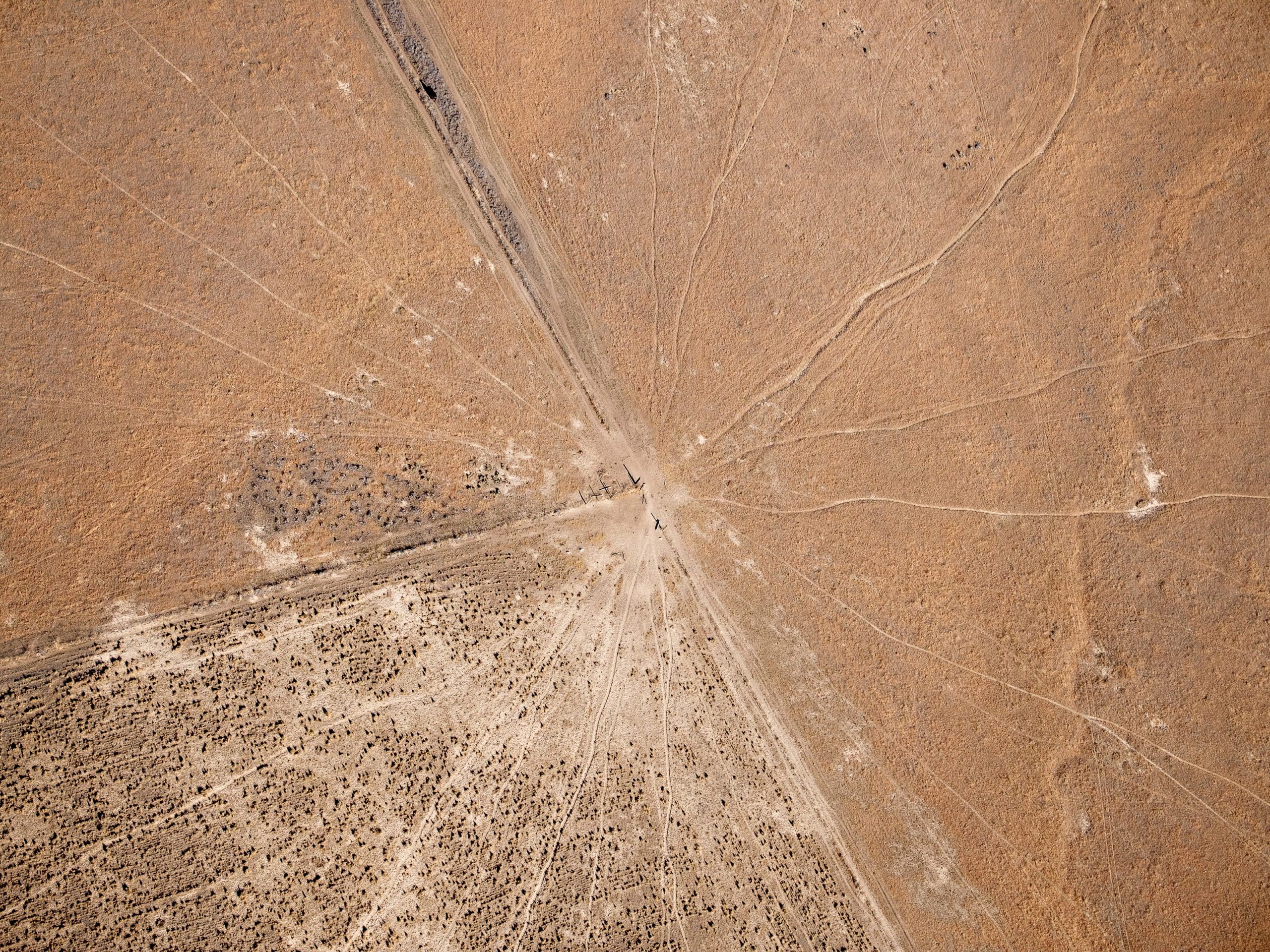
An analysis of agency data conducted by ProPublica and High Country News revealed a stark trend: in 2013, the BLM authorized grazing on nearly half of its lands accessible to livestock without conducting an environmental review. A decade later, this figure had escalated to approximately 75% of BLM-managed acreage, leaving a substantial portion of public land subject to grazing without adequate environmental assessment. Similarly, a study by the Western Watersheds Project documented a steep decline in environmental reviews for grazing lands managed by the Forest Service. This erosion of oversight has occurred concurrently with a significant reduction in the number of federal employees tasked with conducting these crucial reviews and broader land-health assessments, which are vital for identifying potential changes needed to protect natural resources.
The capacity of the BLM to monitor and assess these lands has been further hampered by a substantial decrease in its rangeland management staff. According to data from the Office of Personnel Management, the agency’s rangeland management workforce experienced a 39% reduction between 2020 and 2024. Compounding this issue, agency records indicate that approximately one in ten rangeland staffers departed the BLM in the months following the November election leading up to June, suggesting a potential impact from administrative changes. When agency staff are insufficient to monitor grazing activities, livestock can stray into prohibited areas, exceed permitted numbers, or graze for extended periods beyond what is authorized.

The consequences of such inadequate oversight are far-reaching and detrimental to ecosystem health. Overgrazing can lead to the proliferation of invasive plant species, which outcompete native vegetation and increase the risk of wildfires. When livestock strip away vegetation near waterways, sediment is washed into rivers and streams, disrupting critical fish spawning grounds. Furthermore, without adequate staff to amend permits, agencies miss vital opportunities to reduce livestock numbers on allotments, thereby failing to curb the emission of climate-warming methane, a potent greenhouse gas produced by ruminant animals. Once a permit is renewed, whether through a thorough review or an automatic extension, rectifying these environmental harms becomes considerably more challenging for the subsequent decade.
Interviews with ten current and former BLM rangeland management employees revealed a pervasive sense of pressure to be lenient with ranchers. These individuals reported instances of downplaying environmental damage during permit reviews and land-health assessments. Several of these employees spoke on condition of anonymity, citing their continued employment with the government. One BLM employee remarked that while "sometimes the truth was spoken, but, more often than not, it was not the truth," referring to the agency’s oversight practices. In response, an agency spokesperson stated that "The BLM is committed to transparency, sound science, and public participation as it administers grazing permits and considers updates to grazing regulations."

A notable shift occurred during the Trump administration, which placed the final approval authority for all BLM contracts and agreements of significant value in the hands of political appointees, bypassing career civil servants. Recent records obtained by ProPublica and High Country News indicate that funding cuts have been implemented for various programs essential to land management and restoration. These include an application that assists ranchers in collecting soil and vegetation data for permitting processes, contractors who manage data informing grazing permits, New Mexico farmers cultivating seeds for restoration projects, and soil research initiatives in the Southwest. Official documentation for these cancellations often cited a lack of perceived necessity for meeting administration priorities. The Forest Service did not provide comment on these matters. The White House referred inquiries to the U.S. Department of Agriculture, which issued a statement asserting that "Ranching is often a multi-generation practice that serves to keep working landscapes intact, while also preserving open space, and benefiting recreation, wildlife, and watersheds."
To comprehend the tangible effects of this declining oversight, ProPublica and High Country News undertook a tour of federal grazing allotments in Arizona, Colorado, Montana, and Nevada, encountering evidence of unpermitted grazing or habitat degradation attributed to livestock in each state. In Arizona alone, journalists observed such issues across multiple national conservation areas, a national monument, and a national forest. Within the Las Cienegas National Conservation Area in Arizona, a vast expanse of desert grasslands and forested streams southeast of Tucson, the BLM permits up to 1,500 head of cattle to graze across approximately 35,000 acres. These permits were recently reauthorized until 2035, utilizing the exemption that bypasses environmental reviews. During a visit in late April, a vital riparian corridor, home to a diverse array of wildlife including birds, frogs, snakes, and ocelots, and designated as critical habitat for five threatened or endangered species, showed clear signs of livestock intrusion. A thin barbed-wire fence intended to exclude cattle from the creekbed lay broken and disregarded.

The scene was one of ecological distress: a native leopard frog launched itself from a hardened cow hoof imprint into water contaminated with fecal matter and the remains of a deceased cow. A small herd of cattle subsequently trampled through the creek, their hooves churning up soil and eroding the banks, sending silt into the water. Chris Bugbee, a wildlife ecologist with the Center for Biological Diversity, described the scene as "looks like a sewer," expressing deep concern over the destruction. Astonishingly, a 2024 BLM land-health assessment for this very allotment declared "ALL STANDARDS MET." A trail camera deployed by the agency, bearing its insignia, was positioned overlooking the creek, but a public records request for its data has yet to be fulfilled. While BLM data indicated no ranchers paid for grazing permits in this allotment last year, making the ownership of the cattle unclear, the Arizona Cattle Growers’ Association did not respond to requests for comment. Bugbee’s team has documented significant damage from livestock grazing along 2,400 miles of streams in the Southwest designated as critical habitat under the Endangered Species Act, with half of these waterways showing substantial degradation over the past eight years.
Conversely, proponents of grazing emphasize its potential ecological benefits. The livestock industry points to studies suggesting that grazing can enhance soil’s capacity to sequester carbon dioxide and, when managed appropriately, can improve habitat health and biodiversity. Frank Shirts Jr., who operates one of the largest sheep ranches on Forest Service land, highlighted how sheep consume invasive weeds and brush, effectively creating firebreaks. Retta Bruegger, a range ecologist at Colorado State University, noted that certain ecosystems, particularly those with higher precipitation or where plants co-evolved with large grazers, can sustain more intense grazing and even benefit from the ecological functions livestock provide. Bruegger advocates for focusing on individual producer performance rather than a blanket prohibition of grazing, but stressed that such evaluations necessitate adequate staffing for land monitoring.

The history of federal land management regarding grazing reveals a complex evolution. Following a century of intensive grazing that degraded public lands, a 1974 court ruling established that grazing permits were subject to environmental reviews. Congress then enacted legislation two years later mandating these decennial reviews. Over time, a backlog of permit reviews grew due to insufficient agency staff to cover the vast tracts of land managed by the BLM and Forest Service. Beginning around the year 2000, Congress intermittently granted temporary approvals for agencies to forgo these reviews. Western Republican lawmakers, supported by the livestock industry, subsequently championed legislation to formalize this exemption. In December 2014, this measure was incorporated into a defense spending bill and passed with bipartisan support, effectively creating what some conservationists now refer to as "the loophole."
Ironically, many within the livestock industry express dissatisfaction with the automatic renewal process. When permits are automatically renewed without review, the terms remain static, preventing ranchers from adapting their grazing practices to changing environmental conditions or implementing new management strategies. Chris Jasmine, manager of biodiversity and rangelands for Nevada Gold Mines, which operates extensive ranching operations in northern Nevada, stated that this practice "just locks people into grazing the same place, the same time, year after year." The intended process involves teams of BLM experts, including rangeland specialists, hydrologists, botanists, soil scientists, and wildlife biologists, assessing the health of grazing allotments to inform permit reviews. However, the current staffing shortages mean that large areas of land are not receiving this scrutiny. The BLM oversees 155 million acres of public lands available for grazing, yet it lacks records of completing land-health assessments for over 35 million acres, nearly a quarter of its total grazing lands.

Where assessments have been conducted, the BLM found livestock grazing had degraded at least 38 million acres, an area roughly equivalent to half the size of New Mexico. Furthermore, nearly two-thirds of the land previously classified as in good condition had not been evaluated in over a decade. The situation is exacerbated by the agency’s tendency to bypass permit reviews on land already in poor condition. Data indicates that 82% of acreage previously identified as degraded by livestock was reauthorized for grazing without an environmental review. Several BLM employees reported that supervisors often directed staff to focus on healthier land parcels, avoiding allotments in worse condition or those likely to attract litigation from environmental groups like the Western Watersheds Project or local stockmen’s associations. Automatic renewals thus serve as a mechanism to circumvent lengthy public disputes, with one staffer admitting it was "just using a bureaucratic loophole" that allowed "ongoing degradation of habitat." Bugbee of the Center for Biological Diversity lamented that such degraded parcels, likened to a "mowed lawn," cannot represent the future of public lands.
Agency staff cited numerous factors contributing to environmental degradation. For instance, after a wildfire, the BLM typically aims to keep livestock off the land for two years to allow for ecosystem recovery. However, ranchers frequently negotiate for an earlier return to grazing pastures, as noted by Steve Ellis, a former high-ranking official with both the BLM and Forest Service. Ellis indicated that "there was always pressure to get back on," characterizing it as an inherent aspect of working within the bureau. Government support for ranchers can also inadvertently contribute to environmental harm. Land management agencies sometimes seed invasive grasses that benefit livestock, and the eradication of predators like wolves and cougars, which play crucial roles in healthy ecosystems, is often undertaken to protect ranchers’ economic interests.

BLM employees also shared accounts of managers excising information about threatened and endangered species from reports, despite rank-and-file staff noting their presence, which would have necessitated stricter environmental controls. One staffer described permit reviews as mere "rubber stamping," with higher-ranking officials deliberately omitting negative findings from official documentation. Ranchers’ participation in fieldwork designed to assess grazing impacts also leads to compromised reviews and assessments, according to employees. Conversely, the livestock industry criticizes the assessment process for its perceived inflexibility, with Erin Spaur of the Colorado Cattlemen’s Association describing it as a "one-size-fits-all approach" that fails to adequately consider ecological variations. Dennis Willis, who spent over three decades with the BLM, including in rangeland management, pointed to "huge cultural problems within the agency" and a "real fear of dealing with grazing problems."
While some ranchers acknowledge the environmental footprint of their industry, they argue that greater flexibility, rather than stricter oversight, would empower them to become better land stewards. Jasmine of Nevada Gold Mines believes that responsible ranching can coexist with ecological health. He points to the recovery of Maggie Creek in Nevada as an example, where modified herd rotation practices implemented in the 1990s, with the guidance of a BLM biologist, led to significant land regeneration. Jasmine emphasized that grazing is a "renewable resource" that can thrive if managed properly, focusing on varied grazing locations and times. Nevada Gold Mines, backed by substantial corporate resources, can afford to implement such long-term management strategies.

However, smaller ranchers operate under tighter profit margins, making the lower cost of grazing on federal lands economically attractive, potentially encouraging heavier use. In response to widespread degradation and sensitive habitat concerns, some politicians and environmental groups have proposed programs to pay ranchers to retire their grazing permits, converting these lands into wildlife habitat. While some ranchers have accepted these buyouts, the industry generally remains hesitant to relinquish grazing rights. U.S. Representative Adam Smith (D-Wash.) recently introduced legislation aimed at expanding voluntary permit retirement programs, framing it as a "pragmatic solution that supports local economies, protects biodiversity, and saves taxpayer dollars." Louis Wertz, a spokesperson for the Western Landowners Alliance, articulated the desire of conservation-minded ranchers to maintain their livelihoods while coexisting with vibrant ecosystems that provide clean air and water. He acknowledged the inherent tension between achieving low-cost food production and meeting stringent environmental standards, noting that historical choices have often prioritized cheapness over environmental quality.
The ongoing challenges in managing federal grazing lands underscore the critical need for adequate staffing and robust environmental reviews. Without them, the long-term health of these vital public resources remains at risk, threatening biodiversity, water quality, and the resilience of Western landscapes.