Rocky Gerung
Stan Kroenke, a magnate whose estimated $20 billion net worth makes him one of America’s largest landowners and a prominent figure in professional sports with stakes in the Denver Nuggets and England’s Arsenal soccer club, benefits significantly from a foundational federal subsidy program, despite his immense wealth. Kroenke, whose wife is an heiress to the Walmart fortune, owns the Winecup Gamble Ranch in Nevada, a vast property encompassing grasslands, streams, and a mountain range. Through this ownership, he participates in a federal program that allows his cattle to graze on public lands at a fraction of the cost of private land leases, a benefit that dates back to the 1930s when such programs were established to combat the severe overgrazing that contributed to the Dust Bowl. Today, this program extends its advantages to a diverse group, including wealthy hobby ranchers, major corporations, mining companies, and utility providers, offering benefits far beyond the original legislative intent.
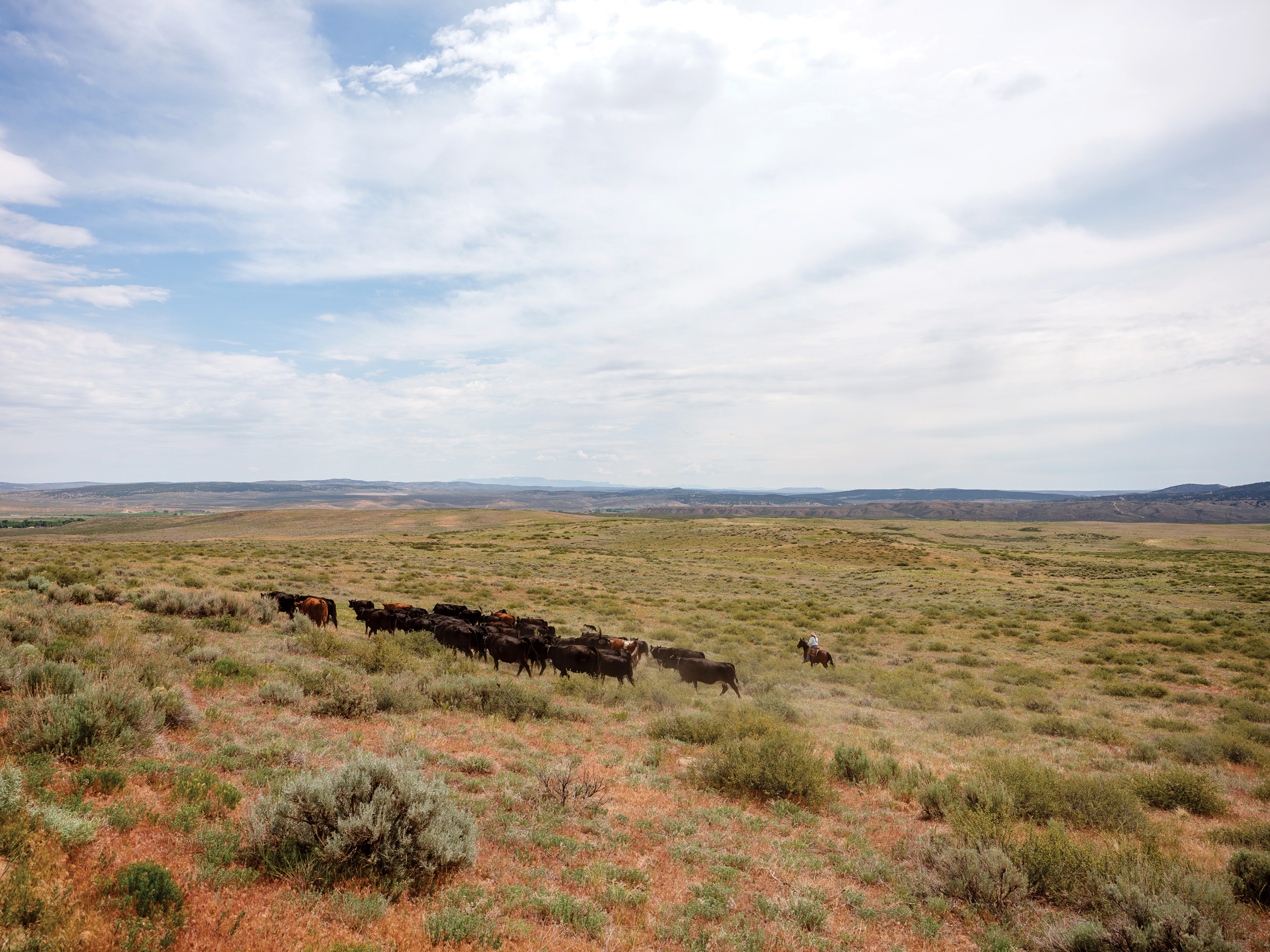
The Trump administration has signaled intentions to further enhance this program, proposing to open more of the 240 million acres of Bureau of Land Management (BLM) and Forest Service grazing lands to livestock while simultaneously reducing environmental oversight. This approach, proponents argue, aligns with broader economic goals, including stimulating the economy and reducing the national debt. Interior Secretary Doug Burgum articulated this perspective during his confirmation hearing, stating that federal lands represent America’s "balance sheet" and that restricting their use is akin to a company limiting its own financial potential.
Investigations by ProPublica and High Country News reveal a systemic transformation of the public lands grazing system into a substantial subsidy program. While Congress raised fees in the late 1970s to align with market prices, these rates have remained largely stagnant for decades. The government continues to charge ranchers a mere $1.35 per animal unit month (AUM) – the amount of forage a cow and her calf consume in a month – representing an average discount of 93% compared to private land grazing rates. This analysis further uncovered that in 2024 alone, the federal government allocated at least $2.5 billion to subsidy programs accessible to public-lands ranchers, not including the significant forage cost discount. These subsidies encompass a wide range of support, from disaster assistance for droughts and floods to affordable crop insurance, funding for essential infrastructure like fences and water sources, and compensation for livestock lost to predators.

The benefits of this expansive system disproportionately flow to a select few. Roughly two-thirds of all livestock grazing on BLM acreage is managed by just 10% of ranchers, a pattern mirrored on Forest Service lands where the top 10% of permit holders control over half of the grazing. This concentration of control is not a recent development; a similar study from 1999 by the San Jose Mercury News found that large ranchers held the same proportion of BLM grazing permits.
Meanwhile, the environmental impact of livestock grazing on public lands has seen a marked decline in agency oversight. Legislators have increasingly allowed for the automatic renewal of grazing permits, often without completing necessary environmental reviews or when land conditions are already flagged as poor. The Trump administration’s initiative to bolster the livestock industry directly supports ranchers like Kroenke, whose Winecup Gamble Ranch is advertised as spanning nearly one million acres, with over half of that acreage being federal public land capable of supporting approximately 9,000 head of cattle. Last year, Kroenke paid the government about $50,000 in grazing fees for his use of BLM land surrounding the ranch, an amount that represents an 87% discount from the market rate, according to an analysis of government data. This financial advantage is not new; previous owners of the ranch also benefited significantly. Before Kroenke, the property was owned by Paul Fireman, former CEO of Reebok, who utilized losses from affiliated companies for a $22 million tax write-off between 2003 and 2018. Even earlier, the ranch was owned by figures like Hollywood icon Jimmy Stewart. Despite these historical advantages, the BLM has identified the land used by Kroenke’s cattle as degraded due to overgrazing, though Kroenke’s representatives did not respond to requests for comment.

The Trump administration’s efforts to revise the federal grazing regulations, the first updates since the 1990s, have been conducted behind closed doors. In October, the administration released a document titled "Plan to Fortify the American Beef Industry," which outlines proposed amendments to grazing regulations governing permit acquisition and environmental damage assessment. The plan also calls for an increase in subsidies for drought and wildfire relief, predator compensation, and government-backed insurance for ranchers. The Forest Service and White House did not provide comment, but the U.S. Department of Agriculture stated that livestock grazing is a "federally and statutorily recognized appropriate land use" and a "proven land management tool" that reduces invasive species and wildfire risk, enhances ecosystem health, and supports rural stewardship. A BLM spokesperson echoed this, highlighting the agency’s commitment to a "healthy and economically viable grazing program" that benefits rural communities, supports ranching heritage, and promotes responsible stewardship.
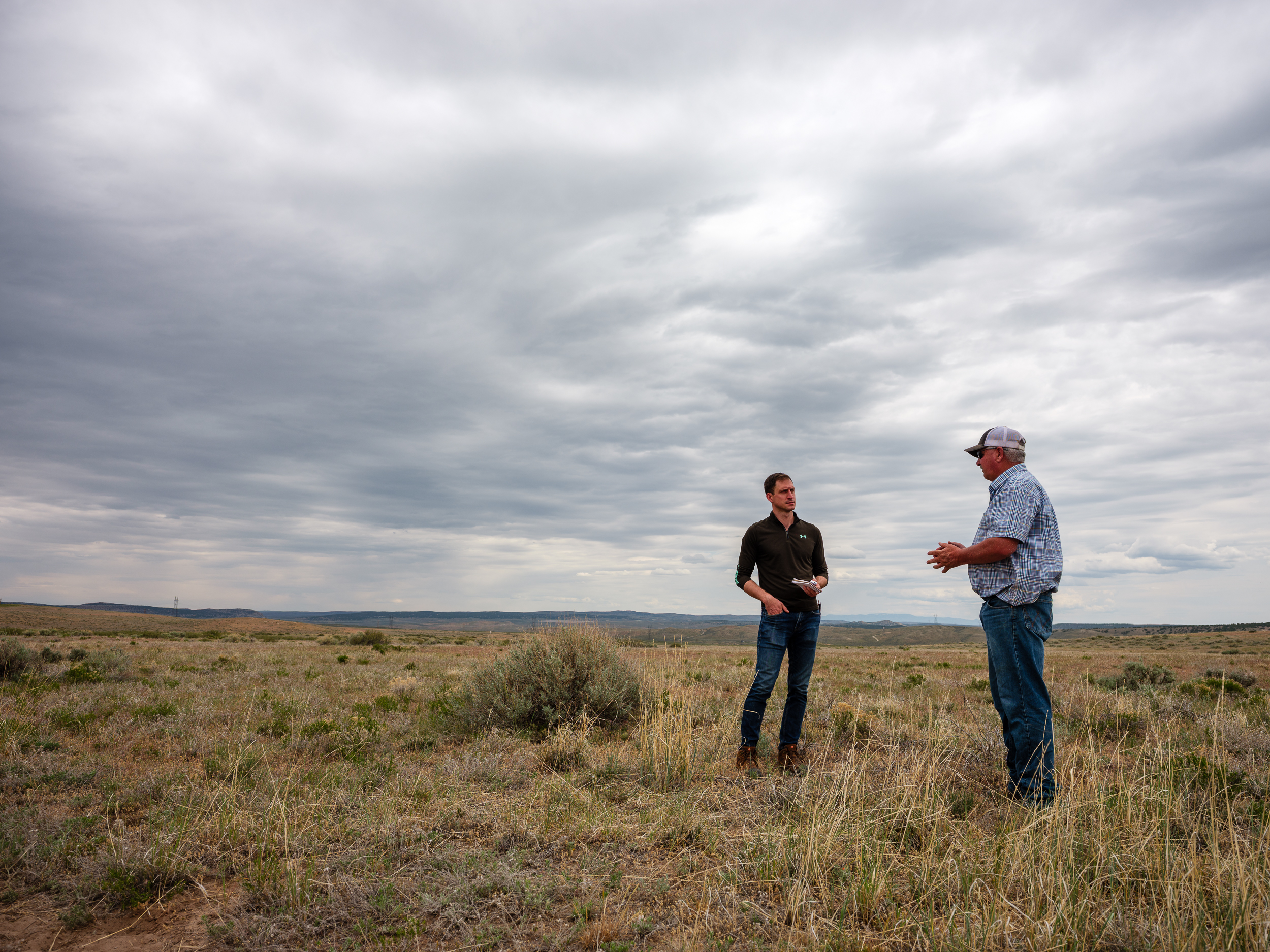
Ranchers argue that taxpayers benefit from their work, as public lands grazing can prevent private land from being developed. Bill Fales, a rancher in western Colorado whose family has managed their ranch for over a century, points out that wildlife, including elk, bears, and mountain lions, rely on these open ranch lands for habitat, especially as development encroaches elsewhere. Advocates for the livestock industry also emphasize its contribution to food production, as well as its role in preserving rural economies and a distinct American way of life. However, while public lands ranching sustains only about 2% of the nation’s beef cattle, it accounts for a substantial portion of the economic benefits derived from these programs.

The historical context of public lands ranching traces back to the mid-1800s, driven by expansionist policies and federal incentives. Unchecked grazing followed, leading to widespread environmental degradation. In response to the overgrazing that exacerbated the Dust Bowl, Congress passed the Taylor Grazing Act in 1934, establishing a permit system for leasing public lands. Subsequent legislation in 1976 and 1978 aimed to balance competing land uses and align grazing fees with market values. Despite these efforts, the current system disproportionately benefits large-scale ranchers.
The J.R. Simplot Co., a multinational agricultural conglomerate with roots as a family business, is the largest rancher on BLM land. The company significantly benefits from subsidized forage, paying $2.4 million below market rate to graze nearly 150,000 AUMs on federal lands last year. Across the industry, ranchers paid approximately $284 million less than the market rate for forage to the BLM and Forest Service combined. Fales, the Colorado rancher, relies on this cheaper forage, arguing that private leases are typically more productive and that public leases often require ranchers to cover infrastructure maintenance themselves. The overall cost to taxpayers, including the environmental impact of grazing, remains largely unquantified.

The capacity of federal agencies to monitor environmental damage has been significantly diminished. From 2019 through 2024, the number of BLM rangeland managers decreased by 39%, with further reductions occurring in subsequent years. This staff shortage leaves each remaining manager responsible for an average of 716 square miles, making comprehensive annual inspections virtually impossible.
The allure of public lands grazing extends to immensely wealthy individuals and corporations. Rupert Murdoch, the billionaire founder of Fox News, purchased the Beaverhead Ranch in Montana for $200 million. This ranch, along with a smaller property acquired in 2021, forms Matador Ranch and Cattle, which utilizes public lands leased from the Forest Service and BLM. Last year, Beaverhead paid less than $25,000 to graze on federal lands, a staggering 95% below market rate. Environmental assessments indicate that at least one of Beaverhead’s BLM allotments is failing to meet environmental standards due to grazing.

The benefits of public lands grazing are multifaceted, offering advantages beyond direct agricultural profits. Ultrawealthy families often acquire ranches for recreational pursuits, status, or as sound investments. Ranching operations can qualify for significant property tax breaks and business expenses can be deducted from federal taxes. Furthermore, federal agencies assign grazing permits to owners of nearby private ranches, known as "base properties," which inflates their value and provides a stable long-term investment. For instance, two-thirds of Murdoch’s Beaverhead Ranch, touted as 340,000 acres, is public land leased from federal agencies.
Other entities also leverage public lands grazing for strategic advantages. The Southern Nevada Water Authority, responsible for supplying water to the Las Vegas Valley, has acquired land and associated groundwater rights hundreds of miles from the city. These properties came with inherited public lands grazing permits, which the authority continues to manage as part of its property and resource stewardship. Mining companies are also significant participants, utilizing grazing permits to gain greater control over areas near their operations, particularly for access to mineral rights, water rights, and mitigation credits. Nevada Gold Mines, a joint venture between two of the world’s largest gold-mining companies, holds millions of acres of grazing permits surrounding its operations, enabling participation in environmental restoration programs that yield valuable credits.

In central Nevada’s Reese River Valley, the remnants of the Hess Ranch stand as a testament to a company called BTAZ Nevada, which has assembled a vast livestock operation spanning roughly 4,000 square miles of public lands. Owned by the Barta family, which also operates Sav-Rx, BTAZ is a major beneficiary of the public lands grazing system. Last year, BTAZ paid the government $86,000 for grazing rights, nearly $679,000 less than the market rate. Evidence of environmental degradation, including degraded creeks and trampled vegetation, has been documented on BTAZ’s allotments, impacting ecosystems that once supported native species like the Lahontan cutthroat trout.
While smaller ranchers have access to many of the same subsidies, they face significant economic challenges. An analysis of agency data shows that the bottom half of permittees manage less than 4% of AUMs on BLM land and less than 10% on Forest Service land. These smaller operations struggle with economies of scale, are more vulnerable to climate change impacts like drought, and face increasing competition from over 70,000 wild horses and burros for forage. Furthermore, consolidation in the meatpacking industry, where the four largest operations control over 80% of the market, allows them to dictate lower prices to ranchers.

Critics argue that the federal government’s continued financial support for ranchers who would otherwise cease operations is unsustainable and offers little benefit to taxpayers. This system is described as a "tyranny of the minority," where substantial government assistance props up an industry that is not economically viable on its own. The potential consequences of ending these subsidies include the closure of rural businesses and the consolidation of private land ownership, potentially by large operators or developers.
Mike and Danna Camblin, small-scale ranchers in northwest Colorado, rely on subsidized drought insurance and federal land grazing to remain profitable, even with record beef prices. They acknowledge that government assistance "tethers us to those subsidies," and that larger ranches, in particular, have become dependent on them. While they practice environmental stewardship, including soil and plant health monitoring and pasture rotation, these efforts incur additional costs. They utilize technologies like virtual fencing to manage their herds, which, while innovative, also represents a significant expense. Economists suggest reimagining federal grazing subsidies to benefit the public rather than enrich the wealthiest ranchers, proposing solutions such as subsidizing co-ops for smaller operators, capping below-market rate forage leases, and ending disaster payments for persistent climate-related droughts. While ending all public support could have detrimental effects on rural communities and landscapes, including potentially jeopardizing smaller ranching operations, there is a growing consensus that the current system requires fundamental reform to ensure it serves the broader public interest.