Joko Susilo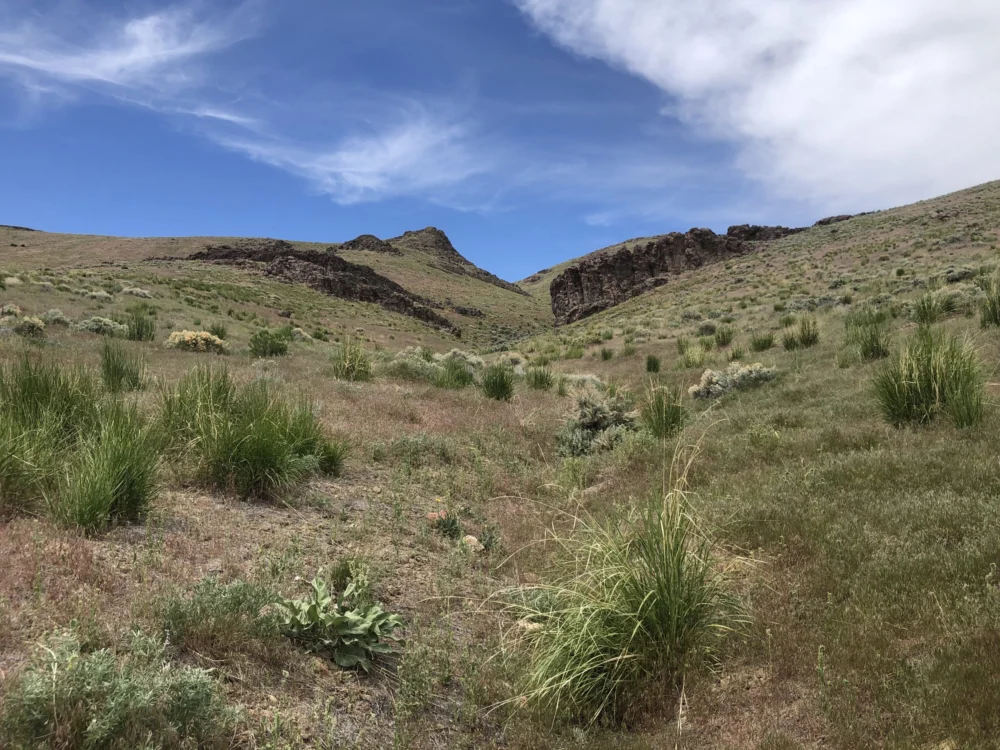
A top Department of Interior official, Karen Budd-Falen, has come under scrutiny for undisclosed financial ties to the contentious Thacker Pass lithium mine in northern Nevada, a project the Trump administration aggressively fast-tracked and later secured an equity stake in. These revelations, stemming from a recently obtained financial disclosure, raise significant questions about potential conflicts of interest as the federal government continues to champion the mine’s development amid a global race for critical minerals.
Budd-Falen, currently serving as Associate Deputy Secretary to Interior Secretary Doug Burgum, previously held a high-ranking legal position within the Department of Interior during the first Trump administration. Her financial disclosure, released after an unexplained delay, details extensive family land holdings, including Home Ranch LLC, a Nevada ranching operation valued at over $1 million. Public records from Nevada’s business search database identify Frank Falen, Karen Budd-Falen’s husband, as the manager of Home Ranch LLC as recently as February 2022.

The direct financial link emerged in November 2018, shortly after Budd-Falen joined the Trump administration. According to a Securities and Exchange Commission (SEC) filing, Home Ranch LLC entered into an agreement to sell crucial water rights to Lithium Nevada Corporation, the subsidiary of Canadian mining giant Lithium Americas responsible for developing the Thacker Pass mine. While the exact financial terms of the water rights sale remain undisclosed, Frank Falen is explicitly listed on the document. Further amplifying these connections, a July 2021 monitoring plan for Thacker Pass, submitted by Lithium Nevada to federal regulators during Trump’s initial term, indicated the company’s intent to utilize existing stock water wells owned by Home Ranch LLC to "monitor potential drawdown impacts" from its mining operations. This arrangement directly implicates the official’s family enterprise in the mine’s operational planning and environmental management.
Thacker Pass, known as Peehee Mu’huh to the Paiute Shoshone people, represents one of the largest known lithium deposits globally, a vital component for electric vehicle batteries, grid-scale energy storage, and a myriad of high-tech industries. The urgency to secure domestic lithium supplies has intensified amidst escalating geopolitical tensions and supply chain vulnerabilities, particularly concerning China’s dominance in critical mineral processing. However, the proposed $2.2 billion open-pit mine, encompassing some 5,700 acres of public land, has ignited fierce and sustained opposition from Indigenous tribes, environmental organizations, and local communities. Opponents contend that the mine poses severe threats to scarce water resources in an arid region, jeopardizes endangered species, and desecrates sacred ancestral lands, including a site where an 1865 massacre of at least 31 Paiute people occurred.
During her earlier tenure at the Interior Department, Budd-Falen’s official calendar notably lists a November 6, 2019, meeting for "lunch with Lithium Nevada." This meeting occurred precisely when Lithium Nevada, a subsidiary of Lithium Americas, was actively seeking expedited federal approval for its Thacker Pass project. The Trump administration ultimately granted this swift approval, with the Bureau of Land Management (BLM) issuing a Record of Decision for the mine in January 2021, just days before the administration concluded its term. The timing of this interaction, coupled with her family’s financial stake, raises critical questions about whether Budd-Falen’s official duties intersected with her personal financial interests.

Budd-Falen’s background as a prominent figure in the "Sagebrush Rebellion" movement, advocating for reduced federal land ownership and greater state and local control, adds another layer of complexity. She was considered to lead the BLM during the first Trump term but reportedly declined the director position in 2018, citing the requirement to divest her family’s ranching interests to avoid conflicts of interest. This previous decision underscores her awareness of the ethical considerations surrounding public service and private financial holdings, making her current situation even more perplexing for observers.
Since its return to power, the Trump administration has reaffirmed its commitment to advancing the Thacker Pass project, framing it as a cornerstone of its broader strategy to bolster critical mineral mining within the United States. In a significant development last September, the administration struck a deal with Lithium Americas, taking a 5% equity stake in both the Thacker Pass mine and the parent company itself. This move was made in exchange for the release of loan money from the Department of Energy, signaling direct federal investment and a deep commitment to the project’s success. Such direct government equity ownership in a private mining venture is an unusual step, highlighting the perceived national strategic importance of Thacker Pass.
Despite her influential position, Budd-Falen has largely operated behind the scenes at the Interior Department. Crucially, the Interior Department has yet to release her ethics agreement, a standard document for high-ranking officials that would delineate any specific companies or projects from which she must recuse herself due to potential conflicts. This lack of transparency has intensified calls for greater accountability.

Kyle Roerink, executive director of the Great Basin Water Network, a prominent water conservation group in Nevada, articulated these concerns, stating, "Did she have any oversight of the environmental review process regarding Thacker Pass? It is a big question. If she didn’t recuse herself, it would fly in the face of the impartial decision-making that Americans expect from government officials." The absence of a publicly available ethics agreement leaves a void of information, preventing the public and oversight bodies from understanding the scope of her official duties relative to her financial interests in a project directly impacted by Interior Department decisions.
The unfolding situation at Thacker Pass exemplifies the intricate challenges and ethical dilemmas at the intersection of national energy policy, environmental protection, Indigenous rights, and government transparency. As the global demand for lithium continues to surge, driven by the imperative to transition to cleaner energy sources, the ethical conduct of officials involved in critical mineral extraction projects will remain under intense scrutiny, underscoring the delicate balance between economic development and public trust.