Rocky Gerung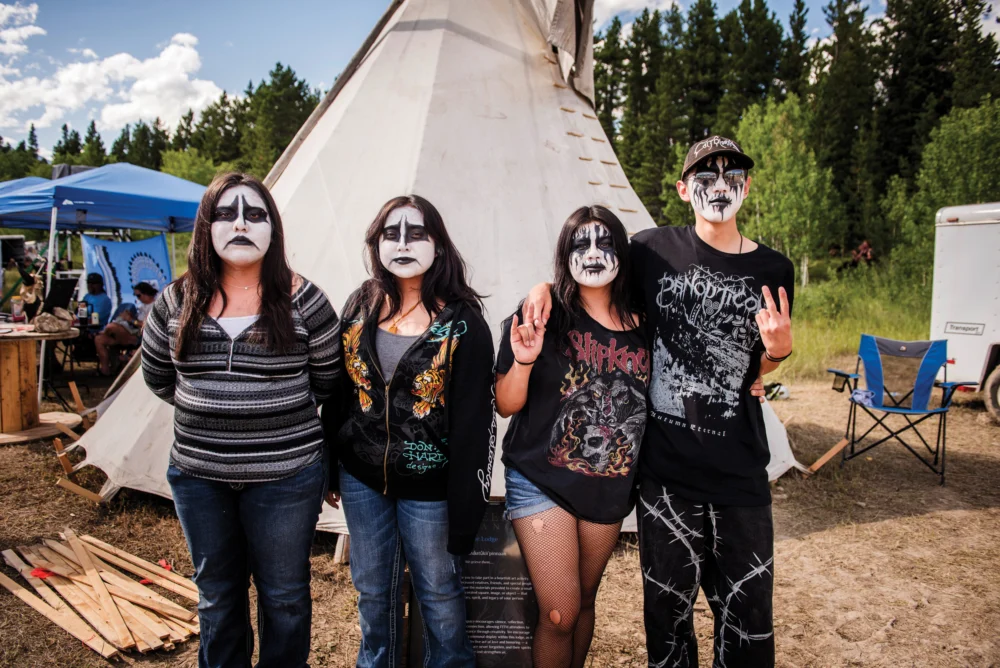
In the rugged beauty of Montana’s Blackfeet Nation, an unlikely convergence of heavy music, Indigenous culture, and profound healing is forging new pathways for a community grappling with deep-seated challenges. This summer, the annual Fire in the Mountains festival transformed a scenic lakeside amphitheater into a vibrant hub, not just for fans of extreme sounds, but as a testament to the power of music to connect, console, and inspire. The festival, and the educational initiatives surrounding it, have become a beacon of hope, offering solace and a sense of belonging to a generation facing immense pressure.

The journey to this transformative event began in the classrooms of Buffalo Hide Academy, an alternative high school in Browning, Montana, the heart of the Blackfeet Nation. Amidst the dust and resilient spirit of this high-plains community, educators like Robert Hall, a Piikunii man and music teacher, and Charlie Speicher, a clinical counselor and the school’s director, recognized a potent, often overlooked, outlet for their students. They launched a semester-long heavy music symposium, a unique curriculum designed to explore the diverse world of metal and hardcore. This wasn’t about simply listening to loud music; it was about dissecting its intricacies, understanding its cultural contexts, and, most importantly, harnessing its therapeutic potential.
Speicher, adorned in his signature battle vest, emblazoned with the iconic artwork of Converge’s Jane Doe, explained the symposium’s core mission: to create a safe space for students, many of whom felt isolated or marginalized, to process their emotions. He acknowledged the dark realities faced by the community, stating, "We don’t turn away from the darkness. We don’t hide our own ugliness." The town itself, with its stark beauty juxtaposed against vacant buildings, mirrors the complex emotional landscape many of the students navigate. Yet, Hall emphasized the immense beauty that endures: the vibrant murals, the strong family networks, the rich ancient history, and the unifying power of their language, all threads binding generations together.

The curriculum delved into the sonic landscapes of genres like mathcore, described by Speicher as "bonkers" and "all over the place." Students analyzed the complex interplay of instruments, the raw power of vocals, and the socio-political commentary embedded within the music. They explored the connection between music and place, discussing how environments shape sonic expressions, from the icy forests inspiring black metal to the urban decay that fuels hardcore. Beyond musical theory, the class fostered critical thinking, examining the complex relationship between art and artist, and how heavy music has historically engaged with societal issues, from war and protest to personal struggles.
The symposium’s impact quickly transcended the classroom. Initially enrolling over fifty students, the program became so popular that others began sneaking into classes to join. This burgeoning interest was directly linked to the urgent need for support systems within the community. The arrival of COVID-19 in 2020 coincided with a devastating wave of suicides that swept through the Blackfeet Nation, claiming young lives, some as young as eleven. This tragedy galvanized a group of educators and community members, including Speicher, Hall, and Nicholas Rink, who teaches Blackfeet studies and language, to form the Firekeeper Alliance. Their goal was simple yet profound: to build a protective shield around their youth, much like a ceremonial fire guarding against the cold and darkness.

The Firekeeper Alliance saw an opportunity to amplify their efforts by collaborating with the Fire in the Mountains festival. Originally priced out of its Jackson, Wyoming, home, the festival’s organizers were seeking a new venue. Speicher proposed bringing the festival to the Blackfeet Nation, integrating student internships to provide tangible career pathways within the music industry. The Blackfeet Tribal Business Council, long supportive of youth through athletics, saw the potential in this unconventional artistic endeavor. Councilman Everett Armstrong expressed his support, noting the initiative offered a "different route to give our youth something that they can open our minds to, open our hearts to, find themselves." Beyond cultural enrichment, the festival also held economic promise for a reservation that has historically seen much of its tourism revenue bypass the community.
Securing major musical acts was crucial to the festival’s success. In August 2024, the Firekeepers traveled to Colorado to meet with the renowned Norwegian folk band Wardruna. Their mission was to convince the band to headline the festival on the Blackfeet Nation. Einar Selvik, Wardruna’s lead singer, was already receptive, having spoken with Speicher. The band saw the festival as more than just a musical event; it was "a chance to stand with the Indigenous in a constructive, powerful way," a sentiment that resonated deeply with their own cultural explorations and the festival’s underlying purpose. The alignment of Nordic and Piikunii traditions, particularly in their shared animistic beliefs, made the proposition even more compelling.

As July approached, the small town of East Glacier Park, Montana, buzzed with anticipation as Amtrak trains delivered a diverse crowd of metal enthusiasts to the festival’s doorstep. Despite the recent passing of metal legend Ozzy Osbourne, a somber yet unifying moment for the community, the atmosphere was optimistic. The festival grounds, nestled beside Two Medicine Lake, were transformed into a vibrant space. A profound cultural exchange began not with a land acknowledgment, but with a traditional Piikunii welcome ceremony. As local dancers in full regalia moved to the rhythm of the drums, hundreds of metalheads watched in respectful silence, many encountering Indigenous culture for the first time. This moment culminated in an intertribal dance, where metal fans, initially hesitant, joined in, creating a unique, slow-motion mosh pit of shared movement and burgeoning understanding.
The festival’s commitment to a dry, alcohol-free environment was a deliberate choice, a departure from typical metal festival culture. This fostered a different kind of energy, one focused on genuine connection and shared experience. Logan Mason, a volunteer who traveled from Spokane, shared how metal had been instrumental in his own journey through depression following the loss of his brother and nephew to suicide. He spoke of the isolation of being an Indigenous person who gravitated towards genres like black and death metal, and how the festival provided a space where such passions were not only accepted but celebrated. Meg Skyum, from Ontario, echoed this sentiment, noting that both Indigenous communities and metal fans often exist on the fringes of mainstream society, creating a natural kinship.

The music itself served as a powerful conduit for healing. Tomas Falomir, of Ojibwe, Hopi, and Zuni Pueblo descent, described the metal community as a welcoming sanctuary for those who have experienced struggle. He noted the resonant connection between the genre’s intensity and Indigenous musical traditions, suggesting that the powerful rhythms and vocals offered a modernized echo of ancestral sounds. This sentiment was further amplified by bands like Tzompantli, a death/doom project that incorporated traditional and contemporary drums, and the Norwegian band Wardruna, whose deep connection to Nordic culture mirrored the spiritual grounding many Indigenous people find in their heritage.
Damien Jones Jr., from the Navajo Nation, highlighted the role of historical trauma in drawing many Indigenous individuals to metal. "A lot of people are into metal because of how much trauma that we go through in our daily lives," he explained, finding an outlet for his own emotions, much like he does with his saxophone, in the music. His battle vest, adorned with turquoise and a "Frybread Power" patch, was a visible testament to this fusion of identity and musical passion.

The festival’s main stage saw performances that ranged from the raw energy of Sage Bond, an acoustic metal singer-songwriter who delivered a captivating set that belied her festival debut, to the intense artistry of Pan-Amerikan Native Front, who invited students to join them on stage, waving a Blackfeet Nation flag. The band members themselves expressed deep gratitude for the opportunity to connect with the youth, seeing themselves reflected in the teenagers’ passion. Heather Jordan, a Navajo Nation musician performing with her duo Liith, spoke of the festival’s spiritual draw and the importance of creating a space that celebrated Indigenous culture alongside her music. Jon Krieger of Blackbraid, a Native black metal project that gained rapid popularity, spoke of the genre’s spiritual depth and its shared anti-Christian ethos with many Indigenous beliefs.
A powerful moment occurred during Converge’s electrifying set when frontman Jacob Bannon invited a Piikunii youth onto the stage to sing a chorus of "Dark Horse," a powerful symbol of intergenerational connection and shared resilience. The festival grounds, a landscape of natural beauty interspersed with stages, vendor tents, and gathering spaces, became a sanctuary. Workshops and panels addressed crucial issues such as Indigenous sovereignty, ethnobotany, and the epidemic of missing and murdered Indigenous people, alongside discussions on the therapeutic power of heavy music.

As the final day dawned, a sudden thunderstorm swept through the festival, plunging the grounds into darkness and forcing an evacuation. Yet, even amidst the chaos, the spirit of the festival endured. As the rain subsided, the crowd reassembled around a bonfire, and the unmistakable opening riff of Black Sabbath’s "War Pigs" echoed through the night. The spontaneous singalong, amplified by the returning stage lights and the drumming of Piikunii high schoolers, became a collective catharsis, a powerful tribute to the enduring legacy of metal and the resilience of its fans. The storm, rather than dampening spirits, seemed to intensify the shared experience, a reminder of the raw, unpredictable forces that heavy music often channels.
The festival’s conclusion was marked by the highly anticipated debut of Old Man’s Child in the United States, their performance a spectacular culmination of the weekend’s journey. As the night sky cleared, revealing the celestial bear constellation, the music and the shared experience created a profound sense of unity. Fans and musicians alike spoke of the festival as a "transformational" and "life-changing" event, a testament to the power of music to bridge divides and foster healing. For many, it was a "strange road to joy," a path forged through darkness and uncertainty, leading to unexpected connection and profound hope. The Fire in the Mountains festival has not only brought a global music genre to a historically underserved community but has also ignited a vital conversation about mental health, cultural exchange, and the enduring power of shared experience.