Rocky Gerung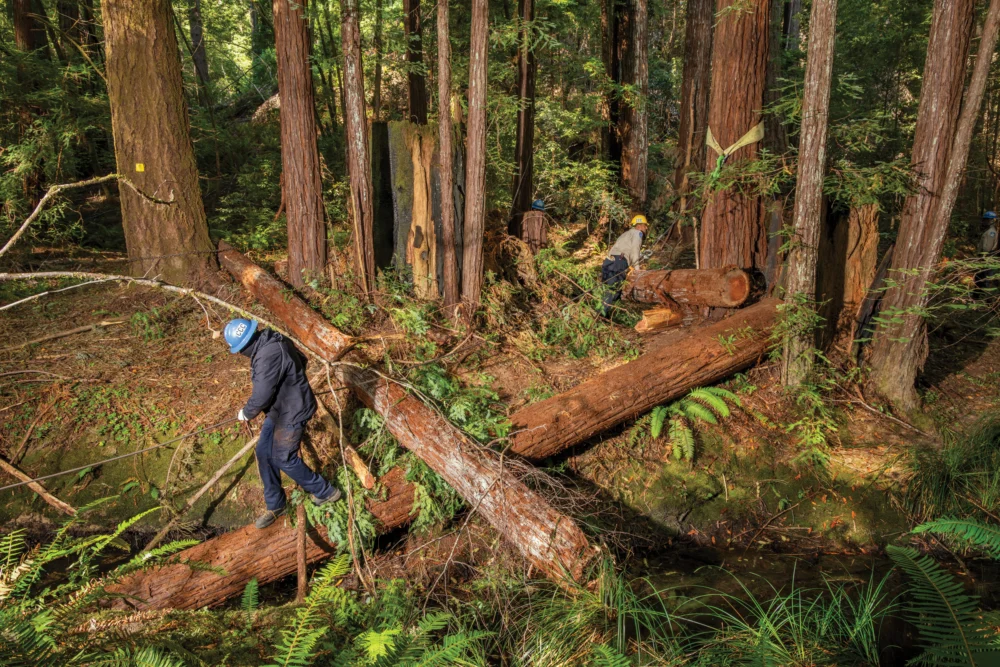
Conservation biologists working to restore coho salmon populations along California’s North Coast have adopted a unique mantra: a thriving coho stream resembles a messy teenager’s bedroom, but instead of discarded clothing, it’s filled with logs and branches. This unconventional approach is yielding remarkable results, with significant returns of coho salmon signaling a hopeful resurgence for the species. Anna Halligan, a conservation biologist with Trout Unlimited, recently surveyed a section of the Navarro River, expressing her delight at the abundance of natural debris. "This is exactly what we want," she stated, observing how fallen trees and branches had slowed the river’s flow, creating deep, shaded pools crucial for salmon survival.
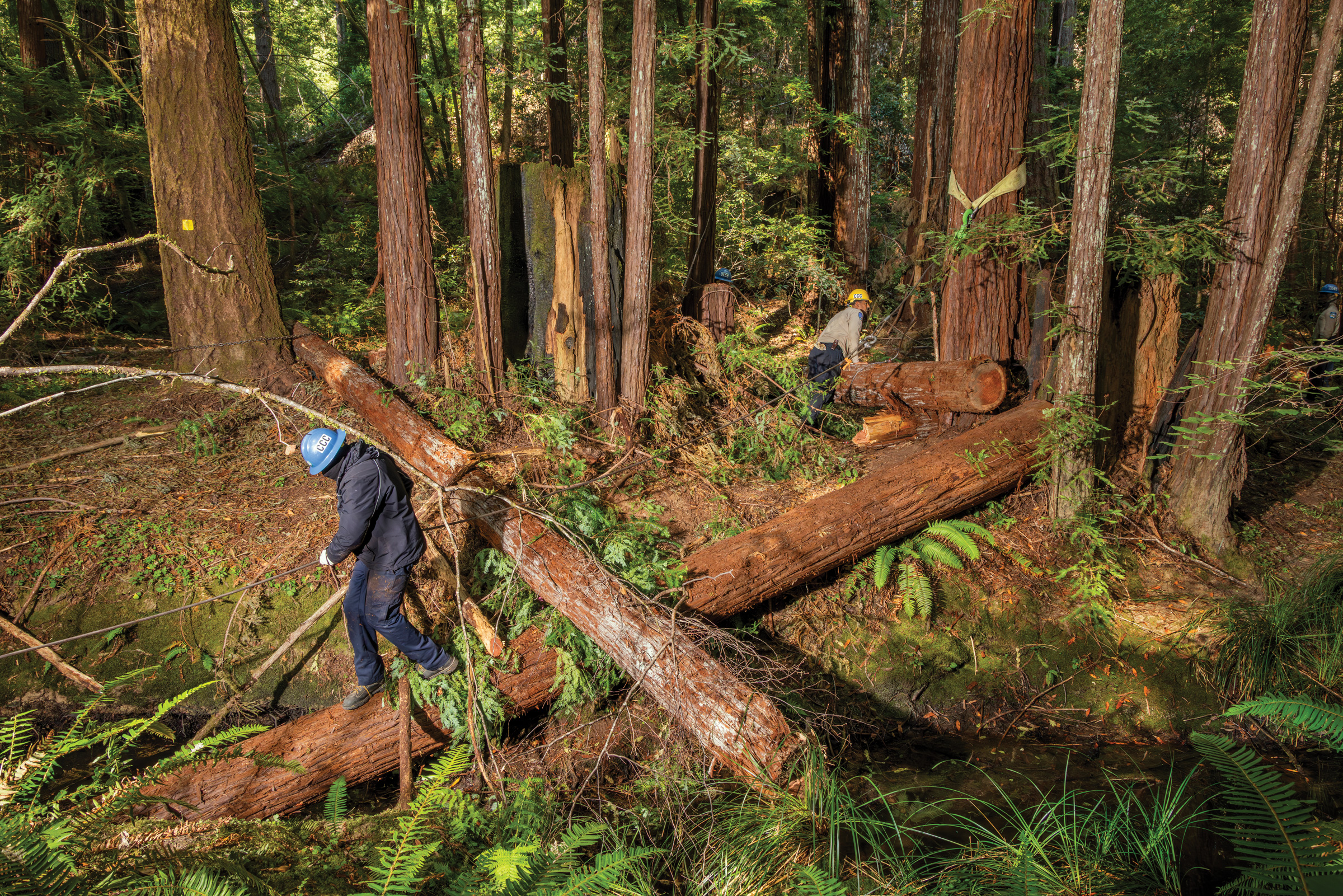
The strategy behind this “mess” is rooted in understanding the ecological needs of coho salmon. In September 2020, Trout Unlimited and its partners strategically placed a redwood tree into the Navarro River to enhance its suitability for coho. This initial intervention, though successful, was soon surpassed by nature’s own remodeling. A much larger redwood, likely dislodged by the heavy rains of the preceding winter, crashed into the river, crushing the smaller log and creating an even more substantial, unplanned debris jam. This natural cascade of wood has dramatically altered the stream, forming precisely the kind of complex habitat that coho salmon require. As Halligan observed the newly formed pool, a flash of silver—a young coho salmon—darted into view, a testament to the effectiveness of this hands-off, yet actively managed, restoration approach.
Coho salmon, anadromous fish that migrate between freshwater streams and the vast Pacific Ocean, have historically been a vital food source and cultural cornerstone for Indigenous peoples and ecosystems along the Pacific Coast. Fred Simmons, an environmental technician for the Cahto Tribe of Laytonville Rancheria, vividly remembers a time when coho runs were so abundant that accessing them for sustenance was a simple matter of visiting the river. However, decades of intensive logging, coastal development, and the escalating impacts of climate change have severely degraded the streams essential for their life cycle. Simmons, now in his sixties, has witnessed the precipitous decline of coho populations firsthand. In Mendocino County, a significant portion of the species’ southern range, coho salmon were first listed as threatened in 1996 and later reclassified as endangered in 2005, underscoring the severity of their plight.
The recent appearance of young coho in the Navarro River is part of a broader trend of recovery. For the past two years, conservationists have observed a notable increase in coho salmon returning to spawn. Peter Van De Burgt, a restoration manager with The Nature Conservancy, expressed cautious optimism, stating, "Recovery seems possible. We’re on the right track." This sentiment is echoed by many involved in the complex, collaborative efforts to bring these iconic fish back from the brink.
The genesis of modern salmon restoration efforts in Mendocino County can be traced back to the 1960s. At that time, extensive logging of old-growth forests had left stream channels choked with woody debris, creating extensive barriers to fish migration. In a well-intentioned but ecologically misguided effort, state conservationists focused on removing this debris, viewing it as an impediment to natural river flow. "They had this Western concept, like sweeping the floor," explained Anira G’Acha, environmental director for the Cahto Tribe. This practice resulted in miles of unnaturally straightened, simplified stream channels, akin to "bowling-alley lanes" with fast-flowing water.

The unintended consequence of this “tidying up” was the elimination of critical habitat elements. Fish populations continued to decline because these simplified streams lacked the complex structures that young salmon need for survival. "It’s hard to be a salmon," noted Van De Burgt. Young salmon are vulnerable to predation from birds, otters, and other fish. Without fallen logs, overhanging banks, and deep pools, they have few places to hide, rest, and grow.
It was not until later, as the understanding of stream ecology evolved, that researchers recognized the vital role of woody debris in creating the diverse microhabitats salmon require. By the time coho salmon populations were afforded protection under the Endangered Species Act, agencies like the California Department of Fish and Wildlife acknowledged the earlier mistakes. John Andersen, a forester and policy director for Mendocino and Humboldt Redwood Companies, recounted the shift in perspective: "basically did an ‘Oops’ and said, ‘Well, let’s put them back in again.’"
Historically, natural disturbances like wildfires played a crucial role in felling trees and introducing woody debris into stream systems. "Stream habitat evolved around fire for thousands of years," explained Ron Reed, a Karuk tribal member, cultural biologist, and dipnet fisherman. However, the era of aggressive wildfire suppression, coupled with intensive logging, disrupted this natural cycle. Conservationists then faced the challenge of recreating these essential habitat features by actively introducing logs into streams.

In the late 1990s, a significant turning point occurred when Mendocino Redwood and other timber companies began collaborating with Trout Unlimited on restoration projects. This marked a shift towards integrating private land management with conservation goals. Subsequently, The Nature Conservancy and other environmental organizations, bolstered by state and federal funding, expanded these restoration efforts to other areas across the region. Halligan highlighted the development of an "ecological system" of collaborators, which has directed millions of dollars into local economies through contracts with local workers and businesses.
Despite the growing understanding, the practical implementation of creating functional logjams proved more complex than their removal. Early restoration projects faced bureaucratic hurdles, often subject to the same lengthy environmental permitting processes as conventional logging operations, despite their fundamentally different ecological objectives. Some projects took over a decade to gain approval.
Practical challenges also emerged. Chris Blencowe, a forester who consults on projects for The Nature Conservancy and Trout Unlimited, shared the lessons learned. Initially, he used second-growth redwoods for logjams, but discovered they were prone to breaking apart under the force of winter floods. "We learned very quickly," he said, noting a shift to using Douglas fir for many projects, as it proved more resilient. Blencowe also refined techniques for anchoring logs between standing trees to prevent them from being swept downstream, a common problem in earlier restoration attempts. The Nature Conservancy has also adopted specialized machinery that uses vibrations to gently sink logs into the stream sediment, avoiding the potentially harmful percussive impact of power hammers on aquatic life.

Even with decades of experience, not every intervention unfolds exactly as planned. Van De Burgt views this inherent unpredictability as a positive aspect of the restoration strategy. "We want to implement projects that create chaos in the river," he explained. This "chaos," in the form of complex, dynamic stream structures, creates a mosaic of habitats that provides young coho with numerous refuges from predators and allows them to thrive as they prepare for their journey to the ocean.
The benefits of these logjam projects extend beyond coho salmon. They also improve habitat conditions for other salmonid species, such as steelhead trout, and contribute to the health of riparian forests. Marisa McGrew, a Karuk and Yurok woman and assistant natural resources director for the Wiyot Tribe, emphasized this interconnectedness, stating in an email that felling nearby second-growth trees for logjams "encourages understory plant relatives to grow." She added, "Stream restoration and forest restoration go hand in hand."
The success of these efforts is becoming increasingly evident. In the winter of 2023-2024, an estimated 15,000 coho salmon returned to spawn along the Mendocino coast, marking the highest number recorded by the California Department of Fish and Wildlife in 16 years. Preliminary estimates suggest this number nearly doubled in the following winter. Sarah Gallagher, who leads the agency’s monitoring program, attributed this surge to a confluence of favorable factors: "I think we got the perfect alignment." This included beneficial ocean conditions, a welcome end to several years of severe drought, and the cumulative impact of hundreds of miles of restored stream habitat.

Despite this encouraging trend, the current coho population remains a fraction of historical levels, when hundreds of thousands of salmon returned to California streams annually. The recovery of other salmon species, like chinook, and steelhead trout, has not been as pronounced. In mid-April, the Pacific Fishery Management Council extended its ban on ocean salmon fishing for a third consecutive year, reflecting the continued struggles of these populations. Furthermore, hundreds more miles of North Coast streams still require habitat restoration. "Sometimes, when you look at it on a map, it looks like we’ve barely done anything at all," acknowledged Halligan of Trout Unlimited, underscoring the vast scale of the challenge ahead.
The long-term future of these critical habitat restoration projects remains subject to funding uncertainties. Earlier this year, proposals were made to significantly reduce the budget of the National Oceanic and Atmospheric Administration, a key source of funding for the Pacific Coastal Salmon Recovery Fund, which supports much of the restoration work and coho monitoring.
In response to these potential funding challenges, conservationists in Northern California are actively exploring alternative funding mechanisms. Proposition Four, a $10 billion bond measure for climate resilience projects approved by California voters last November, offers a potential avenue for sustained investment in ecological restoration. As the recovery of coho salmon gains momentum, the dedication of these conservationists to re-establishing robust populations remains unwavering. Simmons articulated the deep connection to this land, observing, "The coho are realizing this is their homeland where they were born. It seems like they’re trying to heal." This sentiment encapsulates the profound and hopeful work underway to mend the relationship between human activity and the natural world, ensuring a future for these vital aquatic species.