Rocky Gerung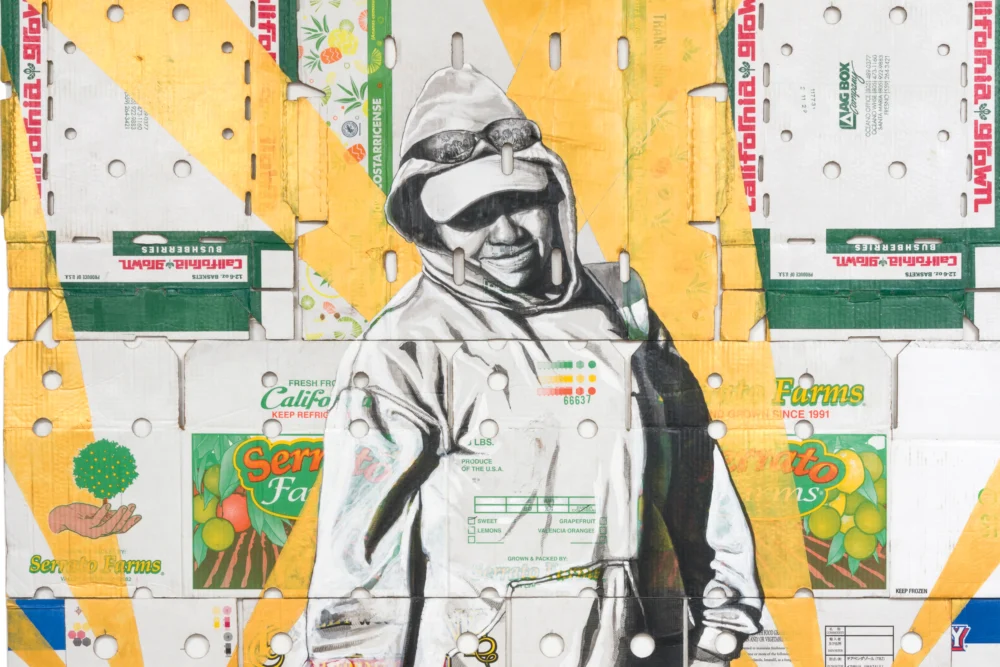
Born in Oaxaca, Mexico, in 1977, Narsiso Martinez immigrated to the United States at the age of 20, embarking on a journey that would lead him to become a prominent visual artist. He honed his skills, earning a Master of Fine Arts degree in drawing and painting from California State University, Long Beach, where he now resides and works. Martinez’s artistic contributions have garnered international recognition, with his works featured in prestigious collections such as the Hammer Museum, the Amon Carter Museum of American Art, the University of Arizona Museum of Art, the Jordan Schnitzer Museum of Art at the University of Oregon, and the Santa Barbara Museum of Art. His unique artistic practice, which began to take shape around late 2016 or early 2017, transforms discarded produce packing materials into powerful commentaries on labor, identity, and the often-overlooked human element in our food system.
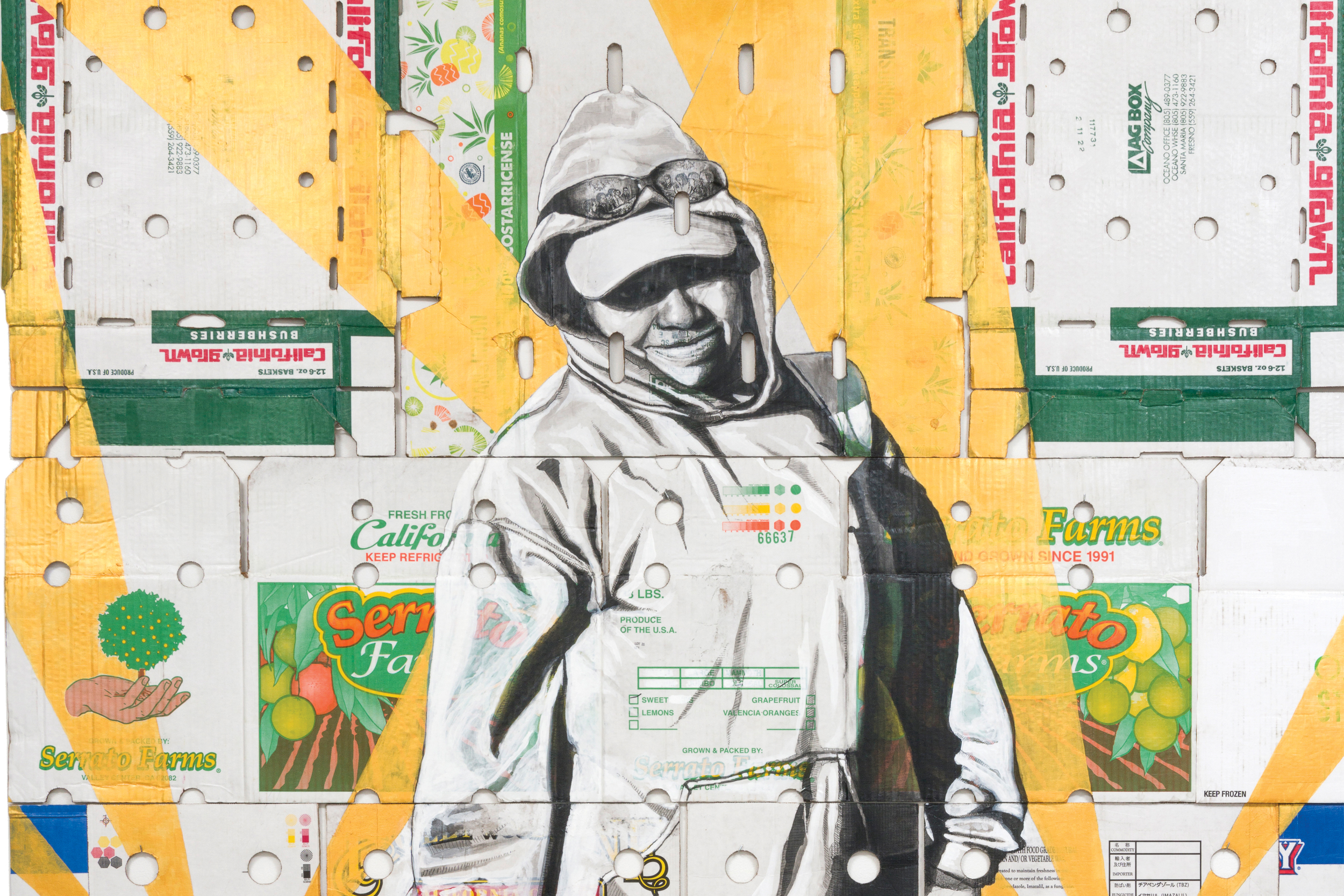
Martinez’s artistic evolution is deeply intertwined with his personal experiences, particularly his years working in agricultural fields. While pursuing his undergraduate studies, he spent three years between his associate’s and master’s degrees working in the fields of Washington state, living with his sister. During this period, he began using discarded produce boxes, initially sketching on the plain cardboard surfaces, often the "good" side of the box, without incorporating the printed labels. It wasn’t until he returned to graduate school in 2015 and faced limitations with oil painting on canvas that he revisited drawing on cardboard. A pivotal moment occurred when he collected a banana box from a Costco in Los Angeles and drew a "banana man" on it. This spontaneous creation, initially a personal exploration, was brought to class, where discussions with classmates and faculty helped him articulate his artistic intent: to depict the working class, specifically focusing on agribusiness and farmworkers due to the inherent nature of the materials he was using. This realization marked the genesis of his distinctive artistic focus.
His extensive experience in the fields, spanning approximately nine years in total, provided him with firsthand insight into the demanding realities faced by agricultural laborers. He would meticulously save his paychecks and travel to Washington for harvests during breaks from his studies, maximizing his time and earnings. The physical toll of this labor was significant, with tasks like picking asparagus requiring prolonged bending in the relentless sun, a stark contrast to the shaded environments many consumers take for granted. He also harvested cherries, various apple varieties, peaches, and blueberries, each crop presenting its own set of challenges and demanding a specific kind of resilience.

Martinez’s art serves as a crucial platform for raising awareness about the individuals who cultivate the food that sustains society. His primary goal is to highlight the presence, contributions, and inherent humanity of farmworkers, who he feels have been historically neglected and marginalized both in the United States and globally. He strives to "dignify farmworkers," aiming to elevate their status and ensure they are recognized for their vital role. This sentiment resonates deeply with farmworkers themselves. Having interacted with many of them during his time in the fields, Martinez found that his sketches and later artworks often evoked a sense of validation. When farmworkers saw themselves represented, it affirmed their existence and contributions, mirroring the sense of belonging and significance he felt upon receiving his own identification card years ago. Exhibitions specifically curated for farmworker audiences have yielded profound emotional responses, fostering shared narratives and reinforcing the importance of their presence in the national fabric.
The power dynamics within the food system are a central theme in Martinez’s work. He observes that the economic and political structures in the U.S. often perpetuate the oppression of farmworkers. He notes that historically, marginalized communities have been relegated to this demanding labor, a fact that strikes him as profoundly unjust given that these individuals are the bedrock of our sustenance. Martinez views farmworkers as having been politically exploited, serving as scapegoats without ever experiencing a truly dignified existence. He advocates for public support of legislation that could foster a more equitable and humane life for these essential workers, recognizing their immense power over our food supply while simultaneously acknowledging the systemic forces that often disempower them.

What is often misunderstood about farmworkers, according to Martinez, is their fundamental humanity. Beyond their indispensable contributions to agriculture, they are individuals with multifaceted lives, experiencing the full spectrum of human emotions, aspirations, and struggles. He emphasizes that recognizing their shared human experiences is long overdue.
The current political climate, particularly policies targeting agricultural workers, has deeply affected Martinez. He finds the persecution of those who harvest our food unacceptable and views it as a politically motivated tactic. He draws parallels to the historical struggles of the United Farm Workers movement, led by figures like Larry Itliong, Cesar Chavez, and Dolores Huerta, who fought for a more dignified life for farmworkers. Martinez expresses gratitude for organizations actively supporting farmworkers and providing them with resources to navigate issues like deportation and kidnapping, acknowledging the unsettling reality of seeing military presence in agricultural settings, which he attributes to political maneuvering.

The widespread appreciation for his art, even within major museum collections, has been a significant surprise for Martinez. He finds it incredibly rewarding that his work, created by an immigrant artist of Indigenous heritage, resonates with diverse audiences, including farmworkers, academics, researchers, and museum professionals. This broad acceptance underscores the universal appeal of his message and the power of art to bridge cultural and social divides.
Martinez’s journey to the United States at a young age, from a small village in Oaxaca, was a profound culture shock. The overwhelming scale of American cities, infrastructure, and cultural diversity presented a significant adjustment. However, he embraced the opportunity to learn English, attending adult school and gaining the confidence to pursue higher education. This pursuit of knowledge allowed him to gain a more comprehensive understanding of his place in the world and the historical context of his experiences. He recognizes the complex history of colonization in both Mexico and the United States, understanding that Indigenous peoples often face ongoing struggles for equity and inclusion.

He sees a strong connection between his work and the rich tradition of sociopolitical and labor-themed art in Mexico, particularly the muralist movement. The influence of Mexican muralists like David Alfaro Siqueiros, whose powerful "América Tropical" mural resonated deeply with Martinez, particularly as someone from a Zapoteca community, is evident in his larger, collaged works. He aspires to create art that evokes similar emotional and intellectual responses, prompting viewers to reflect on critical social issues.
Looking ahead, Martinez aims to expand his artistic scope to encompass the global struggles of farmworkers. He recognizes that the challenges faced by agricultural laborers in the United States are mirrored in other parts of the world, exacerbated by globalization and the increasing dominance of multinational corporations. His future plans involve visiting orchards and potentially working alongside farmworkers in various countries, seeking to draw connections between their shared experiences and identify the underlying systemic factors that perpetuate their struggles. This ambitious endeavor promises to further enrich his artistic narrative and deepen the global conversation around labor and social justice.