Roger Danuarta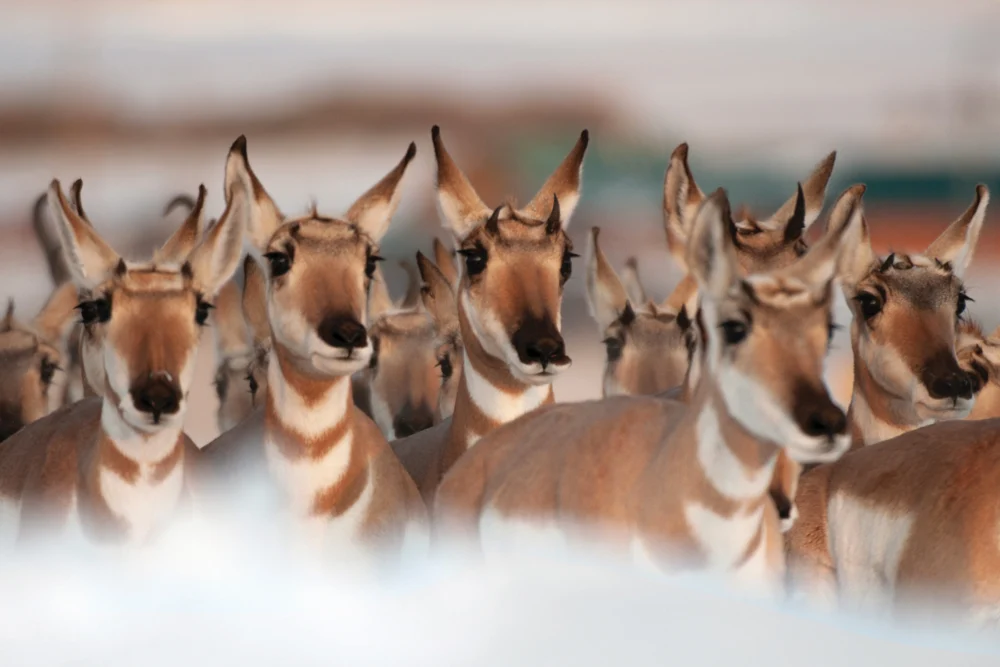
In the vast sagebrush plains of western Wyoming, a fleeting glimpse of pronghorn fawns, all spindly legs and blurred motion, offers a poignant reminder of nature’s enduring speed and resilience. These remarkable animals, slightly smaller than deer, represent one of Earth’s swiftest terrestrial species, capable of sustained speeds over long distances and bursts nearing 60 mph, far outstripping wolves or horses. Their unique physiology, characterized by oversized hearts and lungs, perfectly equips them for the expansive, open landscapes of the American West, where they have grazed and evaded predators for tens of thousands of years. Yet, even these champions of speed face a rapidly accelerating array of threats, including expanding rural development, extensive fencing, and the relentless march of climate change, which fragments their ancestral habitats and reshapes the very environment in which they evolved.

The Western U.S., a region already significantly warmer than the ancient past that shaped its ecosystems, confronts a future of escalating heat and unpredictable climatic shifts. Droughts strike with increasing frequency, winter snowpacks diminish, and spring melts arrive prematurely, leaving streams parched by late summer. Fewer frost days, hotter summers, and more intense storms are becoming the new norm, fundamentally altering the region’s delicate ecological balance. Conifer forests, stressed by heat and lack of moisture, succumb to widespread fires and disease, while rangelands fall prey to invasive, fire-adapted grasses, creating a vicious cycle of ecological degradation. The year 2024, for instance, witnessed over 1,300 square miles of Wyoming consumed by wildfires, more than double the acreage of recent severe fire seasons, underscoring the escalating vulnerability of these landscapes.
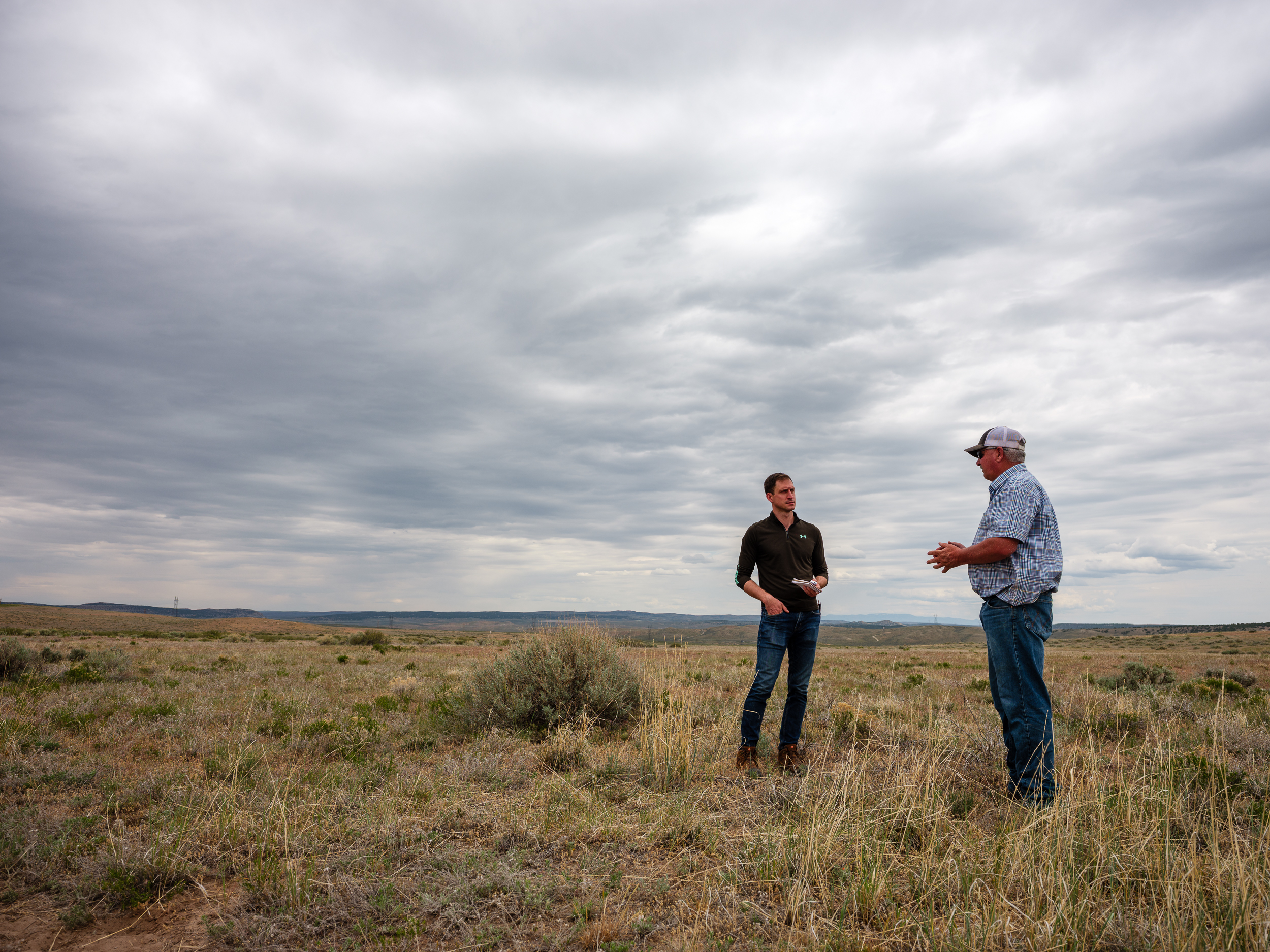
The devastating impact of these changes was starkly illustrated in northeast Wyoming’s Powder River Basin, a vast expanse of grass and shrub-covered bluffs stretching over 100 miles. In August 2024, a lightning-sparked fire, fanned by high winds, erupted into a raging inferno, blackening hundreds of square miles within a single day. When the evacuation orders lifted, ranchers returned to find their familiar world scorched beyond recognition. Wildlife managers and landowners discovered at least 70 dead or dying pronghorn, some trapped against fences, others simply overtaken by the relentless flames in the open. North America’s fastest land animal, honed over millennia to outrun ancient predators, proved tragically unable to escape the unprecedented speed and intensity of a modern megafire.

Such events cast a long shadow over the future, prompting deep reflection on the legacy we leave for coming generations. The sight of wildfire smoke staining the sky, as it did in September 2018 when bringing a newborn home, serves as a visceral reminder of a world in flux. The trajectory of this landscape over the next few decades remains uncertain, but one truth is clear: the environment will be profoundly different from the one that has sustained life for generations. This existential challenge, however, is not entirely novel for the pronghorn. Their earliest North American ancestors emerged in the fossil record during the Miocene epoch, approximately 20 million years ago, a period characterized by global warmth. Modern pronghorn, Antilocapra americana, evolved later, amidst the much colder Pleistocene ice ages. When the last ice age concluded around 12,000 years ago, North America experienced a dramatic warming, leading to the extinction of most large mammals. Yet, the pronghorn persisted, adapting to these new conditions, a testament to their inherent resilience.
The question arises: if pronghorn adapted to profound climate shifts 12,000 years ago, can they – and we – navigate the entirely new set of climate-driven changes unfolding today? Researchers warn of potential "state shifts," where entire ecological systems, such as pine forests or sagebrush steppes, undergo irreversible transformations. Understanding the mechanisms of pronghorn survival through past epochs may offer crucial insights into adaptability for their descendants and, indeed, for humanity facing an unknowable future.

The sight of pronghorn groups, with their large, watchful eyes and distinctive, antenna-like horns, gathered at the edges of towns during spring snowstorms, migrating towards lusher summer grounds, evokes a sense of their ancient connection to the land. These creatures appear almost alien, not from another world, but from another time—remnants of a once-vast assemblage of now-extinct megafauna that roamed the icy, windswept basins of ancient North America. To truly comprehend their journey, one must delve into the climate, plants, and animals of those distant eras.
A vivid mural on the second floor of the University of Wyoming Geological Museum transports visitors to the Laramie Valley during the Pleistocene epoch, a series of ice ages spanning 2.58 million to 11,700 years ago. It depicts a landscape dominated by tundra and scrubby plants, with glaciers descending from treeless mountains. Saber-toothed lions snarl at massive bison, while mammoths with colossal tusks and heavy fur coats roam warily. This prehistoric tableau, a stark contrast to today’s Wyoming, was a world of extreme cold and dynamic environmental forces. Paleoclimatologist Bryan Shuman, a professor in the UW Geology and Geophysics Department, meticulously reconstructs these ancient environments by analyzing microscopic particles in lakebed sediment cores and mapping ancient lake shores. His research in the Central Rockies, home to over a third of the world’s pronghorn, reveals that year-round average temperatures during the coldest Pleistocene periods were up to 18 degrees Fahrenheit colder than today. This profound cold fostered extensive glaciers and permafrost, leaving polygon-shaped patterns still visible on the ground outside Laramie.

Pollen records extracted from lakebed mud layers confirm a landscape primarily dominated by grasses and sagebrush during these frigid times, interspersed with low, shrubby willows akin to those found in the modern Arctic tundra. Furthermore, Shuman’s use of ground-penetrating radar to map past lake shorelines indicates a much drier environment. "We are living in an unusually wet time," Shuman notes, emphasizing that the current era is likely the wettest in the last 20,000 years for this region. The late Pleistocene was also characterized by intense winds and pervasive dust, as glaciers pulverized rocks into fine silt that, once dried, was carried for hundreds of miles, shaping dunes in the Great Plains and depositing thick loess layers across the Midwest. Imagining pronghorn enduring such a harsh, cold, dry, windy, and dusty landscape highlights their extraordinary adaptability.
Beyond the relentless weather, Pleistocene pronghorn contended with formidable predators. Fossil evidence from Natural Trap Cave, a vertical, bell-shaped cavern on the western flank of Wyoming’s Bighorn Mountains, provides a chilling record of this ancient struggle. For over 47,000 years, animals have stumbled into its 15-foot-wide opening, plummeting 80 feet to their deaths, their remains perfectly preserved in the cave’s steady 42-degree Fahrenheit temperature. Paleontologists like Julie Meachen of Des Moines University have led expeditions into this "treasure trove of fossils," revealing a diverse array of extinct megafauna. Among the bones of Pleistocene lions, powerful American cheetahs (Miracinonyx), and heavy-jawed Beringian wolves, pronghorn remains dating back 17,000 to 20,000 years were discovered, indistinguishable from their modern descendants. Isotope analysis of these predators’ fossils confirms pronghorn as a common prey item. The cave also yielded skeletons of camels, horses, modern bighorn sheep, coyotes, and even giant short-faced bears, twice the size of modern grizzlies, alongside multiple mammoths. Todd Surovell, an archaeologist at the University of Wyoming, notes the abundance of Columbian mammoths—the largest mammoth species in the Americas—across Wyoming during this period, painting a picture of a vast, dynamic ecosystem. These scenes, where 22,000-pound mammoths grazed while pronghorn deftly evaded lurking apex predators, played out for tens of thousands of years until a dramatic shift led to the extinction of most of these magnificent creatures.

On a geological timescale, the transition from the deep ice age to the Holocene epoch, our current era, occurred with startling speed, unfolding over approximately 7,000 years. This rapid warming, initiated around 17,000 years ago, was driven by a complex interplay of natural factors. The Earth’s axial wobble, part of a 41,000-year Milankovitch cycle, shifted towards maximum tilt, increasing summer solar radiation. As vast ice sheets retreated poleward, the darker exposed land absorbed more heat, accelerating the melt. This influx of fresh meltwater, carrying sediment and dust, poured into the oceans, raising global sea levels by an astounding 360 feet and altering ocean currents. Warmer oceans, in turn, released massive amounts of carbon dioxide into the atmosphere, intensifying the greenhouse effect and further trapping solar heat. As Shuman explained, "This chain of orbital changes, ice sheet changes, dust and ocean changes, all causes carbon dioxide to go up and down… Carbon dioxide is probably the biggest single hammer on the system."
By about 10,000 years ago, atmospheric carbon dioxide levels had risen by over 40%, contributing to a global warming of 7 to 11 degrees Fahrenheit. North America’s interior became significantly wetter, transforming arid grasslands into less dusty, more fertile plains, and allowing forests of pine, spruce, and fir to expand northward, as evidenced by pollen records. However, this ecological transformation proved catastrophic for much of the continent’s megafauna. "A lot of the big things that used to be here just didn’t survive," noted Julie Meachen. Of the many dozens of large mammal species that roamed Pleistocene North America, at least 59, and possibly many more, vanished in what is known as the Quaternary Extinction Event. By some analyses, 72% of large mammal species, including horses, mammoths, giant beavers, ground sloths, and numerous predators, disappeared within a geologically brief period, between 13,800 and 11,400 years ago. Todd Surovell emphasized that "the bigger you are, the more likely you are to go extinct. Very few small things go extinct," a pattern that has only been further substantiated by more recent evidence. The precise cause of this mass extinction remains a subject of intense scientific debate, with theories ranging from human hunting pressure and extraterrestrial impacts to widespread disease. However, scientists generally concur that abrupt climate change played a pivotal role in driving down biodiversity on a continental scale.

Amidst this colossal upheaval, the pronghorn antelope emerged as a remarkable survivor. Unlike cervids (deer, elk) and bovids (bison, bighorn sheep) whose ancestors arrived in North America much later, antilocaprids, the family to which pronghorn belong, have been indigenous to the continent for over 20 million years. Modern pronghorn are the sole living descendants of these ancient North American ungulates, uniquely evolved to thrive in this environment. Christine Janis, professor emerita of ecology and evolutionary biology at Brown University and an expert on hoofed mammal evolution, highlights their enduring lineage. "They were survivors," she stated, noting their endurance through earlier extinctions around 5 million years ago and their ultimate survival when other large mammals, including their ancient predators, perished at the close of the Pleistocene.
The exact mechanisms of their survival remain a topic of scientific inquiry, but several theories converge. Meachen points to their physiological adaptations for arid environments, particularly their ability to subsist on dry, scrubby vegetation that other large herbivores, such as horses and bison, could not utilize, thereby experiencing less water stress. Surovell adds that the extinction of the American cheetah, a key predator, likely conferred a significant advantage. Janis emphasizes their high-crowned teeth, which allowed them to efficiently process gritty, low-growing browse over a lifetime of chewing, and their relatively small size, which facilitates a faster reproductive rate. While a massive camel or mammoth might produce a single calf every few years, pronghorn typically birth two fawns each spring. Janis succinctly summarized the pronghorn’s survival lesson: "Be small and be adaptable in your diet. That’s a good way to survive."

Pronghorn have weathered countless changes, yet the future presents unprecedented challenges. Earth’s surface temperatures are now consistently setting new records, driven by anthropogenic greenhouse gas emissions. The projected global average temperature shift over the next 75 years is expected to be far more rapid than the 7,000-year warming trend that ended the ice ages, melted glaciers, thawed permafrost, and transformed tundras into forests, leading to the demise of so many large mammals. "That’s the type of magnitude change we’re talking about," Shuman explains, "except it’s going to keep going into a warmer direction that’s still hard to imagine."
The future feels increasingly precarious, for both pronghorn and humanity. Planetary shifts are occurring at a pace arguably unmatched since the asteroid impact that extinguished the dinosaurs 66 million years ago. Can our complex living systems adapt to such swift and profound changes? As an inhabitant of this land and a parent, contemplating this question can be daunting. Yet, the pronghorn’s ancient journey offers a nuanced perspective. While past ice ages were harsh, the current era’s increased precipitation in certain areas has paradoxically fostered the growth of some forests and, in some instances, benefited animals, including pronghorn. The Earth’s long history reveals a planet of immense dynamism, sustaining life through billions of years of fluctuating climates, from periods warm enough for palm trees and crocodiles in Wyoming to millennia locked in ice. This inherent adaptability of living systems, and the capacity for humans to alter diets and migrate to new habitats, offers a glimmer of hope.

When the 2024 rangeland wildfire scorched nearly 275 square miles in Wyoming’s Powder River Basin, though 70 pronghorn perished, tens of thousands survived. These survivors went on to birth new fawns, feeding on the resilient green grass that emerged in the burned areas the following spring. Perhaps the ultimate lesson from the pronghorn is not to dwell on past nostalgia or future anxieties, but to engage with the present moment with heightened awareness. They teach us to observe shifts in the wind, discern the scents in the air, deeply understand our home habitats, and align our patterns of life with the forces of the land. They remind us to notice how the snow drifts, which plants emerge after a soaking thunderstorm, and to accept that each spring will unfold uniquely. They implore us to teach our children to recognize birdsong, learn the rhythms of animal migration, breathe deeply, and keep moving forward, with our feet firmly planted on the Earth, in tune with its ceaseless transformations.