Roger Danuarta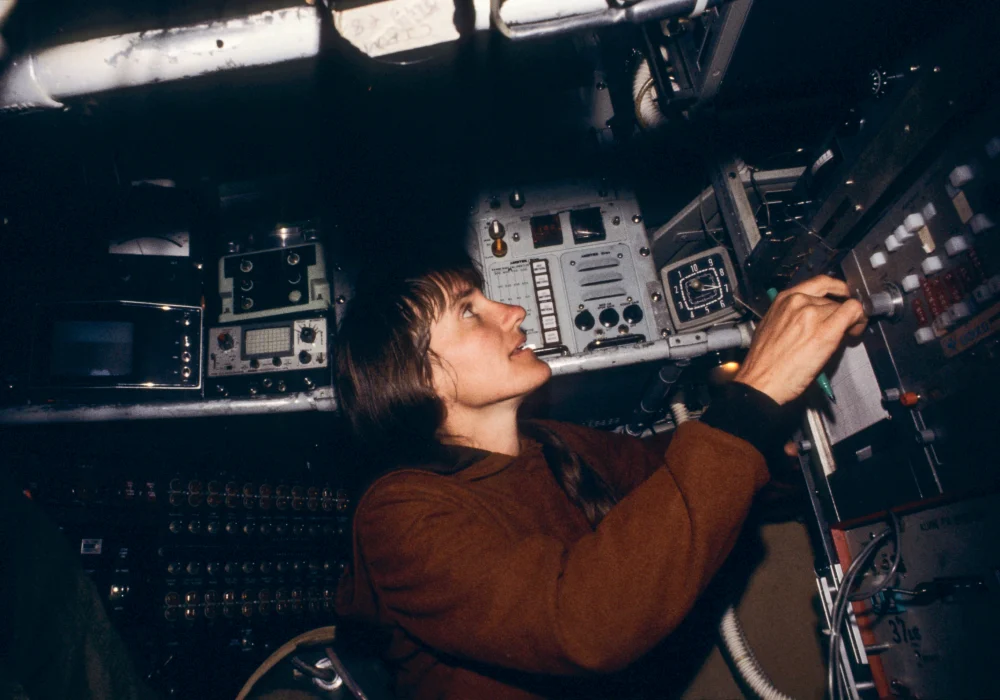
The Scripps Institution of Oceanography in La Jolla, California, pulsed with an almost palpable energy in January 1967 as 24-year-old Tanya Atwater arrived to commence her graduate studies, stepping into the very heart of a burgeoning scientific revolution. Hallways overflowed with neglected rolls of paper, once-dusty archives of magnetic data retrieved from the ocean floor, now imbued with profound significance. Just weeks prior, Cambridge geophysicist Fred Vine had visited Scripps, articulating a groundbreaking concept so fresh it lacked a universally accepted name, alternately known as the Vine-Matthews Hypothesis or seafloor spreading. This theory represented a monumental leap from the long-discredited notion of continental drift, and it was poised to fundamentally redefine humanity’s understanding of Earth’s dynamic crust, eventually coalescing into the grand unifying theory of plate tectonics.
Atwater, a self-described "full-on Berkeley hippie" known for her bare feet, beads, and flowers, was a striking figure in a field overwhelmingly dominated by men. Possessing an undergraduate degree in geophysics and a keen ability to synthesize complex information into a coherent "big picture," she was uniquely positioned for the unfolding paradigm shift. Her inaugural marine geology class became an immediate immersion into this "wonderful new idea" that had already transformed the study of oceans and would soon rewrite the geological narrative of continents and their formation. Textbooks, rendered obsolete overnight, remained unopened, as the professor, caught in the fervor, scribbled chalk diagrams detailing the Earth’s newfound dynamism.

For centuries, the prevailing geological consensus held that continents were static, fixed landmasses since time immemorial – a view known as "fixism." However, mounting evidence challenged this dogma. Paleontologists globally unearthed identical fossil records and similar rock strata across continents now separated by vast oceans. The discovery of Permian reptilian fossils in both Brazil and southwestern Africa, alongside specific fern species found throughout the Southern Hemisphere, posed an enduring enigma: how could land-bound organisms and flora traverse such immense oceanic barriers?
German meteorologist and geophysicist Alfred Wegener offered a radical solution in his 1915 book, "The Origin of Continents and Oceans." He proposed that the continents had once been conjoined in a supercontinent, Pangaea, before slowly "drifting" apart. Initially overshadowed by the ravages of World War I, Wegener’s hypothesis of continental drift gained wider, albeit largely negative, attention with its subsequent translations. The scientific establishment, particularly American geologists, vehemently "pooh-poohed" the idea, largely due to Wegener’s inability to provide a plausible mechanism for such continental movement. Despite widespread ridicule, the compelling observational evidence ensured the concept of drifting continents refused to fade entirely.
Atwater’s path to this scientific maelstrom was serendipitous. Born in California on August 27, 1942, her early artistic aspirations shifted dramatically with the Soviet Union’s launch of Sputnik in 1957. The astonishing capability of science to propel objects into outer space captivated her, fostering a nascent interest encouraged by her engineer father and botanist mother. Her journey through higher education, however, underscored the prevailing gender biases of the era. Caltech, for instance, openly discriminated against women, believing they would "just get married, quit and waste their educations." MIT, while accepting women into its science programs, did so with the paternalistic expectation that they would primarily raise "great children," presumably boys.

Atwater navigated a varied academic landscape at MIT, finding organic chemistry "horrible" and electrical engineering prone to self-electrocution. Her true calling emerged during a transformative field course in Montana. Here, amidst towering mountains, she discovered the profound joy of "practicing geology in the field," hiking, mapping, and deciphering the intricate geometry of the landscape. "Suddenly, the landscapes and the rocks, they were talking to me," she recalled. Yet, geology remained an "obscure" and "grubby" field, seemingly disconnected from the high-tech space dreams that initially drew her to science. Lacking a unifying theory, professors could only offer vague explanations for volcanoes and crumpled mountains, leading students to draw arrows on maps like "the hands of a capricious god shortening or extending our landscapes, willy-nilly." Disillusioned, Atwater dropped out of MIT, but the mountains continued their silent discourse.
The stark, exposed geology of the American West proved pivotal for Atwater. Unlike the verdant East, California’s "rocks are all standing up and yelling at you," she observed. This realization drew her back to her home state, specifically the University of California-Berkeley, at the height of the Free Speech Movement. Amidst the cultural upheaval and anti-Vietnam War protests, Atwater enrolled in geophysics, a discipline that sought to understand Earth’s processes through the lens of physics and mathematics. Despite declining enrollment in geology programs, she pursued her passion, transferring her MIT credits and immersing herself in geological studies.
Her academic journey took her east again for a summer internship at the Woods Hole Oceanographic Institute. At the time, oceanography and geology operated as largely separate disciplines. Atwater, initially drawn by the "romance of going to sea," soon found herself at a crucial intersection. At a meeting in Ottawa, Canada, she heard geophysicist J. Tuzo Wilson present a radical new concept: the "transform fault." Wilson explained that these faults, unlike simple vertical displacements, involved horizontal movement and often intersected "mid-ocean ridges"—vast, undersea mountain ranges cleaved by lava-spewing rifts. These ridges, Wilson posited, delineated Earth’s crust into large, rigid plates that slowly moved apart as magma welled up. The plate edges, rather than being smooth, were jagged, with transform faults linking segments of ridges like stitches in a seam.

Wilson, a recent convert from fixism to "drifter," distributed paper diagrams instructing attendees to "Cut here, fold here, pull here." While the crowd laughed at the seemingly childish exercise, Atwater was captivated. In the privacy of her hotel room, she meticulously followed the instructions, a pivotal moment in her intellectual awakening.
Crucially, Wilson mentioned an unusual transform fault located on land: California’s own San Andreas Fault. This immense fracture, stretching 800 miles from Mendocino to the U.S.-Mexico border and reaching depths of 10 miles, is not a single crack but a complex network. Its dramatic impact is visibly etched on landscapes like the Carrizo Plain, where dry creek beds abruptly jump hundreds of feet sideways at the fault line. The catastrophic 1906 San Francisco earthquake, which claimed thousands of lives and devastated the city, spurred the first comprehensive study of the San Andreas. Geologist Andrew Lawson’s Earthquake Investigation Commission meticulously traced the fault, documenting lateral shifts of up to 21 feet, a stark testament to the immense horizontal forces at play.
The crucial evidence for continental movement, however, emerged from beneath the oceans. In 1963, Fred Vine and Drummond Matthews published a seminal, though initially obscure, paper in Nature. They proposed that peculiar magnetic anomalies on the ocean floor could be explained by the imprint of Earth’s magnetic field on freshly cooled lava. As magma erupted at mid-ocean ridges and solidified, it recorded the prevailing magnetic polarity – either "normal" (pointing north) or "reversed" (pointing south). As new magma continuously surfaced, it pushed older rock aside, creating a symmetrical "zebra-stripe" pattern of alternating magnetic polarities parallel to the mid-ocean ridge. This pattern, they argued, was irrefutable evidence of seafloor spreading.

Initially, the Vine-Matthews hypothesis was met with skepticism, even dismissal, as it relied on another unproven theory: that Earth’s magnetic field periodically reversed. Yet, a breakthrough arrived in early 1966. James Heirtzler, a prominent geophysicist at Lamont Geological Observatory, initially a critic, was confronted by his graduate students with startling new data from the Eltanin, a research vessel exploring Antarctic waters. The magnetic profile was unmistakably symmetrical across the mid-ocean ridge, precisely matching the Vine-Matthews prediction. Heirtzler, though initially incredulous, soon embraced the evidence.
Atwater, then in Santiago, Chile, for a geophysics job, was one of the few who witnessed Heirtzler’s groundbreaking presentation at an international scientific meeting. While others drifted off to lunch during the dry, plankton-focused talks, Atwater remained. Heirtzler’s slide, a simple "wiggly line" of data, revealed an astonishing symmetry. This undeniable pattern, combined with a recently developed, though initially dismissed, timeline of magnetic reversals from the U.S. Geological Survey, provided the missing link. When Heirtzler displayed the Eltanin profile alongside the magnetic reversal calendar, the match was perfect. "It was ironclad," Atwater marveled. Seafloor spreading was definitively real, and its implications for understanding Earth’s geology were monumental. The revelation hit Atwater like a "lightning bolt," solidifying her resolve to return to California, the epicenter of this radical new understanding.
Upon her arrival at Scripps in January 1967, Atwater plunged into a scene of exhilarating scientific ferment. Researchers meticulously re-examined old magnetic profiles, now recognizing the symmetrical patterns everywhere. Decades of seemingly random data suddenly spoke volumes, converting staunch fixists into enthusiastic drifters overnight. The paradigm shift was fully underway for marine geologists, but terrestrial geologists remained largely aloof. "The people on land knew there was some revolution going on in the ocean," Atwater recounted, adding with a hint of disdain, "But, you know, the ocean." This intellectual chasm underscored the need for a translator, someone who could bridge the divide between oceanic and continental geology. Atwater, with her interdisciplinary background, was uniquely suited for this pivotal role. The plate tectonic revolution, as one contemporary noted, was a "great leveller," erasing distinctions of age or experience, though not entirely for women.

A pervasive superstition, coupled with concerns about propriety and cramped quarters, effectively barred women from research vessels. This presented a significant hurdle for Atwater, a member of the Deep Tow research group, which was preparing an expedition to the Gorda Rift off Northern California. While previous ships gathered data near the surface, Deep Tow would deploy instruments to the seafloor, offering an unprecedented, close-up view of a seafloor-spreading center. Behind closed doors, Scripps scientists debated "what to do with the girl." Ultimately, Atwater’s advisor, John Mudie, cut through the archaic resistance: "She could sue you, you know." That simple statement paved her way onto the ship.
Aboard the research vessel, Atwater and her colleagues faced the arduous task of maneuvering scientific instruments just above the treacherous seafloor, avoiding collisions with rocks and cliffs. This hair-raising operation, involving constant adjustments to the cable, provided Atwater with a direct, real-time observation of a mid-ocean rift—a "center fallen in and fresh lava pouring over the seafloor." This firsthand experience solidified her theoretical understanding of seafloor spreading, which Vine and Matthews had further refined to include the concept of subduction, where old seafloor is "swallowed by trenches, chewed up and recycled in the ever-moving mantle"—a "conveyor belt" mechanism that explained the eternal youth of the ocean floor, geologically speaking.
The next pivotal turn in Atwater’s career emerged from a simple napkin sketch during an autumn evening in 1967. At a dance hall near Scripps, visiting scientist Dan McKenzie revealed a crucial insight: a third plate bordered the Pacific and North American plates just off Cape Mendocino, California, a region renowned for its seismic activity. McKenzie, who was developing his theory of "triple junctions"—points where three tectonic plates meet—sparked a profound realization for Atwater. Triple junctions, seafloor-spreading centers, and transform faults, she understood, were "the key to the whole geometry of the ocean." While plate tectonics had ignited an oceanic revolution, its application to terrestrial features remained elusive. The San Andreas Fault, a prominent plate boundary on land, became her focus. If she could unravel its formation using the new oceanic theories, she could bring the entire theory of plate tectonics onto dry land.

A significant challenge remained: the available magnetic reversal timescale extended back only a meager 4 million years, barely into the Pliocene Epoch. The San Andreas, however, was speculated to be much older, perhaps 100 million years, though its precise age was unknown. Atwater knew the zebra-stripe patterns offshore held the answer, but she desperately needed reliable dates for a longer magnetic chronology.
Such work was underway at Lamont Geological Observatory, where James Heirtzler and his team published a "wildly speculative" timeline for magnetic reversals spanning 85 million years, reaching back to the Late Cretaceous, the age of dinosaurs. Though a "best guess," its accuracy was uncertain, leaving Atwater hesitant to base her research on a paper "chock-full of uncertainty." Her personal experiences also highlighted the pervasive challenges for women in science; during a tour of Lamont after her successful first conference lecture on the Gorda Rift, she noted, "I was invisible. At every lab we visited, they introduced all the young men and skipped me, every time."
That autumn, the research vessel Glomar Challenger provided the missing piece. Drilling deep holes and sampling sediment along the Mid-Atlantic Ridge, the expedition retrieved fossil-rich sediment cores. These microfossils, with their known evolutionary timelines, provided definitive dates for the oldest sediment layers, confirming the astonishing accuracy of Heirtzler’s speculative 85-million-year magnetic reversal timeline.

With this newfound chronological anchor, Atwater abandoned her official Deep Tow work, immersing herself in the study of the San Andreas. This became the most intense period of her career, filled with sleepless nights and urgent calls to her mentor. Her focus centered on a perplexing, one-sided zebra-stripe pattern off the Pacific coastline—the eastern half of the pattern was missing. McKenzie, the napkin-sketching scientist, offered a brilliant explanation: a third plate, the Farallon, once existed between the Pacific and North American plates. Over millions of years, the Farallon plate had been almost entirely "subducted" or pulled beneath the North American plate, carrying with it the "missing half" of the magnetic pattern.
Atwater seized this narrative. Only after the Farallon plate had largely vanished, leaving behind a few fractured remnants like the Juan de Fuca Plate, could the Pacific plate directly abut the North American plate, giving birth to the San Andreas Fault. Utilizing the Glomar Challenger‘s confirmed magnetic timeline, she meticulously traced this complex history back 85 million years. Her groundbreaking work determined that the San Andreas Fault was much younger than previously believed, no older than 23 million years. This crucial finding demonstrated how the unseen, dynamic movements of oceanic plates had profoundly shaped California’s geography and geology, definitively proving to terrestrial geologists that plate tectonics was central to their work.
In December 1968, the Geological Society of America convened a landmark five-day meeting at the Asilomar Conference Grounds in Pacific Grove, California, to discuss "the new global tectonics." Tanya Atwater stood as the sole woman invited to speak, dressed in her characteristic flowers and beads. Before a packed audience, she presented her revolutionary findings. When she exceeded her allotted time, a voice from the captivated crowd urged, "Let her go on! This is great stuff." A skeptical challenge to her assertion of the San Andreas’s youth was swiftly countered by Ken Hsu, who had been aboard the Glomar Challenger. His passionate defense, driven by the fervor of the newly convinced, silenced dissent.

Atwater’s presentation stunned the geological community. She was the first to seamlessly integrate the newly revealed secrets of the seafloor with the complexities of a major geological feature on land. She demonstrated that magnetic data could reconstruct the movements of Earth’s tectonic plates across millions of years, offering a comprehensive explanation for California’s seismic activity, the uplift of the Coast Ranges, the volcanism of the Cascades, and the opening of the Gulf of California. Her narrative encompassed the Cenozoic Era, from the extinction of dinosaurs to the rise of mammals, through the continuous rending and suturing of continents and seas. One listener profoundly recalled, "I felt I had just been witness to the end of an era, and the beginning of a totally new approach to understanding the dynamics of the Earth."
Speaking invitations flooded in. Atwater’s unique ability to translate complex ocean science into compelling earth science drew massive audiences. "Everybody came, partly to see the girl geophysicist, but also to hear what the revolution could mean for them," she noted. A year after Asilomar, she published her seminal paper in The Bulletin of the Geological Society of America, which became required reading for geology students worldwide. Despite still being a student herself, Atwater embraced her new notoriety, stating, "I knew I deserved it."
Plate tectonics rapidly transformed geology. New editions of textbooks appeared, with the unifying theory woven into every chapter, providing a coherent framework for once-mysterious phenomena like earthquakes, volcanoes, and mountain building. The once heretical notion of a dynamic Earth, constantly reshaping itself, became the bedrock of modern Earth science.

Atwater earned her Ph.D. in oceanography from Scripps in 1972. Two years later, her son, Alyosha, was born—a significant milestone for women in science, demonstrating that a successful career and family life could be managed simultaneously. After seven years teaching at MIT, she returned to the West, dedicating the remainder of her career to the University of California-Santa Barbara, nestled amidst the Santa Ynez Mountains, a range caught and rotated by jostling plates 18 million years ago. Her fieldwork included 12 dives in the 6-foot submersible Alvin to the ocean floor, experiences that still highlighted lingering gender biases, such as initial resistance to sharing cramped sleeping quarters with men on research catamarans. Yet, she reflects on progress: "for many years, I owned the ladies’ room" at American Geophysical Union meetings; "Now I have to stand in line."
Atwater credits her parents for instilling the conviction that she could pursue any ambition. She once worried about her frequent changes in major, but now sees each step as leading her toward her destiny. "You have to have some faith that it’s going to work out," she advises. Now a professor emeritus, she continues to inspire, joining university field trips and sharing her passion for geology amidst California’s dramatic landscapes. Since the mid-1990s, her artistic talent has found a new outlet in creating digital animations that vividly illustrate plate movements, from the global breakup of the supercontinent Pangaea to the formation of California’s iconic Transverse Ranges and Channel Islands. Science, like the Earth itself, is not static, yet Atwater remains struck by the enduring validity of plate tectonics. "We make more measurements and it’s more precise," she observes, adding with a tinge of relief, "It’s a relief, since I spent my whole life on it." The theory, once a radical notion, has proven to be as solid and fundamental as the Earth’s crust itself.