Rocky Georgio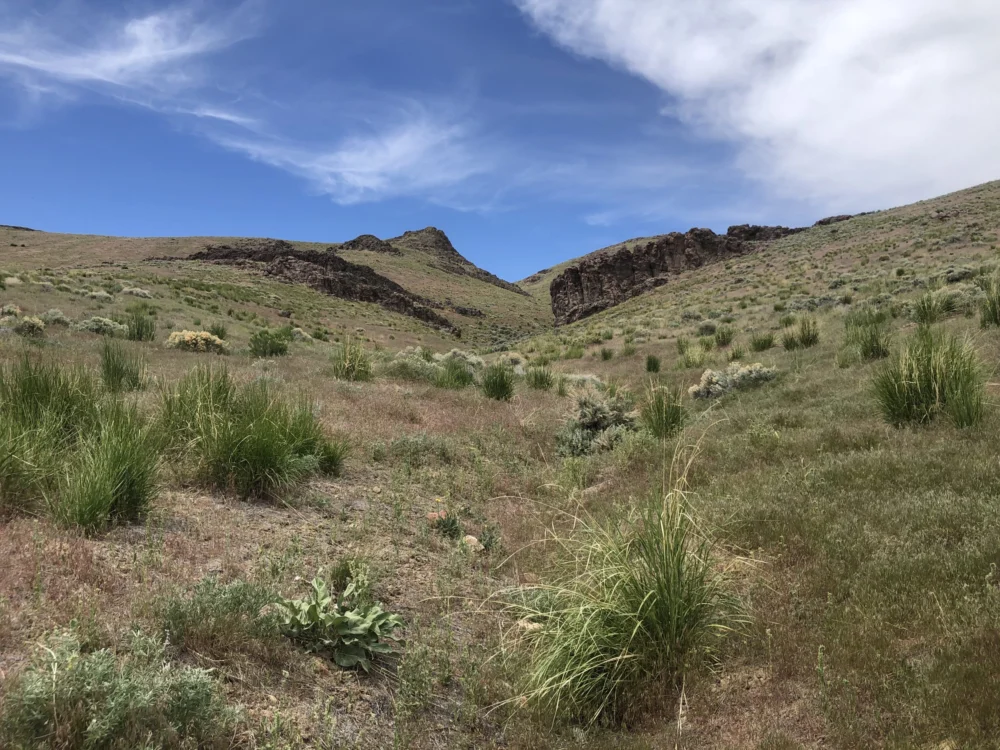
A high-ranking official within the Department of the Interior, Karen Budd-Falen, has established financial connections to the contentious Thacker Pass lithium mine located in northern Nevada, a project that saw expedited efforts for approval during the Trump administration. Recent actions have seen the current administration acquire an equity stake in both the mine and its parent company, further intensifying scrutiny.
Following an undisclosed delay, financial disclosure documents obtained earlier this month reveal the extent of Budd-Falen’s family’s significant land holdings, which include Home Ranch LLC, a Nevada ranching enterprise valued at over $1 million. Public records from Nevada’s business search database confirm the existence of a Home Ranch LLC, listing Frank Falen, husband of Karen Budd-Falen, as its manager in February 2022.

The entanglement between Budd-Falen’s family interests and the Thacker Pass project dates back to November 2018. Shortly after Budd-Falen joined the Interior Department as a senior legal official during the first Trump administration, Home Ranch LLC entered into an agreement to sell water rights to Lithium Nevada Corporation, the entity developing the Thacker Pass mine. The precise financial terms of this water rights sale remain undisclosed, as indicated by a filing with the Securities and Exchange Commission, which also lists Frank Falen on the document.
Further evidence of this connection emerges from planning documents submitted by Lithium Nevada to federal regulators during the initial Trump term. A monitoring plan for the Thacker Pass project, dated July 2021, explicitly states the company’s intention to utilize existing stock water wells owned by Home Ranch LLC. These wells are designated for the purpose of monitoring potential drawdown impacts resulting from the mining operations.
These documented instances of a water purchase agreement and the use of family-owned wells raise significant questions regarding potential conflicts of interest. Budd-Falen was appointed in March to the position of associate deputy secretary to Interior Secretary Doug Burgum, a role that does not necessitate Senate confirmation. Her prior tenure as a high-ranking legal official at the Interior Department during President Trump’s first term places her within a history of government service where such financial disclosures are crucial.

Adding to the complexity, Budd-Falen’s official calendar from her previous government service includes an entry for a November 6, 2019, meeting noted as "lunch with Lithium Nevada." This scheduled engagement occurred during the period when Lithium Nevada, a subsidiary of the Canadian firm Lithium Americas, was actively pursuing swift approval for its Thacker Pass mine.
In January 2021, the Bureau of Land Management granted approval for the mine project, which encompasses approximately 5,700 acres of public land. The $2.2 billion open-pit mining endeavor has ignited substantial opposition from local Indigenous tribes and environmental advocacy groups. Critics voice grave concerns over the project’s potential to jeopardize vital water resources, threaten endangered species, and desecrate sacred cultural sites. Thacker Pass, known as Peehee Mu’huh to the Paiute Shoshone people, holds profound historical significance, notably as the site of a brutal massacre of at least 31 Paiute individuals in 1865.
It is noteworthy that during the first Trump administration, Budd-Falen was considered for the leadership of the Bureau of Land Management. However, she reportedly declined the director position after learning that she and her husband would be required to divest their interests in their family ranches to avert conflicts of interest. She communicated this decision to The Fence Post in 2018.

Upon their return to power, the Trump administration has renewed its commitment to advancing the Thacker Pass project, aligning with a broader national strategy to bolster domestic production of critical minerals. In September, the administration finalized an agreement with Lithium Americas, securing a 5% equity stake in both the Thacker Pass mine and the parent company. This stake was part of a transaction involving the release of loan funds from the Department of Energy.
Budd-Falen’s contributions within the Interior Department have largely been behind the scenes, and details regarding her specific areas of focus since her return remain limited. Crucially, her ethics agreement, which would delineate any companies or projects from which she must recuse herself, has yet to be publicly released.
"Did she have any oversight of the environmental review process regarding Thacker Pass? It is a big question," stated Kyle Roerink, executive director of the Great Basin Water Network, a Nevada-based water conservation organization. He further emphasized, "If she didn’t recuse herself, it would fly in the face of the impartial decision-making that Americans expect from government officials."

The Thacker Pass mine represents a pivotal point in the ongoing global race for lithium, a key component in electric vehicle batteries and renewable energy storage. As nations strive to transition away from fossil fuels, the demand for lithium is projected to surge dramatically in the coming decade. This heightened demand places immense pressure on mining operations, often leading to conflicts between economic development, environmental protection, and the rights of Indigenous communities. The development of such resources frequently involves navigating complex legal frameworks, balancing national energy security goals with local environmental concerns, and ensuring that the benefits and burdens of extraction are distributed equitably.
The Department of the Interior, as the steward of vast federal lands, plays a critical role in the permitting and oversight of mining projects. Decisions made within the department have far-reaching implications, not only for the immediate environment and local communities but also for national resource strategies and international supply chains. The transparency and impartiality of these decision-making processes are paramount to maintaining public trust and ensuring responsible resource development.
The controversy surrounding Thacker Pass highlights the inherent challenges in resource development, particularly when it involves sensitive ecosystems, cultural heritage sites, and the financial interests of public officials. As the world increasingly relies on minerals like lithium for its energy transition, the ethical considerations and potential for conflicts of interest in their extraction will undoubtedly remain a focal point of public and governmental scrutiny. The resolution of such issues often requires robust public engagement, stringent ethical guidelines for public servants, and a commitment to upholding environmental and Indigenous rights. The ongoing situation at Thacker Pass serves as a critical case study in these complex dynamics.