Rocky Gerung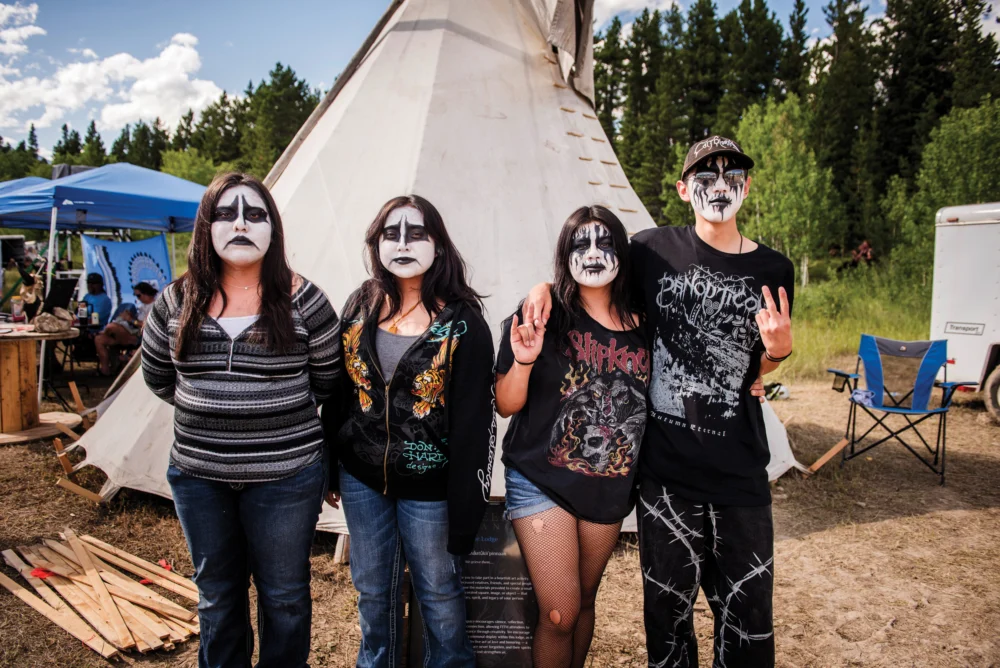
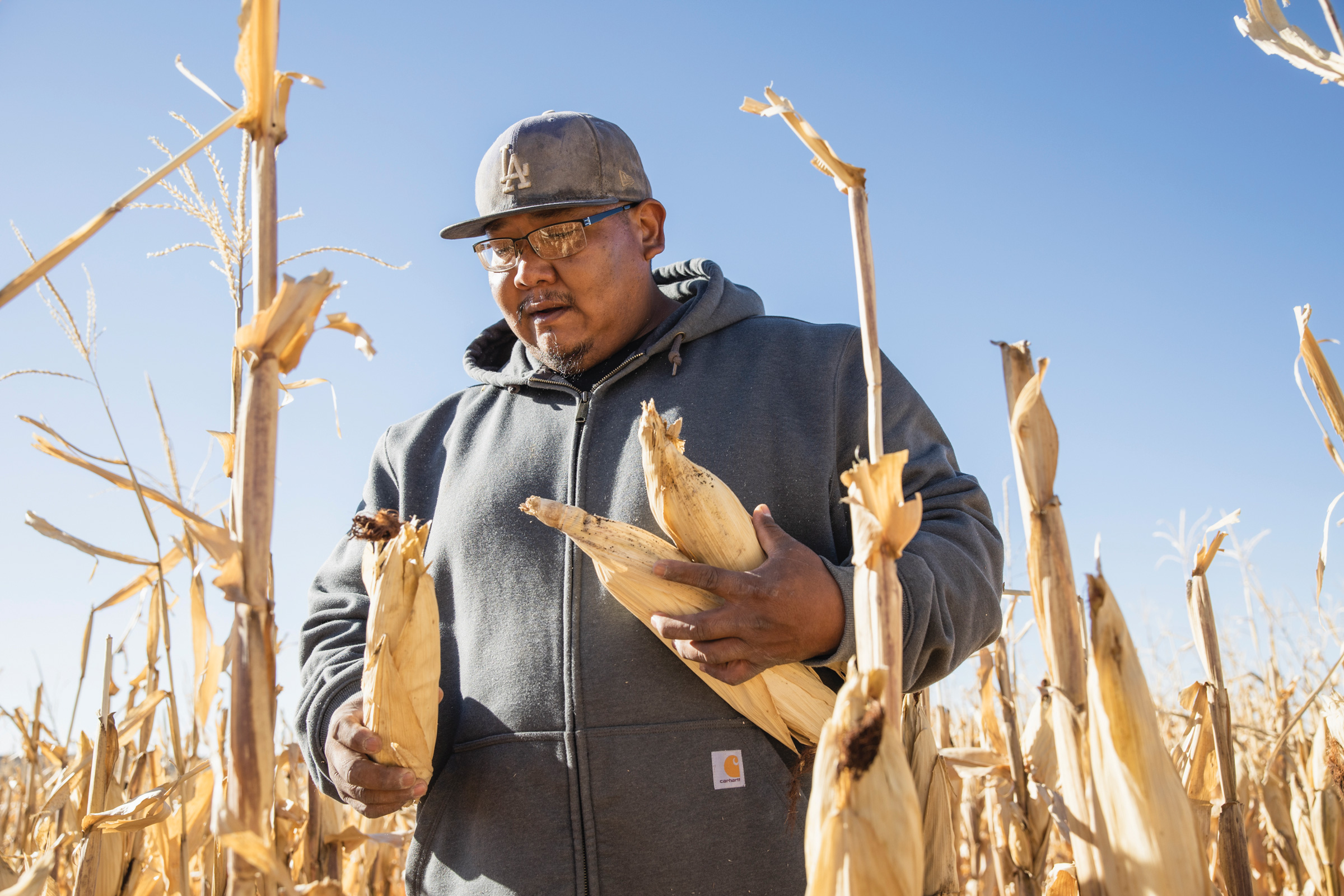
A few, for sure. About four times, actually. And my family’s rather small. Suicide has impacted my old friend group quite a bit. I’ve lost friends. I’ve lost family. My older brother. My sister’s youngest. I never thought I’d have that many people. Alcohol and depression, it comes hand-in-hand. One day the smiles stopped. I don’t mind talking about it. You guys are actually talking to the right person. Plenty of times. I had attempted two times. Growing up here, you could feel very isolated. The truth is I felt like I didn’t belong anywhere. Everywhere I went I just didn’t feel like I had enough of me in me. It’s a battle, for sure. Sometimes it’s a little voice in the back of your ear. I’ve looked at a full prescription of pills I had, and I’m just like, ‘just this, and it can all just be…’ But I never went through with it, cause I’m still here! The idea came close here and there, but I had my own outlets to manage my emotions. Music. Going to shows. Keeping my hands busy. After those two times, it really was music. My son, really. There’s a lot of love around me. I didn’t want my mom to lose another kid. I don’t want my niece or my nephew, or even my mother, walking in and finding me there. Seeing how other people push on. Being one of the people that other people see pushing on. Skateboarding, when I was younger, which is kind of why I got into heavy metal. Listening to my uncle’s Metallica CDs. I just get over it by listening to metal. Throw on some metal and you’re good.
The school year was winding down, and a sweltering May afternoon settled over Browning, Montana, the heart of the Blackfeet Nation. Outside Buffalo Hide Academy, an alternative public high school, scruffy dogs with patchy coats sought refuge from the heat in the slivers of sidewalk shade as lunch concluded. Students meandered into a spacious classroom, a testament to unconventional learning, featuring a podium, tables, and a corner filled with musical instruments. The walls were adorned with student artwork, a Blackfeet Nation flag, and a mural of a buffalo skull beneath the school’s name rendered in bold, dripping red letters. Far from the rigid structure of traditional classrooms, these students, clad in well-worn Converse, moved freely, their boisterous jokes echoing through the space. Some gravitated towards the instruments, joining their teacher, Robert Hall (Piikunii), who was already engaging with the drum kit, igniting a rapid and loud jam session.
"I would describe Browning as metal," Hall remarked, seated at the drums, his presence commanding despite a relaxed attire of a luau shirt and a bushy black ponytail. His intense brown eyes, described as being the size of jawbreakers, conveyed a deep understanding of his environment. "We don’t turn away from the darkness," he continued, "We don’t hide our own ugliness, the way that people in big cities could hide." He painted a picture of a town that, even by reservation standards, bore the marks of hardship. "There’s buildings that have been standing just in a void. No humans, no life running through these buildings for years," Hall explained, yet he quickly contrasted this with the profound beauty that also defined the landscape. "But there’s immense beauty here, too—extreme beauty. Our murals, our family networks, our ancient history, our language, the things that are binding us together for thousands of generations."

Charlie Speicher, another educator, stepped up to the microphone, testing its capabilities. "Who likes chaotic mathcore?" he inquired, referencing a subgenre of hardcore punk characterized by its complex rhythms and unpredictable structures, which he humorously described as "bonkers" and "all over the place." Only two hands rose in response, one of which was mine. "That makes three of us," Speicher declared, proceeding to cue up a YouTube video.
These students were nearing the conclusion of the inaugural year of Buffalo Hide Academy’s unique semester-long, two-hour heavy music symposium. This immersive course was dedicated to the comprehensive study of metal and hardcore music. Speicher, who is not Native, serves as both a clinical counselor and the director of Buffalo Hide Academy, and the symposium was his innovative creation. He, along with other faculty members, had specifically identified students who appeared to be isolated or who showed an inclination towards darker, more aggressive forms of art and music – potential candidates for the metalhead community. While over fifty students initially enrolled, by the semester’s end, the appeal of the class had grown so strong that students began to sneak away from their other classes to attend.
Speicher embraced the metal aesthetic in his teaching, often sporting a "battle vest," a quintessential piece of metal fashion. These vests, typically denim adorned with metal pyramids or spikes and embellished with patches featuring band logos in intricate, often illegible scripts, serve a dual purpose. Beyond offering a sense of physical protection, they act as gatekeepers, intimidating those unfamiliar with the culture while signaling a shared identity to fellow fans who recognize the symbols. The unspoken message is clear: if you understand, you are welcome; otherwise, you are an outsider. However, Speicher’s intention was to welcome these students into a community where a shared passion for music could offer solace and understanding for their struggles. As he articulated it, his goal was "to create more safety and protection specifically from suicidal distress," a pervasive issue that, he noted, had touched every family in Browning.
While some in Browning viewed Speicher’s initiative with suspicion, perhaps even as a misguided endeavor, he projected an aura of warmth and approachability, akin to a friendly youth pastor. He spoke with a gentle tone and offered easy smiles, his handsome face framed by a light stubble. His own battle vest was prominently adorned with the haunting image from the cover of Converge’s seminal 2001 album, Jane Doe. He introduced the students to the visceral music video for "Farewell, Mona Lisa" by the mathcore band The Dillinger Escape Plan, a piece so intense it could be likened to the frantic yet precise footwork of a dancer executing a series of elaborate stumbles. "Goes hard, huh? What’d you see? What’d you hear?" he prompted, inviting their reactions.

The students described the music as intricate and complex, noting the dynamic interplay between the guitars and drums, which seemed to mirror each other. The drumming, they observed, began with blast beats reminiscent of black metal before transitioning into a more grounded groove. The raw, guttural vocals alternated with moments of clear singing. Intriguingly, the guitars were tuned to standard pitch, a departure from the drop-tuning common in much of metal. The fashion, too, differed from typical metal presentations, appearing less theatrical. One student particularly noted the singer’s expressive, contorted body language, interpreting it as a profound release of emotion through artistic expression.
"Mmm, beautiful," Speicher responded thoughtfully. Later, the class engaged in an exercise where they were shown landscape photographs and tasked with identifying the heavy music genre or subgenre each image evoked: a frozen forest for black metal, a crumbling alley for doom, an urban protest scene for hardcore, and an alligator swamp for death metal. This led to a discussion on "geographic determinism," the theory suggesting that a region’s environment influences its musical output.
But Speicher’s curriculum extended beyond musical appreciation. He seamlessly transitioned into an exploration of heavy music’s therapeutic benefits, highlighting its capacity for catharsis, community building, and the development of coping mechanisms. "Heavy music teaches us things such as we’re not alone; when life is dark, we do something about it. We’re not just a prisoner to that darkness. But also that our risk fluctuates, that our misery isn’t gonna last forever. There are ways through it," he explained. Throughout this discussion, students engaged in various activities, doodling in their notebooks, idly strumming an unplugged bass guitar, or holding hands discreetly beneath the table.
A history lesson delivered by another teacher delved into the 1980s and 90s Scandinavian origins of black metal, including its more problematic elements such as violence and Nazism associated with certain bands. This served as a crucial reminder for the students to approach media with a critical lens. While hardcore music often takes explicit political stances, typically leaning left, the morality within metal is far more ambiguous, primarily focusing on pushing boundaries and challenging societal norms, leading to often chaotic outcomes. This discussion naturally evolved into a nuanced conversation, led by the students themselves, about the complex question of whether and when to separate artistic creation from the artist. In another lesson, Speicher recalled, they had examined the Vietnam War through the lens of Black Sabbath, whose iconic 1970 anthem "War Pigs" served as a potent critique of American involvement in the conflict.

"Your homework tonight, and I’ll remind you of this later, go listen to the song ‘43% Burnt’," Speicher instructed the students, urging them to pay particular attention to an influential breakdown passage near the song’s conclusion. Following this assignment, the students dispersed to engage in a creative activity: painting each other’s faces in "corpse paint" and posing for album cover-style photographs, incorporating animal skulls and hides as props. Emily Edwards (Piikunii), who was approaching her fifteenth birthday, demonstrated her knowledge by questioning my familiarity with the Swedish rock band Ghost, stating, "You don’t know Ghost?" Inspired by the class, Edwards and her friends had recently formed their own band, Crimson Harmony. Edwards was among many students who had eagerly signed up for a paid internship opportunity at an upcoming metal festival, Fire in the Mountains, scheduled to take place on the Blackfeet Nation later that summer. These festival internships were a key component of why the teachers had initiated the symposium.
Nicholas Rink (Piikunii), who teaches Blackfeet studies and language, approached me with palpable excitement. He was in the process of painting a buffalo skull that the students had helped prepare. Across its brow, he had meticulously painted overlapping bear paws, symbolizing a mother and cub, rendered in vibrant flame colors. He then dotted them with tiny white stars, representing Ursa Major and Minor, constellations that, he explained, are recognized as bears in both Piikunii and European traditions. The skull itself was intended as a gift for the Norwegian festival headliners, Wardruna, whose latest album, Birna, was dedicated to the bear. Rink had carefully aligned the painted stars to precisely match the celestial positions they would occupy during Wardruna’s performance on the Blackfeet Nation.
The Firekeepers
As the COVID-19 pandemic began to unfold in 2020, a devastating wave of suicides swept through the Blackfeet Nation, claiming the lives of multiple young people each year, some as young as eleven. Speicher described the impact on the community as akin to being hit "like a sledgehammer." He reached out to Steve Von Till, a fourth-grade teacher in Rathdrum, Idaho, and a figure well-known in metal circles as a doomy poet-troubadour and former guitarist for Neurosis. Speicher, Hall, Rink, Von Till, and a few other dedicated individuals banded together with a singular purpose: to support their students and help them navigate the darkness, metaphorically building a protective fire to shelter them from the encroaching shadows. They collectively named themselves the Firekeeper Alliance.

Several years prior, the "crunchy-pagan" festival, Fire in the Mountains, had been priced out of the increasingly gentrified Jackson, Wyoming. Speicher then approached the festival’s owners, proposing the idea of relocating the event to the reservation. His vision included integrating internships into his class curriculum, thereby providing students with tangible career pathways within an industry populated by like-minded individuals. This prospect seemed ideal, but securing the approval of the tribal council was the crucial next step.
The Blackfeet Tribal Business Council had a long-standing tradition of supporting youth through athletic programs, particularly in running and basketball. Venturing into the realm of the arts, and specifically music – let alone the genre of metal – represented uncharted territory. However, Councilman Everett Armstrong conveyed that the council’s consideration of the proposal was largely driven by its potential benefit to the youth. "Let’s try to go a different route to give our youth something that they can open our minds to, open our hearts to, find themselves," he stated.
Armstrong also highlighted the potential economic advantages for the nation. The reservation is situated along the border of Glacier National Park, a significant tourist destination that generates substantial revenue. He noted that many Piikunii individuals, in contrast, experience poverty, a contributing factor to the widespread suicidal ideation that disproportionately affects Native communities. The lack of widespread awareness of the Blackfeet Nation’s location was evident; many people only recognized it when Glacier National Park was mentioned. The upscale Glacier Park Lodge offered souvenirs, but despite being on reservation land, none bore any indication of the Blackfeet Nation itself. "We need to try to tap into that and try to get some revenue back into the Blackfeet Reservation," Armstrong emphasized.
For the festival to be a success, attracting a significant audience to the reservation was paramount, necessitating the involvement of bands with considerable drawing power. Consequently, in August 2024, the Firekeepers traveled to Boulder, Colorado, with the explicit goal of persuading the pagan folk band Wardruna to participate. Wardruna’s world tour was slated to commence at the iconic Red Rocks Amphitheatre, and Speicher and his team sought a personal meeting to advocate for their vision. They emphasized the festival’s core mission: "It’s for the children." The cultural resonance was undeniable, as Norwegian and Piikunii cultures share deep-rooted traditions of animism. The Firekeepers presented Wardruna with sweet pine ties, traditionally used for smudging, as gifts. Their meeting took place at the C.U. Boulder library, where they discovered the band was already fully supportive of the initiative. Einar Selvik, Wardruna’s singer, had already spoken with Speicher by phone and was prepared to commit.

"A chance to stand with (the) Indigenous in a constructive, powerful way, and a chance to visit a beautiful place and to do something that is more than just a festival, more than just a concert," Selvik explained, underscoring how "all the pieces just fit so well together." This secured booking represented a significant coup for the festival. Rink recounted that they spent the entire night discussing the implications of this partnership. Their shared vision and the alignment of celestial influences seemed to have converged.
Dance Intertribal
In late July, a contingent of metalheads, clad in black denim and bandanas, disembarked from an Amtrak train onto the sun-drenched platform at East Glacier Park, Montana, a small, seasonal town situated just fifteen minutes from Browning. Two days prior, Ozzy Osbourne, the legendary godfather of metal and frontman of Black Sabbath, had passed away.
Given that this marked the festival’s inaugural presence on a reservation, a palpable sense of anticipation and uncertainty permeated the air. Festivals, after all, have a notorious history of going awry, and the specter of a "Fyre Festival" in the Mountains was a concern for many. However, auspicious signs soon emerged. The passing of Ozzy Osbourne seemed to coincide with a reprieve from the week’s persistent rain, ushering in a few days of idyllic festival weather: temperatures in the high 70s, with partly cloudy skies and a refreshing coolness after sunset.

The Firekeeper Alliance thoughtfully distributed tickets to the local community and extended invitations to Blackfoot attendees from Canada. Others embarked on road trips or flew into Kalispell, culminating in a gathering of approximately 2,400 fans – an estimated third of whom were Indigenous, according to Speicher and Rink – converging from across the continent for three days of music featuring 23 bands.
Upon arrival at the festival grounds, the celebration commenced not with a land acknowledgment, but with a direct welcome from the land’s original inhabitants. In a time-honored Native tradition, a grand entry was organized, and true to form, it began with a characteristic delay. "We’re running on Indian time!" Hall exclaimed through a megaphone, punctuating his announcement with a war whoop and a dramatic flourish from the back of a motorcycle expertly maneuvered by Speicher across the rugged terrain.
As the stage crew finalized the setup in the distance, hundreds of metalheads settled into a circle to witness the spectacle. Local Piikunii individuals, adorned in traditional regalia, performed a series of captivating dances: fancy, traditional, chicken, jingle, and grass. Young Grey Horse provided a powerful drumbeat, while Hall, maintaining his characteristic boisterous demeanor, served as the emcee, interspersing his commentary with lighthearted Charlie Hill jokes to keep the mood buoyant. For many attendees, this was a profoundly transformative experience. Some fans had never witnessed a powwow before and were encountering Indigenous culture for the very first time.
Finally, Hall called for an intertribal dance – an inclusive celebration open to all. Initially, the metalheads hesitated, but after a few brave individuals ventured onto the grass, others followed suit. They formed a circle, moving in a respectful, slow-motion mosh pit, their battle vests and black jeans a stark contrast to the fluid movements of the Native dancers as they tentatively attempted to emulate the two-step. A spirited young fancy dancer, a school-aged performer, twirled past them with rapid-fire footwork, leaving them in her wake. Yet, the dance was intended as a welcoming gesture, not a competition. Hearts began to open, and a chorus of cheers erupted from both Native and non-Native attendees alike.

For Selvik, the powwow served as a deeply meaningful way "to set the tone, to open the circle." This festival demanded a certain level of vulnerability and deference from its attendees, acknowledging their status as guests on Piikunii lands. Notably, alcohol was prohibited – a significant departure from the typical conventions of metal culture. As Hall eloquently declared, it was intended to be "a cultural exchange between the Piikunii and metalheads."
Fringe Culture
"On my reservation, people only listen to two things: rap or hip-hop," joked Logan Mason (Colville), who had traveled from Spokane and was volunteering with the camping crew in exchange for festival admission. Mason, who had personally experienced the profound loss of his brother and nephew to suicide, found solace and a means to process his own struggles with depression during his late teens and early twenties through metal music. "Growing up, I did not know anybody else that listened to black metal or death metal," he admitted.
However, experiences vary across reservations. The Navajo Nation, for instance, boasts a thriving and genre-defining "rez metal" scene. Some individuals humorously categorize Native people as either "hip-hop Natives" or "metal Natives," suggesting that Indigenous individuals appear to be notably well-represented within the metal community. "A lot of it is land-based," observed Meg Skyum (Oji-Cree), who had traveled from Ontario to witness the performance of the Native black metal outfit Blackbraid and to catch a preview of their upcoming third album. Atmospheric black metal, in particular, resonated with her description of being "about the fucking trees and shit," a sentiment that, she noted, Native people deeply appreciate. Furthermore, Skyum added, both Indigenous individuals and metalheads often find themselves occupying marginalized positions within mainstream society, concluding, "We’re fringe, they’re fringe."

"A chance to stand with (the) Indigenous in a constructive, powerful way, and a chance to visit a beautiful place and to do something that is more than just a festival, more than just a concert."
"The metal tribe itself seems to attract a lot of people that go through different types of struggle," remarked Tomas Falomir (Ojibwe, Hopi, and Zuni Pueblo descent) from Parker, Colorado, emphasizing the healing power of the music and the welcoming nature of its community. "Any type of person could be included," he asserted.
Falomir further suggested that there is an intrinsic connection between the sound of metal and its appeal to those who have experienced hardship. "It almost goes with the loudness, and even down to the beat of it," he observed. Other fans echoed this sentiment, noting that the thunderous drums and powerful vocals of certain metal genres bear a resemblance to a modernized iteration of traditional Native music. The Pomona-based Indigenous death/doom project Tzompantli, for example, later exemplified this connection, powerfully shaking the festival grounds with their potent blend of traditional and contemporary drumming. Additionally, European bands like Wardruna were recognized for their deep engagement with their respective cultures, particularly pre-Christian traditions, a characteristic that resonated strongly with Native attendees.
"A lot of people are into metal because of how much trauma that we go through in our daily lives. And not only in our own daily lives, but our historical trauma," explained Damien Jones Jr. (Diné), who traveled with his family from Lukachukai in the Navajo Nation. Jones, who brought one of the festival’s most photographed battle vests – adorned with turquoise geometric patterns and a "Frybread Power" backpatch – plays saxophone, excelling in both classical and jazz genres. "That’s what I do as well, throw all my feelings and emotions into music," he shared, drawing a parallel between his own artistic expression and the cathartic nature of heavy music.

Dark Horse, Ride
"WELCOME TO THE BACKBONE OF THE WORLD," proclaimed a sign at Red Eagle Campground, where the majestic peaks of the Rockies arched like the ancient vertebrae of a slumbering giant half-submerged in the earth’s embrace. Across the glassy surface of Two Medicine Lake, an amphitheater of pines stood sentinel, a silent chorus poised between the water’s edge and the distant timberline. On the near bank, a footpath meandered along the lake, occasionally opening to beach access points equipped with pop-up canopies and scattered hay bales serving as seating for workshops and panel discussions on topics ranging from Indigenous sovereignty and ethnobotany to the epidemic of missing and murdered Indigenous people and the therapeutic potential of heavy music.
A cluster of interconnected meadows had been transformed into a vibrant festival hub, featuring expansive parking areas, a charming village of glamping yurts, a bustling bazaar of vendor tents, and the central "stage bowl"—a natural glen housing two stages framed by tipis that served as green rooms. The air was thick with the savory aroma of roasting duck and buffalo, expertly prepared by the Montana-based off-grid catering team, Region Sauvage. High school interns had meticulously decorated the stages with an array of skulls, antlers, driftwood, and intricately crafted pieces reflecting a blend of Indigenous artistry and forest mysticism. Edwards, working diligently at the merch tent, was busy selling Firekeeper Alliance t-shirts. These shirts featured a striking design depicting a malevolent spirit of suicide haunting a tipi, within which Native children found shelter around a protective fire. All proceeds from the shirt sales were dedicated to suicide prevention efforts. The parking attendants and security personnel exuded an unusually relaxed demeanor, a deliberate choice designed to foster a welcoming atmosphere, acknowledging that Indigenous people are often subjected to scrutiny and surveillance.
The inaugural performance on stage was delivered by Sage Bond (Diné and Nde), an emerging acoustic metal singer-songwriter hailing from Tonalea on the Navajo Nation. Bond, who had previously toured in support of suicide prevention initiatives on her reservation, captivated the audience with a vocal range that moved from a low snarl, reminiscent of Eddie Vedder, to a powerful roar that she playfully dubbed "Cookie Monster vocals," a sound as immense as ten mountain lions. She had anticipated a modest turnout, with attendees drifting in and out, but was astounded by the hundreds who remained captivated by her performance. This marked a significant milestone for Bond, her first performance at a festival of this magnitude, which she humorously dubbed a "black metal Coachella," despite the absence of feather headdresses, except those worn by tribal council members. "How the heck did they even find me?" she marveled.

It transpired that Bond had been recommended by Pan-Amerikan Native Front, a Chicago-based black metal act. During their electrifying set, they invited students onto the stage to join the singer, Kurator of War, in headbanging. Kurator of War, adorned in black-and-white face paint and crossed bullet sashes, stood alongside the students who proudly held aloft a Blackfeet Nation flag. Necroboar (Purépecha), the band’s barrel-chested guitarist, who projected an intimidating presence in spiked leather cuffs, was later seen beaming backstage. "A lot of people are thanking us for being here with the kids," Necroboar shared, his voice filled with emotion, "but it’s like you don’t understand what this means to us to be here and to see them." He revealed that he and his bandmates saw a reflection of themselves in the teenagers. Misty-eyed fans echoed this sentiment, recognizing the profound significance of the moment. The band had rehearsed their set earlier that morning at Buffalo Hide Academy with the students, fulfilling a long-held aspiration to perform on a reservation. "I’m still shaking from it," Necroboar confessed.
The festival’s profound connection to Indigenous culture and its commitment to supporting youth well-being resonated deeply with attendees and performers alike. The Firekeeper Alliance’s initiative had successfully woven together the raw power of heavy music with a crucial message of healing and resilience, creating an unforgettable experience on the Blackfeet Nation.
The festival grounds transformed into a vibrant hub of activity. A footpath wound along the lake’s edge, leading to beach access points where pop-up canopies provided shade and hay bales served as seating for workshops and panel discussions. These sessions explored critical topics such as Indigenous sovereignty, ethnobotany, the ongoing crisis of missing and murdered Indigenous people, and the therapeutic applications of heavy music. Interconnected meadows evolved into parking lots, a cluster of glamping yurts, and a lively bazaar of vendor tents. At the heart of it all lay the "stage bowl," a natural amphitheater where two stages were erected, flanked by tipis serving as green rooms. The air was filled with the tantalizing aroma of duck and buffalo, prepared by the local off-grid catering company, Region Sauvage. Students, having participated in processing the buffalo, assisted in decorating the stages with an array of symbolic items, including skulls, antlers, and driftwood, creating an environment that blended the raw aesthetics of heavy music with Indigenous artistry. Edwards, working at the merchandise tent, enthusiastically sold Firekeeper Alliance shirts, featuring a powerful design illustrating a spirit of suicide haunting a tipi where Native children found refuge around a fire, with proceeds dedicated to suicide prevention. The parking attendants and security personnel, all seemingly relaxed and approachable, maintained a conscious effort to cultivate a welcoming atmosphere, mindful of the need to avoid any semblance of the surveillance often experienced by Indigenous communities.
The festival opened not with a perfunctory land acknowledgment, but with a heartfelt welcome from the land’s original stewards. In true Native fashion, a grand entry commenced, albeit with a characteristic, unhurried rhythm. "We’re running on Indian time!" declared Robert Hall, the festival’s charismatic emcee, through a megaphone, his pronouncement accompanied by a spirited war whoop and a dramatic flourish from the back of a motorcycle skillfully navigated by Charlie Speicher across the rugged terrain. As the stage crew meticulously finalized the setup in the distance, hundreds of metalheads settled into a respectful circle to witness the cultural exchange. Local Piikunii individuals, resplendent in traditional regalia, performed a series of captivating dances—fancy, traditional, chicken, jingle, and grass. Young Grey Horse provided a powerful, resonant drumbeat, while Hall, maintaining his signature energetic demeanor, kept the mood light with humorous anecdotes. For many attendees, this was a deeply moving experience, offering a first encounter with Indigenous culture for those who had never attended a powwow.

Following the traditional performances, Hall called for an intertribal dance, an inclusive celebration open to all. A moment of hesitation rippled through the metalhead contingent, but soon, a few brave individuals ventured onto the grass, followed by others. They formed a circle, moving in a respectful, slow-motion mosh pit, their black attire a striking contrast to the vibrant movements of the Native dancers as they tentatively attempted to mirror the intricate steps. A spirited young fancy dancer, a school-aged performer, twirled past them with dazzling footwork, leaving them in her dust. The dance, however, was not a competition but a genuine invitation, a gesture of shared experience. Hearts began to open, and a wave of cheers erupted from both Indigenous and non-Indigenous attendees alike.
Einar Selvik, the lead singer of the Norwegian band Wardruna, described the powwow as a profoundly meaningful way "to set the tone, to open the circle." The festival inherently demanded a degree of vulnerability and deference from its attendees, acknowledging their role as guests on Piikunii lands. Notably, the absence of alcohol represented a significant departure from typical metal festival norms. As Hall articulated, the event was conceived as "a cultural exchange between the Piikunii and metalheads."
"On my reservation, people only listen to two things: rap or hip-hop," joked Logan Mason (Colville), who had traveled from Spokane and volunteered with the camping crew. Mason, having experienced the profound loss of his brother and nephew to suicide, found that metal music had been instrumental in helping him navigate his own struggles with depression during his late teens and early twenties. "Growing up, I did not know anybody else that listened to black metal or death metal," he confessed. However, the presence of metal music on reservations varies. The Navajo Nation, for instance, boasts a vibrant and genre-defining "rez metal" scene. Some wryly observe that Native individuals tend to fall into one of two categories: "hip-hop Natives" or "metal Natives," suggesting a notable overrepresentation of Indigenous people within the metal community. "A lot of it is land-based," commented Meg Skyum (Oji-Cree), who journeyed from Ontario to witness the performance of the Native black metal act Blackbraid and to preview their upcoming album. She particularly noted that atmospheric black metal, with its focus on nature, resonates deeply with Indigenous sensibilities. Furthermore, Skyum added, both Indigenous people and metalheads often occupy marginal spaces in society, concluding, "We’re fringe, they’re fringe."
"The metal tribe itself seems to attract a lot of people that go through different types of struggle," remarked Tomas Falomir (Ojibwe, Hopi, and Zuni Pueblo descent) from Parker, Colorado, highlighting the healing aspects of the music and the welcoming nature of the community. "Any type of person could be included," he affirmed. Falomir also suggested a sonic connection, noting, "It almost goes with the loudness, and even down to the beat of it." Other fans agreed, drawing parallels between the powerful drumming and vocals in some metal genres and a modernized interpretation of traditional Native music. The death/doom project Tzompantli, based in Pomona, exemplified this, delivering a performance that reverberated through the festival grounds with its potent blend of traditional and contemporary drumming. Additionally, European bands like Wardruna were lauded for their deep reverence for their cultures, particularly their pre-Christian heritage, a characteristic that strongly resonated with Native attendees.

"A lot of people are into metal because of how much trauma that we go through in our daily lives. And not only in our own daily lives, but our historical trauma," explained Damien Jones Jr. (Diné), who traveled with his family from the Navajo Nation. Jones, whose battle vest adorned with turquoise geometrics and a "Frybread Power" patch garnered significant attention, plays saxophone in classical and jazz ensembles. "That’s what I do as well, throw all my feelings and emotions into music," he stated, drawing a parallel between his own artistic expression and the cathartic nature of heavy music.
Dark Horse, Ride
"WELCOME TO THE BACKBONE OF THE WORLD," declared a sign at Red Eagle Campground, where the majestic peaks of the Rockies formed a dramatic backdrop against the vast Montana sky. Across the serene waters of Two Medicine Lake, an amphitheater of pines stood as silent sentinels, poised between the shoreline and the distant timberline. A footpath meandered along the lake’s edge, occasionally opening to beach access points equipped with pop-up canopies and hay bales arranged as seating for a diverse array of workshops and panel discussions. These sessions delved into critical topics such as Indigenous sovereignty, ethnobotany, the pressing issue of missing and murdered Indigenous people, and the profound therapeutic benefits of heavy music.
The landscape transformed into a bustling festival site, complete with parking areas, a village of glamping yurts, and a vibrant bazaar of vendor tents. The central "stage bowl," a natural glen, housed two stages flanked by tipis that served as green rooms. The air was filled with the tantalizing aromas of duck and buffalo, prepared by the local catering team, Region Sauvage. High school interns had meticulously decorated the stages with an assortment of symbolic elements, including skulls, antlers, and driftwood, creating an environment that harmoniously blended the raw aesthetics of heavy music with Indigenous artistry. Edwards, working at the merchandise tent, enthusiastically sold Firekeeper Alliance t-shirts, featuring a powerful design depicting a spirit of suicide haunting a tipi where Native children found refuge around a fire, with all proceeds dedicated to suicide prevention. The parking attendants and security personnel exuded a relaxed and approachable demeanor, a deliberate effort to foster a welcoming atmosphere, consciously avoiding any semblance of the surveillance often experienced by Indigenous communities.

The festival commenced not with a perfunctory land acknowledgment, but with a heartfelt welcome from the land’s original stewards. In true Native fashion, a grand entry unfolded, albeit with a characteristic, unhurried rhythm. "We’re running on Indian time!" announced Robert Hall, the festival’s charismatic emcee, through a megaphone, his declaration accompanied by a spirited war whoop and a dramatic flourish from the back of a motorcycle expertly navigated by Charlie Speicher across the rugged terrain. As the stage crew meticulously finalized the setup in the distance, hundreds of metalheads settled into a respectful circle to witness the cultural exchange. Local Piikunii individuals, resplendent in traditional regalia, performed a series of captivating dances—fancy, traditional, chicken, jingle, and grass. Young Grey Horse provided a powerful, resonant drumbeat, while Hall, maintaining his signature energetic demeanor, kept the mood light with humorous anecdotes. For many attendees, this was a deeply moving experience, offering a first encounter with Indigenous culture for those who had never attended a powwow.
Following the traditional performances, Hall called for an intertribal dance, an inclusive celebration open to all. A moment of hesitation rippled through the metalhead contingent, but soon, a few brave individuals ventured onto the grass, followed by others. They formed a circle, moving in a respectful, slow-motion mosh pit, their black attire a striking contrast to the vibrant movements of the Native dancers as they tentatively attempted to mirror the intricate steps. A spirited young fancy dancer, a school-aged performer, twirled past them with dazzling footwork, leaving them in her dust. The dance, however, was not a competition but a genuine invitation, a gesture of shared experience. Hearts began to open, and a wave of cheers erupted from both Indigenous and non-Indigenous attendees alike.
Einar Selvik, the lead singer of the Norwegian band Wardruna, described the powwow as a profoundly meaningful way "to set the tone, to open the circle." The festival inherently demanded a degree of vulnerability and deference from its attendees, acknowledging their role as guests on Piikunii lands. Notably, the absence of alcohol represented a significant departure from typical metal festival norms. As Hall articulated, the event was conceived as "a cultural exchange between the Piikunii and metalheads."
Sage Bond (Diné and Nde), an emerging acoustic metal singer-songwriter from Tonalea on the Navajo Nation, delivered a captivating performance on the main stage, her vocals ranging from a low snarl to a powerful roar. Bond, who had previously toured in support of suicide prevention efforts on her reservation, expressed surprise at the large and engaged audience. This marked a significant milestone for her, her first performance at a festival of this scale. Pan-Amerikan Native Front, a Chicago-based black metal act, later took the stage, inviting students to join them in headbanging. Their singer, Kurator of War, adorned in face paint and bullet sashes, shared the stage with students holding a Blackfeet Nation flag. Necroboar (Purépecha), the band’s guitarist, spoke of the profound significance of performing for and with the youth, noting the shared sense of identity and struggle.

The festival’s impact extended beyond the musical performances. Musicians mingled with fans, participating in activities such as horseback riding, paddleboarding, yoga, and attending workshops. Near the food stalls, a makeshift altar to Ozzy Osbourne was established, adorned with rocks, feathers, cigarettes, and trinkets, bearing the inscription "Long Live the Prince of Darkness." Heather Jordan (Diné), pregnant and performing with her band LiÅ‚ith, delivered a powerful set, highlighting the festival’s focus on Indigenous artists. She expressed her desire to perform at Fire in the Mountains due to its lineup and its unique emphasis on Native culture. Jordan, who works a day job serving tourists on her dry reservation, noted the challenges of navigating cultural differences.
Jon Krieger of Blackbraid, a solo project that gained rapid popularity, spoke about the spiritual nature of black metal and its alignment with Indigenous values, particularly its anti-Christian stance, which he shares with Scandinavian black metal traditions. Krieger, who was adopted and is unaware of his tribal affiliation, performed a mesmerizing set that included cedar flute and intense vocals, captivating the audience. A fan in the mosh pit hoisted a buffalo rib like a symbolic invocation, a testament to the primal energy of the performance. Photographer Russel Albert Daniels, initially skeptical, found himself drawn into the music, declaring, "Now I get it." Converge, a highly anticipated act and a personal favorite of Speicher’s, delivered an explosive performance. Bassist Nate Newton and Ivar Bjørnson from Enslaved had previously engaged with the students via Zoom, offering their time and support.
Before Converge’s set, Speicher and the Firekeepers presented the band with a buffalo skull painted with the iconic Jane Doe artwork, a symbolic exchange that underscored the festival’s unique cultural fusion. The festival’s commitment to showcasing Indigenous talent and fostering a sense of community was evident throughout the event, creating