Rocky Gerung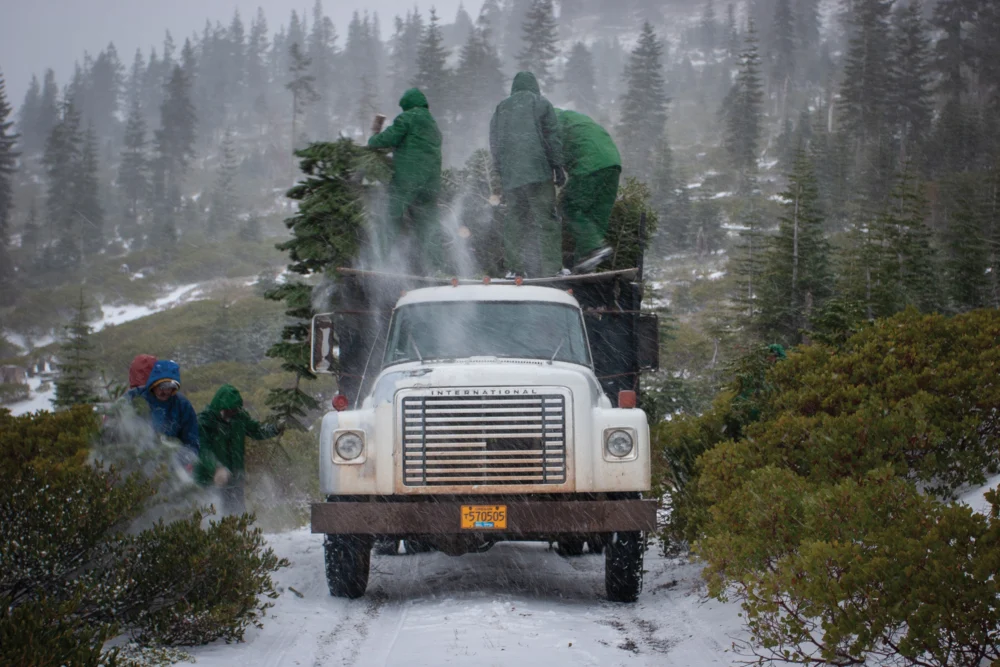
High on the volcanic slopes of Northern California’s Cascade Range, where the air bites with a crispness unique to high altitudes, a seasonal ritual unfolds with the urgency of an approaching winter. Between the mid-October freeze and the first heavy snows of November, the sharp, rhythmic sound of chainsaws pierces the resin-scented air. In the dim light of dawn, a dedicated crew works with practiced efficiency, harvesting wild red firs destined for Christmas tree lots across the nation. These majestic trees, scientifically known as Abies magnifica and commonly called silvertips for their distinctive, silvery-blue needles, flourish at elevations between 6,500 and 8,000 feet. They cling tenaciously to rugged terrain in California and Oregon, landscapes that endure scorching summers and deep winter freezes, conditions that forge the trees’ characteristic, symmetrical branching patterns.

For John Wayne Strauch, a man affectionately known as "Bambi" after five decades in the wild Christmas tree business, the season is fleeting. "You only get a few weeks," he stated, his voice seasoned by years spent in the mountains. Strauch, who owns timber rights on over 300 acres of land on Worley Mountain, situated between the vast expanse of Eagle Lake and the town of Susanville, California, understands the delicate balance of this endeavor. "If the ground doesn’t freeze, the needles won’t set," he explained, referring to a crucial stage in the tree’s development that ensures its needles remain vibrant throughout the holiday season. "If it snows early, you’re done." It is a relentless race against time, a narrow window of opportunity before winter’s snows render the mountain inaccessible, forcing the workers to abandon their efforts. "Why are we doing this?" Strauch mused, a hint of both weariness and determination in his tone. "Guys are barely breaking even… but we just keep doing it." This enduring commitment to a vanishing tradition underscores the deep connection these harvesters have to the land and the unique product they provide.

Strauch’s own journey into this demanding profession began in the early 1970s, alongside his godfather, Joe McNally. Both were newcomers to the industry, seeking both livelihood and adventure in the remote wilderness. Their early years were marked by a steep learning curve, fraught with challenges like hauling broken-down trucks from snow-choked ravines and watching their carefully selected trees disappear under sudden, fierce storms. Despite these hardships, their shared mission endured: to bring a touch of the wild forest into homes for the holiday season. Today, Strauch relies heavily on a workforce of predominantly migrant Mexican laborers who travel north each winter, many transitioning from seasonal work in orchards and vineyards. However, recent years have introduced new layers of uncertainty, as shifts in immigration policies and increased risks associated with Immigration and Customs Enforcement (ICE) operations have cast a shadow over the labor force, according to Dan Barker, who helps manage the harvest operations.

The harvest itself is a finely tuned operation, typically involving two crews comprising around 18 men. This team includes essential roles such as a cook to sustain them in the remote location, two drivers to manage the transport of trees, two skilled cutters who meticulously fell the trees, a baling operator to prepare them for transport, and the remainder of the crew tasked with hauling the felled trees from deep within the dense forest. They work in a coordinated rotation, moving with swift precision. Their task involves expertly slicing through the sturdy trunks of silvertips, guiding them gently down steep ridgelines to avoid damaging their branches. Once at a collection point, the trees undergo a rigorous grading process, assessed for their shape, symmetry, and color. They are categorized into tiers: 2s, 1s, primos, and the highly coveted double primos, with prices reflecting their quality. This year, a prime 8-foot red fir, a "double primo," is expected to fetch around $250 at market, while a "2" of the same height might sell for approximately half that amount. This meticulous grading system forms a crucial link, connecting the remote high-country forests to living rooms hundreds of miles away.

A key element of this sustainable harvesting practice is known as coppicing, or stump culturing. This method involves making a precise cut above the tree’s base, carefully leaving several whorls of branches intact. This technique allows the tree’s base to regenerate. Within a few years, one of the surviving branches receives internal cues and redirects its growth towards the sun, eventually developing into a new tree ready for future harvests. "We’re not clear-cutting," Strauch emphasized. "The better we take care of the trees, the better they take care of us. Some, we’ll get five, 10 harvests. Those are the mothers." This natural regeneration process eliminates the need for replanting, tilling, or chemical treatments, fostering a simple yet effective sustainable cycle that has ensured the productivity of these slopes for decades.

Strauch’s operation on Worley Mountain yields approximately 7,000 trees annually, making it one of the nation’s last significant commercial wild Christmas tree harvests. While its scale is modest compared to large-scale farmed Christmas tree operations, its intrinsic value lies in the rarity of the silvertip, its inherent sustainability, and the profound relationship between the land and the labor it sustains. "These are beautiful trees with a beautiful story," remarked Barker. "We don’t just want people to accept them – we want them to love them like we do." This sentiment highlights the dedication of the harvesters and their hope that consumers appreciate the unique origins and ecological integrity of their wild-harvested Christmas trees.

The silvertip’s unique characteristic of retaining its needles well into March, thanks to the crucial "setting" process triggered by freezing nights, makes it a sought-after specimen. This ensures that the trees, after being meticulously cut, graded, and tagged with color-coded labels indicating their height, remain fresh and vibrant long after the holiday season concludes. Within days of being harvested, these trees are loaded onto trucks, embarking on journeys to tree lots across the Western United States, marking the end of another challenging yet rewarding season in the high country. The impact of climate change is increasingly felt in these alpine environments, influencing not only the growth patterns of the trees but also the lives of those who depend on them. Extreme early-season heat waves have scorched thousands of young trees in recent years, hindering their development before they can mature. These environmental shifts add another layer of complexity to an already demanding profession, requiring adaptation and resilience from both the land and its stewards.

The rugged terrain and unpredictable weather present constant challenges. Crews often work into the late hours, relying on headlamps and truck lights to navigate the slopes and sort the trees. The visual spectacle of a full moon rising over the high-elevation forest on Worley Mountain serves as a backdrop to this often arduous work, a reminder of the natural beauty intertwined with this human endeavor. The silvertip trees in the foreground, showcasing the results of careful stump culturing, stand as a testament to a harvesting method that prioritizes long-term forest health and sustainable yield. This practice ensures that future generations can continue to enjoy the tradition of wild-harvested Christmas trees, connecting them to the enduring spirit of the American West.