Rocky Gerung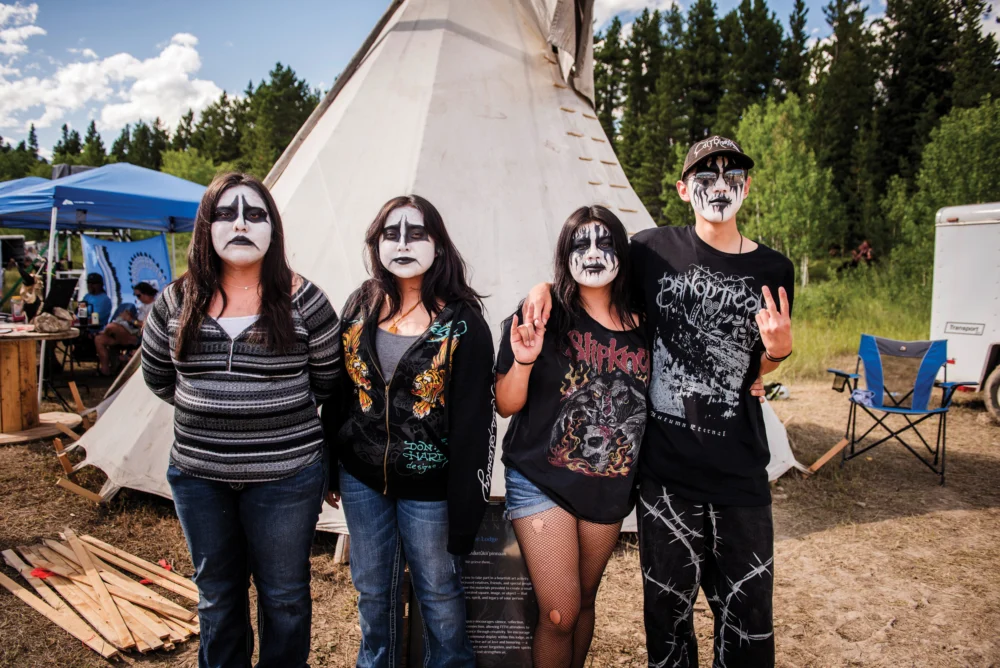
A profound sense of shared experience and catharsis pulsed through the Fire in the Mountains festival, a heavy music gathering held on the ancestral lands of the Blackfeet Nation, commonly known as the Piikunii people. This unique event transcended typical festival atmospheres, weaving together the raw power of metal with Indigenous culture and a vital focus on mental well-being. For many attendees, the aggressive sounds and dark lyrical themes of heavy music served as a powerful conduit for processing trauma, isolation, and grief, offering solace in a community that understood their struggles. The festival’s organizers, a collective known as the Firekeeper Alliance, intentionally curated an experience designed to foster connection and support, particularly for Indigenous youth facing immense challenges.

The journey to this transformative event began in the alternative public high school, Buffalo Hide Academy, located in Browning, Montana, the heart of the Blackfeet Nation. Amidst the dust and the resilient spirit of the community, a novel heavy music symposium was taking shape. Spearheaded by Charlie Speicher, a clinical counselor and the school’s director, the semester-long course delved deep into the diverse subgenres of metal and hardcore. Speicher, often seen in his meticulously adorned “battle vest,” a symbol of belonging and identity within metal subcultures, aimed to create a safe haven for students who might feel marginalized or drawn to darker, more expressive art forms. What started as an enrollment of over fifty students quickly grew, with many eager teens sneaking away from other classes to immerse themselves in the symposium’s offerings.
Speicher’s approach was as unconventional as the music itself. He presented the complexities of mathcore through videos of bands like The Dillinger Escape Plan, fostering discussions about rhythm, instrumentation, and emotional expression. Students analyzed landscape photographs, associating them with specific metal subgenres like black metal for frozen forests or doom metal for crumbling alleys, exploring the concept of “geographic determinism” in music. Beyond theoretical exploration, the curriculum directly addressed the therapeutic potential of heavy music, emphasizing its role in combating isolation and offering coping mechanisms. The students, in turn, found powerful outlets for their emotions, whether through jamming with instruments, sketching in notebooks, or simply finding solidarity in shared listening.

The symposium also tackled the darker, more challenging aspects of metal’s history, including the problematic elements found in some subgenres like black metal, such as links to violence and extremist ideologies. This critical examination encouraged students to engage with music thoughtfully, prompting high-level discussions about the complex relationship between art and artist. Lessons on historical events, like the Vietnam War, were framed through the lens of seminal metal anthems like Black Sabbath’s “War Pigs,” demonstrating music’s capacity to reflect and critique societal issues. Students were encouraged to explore powerful tracks like “43% Burnt,” and many found themselves inspired to create their own art, with some forming bands like Crimson Harmony and even securing internships for an upcoming metal festival.
The genesis of the Fire in the Mountains festival was deeply rooted in the community’s struggle with a devastating wave of suicides that swept through the Blackfeet Nation in the wake of the 2020 pandemic. These tragic losses, claiming young lives as early as age eleven, left an indelible mark on the community. In response, a group of dedicated educators and musicians, including Speicher, Robert Hall (Piikunii), a teacher at Buffalo Hide Academy, and Steve Von Till, a musician known for his work with Neurosis, banded together to form the Firekeeper Alliance. Their mission was clear: to build a metaphorical “protective fire” for the youth, offering them a sense of belonging and a path away from despair.

The Firekeeper Alliance recognized the potential of a music festival to not only provide economic opportunities for the reservation but also to foster cultural exchange and healing. They approached the owners of the Fire in the Mountains festival, which had been displaced from Jackson, Wyoming, with the idea of relocating it to the Blackfeet Nation. This proposal required buy-in from the Tribal Business Council, which, while accustomed to supporting youth through athletics, was venturing into new territory with a heavy music event. Councilman Everett Armstrong, however, recognized the potential benefits, stating the initiative offered a "different route to give our youth something that they can open our minds to, open our hearts to, find themselves." The economic implications were also significant, as the reservation, situated near the highly lucrative Glacier National Park, grappled with widespread poverty, a known contributing factor to the disproportionately high rates of suicidal distress among Native communities.
Securing prominent bands for the festival was crucial to its success. In August 2024, the Firekeepers traveled to Boulder, Colorado, to meet with the acclaimed Norwegian folk band Wardruna. Their aim was to persuade the band to headline the festival on the Blackfeet Nation. The meeting, held at the C.U. Boulder library, proved unexpectedly fruitful. Wardruna’s singer, Einar Selvik, had already spoken with Speicher and was enthusiastic about the project. Selvik expressed his desire to “stand with the Indigenous in a constructive, powerful way” and saw the festival as an opportunity to create something more meaningful than a typical concert. This alignment of values, bridging ancient Nordic traditions with Indigenous spirituality, was a significant coup for the festival, setting a powerful tone for the event.

As July arrived, the first edition of Fire in the Mountains on the Blackfeet Nation commenced with a palpable sense of anticipation. The arrival of metalheads, a diverse throng of fans from across the continent, signaled a new era for the festival and the community. Despite the lingering shadow of the Fyre Festival debacle, the event unfolded under auspicious skies, with organizers prioritizing safety and cultural respect. The festival opened not with a land acknowledgment but with a vibrant welcome from the Piikunii people, featuring a grand entry with traditional powwow dancing. This powerful display of Indigenous culture served as a profound introduction for many festival-goers, offering a firsthand encounter with the traditions and resilience of the land’s original inhabitants.
Robert Hall, acting as the boisterous emcee, ensured the atmosphere was both celebratory and respectful. The inclusion of an intertribal dance, where metalheads tentatively joined Indigenous dancers on the grass, symbolized a genuine cultural exchange, breaking down barriers and fostering a sense of unity. The absence of alcohol, a deliberate choice by the organizers, further encouraged a focus on authentic connection and mindful engagement. This intentional departure from typical festival norms created an environment where vulnerability and mutual respect could flourish.

For many attendees, the festival provided a rare opportunity to connect with others who shared their passion for heavy music and understood their experiences. Logan Mason, who traveled from Spokane, spoke about how metal helped him cope with the loss of his brother and nephew to suicide, lamenting that he knew few other Native individuals who shared his musical tastes. This sentiment resonated with many, highlighting the isolating nature of niche interests within reservation communities. However, the growing “rez metal” scene, particularly on the Navajo Nation, and the increasing visibility of Indigenous bands like Blackbraid, suggested a burgeoning counterculture. Meg Skyum, attending from Ontario, noted the shared “fringe” identity of Indigenous people and metalheads, both existing on the margins of mainstream society.
The music itself resonated deeply with attendees, drawing parallels between the powerful rhythms of metal and the percussive elements of Native music. Bands like Tzompantli, with their blend of death/doom and traditional drumming, and European artists like Wardruna, who draw heavily on ancient cultural traditions, further underscored this connection. For Damien Jones Jr., a Diné musician, the cathartic release offered by heavy music provided an essential outlet for processing personal and historical trauma. His elaborately decorated battle vest, featuring turquoise accents and a “Frybread Power” patch, became a symbol of this intersection of identities.

The festival grounds, nestled within the breathtaking landscape of the Rockies near Two Medicine Lake, provided a stunning backdrop for the immersive experience. Workshops and panels addressed vital issues such as Indigenous sovereignty, ethnobotany, and the epidemic of missing and murdered Indigenous people, alongside discussions on the therapeutic power of heavy music. The stage, adorned with natural elements like antlers and driftwood, reflected the festival’s commitment to integrating with the environment and Indigenous aesthetics. High school interns, including Emily Edwards, who was actively involved in promoting suicide prevention through festival merchandise, played a crucial role in the event’s organization and spirit.
The musical lineup featured a diverse array of talent, from the raw energy of Indigenous artists like Sage Bond, whose powerful vocals captivated a large audience, to the established international acts. The band Pan-Amerikan Native Front, with their provocative stage presence, invited Indigenous youth onto the stage, fostering a sense of empowerment and shared identity. For many musicians, performing on the Blackfeet Nation was a deeply meaningful experience. Necroboar of Pan-Amerikan Native Front expressed his profound gratitude for the opportunity to connect with young Indigenous fans, stating, “It’s like you don’t understand what this means to us to be here and to see them.”

The festival’s commitment to cultural exchange extended to the musicians themselves, with many engaging in activities like horseback riding, paddleboarding, and attending workshops alongside attendees. A makeshift altar dedicated to the recently deceased Ozzy Osbourne, adorned with natural offerings, became a poignant symbol of remembrance and shared grief. Heather Jordan, a pregnant Diné musician performing with her blackened doomgaze duo Liith, spoke of the festival’s alignment with her own cultural values and her desire to share her music in a space that embraced Indigenous themes. Jon Krieger, the driving force behind the popular black metal project Blackbraid, found spiritual resonance in the genre, noting its shared anti-Christian sentiment with some Indigenous traditions.
The performance by Blackbraid, featuring Krieger’s captivating stage presence and powerful vocalizations, resonated deeply with the audience, leaving a lasting impression on many, including photographer Russel Albert Daniels, who declared his newfound commitment to the metal scene. The presence of acclaimed bands like Converge, whose bassist Nate Newton had previously connected with students at Buffalo Hide Academy, further solidified the festival’s artistic credibility. The Firekeepers presented Converge with a painted buffalo skull, a significant cultural offering that underscored the unique nature of the event.

The intensity of the mosh pit during Converge’s set, characterized by a “consensual violence” that fostered mutual support among participants, became a visceral metaphor for the festival’s underlying themes of shared struggle and release. The spontaneous inclusion of a Piikunii youth singing alongside Converge frontman Jacob Bannon during the song “Dark Horse” was a powerful moment of cultural fusion, embodying the festival’s core message of unity.
As a powerful thunderstorm rolled in on the final day, the festival’s resilience was put to the test. When the power failed during Inter Arma’s set, the band continued undeterred, relying on acoustic percussion. The crowd’s enthusiastic singalong to Black Sabbath’s “War Pigs” during the blackout, a collective act of defiance and tribute, highlighted the enduring spirit of the community. Despite the logistical challenges posed by the storm, the music ultimately persevered, with Old Man’s Child delivering a highly anticipated debut performance in the United States under a dramatic, storm-lit sky.

The aftermath of the festival saw an outpouring of positive feedback on social media, with attendees describing the experience as “transformational” and “life-changing.” Many praised the absence of alcohol, noting that it enhanced their ability to connect and engage with the music and culture on a deeper level. Frank Godla, co-founder of Metal Injection, remarked that he learned more about Native people at the festival than from any other source. Wardruna expressed their profound gratitude to the Blackfeet Nation, emphasizing the sense of ancestral connection and shared struggle. Tribal Chairman Rodney Gervais echoed this sentiment, commending the metalheads for their respectful demeanor and the unifying power of music.
The success of Fire in the Mountains has inspired the Tribal Business Council to consider hosting other music events, recognizing the potential for cultural and economic growth. For attendees like Mason, the festival represented a powerful full-circle moment, bridging his love for metal with his cultural heritage and a cause close to his heart. Emily Edwards, who interned at the festival, expressed her desire to remain involved in the music industry, inspired by the event’s impact.

As attendees departed, the shared experience lingered, fostering new friendships and a renewed sense of hope. The festival’s organizers and musicians reflected on the profound impact of the event, recognizing its unique ability to provide healing and connection. As Steve Von Till articulated, Fire in the Mountains “made me dare to hope,” underscoring the transformative power of music and community in navigating life’s darkest challenges. The festival served as a testament to the enduring strength of the human spirit and the unexpected places where solace and joy can be found.