Rocky Gerung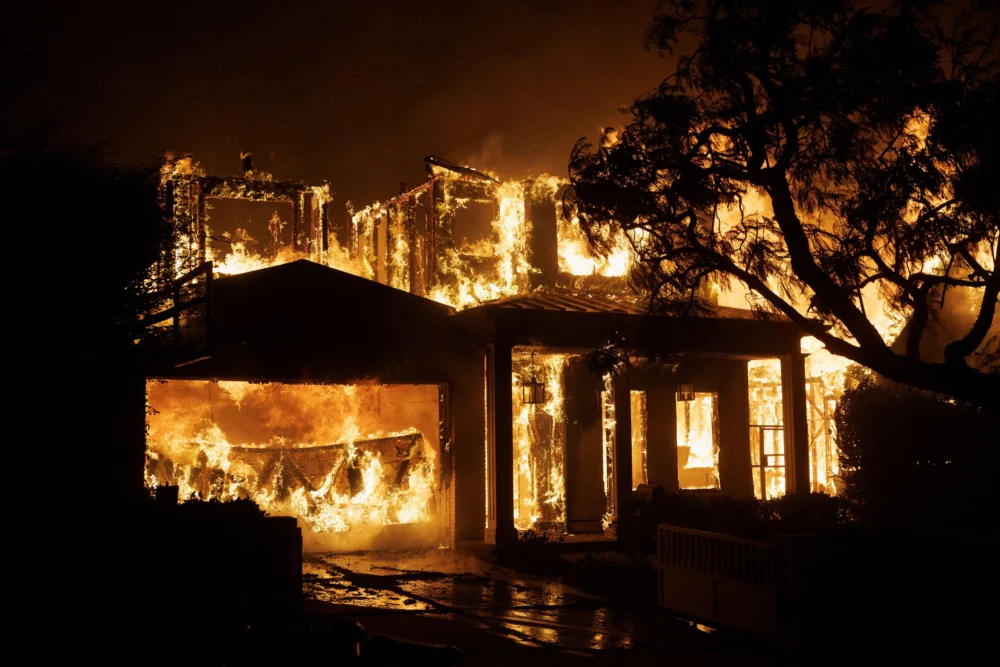
Two Washington residents initiated legal action last November, alleging that petroleum corporations deliberately misled the public for decades regarding the detrimental effects of fossil fuels on climate change and the consequent global warming impacts. This lawsuit represents the latest in an escalating series of legal challenges aimed at major oil companies. The case distinguishes itself through its unique damage claims: the plaintiffs contend that increased carbon emissions from fossil fuel combustion have demonstrably amplified extreme weather events, including hurricanes, wildfires, floods, and heatwaves, thereby driving up insurance premiums and precipitating a widespread homeowners insurance crisis.

Recent years have witnessed a dramatic surge in climate-related disasters, inflicting billions of dollars in damages and invariably triggering a sharp increase in insurance costs. This escalating financial burden has significantly eroded the profitability of insurance companies, compelling them to raise premiums at rates substantially exceeding inflation, particularly in regions susceptible to frequent disasters. Consequently, many insurers are withdrawing coverage from homeowners in high-wildfire-risk areas, opting to cancel existing policies or refuse renewals.
This trend exacerbates housing affordability challenges in areas already grappling with economic pressures, disproportionately affecting lower-income families. The housing market faces further strain as obtaining insurance becomes prohibitively expensive or entirely impossible. Conversely, higher premiums in risk-prone zones could serve as a disincentive for new construction, especially in the wildland-urban interface. The courts will ultimately determine the extent to which major fossil fuel companies will be held accountable, but the data unequivocally demonstrates a correlation between a warming planet and escalating insurance costs. A 2024 Senate Budget Committee report starkly warned that without a swift global transition to clean energy, climate-related extreme weather events will intensify in frequency and severity, leading to increasingly scarce insurance coverage and perpetually higher premiums. The report concludes that climate change has transcended an environmental concern to become a significant looming economic threat.

Between 2018 and 2022, climate-related disasters inflicted an estimated $114 billion in damages, with $80 billion of that amount being insured. An analysis by the U.S. Treasury Department’s Federal Insurance Office early last year revealed that the number of disaster declarations for climate-related incidents during this five-year period was double the national average over the preceding fifty years. This underscores a profound shift in the frequency and intensity of weather-related catastrophes, directly impacting the financial stability of homeowners and the insurance industry alike.
During the 2018-2022 period, average homeowners insurance premiums nationwide rose by 8.7% faster than inflation. Residents in disaster-prone areas experienced even more significant increases, assuming they could still secure coverage at all. For instance, the devastating Eaton and Palisades fires in the Los Angeles area in January 2025 resulted in the destruction of 16,251 homes and damage to an additional 2,046, highlighting the escalating threat posed by wildfires. The insured losses from these two fires alone are estimated at a staggering $40 billion, a figure four times greater than the $10 billion in insured losses attributed to the 2018 Camp Fire.

The repercussions of these events are far-reaching. State Farm, a major insurer, announced in 2024 the cancellation of nearly 72,000 homeowner, rental dwelling, commercial apartment, and other property insurance policies in California due to "catastrophe exposure." Since 2021, insurers have canceled close to 400,000 policies in the state, reflecting a broader trend of insurers reassessing their risk portfolios in the face of mounting climate-related perils. In response to the significant claims from the Eaton and Palisades fires, State Farm reported paying out claims totaling $13,500 and valued at $5 billion, prompting the company to request an emergency 22% rate hike from California insurance regulators.
This situation unfolds against a backdrop of substantial profitability within the insurance sector. In 2024, 22 publicly traded insurance companies collectively reported profits of $36 billion, with CEO compensation reaching $220 million. This disparity raises questions about the distribution of financial burdens and profits as climate change impacts intensify. The escalating costs associated with climate-related disasters, from wildfires to floods and hurricanes, are not abstract projections but tangible realities that are fundamentally reshaping the insurance landscape.

The interconnectedness of fossil fuel consumption, climate change, extreme weather, and the insurance market is becoming increasingly evident. As the planet continues to warm, the frequency and intensity of weather-related events are projected to rise, placing further strain on the insurance industry. This creates a complex challenge for policymakers, industry leaders, and consumers alike, necessitating innovative solutions to ensure long-term affordability and availability of insurance coverage while addressing the root causes of climate change. The legal battles initiated by individuals and potentially by governments will play a crucial role in shaping the future accountability of industries contributing to this growing crisis. The Senate Budget Committee’s assertion that climate change is no longer merely an environmental issue but a pressing economic threat resonates deeply as homeowners face mounting costs and insurers grapple with unprecedented risks. The transition to clean energy sources is not only an environmental imperative but also an economic necessity to mitigate the escalating financial consequences of a warming world and to ensure a stable and accessible insurance market for all. The data clearly illustrates that as the planet heats up, so too do insurance costs, creating a cycle that demands urgent and comprehensive action.