Johny Prima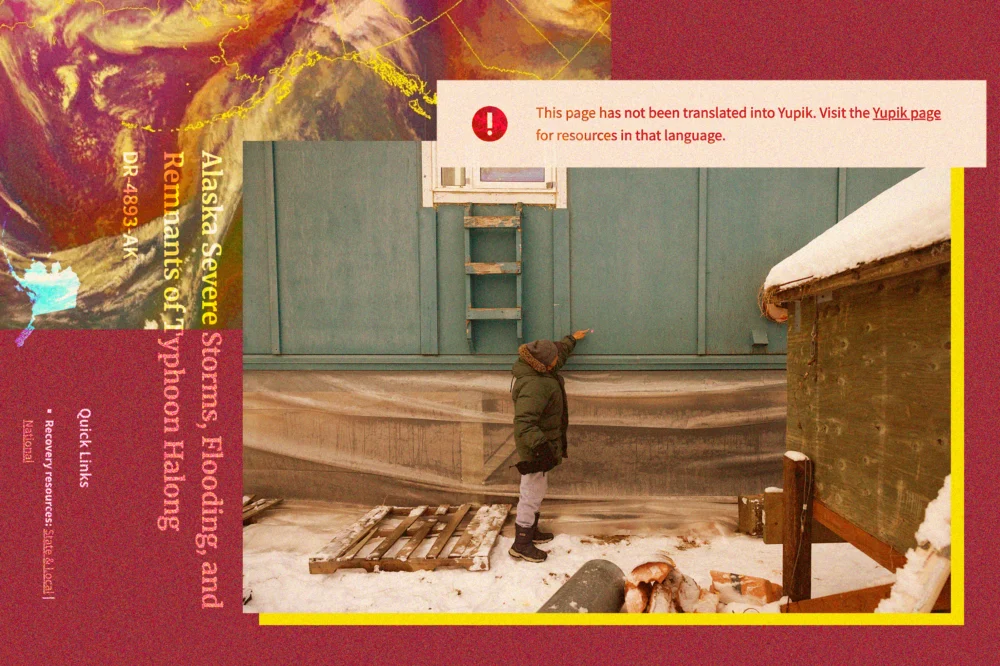
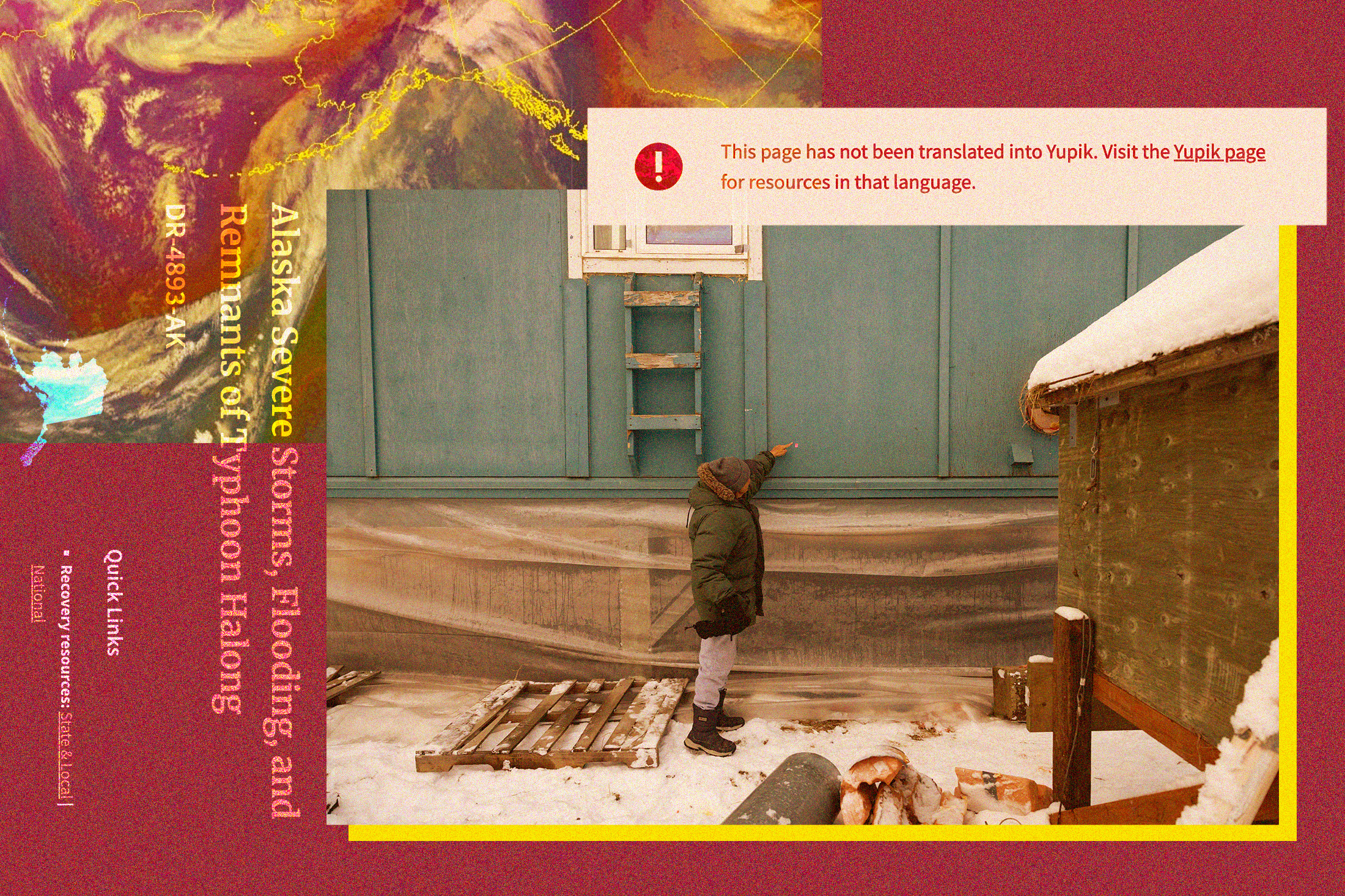
Following the devastating impact of Typhoon Halong in mid-October, which displaced over 1,500 residents and claimed at least one life in the remote village of Kwigillingok, Alaska Native communities are once again confronting critical questions about the accessibility and accuracy of federal disaster aid, with new anxieties emerging over the role of artificial intelligence in translation services. This recent calamity, mirroring the historic storms of 2022 that ravaged Western Alaska, underscores a persistent challenge in disaster response: ensuring vital information reaches communities whose primary languages are not English, particularly in regions where indigenous dialects embody deep cultural identity.
Just three years prior, in the aftermath of widespread devastation across the Yukon-Kuskokwim Delta, a constellation of small Alaska Native communities, the Federal Emergency Management Agency (FEMA) faced a significant public relations and operational crisis. Tasked with translating applications for financial assistance, a California-based contractor delivered materials that were, according to local journalists at KYUK public radio, incomprehensible. The region is home to approximately 10,000 people who learn Yugtun, the Central Yup’ik dialect, before English, and another 3,000 Iñupiaq speakers further north. Julia Jimmie, a Yup’ik translator at KYUK, articulated the profound sense of cultural disregard, stating, "They were Yup’ik words all right, but they were all jumbled together, and they didn’t make sense. It made me think that someone somewhere thought that nobody spoke or understood our language anymore." This egregious failure not only hampered aid delivery but also sparked a civil rights investigation into FEMA’s practices and prompted the contractor, Accent on Languages, to reimburse the agency for the faulty translations. The incident served as a stark reminder of the unique linguistic landscape of Alaska and the profound consequences of mismanaged translation in times of crisis.
Now, with Typhoon Halong’s remnants leaving a fresh trail of destruction, the specter of inadequate translation has re-emerged, this time with a technological twist. On October 21, the day before the Trump administration approved a disaster declaration for the storm, Prisma International, a Minneapolis-based company, posted an advertisement seeking "experienced, professional Translators and Interpreters" for Yup’ik, Iñupiaq, and other Alaska Native languages. Government records indicate Prisma has secured over 30 contracts with FEMA in recent years. Its corporate website prominently states that Prisma’s tools "combine AI and human expertise to accelerate translation, simplify language access, and enhance communication across audiences, systems, and users." Furthermore, the job listing explicitly noted that Alaska Native language translators would be required to "provide written translations using a Computer-Assisted Translation (CAT) tool."
While a FEMA spokesperson declined to confirm a contract with Prisma in Alaska in late October, the company’s proactive outreach to local Yup’ik language speakers, identifying itself as a FEMA language services contractor, suggested an imminent role. Julia Jimmie was among those contacted, expressing willingness to assist but harboring significant reservations about working with a company that leverages AI for such sensitive tasks.
The integration of artificial intelligence into translation, particularly for Indigenous languages, has ignited both curiosity and considerable apprehension within Native communities. Experts in Native technology and culture acknowledge AI’s potential for language preservation, a critical concern given the endangered status of many Indigenous dialects worldwide. However, they simultaneously caution against the inherent risks of distorting cultural knowledge and undermining language sovereignty. Morgan Gray, a member of the Chickasaw Nation and a research and policy analyst at Arizona State University’s American Indian Policy Institute, articulated this core concern: "Artificial intelligence relies on data to function. One of the bigger risks is that if you’re not careful, your data can be used in a way that might not be consistent with your values as a tribal community."
The concept of "data sovereignty"—the inherent right of a tribal nation to define how its data is collected, stored, and utilized—is gaining increasing prominence in international dialogues concerning Indigenous intellectual property. The United Nations Declaration on the Rights of Indigenous Peoples explicitly enshrines the principle of free, prior, and informed consent for the use of Indigenous cultural knowledge. UNESCO, the United Nations body responsible for cultural heritage, has consistently advocated for AI developers to respect tribal sovereignty when engaging with Indigenous communities’ data. Gray emphasized the imperative for complete transparency: "A tribal nation needs to have complete information about the way that AI will be used, the type of tribal data that that AI system might use. They need to have time to consider those impacts, and they need to have the right to refuse and say, ‘No, we’re not comfortable with this outside entity using our information, even though you might have a really altruistic motivation behind doing it.’" It remains unclear whether Prisma International has initiated contact with tribal leadership in the Y-K Delta, and the Association of Village Council Presidents, representing 56 federally recognized tribes in the region, has yet to comment.
Prisma’s website indicates that clients can opt for human-only translation and states that its AI use is governed by an "AI Responsible Usage Policy." However, the specific details of this policy are not publicly accessible, and the company has not responded to requests for clarification, deepening concerns about transparency and accountability.
Since the 2022 translation debacle, FEMA has indeed taken steps to improve its engagement with Alaska Native communities. The agency now mandates the use of "Alaska-based vendors" for Alaska Native languages, prioritizing those within disaster-impacted areas, and requires a secondary quality-control review for all translations. A FEMA spokesperson affirmed that "Tribal partners are continuously consulted to determine language services needs and how FEMA can meet those needs in the most effective and accessible manner." Yet, FEMA’s policies regarding AI remain ambiguous. The agency’s email did not directly address inquiries about specific regulations for AI use or mechanisms to protect Indigenous data sovereignty, offering only a general assurance that FEMA "works closely with tribal governments and partners to make sure our services and outreach are responsive to their needs."
Prisma’s track record includes contracts with FEMA in over a dozen states and several other federal agencies. A case study on its website highlights how its "LexAI" technology facilitated multi-language disaster relief information following a wildfire, including "rare Pacific Island dialects." However, the company does not appear to have prior federal government contracts in Alaska.

For Yup’ik language translators in the Y-K Delta, a practical and profound concern revolves around AI’s capacity for accurate translation. Julia Jimmie expressed deep skepticism, noting, "Yup’ik is a complex language. I think that AI would have problems translating Yup’ik. You have to know what you’re talking about in order to put the word together." Most AI models thrive on vast datasets, which are largely unavailable for Indigenous languages. Consequently, AI has a documented poor record in translating these languages, frequently producing inaccurate sentences or even fabricating words. Sally Samson, a Yup’ik professor of language and culture at the University of Alaska Fairbanks, emphasized the fundamental syntactic differences between Yugtun and English, but her concerns extend beyond mere factual accuracy. She worries that AI would fail to convey the intricate nuances of the Yup’ik worldview. "Our language explains our culture, and our culture defines our language," Samson asserted. "The way we communicate with our elders and our co-workers and our friends is completely different because of the values that we hold, and that respect is very important."
In contrast to the external deployment of AI by contractors, Indigenous software developers are actively engaged in addressing AI’s limitations for Native languages, often with the explicit goal of revitalizing endangered dialects. An Anishinaabe roboticist has developed a robot to teach Anishinaabemowin to children, while a Choctaw computer scientist created a chatbot for conversations in Choctaw. Crucially, in these instances, Indigenous people are the architects and decision-makers behind the AI models, ensuring alignment with community values and goals. Crystal Hill-Pennington, who teaches Native law and business at the University of Alaska Fairbanks and consults with Alaska tribes, voices concerns about potential exploitation if AI is trained on the invaluable work of Indigenous translators for subsequent commercial use by non-Native companies. "If we have communities that have a historical socioeconomic disadvantage, and then companies can come in, gather a little bit of information, and then try to capitalize on that knowledge without continuing to engage the originating community that holds that heritage, that’s problematic," she explained.
Indigenous communities possess centuries of experience with outsiders extracting and exploiting their cultural knowledge. A recent precedent for this kind of controversy occurred in 2022, when the Standing Rock Sioux Tribal Council banished a nonprofit that, after years of Lakota elders sharing cultural knowledge, copyrighted the material and attempted to sell it back to tribal members in textbooks. Hill-Pennington highlights that the introduction of AI by private entities adds another complex layer to contemporary intellectual property discussions. "The question is, who ends up owning the knowledge that they’re scraping?" she asked.
As AI technology rapidly evolves, so too do the standards surrounding its ethical engagement with Indigenous cultural knowledge. Hill-Pennington acknowledges that some companies may still be unfamiliar with the expectation of informed consent and the critical concept of data sovereignty. However, she stresses that these standards are becoming increasingly pertinent, particularly for entities contracting with federal agencies subject to executive orders mandating authentic consultation with Indigenous peoples in the United States. In the wake of Typhoon Halong, the unfolding situation in Alaska’s remote villages serves as a critical test case for how government agencies and their contractors navigate the complex intersection of disaster relief, linguistic diversity, technological innovation, and Indigenous rights in the digital age.