Joko Susilo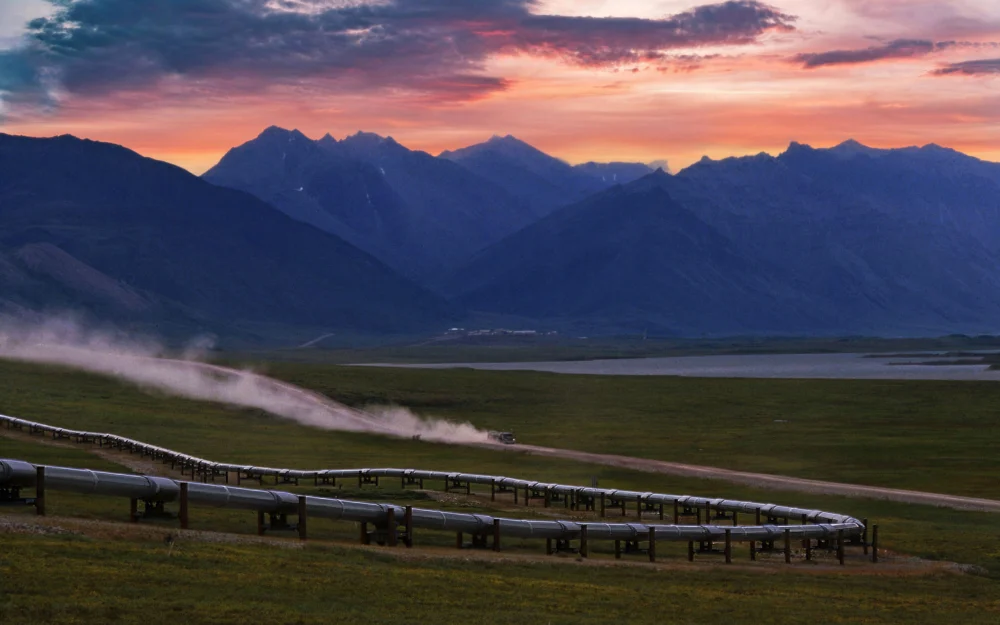
The federal government has historically viewed Alaska as an immense repository of natural resources, a perception that gained significant momentum and actionable policy under the previous Trump administration. Following a 2018 meeting with then-President Trump, Alaska Governor Mike Dunleavy famously declared the state "America’s natural resource warehouse," signaling a clear mandate for accelerated development. This posture echoes, and in some ways surpasses, the intensity of the late 1970s, when Alaska last held such a prominent position in national energy and conservation discussions during the pivotal negotiations over the Alaska National Interest Lands Conservation Act (ANILCA). Passed in 1980, ANILCA protected over 100 million acres of federal land in Alaska, creating or expanding national parks, wildlife refuges, and wilderness areas, representing a monumental compromise between development and preservation.
However, the current landscape presents distinct challenges and dynamics, as noted by Philip Wight, an Arctic energy historian at the University of Alaska Fairbanks. Unlike previous eras, the present period is characterized by a unified federal government actively advancing multiple contentious development proposals simultaneously. This coordinated effort faces diminished opposition from moderate Republican voices, a demographic once influential in bipartisan conservation efforts. Simultaneously, environmental conservation organizations find themselves grappling with systemic funding challenges and a barrage of coordinated political attacks, weakening their capacity to mount effective resistance. Wight acknowledges that Alaska has served as a resource territory for centuries, a crucial component of its historical and economic identity. Yet, he cautions that the immense wealth generated from these resources has too often disproportionately benefited outside corporations and national interests, failing to translate into sustainable, long-term welfare for Alaskans themselves. This paradox is starkly evident in the fact that Alaskans continue to face some of the nation’s highest energy costs, even as the state’s fossil fuel reserves are aggressively pursued. Compounding these issues, the accelerating impacts of climate change — manifesting as permafrost thaw, coastal erosion, and unpredictable weather patterns — already threaten existing and proposed infrastructure, adding another layer of complexity to the development calculus. As Wight succinctly put it, "While Alaska has much to gain from developing our resources, we also have much to lose." This sentiment encapsulates the profound stakes involved for the state’s economy, its unique ecosystems, and the Indigenous communities whose lives are intricately tied to the land and sea.
Here is a closer look at some of the most high-profile hotspots driving this intense national debate:

Logging the Tongass National Forest
Last summer, the U.S. Department of Agriculture announced its intent to rescind the Roadless Rule, a move that could open more than 9 million acres of the Tongass National Forest to extensive road-building, logging, and other forms of development. This rule, designed to protect tens of millions of acres of national forest across the country from industrial activities, has been a political football for years, having been rolled back during the Trump administration in 2020 and subsequently reinstated by the Biden administration in 2023. At nearly 17 million acres, the Tongass stands as the largest national forest in the United States and the planet’s largest intact temperate rainforest, a global ecological treasure. Its ancient, carbon-rich forests play a critical role in mitigating climate change by sequestering vast amounts of atmospheric carbon dioxide, earning it the moniker "America’s climate forest." Beyond its global ecological significance, the Tongass is a cornerstone of the regional economy and cultural fabric, supporting vital salmon runs, diverse wildlife, and the subsistence practices of numerous Indigenous communities. As Nathan Newcomer, an advocate for the Tongass with the Southeast Alaska Conservation Council, emphasizes, "People depend on it for subsistence, for hunting, for fishing, for a tourism economy, for recreation." The proposed rescission of the Roadless Rule poses a significant threat to these intertwined ecological and human systems. A draft environmental impact statement from the USDA is anticipated in March 2026, with the ambitious goal of finalizing a new rule-making process by the end of that year. Adding to the development pressures, the previous Trump administration has also sought to re-open the international market for timber harvested from the Tongass, potentially fueling increased demand for logging.
Oil Development in the Arctic National Wildlife Refuge (ANWR)
America’s largest and northernmost wildlife refuge, the Arctic National Wildlife Refuge, spans an immense 19 million acres between Alaska’s prolific Prudhoe Bay oil fields and the Canadian border. The U.S. Geological Survey estimates that its ecologically sensitive coastal plain alone may harbor between 4.3 billion and 11.8 billion barrels of recoverable oil, alongside substantial quantities of natural gas. However, the path to extracting these resources is fraught with significant geopolitical, economic, environmental, and legal obstacles. This region, often referred to as "America’s Serengeti," is a critical calving ground for the Porcupine caribou herd, whose migration routes are central to the subsistence and cultural identity of the Gwich’in Nation, who view the coastal plain as "the sacred place where life begins." It also provides vital denning habitat for polar bears and serves as a crucial breeding ground for millions of migratory birds from around the globe. During his first term, President Trump moved to open the refuge’s 1.57 million-acre coastal plain to oil and gas leasing. Subsequent lease sales have yielded mixed results: the January 2021 sale saw Alaska Industrial Development and Export Authority (AIDEA), a state-owned public resource development corporation, acquire several leases. However, a January 2025 sale notably attracted no bids, reflecting the high financial risk and public opposition associated with Arctic drilling. The Biden administration attempted to cancel AIDEA’s leases, but a federal court reinstated them in March 2025, underscoring the legal complexities. In his January 20 executive order titled "Unleashing Alaska’s Extraordinary Resource Potential," President Trump explicitly called on the Secretary of the Interior to "take all necessary steps" to facilitate additional coastal plain lease sales. This directive was followed by a new Record of Decision in October 2025, which aimed to open the entire coastal plain to development. Further consolidating this push, Congress voted in December 2025 to strike down the Biden-era land-management plan that had restricted drilling to a small section of the refuge, intended to safeguard critical wildlife habitats.

Oil Extraction in the National Petroleum Reserve in Alaska (NPR-A)
To the west of the Prudhoe Bay oil fields lies the National Petroleum Reserve in Alaska (NPR-A), a vast area designated specifically for petroleum exploration, albeit with significant environmental stipulations. In October, the Bureau of Land Management initiated a call for nominations for areas within the NPR-A for a future lease sale. These proposed sales align with broader rollbacks on environmental protections across the reserve, potentially opening over 18.5 million acres to leasing. This includes critical habitat for numerous species of migratory birds and essential calving grounds for the Teshekpuk caribou herd, a vital resource for Indigenous communities. Earlier this month, President Trump signed Senate Joint Resolution 80 into law, effectively stripping away restrictions established in 2022 by the Biden administration, which were designed to protect ecologically delicate areas within the NPR-A from industrial development. Concurrently, construction for ConocoPhillips’ massive Willow project, approved under the Biden administration and representing the first major development within the reserve, is well underway. This controversial project, projected to produce over 600 million barrels of oil over its lifetime, has drawn widespread criticism for its substantial carbon footprint and its location within critical wildlife habitat. Oil production from the Willow project is anticipated to commence before 2030, further solidifying the NPR-A’s role in U.S. energy production.
The King Cove Road Controversy
For half a century, the remote, predominantly Aleut community of King Cove, with a population of approximately 750, has sought to construct an 18-mile, single-lane gravel road connecting it to the all-weather airport in Cold Bay. Proponents of the road argue it is a critical public safety measure, providing reliable emergency medical access for residents who often face life-threatening delays due to severe weather conditions that ground flights and make sea travel hazardous. In late October, the Interior Department signed a land exchange agreement intended to facilitate this road, which would primarily traverse the Izembek National Wildlife Refuge. The agreement involves swapping less than 500 acres of refuge land to the Alaska Native Corporation King Cove Corp., which in turn would sell 1,739 acres of its own land to be added to the refuge. However, this land swap has met fierce opposition. In November, several tribal governments – including the Native Village of Paimiut, Native Village of Hooper Bay, and Chevak Native Village – joined environmental groups in filing a lawsuit against the administration, aiming to block the land trade. Their central argument revolves around the irreversible damage the road would inflict upon the Izembek National Wildlife Refuge, a globally recognized wetland of international importance. Izembek is a critical staging and feeding area for millions of migratory birds, including nearly the entire world populations of Pacific brant and emperor geese, as well as a diverse array of other waterfowl and shorebirds. Chief Edgar Tall Sr. of the Native Village of Hooper Bay voiced deep concerns in a November 12 press release, stating, "If the Izembek road happens, it will cause a lot of chaos for Alaska Native people in my region who still live off the land and sea. The birds we hunt may not be able to survive." The legal battle highlights the profound tension between community safety and the preservation of irreplaceable ecological resources.

The Ambler Road Mining Project
The construction of the 211-mile industrial road to the remote Ambler Mining District has been mired in litigation and debate for years. In 2024, the Biden administration had rejected the road plan, citing its anticipated severe impacts on wildlife habitat and crucial waterways. Analysis revealed the project would necessitate an estimated 3,000 stream crossings, directly affecting vital fish populations like sheefish and the declining Western Arctic caribou herd, both of which serve as critical subsistence food sources for Indigenous communities living in the Brooks Range area of Northern Alaska. However, in a significant reversal, President Trump approved an appeal from AIDEA on October 6, thereby allowing federal agencies to reissue permits for the road. This decision was accompanied by an announcement that the U.S. government would partner with Trilogy Metals, investing $35.6 million to support exploration in the area and making the federal government a 10% shareholder in the company. Later that month, the AIDEA board further solidified its commitment by allocating $50 million for the construction of the project. The Ambler Road is designed to unlock access to a vast, remote region rich in deposits of strategic minerals such as copper, silver, gold, lead, and cobalt. These minerals are increasingly vital for the global transition to renewable energy technologies and electric vehicles, positioning the project as a matter of both economic development for Alaska and national security through reduced reliance on foreign mineral sources. Yet, the environmental and cultural costs associated with fragmenting pristine wilderness and disrupting traditional Indigenous lifeways remain a central point of contention in this ambitious mining endeavor.