Johny Prima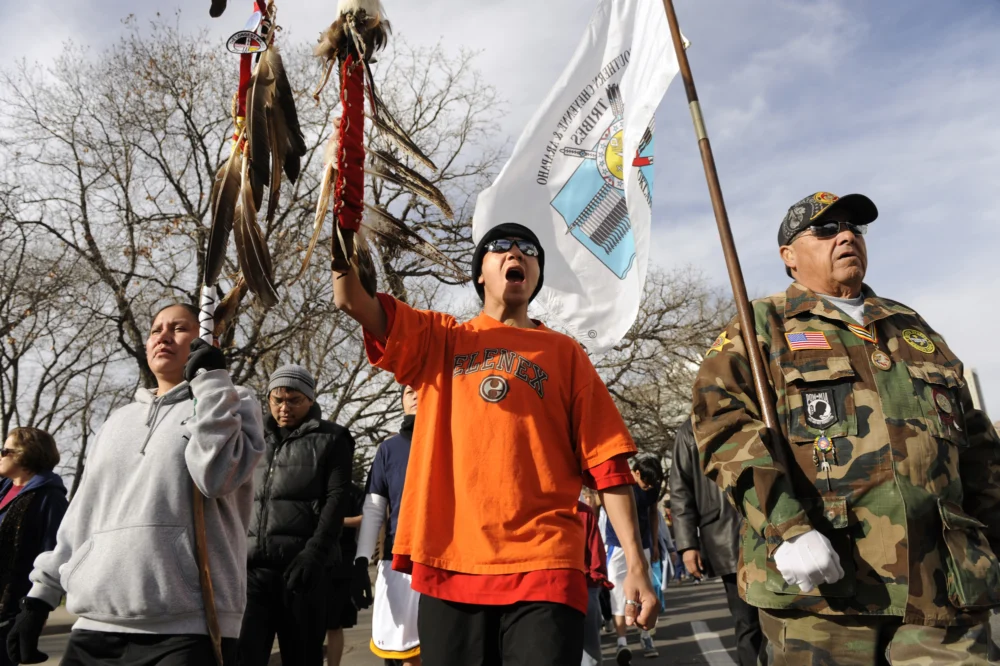
The deep, generational wounds inflicted by history seldom heal spontaneously; they demand deliberate and sustained care, a truth vividly underscored by the annual Sand Creek Massacre Spiritual Healing Run. Each year, descendants of the victims culminate their arduous journey at the imposing steps of the Colorado State Capitol, the very nexus of the state’s governance, symbolizing an enduring quest for acknowledgment and reconciliation. For these communities, the empty pedestal on the Capitol’s west plaza represents not a void, but a profound anticipation, signaling that Colorado’s most critical stride toward genuine healing and truth-telling still lies ahead.
On November 29, 1864, a peaceful encampment of Cheyenne and Arapaho people, resting under the ostensible protection of the U.S. military flag, faced an unimaginable betrayal. Colonel John Chivington’s volunteer cavalry troops descended upon them with ruthless efficiency, slaughtering more than 200 lives, predominantly women, children, and elders. This horrific act, later condemned swiftly as a massacre by both military and congressional investigations, left an indelible scar on the American conscience and sent shockwaves through Indigenous communities across the Great Plains. Despite its immediate and widespread denunciation as an atrocity, the state of Colorado, for decades, paradoxically celebrated this dark chapter as a decisive victory, constructing a narrative that glorified violence and obscured the truth.
This historical revisionism was physically embodied by a controversial plaque on the Capitol grounds, which listed Sand Creek among Colorado’s Civil War battles. This monument, for generations, served as a stark reminder of the state’s official endorsement of a false narrative, perpetuating the trauma for the descendants of the massacre. Its very presence symbolized a systemic denial of justice and a celebration of colonial violence. Now, that space awaits a powerful and necessary replacement: the "Peace Keepers" memorial, a bronze sculpture envisioned to honor the extraordinary courage of peaceful Cheyenne and Arapaho leaders, such as Chief Black Kettle and Chief Left Hand, who steadfastly pursued peace even as they faced annihilation. The memorial will also pay tribute to the resilience of survivors like Medicine Woman, who, despite suffering eight bullet wounds, lived to bear witness to the horror.

In a pivotal moment of collective acknowledgment, the Colorado Legislature and Governor Jared Polis in 2025 unanimously endorsed the creation and installation of this monument. This landmark legislative act represents a significant step forward, affirming that the truth about Sand Creek can no longer be suppressed or distorted. It stands as a historic commitment to remembrance, an official gesture of governmental accountability for the institutional betrayals of the past, and a public pledge to honor the innocent lives so brutally extinguished. The unanimous decision reflects a growing societal awareness and a political will to confront uncomfortable historical truths, echoing similar movements for historical reckoning seen in nations worldwide grappling with their colonial legacies.
However, the path to true reconciliation extends far beyond legislative mandates or the erection of statues. The real, and often hardest, work lies in healing. Healing, in this context, does not imply forgetting the past or seeking a comfortable, convenient closure. Rather, it demands a profound recognition that trauma, especially intergenerational trauma stemming from events as devastating as the Sand Creek Massacre, is not confined to history books. Its tendrils reach into the present, profoundly shaping the lives, identities, and socio-economic realities of the Cheyenne and Arapaho peoples today. The "Peace Keepers" memorial, therefore, is not merely an artistic representation for Indigenous communities; it is designed to serve as a sacred space, a focal point for all Coloradans—Indigenous and non-Indigenous alike—to collectively confront this persistent trauma, understand its enduring legacy, and begin the arduous, yet essential, process of repairing the foundational trust of this state.
This historical narrative, particularly the origins of the Sand Creek Massacre, serves as an acutely powerful and immediate cautionary tale for our current global moment. The massacre itself was born from a toxic confluence of fear, widespread hysteria, and a deliberate, chilling rejection of moral conscience. Colonel Chivington’s brutal attack was not an isolated act of rogue violence; it was meticulously fueled and justified by influential politicians and a sensationalist press that systematically dehumanized Indigenous tribes, portraying them as existential threats. This pervasive rhetoric actively discouraged diplomatic engagement, replacing it with a fervent embrace of brute force and treachery.
Today, across national and international discourses, disturbing echoes of these same dangerous conditions resonate. Rampant political polarization and division, the strategic and often malicious dissemination of fear and disinformation, and the increasingly prevalent temptation to cast political opponents as existential enemies to be vanquished rather than fellow citizens with whom to negotiate, all bear an unsettling resemblance to the climate preceding Sand Creek. When societies allow dialogue to be supplanted by demagoguery, and diplomacy to be dismissed in favor of confrontation, they are inadvertently laying the very groundwork that enabled atrocities like the Sand Creek Massacre to occur. The lessons of history unequivocally demonstrate that dehumanization, whether of a nation, an ethnic group, or a political faction, paves a perilous road toward escalating conflict and violence.

The poignant story of the "Peace Keepers" chiefs, particularly their unwavering commitment to non-violence in the face of violent dehumanization, offers a profound moral imperative. Despite overwhelming odds and repeated betrayals, these Cheyenne and Arapaho leaders chose the path of peace. Their ultimate sacrifice serves as a timeless call to action for all of us, urging individuals and nations alike to uphold humanity, champion truth, and prioritize dialogue, especially during periods when the prevailing atmosphere tempts us toward anger, division, and the erosion of shared values. It reminds us that even in the darkest hours, the choice for peace and understanding remains a powerful act of resistance.
This commitment to truth and healing now faces a tangible deadline. The "Peace Keepers" memorial is slated for its dedication on November 29, 2026, a date deliberately chosen to coincide with Colorado’s 150th anniversary of statehood. This alignment presents Colorado with an unparalleled opportunity to make a definitive declaration, at the highest echelons of its governance, about the kind of history it chooses to commemorate and the kind of future its citizens aspire to build. It is a chance to rectify a century and a half of historical misrepresentation and establish a new foundation rooted in honesty and respect.
The Sand Creek Massacre Memorial Committee is diligently working to secure the final funds necessary for the bronze casting and installation of this monumental sculpture. Their efforts have already garnered significant community support, evidenced by a generous matching gift, signaling a collective readiness within Colorado to embrace this vital step toward reconciliation. To allow this pedestal to remain empty for another year would send a clear and regrettable signal that Colorado’s commitment to historical truth and healing is merely theoretical, a statement of intent rather than an active priority. By actively supporting the immediate completion of the "Peace Keepers" memorial, the state and its citizens unequivocally declare that healing is paramount. This collective action chooses to fill the void of a false, violent past with a permanent, visible testament to the courage, the enduring spirit of peace, and the profound humanity of the Cheyenne and Arapaho people. It is a decision that not only honors a tragic past but is absolutely essential for the future health, integrity, and genuine healing of the state of Colorado, setting a precedent for how societies can confront and transcend their most painful historical injustices.