Johny Prima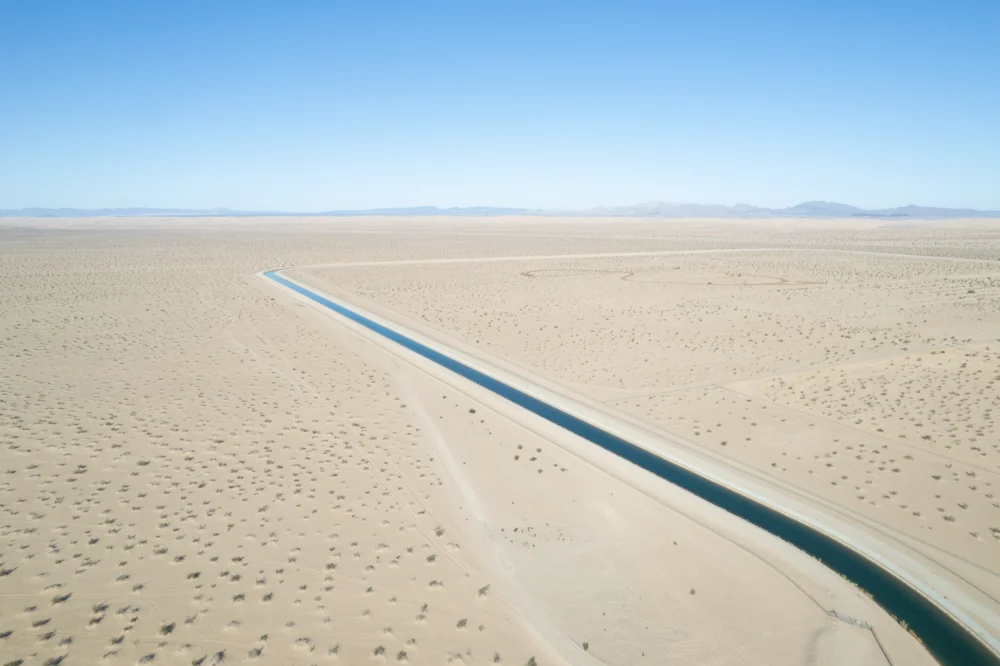
With a pivotal November 11 federal deadline looming, the seven Western states reliant on the lifeblood of the Colorado River have failed to reach a consensus on a vital water management plan, casting a long shadow of uncertainty over the future of a resource that sustains over 40 million people and a multi-trillion-dollar economy across the American Southwest and parts of Mexico. As the clock wound down, the prospects of a breakthrough evaporated, leaving federal intervention or protracted litigation as increasingly likely, albeit undesirable, outcomes. Negotiators and stakeholders, after more than two years of intense, often fraught discussions, voiced profound frustration and deep concern over the inability to forge a path forward, highlighting the immense pressure building on a system already stretched to its breaking point.
The impasse reflects a profound and escalating crisis in the Colorado River Basin, a region grappling with the relentless effects of a 25-year megadrought, the most severe in at least 1,200 years. This aridification, exacerbated by climate change, has dramatically reduced the river’s flow, which now averages 20% less than in the last century. Projections suggest hotter, drier conditions will persist, further straining an already depleted system. Adding to the complexity are the limitations of aging infrastructure and a century-old legal framework ill-equipped to manage such severe and sustained scarcity. J.B. Hamby, California’s representative in the stalled negotiations, starkly articulated the precarious situation: "There’s very little to no resiliency built into the river system right now, because the system is very depleted." This lack of buffer means that every decision, or indecision, carries amplified consequences.
The U.S. Bureau of Reclamation, the federal agency overseeing the vast network of dams and reservoirs across 17 Western states, has spearheaded these critical negotiations. Having previously indicated a willingness to impose its own solution if the basin states cannot agree, the Bureau now faces the unenviable task of potentially dictating terms that could reshape water access for generations. Any imposed or negotiated agreement, however, must contend with a thicket of deepening legal uncertainties, the long-overlooked and paramount water rights of numerous Indigenous tribal nations, and the inherent vulnerabilities of an infrastructure system designed for an era of perceived abundance, not chronic scarcity.
At the heart of the legal quagmire is the "Law of the River," a complex and often contradictory body of compacts, federal laws, court decisions, and treaties that governs water allocation. Central to this is the 1922 Colorado River Compact, which initially apportioned the river’s flow between the Upper Basin (Colorado, New Mexico, Utah, Wyoming) and the Lower Basin (Arizona, California, Nevada). This foundational agreement, alongside subsequent legislation, established the doctrine of prior appropriation, often summarized as "first in time, first in right." Under this system, during times of shortage, newer water users are mandated to cut their consumption first, while those with more senior rights enjoy greater security. While this framework once spurred development across the arid West, it now creates profound instability for communities with junior rights, who face erratic and often devastating reductions in water access, sometimes leading to a complete cessation of river water for the foreseeable future.
Jason Hauter, a partner at the Akin law firm representing the Gila River Indian Community in the current negotiations, underscored this inherent flaw: "The Western legal system was designed to encourage development. The prior appropriation system is really about rewarding those that develop their water the fastest… But you can only keep developing water if there is plenty of water in the system … and right now there is no more water to develop." This stark reality forces states to confront the very foundations of the compact. As Hamby noted, "Previous negotiations did not address core issues. They either delayed them or worked around them, making do based on the circumstances of the time." This time, however, is different, forcing a reckoning with "much deeper roots that all fundamentally get back to the compact and what it means or doesn’t mean."

A major point of contention stems from the compact’s wording regarding flow obligations. Lower Basin states assert that the compact obligates the Upper Basin to deliver a specific volume of water downstream. Conversely, Upper Basin states contend their usage should not cause flows to dip below a certain level, arguing that climate change, not their diversions, is primarily responsible for diminishing water supplies. This dispute, largely academic during periods of higher flow, has become critically relevant as record shortages push the river’s volume closer to the minimum delivery thresholds. The historical precedent for such intractable disputes is litigation, a path that many fear could lead to decades of legal battles, reminiscent of the landmark Arizona v. California case, which consumed over four decades of Supreme Court proceedings. Jason Robison, a law professor at the University of Wyoming, cautions against this route: "I really think it is worthwhile to consider whether litigation is the best way for states to deal with managing conflicts." He highlighted how that particular case "morphed like a river," with the ultimate resolutions often diverging significantly from the original issues presented.
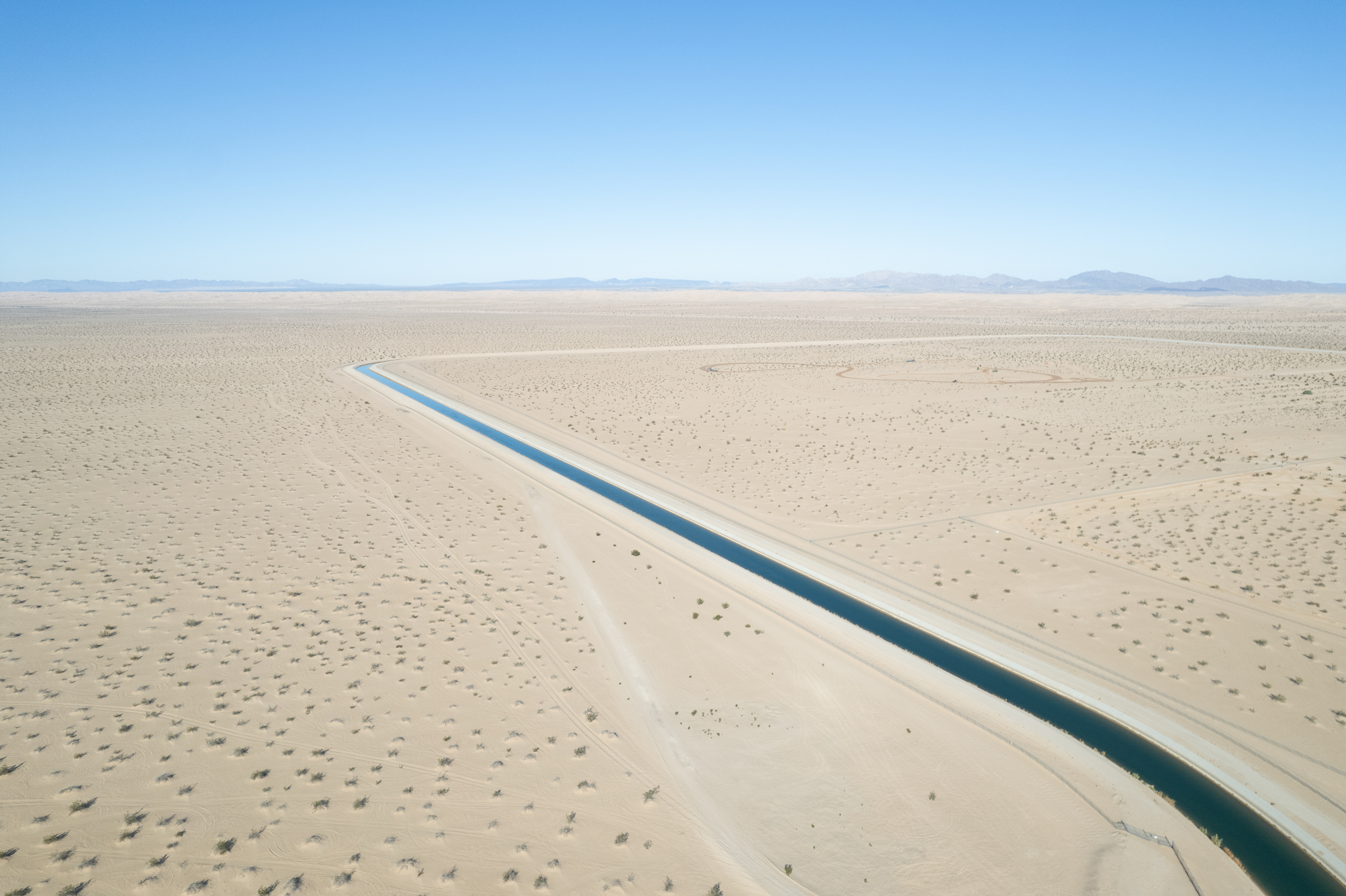
Beyond interstate squabbles, any viable solution must also comprehensively address the water rights of the 30 federally recognized tribal nations within the basin, who collectively hold rights to an estimated 25% of the river’s flow. Historically marginalized and excluded from the original compact negotiations and subsequent infrastructure development, these sovereign nations now stand as crucial, and often senior, rights holders. The Gila River Indian Community in Arizona, for instance, possesses extensive and senior water rights in the Lower Basin. However, a significant portion of their allocated water is delivered via the Central Arizona Project (CAP), an extensive system of canals and aqueducts that, under the Supreme Court’s interpretation in Arizona v. California, is junior to California’s primary water rights. Consequently, proposed cuts to the CAP in severe shortage scenarios would disproportionately impact the Gila River Indian Community, obligating the federal government to find alternative, currently undefined, water sources.
This potential disruption has led to significant frustration among tribal leaders. Gila River Indian Community Gov. Stephen Roe Lewis firmly stated via email, "What is being contemplated is a major disruption to half of our water supply, and we will not be cut without our consent. This is water we are currently putting to use and have long-term plans to use. We remain opposed to all current proposals at this time because our concerns have not been adequately addressed." Reconciling these complex legal obligations and ensuring equitable treatment for tribal nations is a critical challenge for the federal government, the state of Arizona, and the negotiating states. Governor Lewis expressed hope for a consensus, stating, "We hope to be able to say yes to a consensus approach if the Basin States can reach agreement and our concerns are addressed."

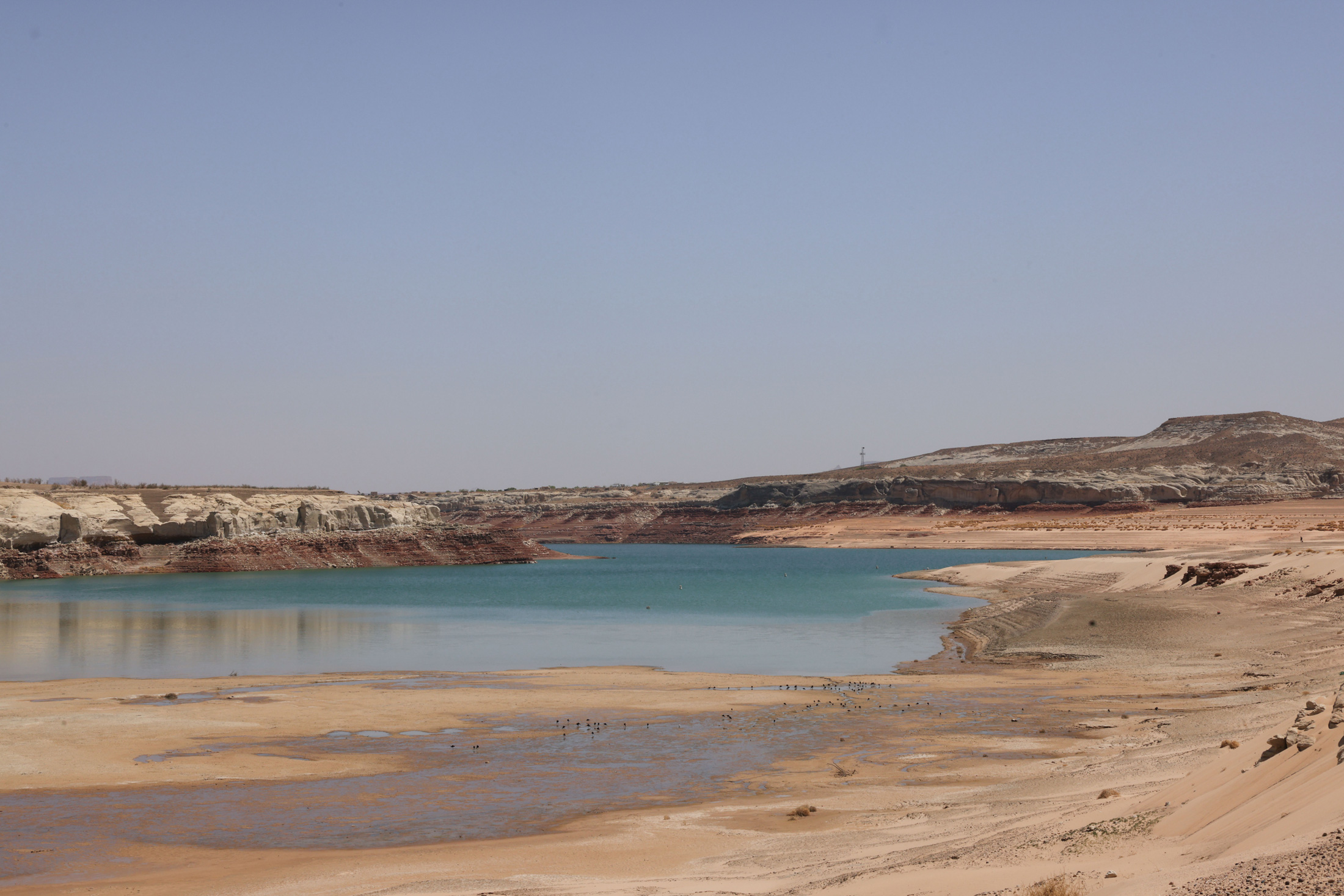
The physical infrastructure itself presents another formidable hurdle. The monumental dams and canals, including Hoover Dam and Glen Canyon Dam, built primarily in the early to mid-20th century, were engineered for irrigation, hydropower generation, and flood control during a wetter hydrological era. They possess limited contingencies for operating effectively under prolonged, extreme scarcity. Lakes Mead and Powell, the two largest reservoirs in North America and the primary storage for 90% of the Colorado River’s water, are currently less than one-third full. This unprecedented depletion pushes water levels dangerously close to "minimum operating power pools" and even "dead pool" levels, below which water cannot flow through the dams, threatening hydropower generation and downstream deliveries. For example, at Glen Canyon Dam, if reservoir levels fall too low, only four 8-foot-wide tubes can convey water downstream into the Grand Canyon, posing immense operational challenges. Concerns also exist for structures like Colorado’s Morrow Reservoir, where critically low water levels could trigger landslides.
In 2022, the gravity of this situation was underscored when insufficient cuts necessitated emergency releases from upstream reservoirs like Flaming Gorge and Blue Mesa to bolster Lake Powell’s dwindling reserves. With "banked" water from previous years largely depleted, communities now largely depend on the current year’s flow, amplifying the urgency of finding sustainable solutions. The potential impacts extend far beyond municipal taps, affecting a vast agricultural industry that feeds the nation, a critical hydropower network supplying electricity to millions, and vital ecosystems throughout the basin, including the once-thriving Colorado River Delta in Mexico. This complex web of interconnected systems makes the current impasse not merely a regional issue, but a national, even global, indicator of the challenges posed by water scarcity in a changing climate, mirroring struggles in river basins from the Nile to the Mekong.
For a century, the Colorado River Basin states largely pursued their individual visions for water development. Now, they must confront deeply entrenched philosophical differences, long-unresolved questions, and legal ambiguities stretching back to the compact’s inception. Negotiators grapple with fundamental questions of equity, risk allocation, and the real-time implications of climate change. The core challenge is whether these diverse stakeholders can transcend competitive historical practices to forge a cohesive, sustainable vision for managing the Colorado River. So far, the answer remains elusive.

Scott Cameron, acting leader of the Bureau of Reclamation, has set a new target for a finalized plan by May or June 2026, allowing time for state legislative approvals and implementation before the new water year begins. Should the states again fail to deliver, federal intervention remains a firm commitment, though the specifics of such an intervention are vague, particularly amidst reports of the current administration’s fluctuating stance on climate change and federal funding for water initiatives. This climate of intense uncertainty casts every decision into high relief. Kathy Sorensen, a water policy expert at the Kyl Center of Arizona State University, emphasizes the generational stakes: "Every state is having to make decisions that may set precedents — not just for 20 years, or the run of new operating guidelines, but for generations." While acknowledging the severity, she offers a glimmer of pragmatic hope: "The good news side of this story — if there is one — is water managers have long known this day might come and have been preparing. So, we’re not talking about taps running dry. We’re talking about things like water might become a hell of a lot more expensive, or there might be massive litigation. Things that are distinctly unpleasant, but we can withstand." The path ahead promises significant challenges, demanding unprecedented cooperation to avert a full-blown crisis in one of the world’s most vital river systems.