Rocky Gerung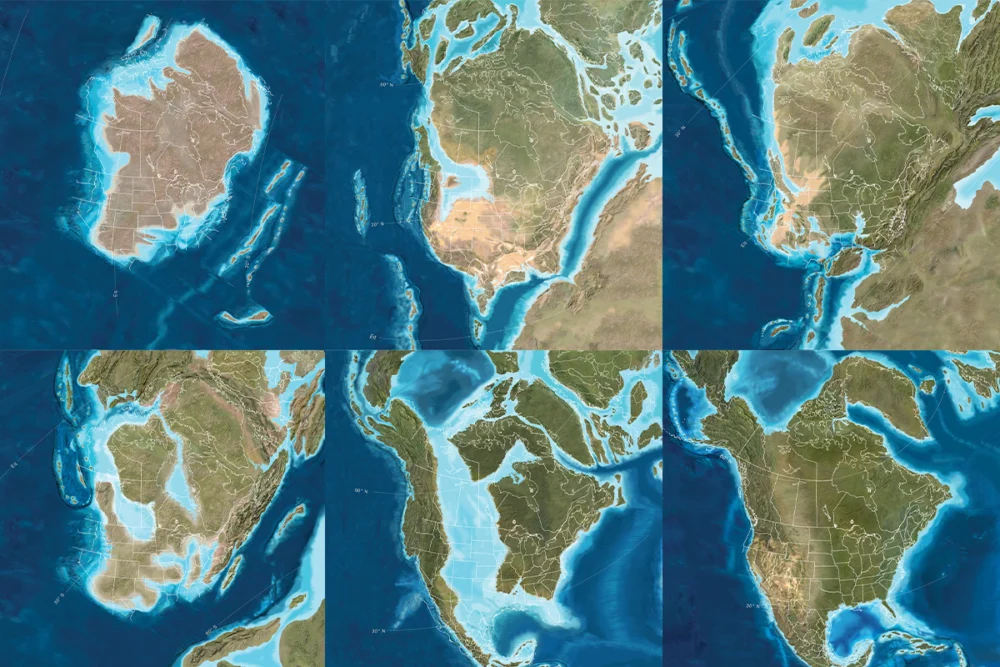
The shifting sands of the Gran Desierto de Altar, a vast desert east of the Colorado River’s former delta in the Gulf of California, offer a tangible, observable lesson in geological processes. As dunes migrate, their incremental movement mirrors the immense forces that sculpted ancient landscapes, such as the Coconino sandstone formations within the Grand Canyon. These cross-bedded layers, with their sweeping diagonal lines, are direct imprints of wind patterns from approximately 280 million years ago, underscoring the geological adage: "The present is the key to the past." However, Earth’s history is not solely a chronicle of gradual change; it is also punctuated by cataclysmic events, notably the "Big Five" mass extinctions that profoundly reshaped life and the planet’s ecosystems. Understanding this dual nature of geological history—a tapestry woven from both slow, steady evolution and sudden, transformative upheavals—is crucial for comprehending our current world and navigating the challenges ahead. The ability to grasp events that transpired over millions of years, a concept known as "deep time," offers invaluable perspective on the long-term consequences of our actions today.
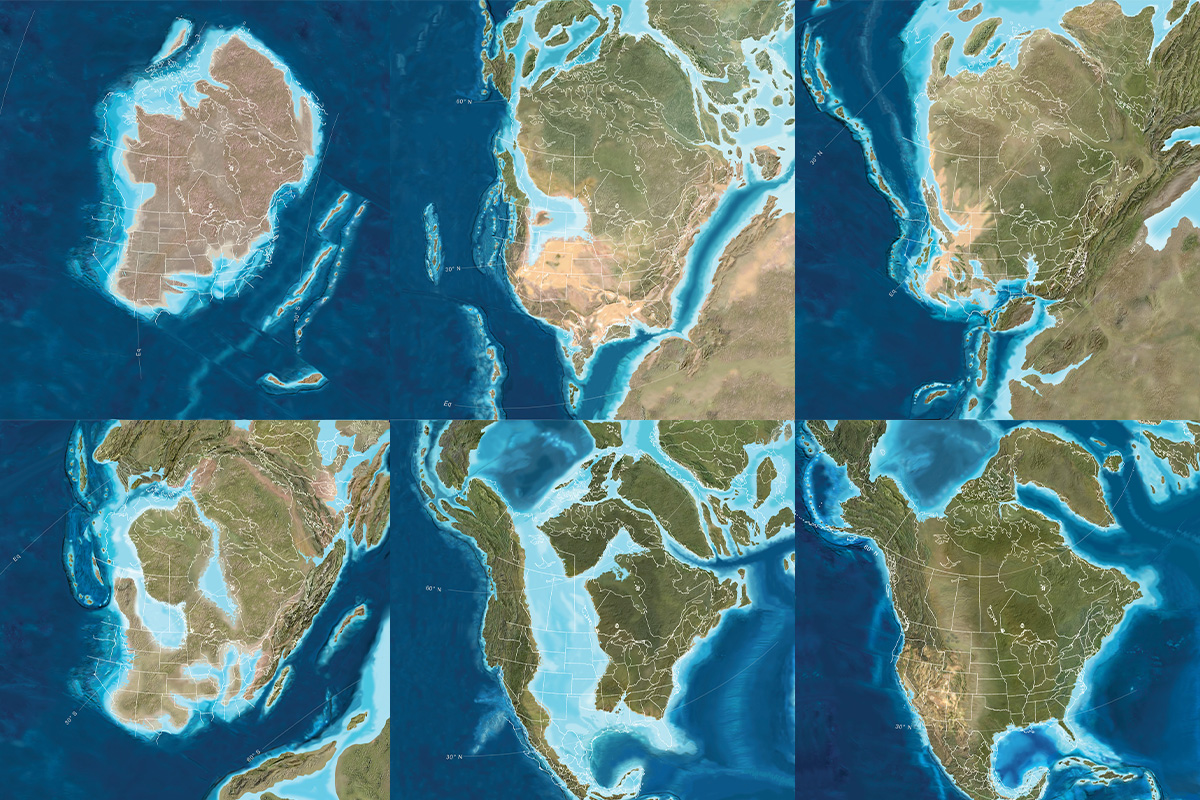
John McPhee, a renowned writer for The New Yorker, was instrumental in popularizing the concept of "deep time" with his seminal 1981 work, Basin and Range. A revised edition, included in his 1999 Pulitzer Prize-winning anthology Annals of the Former World, remains a compelling entry point into Earth’s ancient past. Though initially published during the Reagan administration and later updated, McPhee’s narratives, chronicling events and landscapes as interpreted by geologists, retain their enduring relevance. His journey across North America, following Interstate 80 from New Jersey to Nevada, serves as a narrative framework for exploring the continent’s multi-billion-year history.
In the western United States, McPhee delves into the dramatic geological processes that create the characteristic topography of basins and ranges. Geologists explain that these long, linear mountain chains and intervening valleys are formed through faulting, where the Earth’s crust is torn apart, followed by the accumulation of sediments within these depressions. These geological dramas, while seemingly ancient, are geologically young, dating back millions of years. McPhee reveals how the North American continent is, in essence, being stretched and pulled apart between the Rocky Mountains and the Sierra Nevada. This is not the first instance of such tectonic activity; a similar rifting occurred around 200 million years ago when the supercontinent Pangaea began to break apart, ultimately leading to the formation of the Atlantic Ocean. This historical perspective prompts contemplation: could the landscape of western North America witness the birth of a new sea in the distant future?

McPhee’s explorations are rich with detours, including a visit to an abandoned silver mine in Nevada. Following a precarious road overlooking a valley significant to the Paiute people, he uncovers the legacy of 19th-century mining, where the most accessible silver was extracted, leaving behind potentially vast quantities of ore overlooked in the waste. This narrative thread highlights the human element within the geological narrative, demonstrating how resource extraction interacts with and is shaped by the Earth’s formations.
The author masterfully contrasts human perception of time with the immense scales of geology. He observes that human lifespans and societal memory are typically confined to a few generations, with a strong focus on the present. Geologists, however, grapple with measuring and conceptualizing deep time, a span that defies easy human comprehension. McPhee’s book acts as an accessible primer, demystifying geological concepts and enabling readers to visualize landscapes and events that have long since vanished, such as "archipelagos of aching beauty rising in volcanic violence to settle down quietly and then forever disappear—almost disappear."

Science journalist Laura Poppick, in her book Strata: Stories from Deep Time (published in July 2025), explores a similar geological history with a meticulous attention to detail, yet offers a distinct approach. Her work is structured thematically, delving into "deep time" through the lenses of air, ice, mud, and heat, presented with meditative prose. Poppick examines rocks dating back 2 to 3 billion years, which hold clues to the early evolution of Earth’s atmosphere and the initial introduction of oxygen. Her visit to Minnesota to study iron-rich rocks from a period of global anoxia—a time before significant atmospheric oxygen existed, roughly half of Earth’s history—reveals the profound connection between atmospheric composition and the very foundation of life as we know it. The oxygen-rich air that sustains us today facilitated the formation of iron, a fundamental element for modern technologies, from steel vehicles and appliances to advanced medical devices and aircraft.
The fossil record, Poppick explains, is a critical tool for paleontologists to trace the evolution of life, particularly the explosive diversification that occurred around 540 million years ago during the Cambrian period, when most of today’s major animal groups first appeared. This record also documents the devastating impact of mass extinction events. She details two of the "Big Five" mass extinctions: one 250 million years ago and another approximately 50 million years later. Unlike the asteroid impact that famously wiped out the dinosaurs, these earlier extinctions appear to have been triggered by massive volcanic eruptions. Poppick elaborates on how magma rising from Earth’s mantle beneath vast deposits of fossil fuels ignited these carbon-rich reserves. This combustion released not only carbon dioxide but also toxic compounds like butanes and benzenes, along with ozone-depleting gases, creating a profound environmental crisis. This historical account of catastrophic volcanic activity and its global consequences serves as a stark parallel to contemporary concerns about climate change, offering insights into potential future scenarios and pathways toward mitigation.

During the Mesozoic Era, a period characterized by its warm climate and the reign of dinosaurs, global temperatures are estimated to have been 14 to 25 degrees Celsius (25 to 45 degrees Fahrenheit) warmer than today. Poppick joins scientists in Wyoming, exploring the Morrison Formation, a rich repository of sedimentary rock spanning from New Mexico to Montana, which has yielded more dinosaur fossils than any other formation on the continent. These rock layers, deposited over roughly 9 million years, offer a detailed chronicle of dinosaurian history, a timescale that dwarfs the approximately 12 million years of evolution that led to the divergence of humans, gorillas, and chimpanzees from a common ancestor. Scientists studying these layers seek to understand how large herbivores like the long-necked sauropods—including iconic species such as Diplodocus, Brontosaurus, and Apatosaurus—thrived in such a warm environment. Poppick notes that by piecing together a clearer picture of this ancient era, we gain a deeper appreciation for Earth’s resilience and its capacity to support life under extreme conditions.
For a more immersive experience of these ancient ecosystems, particularly the Jurassic period of Utah, science writer and paleontologist Riley Black’s book When the Earth Was Green (published in February 2025) is highly recommended. Black masterfully blends scientific data with artistic interpretation, allowing readers to vividly imagine the sensory details of prehistoric worlds. Each chapter unfolds as a descriptive vignette, accompanied by an appendix that delineates the scientific certainty, speculative hypotheses, and imaginative insights that inform her narrative.

Black transports readers to Utah 150 million years ago, where an Apatosaurus navigates a lush, expansive woodland. The narrative focuses on the creature’s feeding habits, its consumption of abundant horsetails and an ancient relative of the ginkgo tree. The sauropod’s formidable size and long neck allow it to access both ground-level vegetation and higher canopy leaves, providing a degree of protection from predators. Black emphasizes that the very existence of such colossal herbivores is a testament to the unique characteristics of their environment, with towering conifers and dense ferns creating a rich food source. This dynamic, she explains, represents an "evolutionary dance between herbivores and plants." While Black’s previous work, The Last Days of the Dinosaurs, meticulously detailed the final moments of the dinosaur age through the fifth major extinction event, When the Earth Was Green shifts focus to the co-evolutionary relationships and the slow, persistent interactions between flora and fauna that shaped ancient life, leaving their stories imprinted in the rock record.
Reading McPhee offers a captivating, if occasionally eccentric, journey alongside a journalist and his geologist companions, punctuated by enthusiastic exclamations upon encountering significant rock formations. While the scientific nuances might not always be fully grasped, the experience is undeniably exhilarating. Poppick invites readers into the scientific process itself, taking them on virtual field trips, participating in research, and visiting laboratories, revealing the engaging nature of scientific discovery. Black, with her evocative prose, immerses readers in almost dreamlike landscapes, using her imagination and scientific knowledge to bring long-vanished worlds to life and make deep time palpable.

As Poppick aptly observes, "Our planet seems to be telling us to take a look back." These books collectively serve as guides through the vast expanse of geological time, prompting us to reflect on our place within the grand narrative of Earth’s history and consider the profound implications for our future.