Joko Susilo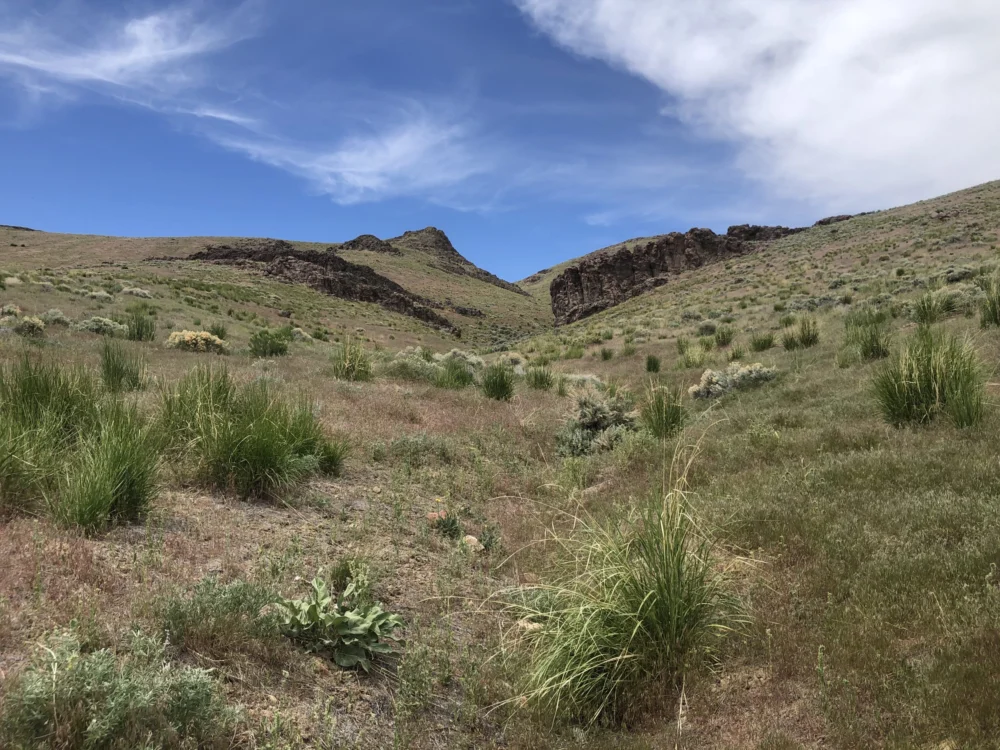
Karen Budd-Falen, a high-ranking official within the Department of the Interior, holds significant financial ties to the contentious Thacker Pass lithium mine in northern Nevada, a project that has been aggressively fast-tracked by the Trump administration. This revelation comes as the administration recently acquired an equity stake in the mine and its parent company, underscoring a deepening federal commitment to domestic critical mineral extraction. The intricate web of personal financial interests and public service raises serious questions about potential conflicts and the integrity of governmental decision-making processes regarding crucial national resources.
Budd-Falen’s financial disclosure, obtained after an unexplained delay, offers a glimpse into her family’s extensive land holdings, which include Home Ranch LLC, a Nevada ranching operation valued at over $1 million. Public records from Nevada’s business search database confirm that Frank Falen, Karen Budd-Falen’s husband, was listed as the manager of Home Ranch LLC as recently as February 2022. This connection forms the bedrock of the ethical scrutiny now facing the Interior Department official.

Further scrutinizing the timeline, in November 2018, shortly after Karen Budd-Falen assumed a top legal position at the Interior Department during the Trump administration’s initial term, Home Ranch LLC entered into an agreement to sell crucial water rights to Lithium Nevada Corporation. Lithium Nevada, a subsidiary of the Canadian mining giant Lithium Americas, is the company spearheading the development of the Thacker Pass mine. While the exact financial terms of this water rights sale remain undisclosed, an official Securities and Exchange Commission (SEC) filing explicitly names Frank Falen in connection with the transaction. Moreover, planning documents submitted by Lithium Nevada to federal regulators during the same period indicate the company’s intent to utilize existing stock water wells owned by Home Ranch LLC. A July 2021 monitoring plan for Thacker Pass specifically notes that these wells would be instrumental in "monitor[ing] potential drawdown impacts" stemming from the massive mining operations, directly linking the Falen family’s property to the mine’s operational footprint and environmental management.
These documented transactions and ongoing associations inevitably provoke questions regarding potential conflicts of interest, especially given Budd-Falen’s dual roles within the federal government. Appointed in March as associate deputy secretary to Interior Secretary Doug Burgum, a position that notably bypasses the requirement for Senate confirmation, Budd-Falen’s influence within the department is considerable. Her prior tenure as a high-ranking legal official at the Interior Department during President Trump’s first term further amplifies these concerns. It was during this earlier period that her official calendar, a public record, recorded a November 6, 2019, meeting designated as "lunch with Lithium Nevada." This meeting occurred precisely when Lithium Nevada was actively pursuing expedited approval for its ambitious Thacker Pass project, a fact that casts a shadow over the impartiality expected of a public servant.
The $2.2 billion open-pit mine project at Thacker Pass represents one of the largest known lithium deposits in the United States, positioning it as a cornerstone of the nation’s burgeoning electric vehicle (EV) battery supply chain. Lithium, a critical component in rechargeable batteries, is indispensable for the global transition to cleaner energy technologies. The aggressive pursuit of domestic lithium sources is a strategic imperative for many nations, including the United States, aiming to reduce reliance on foreign supply chains, particularly those dominated by China, and to bolster national security and economic competitiveness in the rapidly expanding EV market. The Biden administration, much like its predecessor, has also emphasized the importance of securing critical mineral supplies, albeit often with a greater stated emphasis on environmental and social safeguards.

Despite its strategic significance, the Thacker Pass project has ignited fierce and sustained opposition from a diverse coalition of area Indigenous tribes and environmental conservation groups. For the Paiute Shoshone people, the area known as Peehee Mu’huh holds profound cultural and spiritual significance, serving as ancestral lands and a sacred site. It is also tragically remembered as the site of an 1865 massacre of at least 31 Paiute people, making the proposed mine an affront to historical memory and cultural heritage. Environmentalists, meanwhile, express grave concerns over the mine’s potential ecological devastation, particularly its significant demand for water in an already arid region like northern Nevada. They warn of severe impacts on local water resources, the degradation of crucial habitats for endangered species, and the broader environmental footprint of an expansive open-pit mining operation.
The controversy surrounding Thacker Pass highlights a complex dilemma at the heart of the global clean energy transition: the tension between urgent demand for critical minerals and the imperative to protect environmental and Indigenous rights. The U.S. government, through agencies like the Department of the Interior and the Bureau of Land Management (BLM), plays a pivotal role in balancing these competing interests, overseeing vast tracts of public land where much of the nation’s mineral wealth lies. The Trump administration, in its final days, notably issued a Record of Decision in January 2021, approving the mine project, which encompasses approximately 5,700 acres of public land, thereby setting the stage for its development.
Karen Budd-Falen’s background further illuminates the ideological underpinnings of this push for resource extraction. During President Trump’s first term, she was reportedly considered for the directorship of the Bureau of Land Management, an offer she ultimately declined. She publicly stated in 2018 that she would have been required to divest her and her husband’s interests in their family ranches to avoid conflicts of interest, a condition she found unacceptable. Budd-Falen is widely recognized for her advocacy on behalf of ranchers and property rights, often aligning with the "wise use" movement that advocates for reduced federal control over public lands and increased local and private resource development. Her current position within the Interior Department, a sprawling agency responsible for managing the nation’s public lands and natural resources, places her at the nexus of these debates.

The renewed vigor in advancing the Thacker Pass project under the Trump administration’s broader critical minerals strategy gained fresh momentum recently. In September, the administration finalized a deal with Lithium Americas, exchanging the release of Department of Energy loan funds for a 5% equity stake in both the Thacker Pass mine and the company itself. This move signifies a direct governmental investment in a private mining venture, an unusual step that underscores the perceived national importance of the project.
Budd-Falen’s influence since her return to the Interior Department has largely been exerted behind the scenes, with little public information regarding her specific focus areas. This lack of transparency is compounded by the fact that Interior officials have yet to release her ethics agreement, a standard document that would typically detail any companies or projects from which she is required to recuse herself. "Did she have any oversight of the environmental review process regarding Thacker Pass? It is a big question," stated Kyle Roerink, executive director of the Great Basin Water Network, a prominent water conservation group in Nevada. Roerink added, "If she didn’t recuse herself, it would fly in the face of the impartial decision-making that Americans expect from government officials." The ongoing concerns about potential conflicts of interest at the highest levels of government continue to cast a long shadow over the future of the Thacker Pass lithium mine, a project central to both America’s economic ambitions and its commitment to environmental and social justice.