Rocky Gerung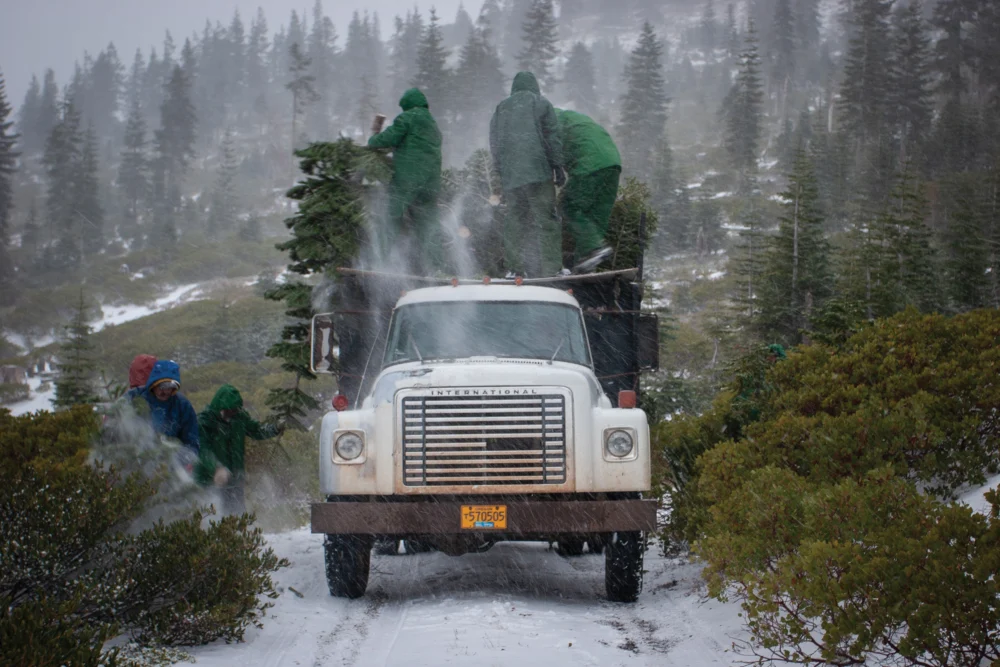
High on the volcanic slopes of California’s Cascade Range, amid air thin enough to sting the lungs, a short, intense season unfolds each autumn. Between mid-October’s first freeze and November’s snow, the sharp echo of chainsaws cuts through the crisp, resin-scented air. Here, on mountainsides between 6,500 and 8,000 feet, crews meticulously harvest wild red firs, known for their distinctive silver-tinged needles and dense, concentric branching, destined for Christmas tree lots across the nation. These magnificent Abies magnifica, or silvertips, thrive in rugged terrain that endures scorching summers and hard winters, a duality that shapes their hardy growth.

The window for this unique harvest is brutally brief, often lasting only two to three weeks before impassable snows blanket the roads and drive the workers off the mountain. "You only get a few weeks," explains John Wayne Strauch, known affectionately as Bambi, a wild Christmas tree harvester for fifty years. Strauch, who owns timber rights on over 300 acres of Worley Mountain, between Eagle Lake and Susanville, California, understands the unforgiving nature of the job. "If the ground doesn’t freeze, the needles won’t set," he notes, referencing the critical period when the trees are best suited for harvest. "If it snows early, you’re done." It’s a relentless race against time, a demanding endeavor that pushes many to their physical and financial limits. "Guys are barely breaking even… but we just keep doing it," Strauch admits, highlighting the deep-seated commitment to this rural tradition.

Strauch’s own journey into this profession began in the early 1970s alongside his godfather, Joe McNally. Both were newcomers to the industry, seeking adventure and a connection to the wild. Their early years were marked by steep learning curves, from navigating treacherous mountain roads to extricating snowbound trucks and enduring the biting cold. Yet, each winter, they returned with the same unwavering purpose: to bring a piece of the untamed wilderness into homes for the holidays.

Today, Strauch’s operation relies heavily on a crew of mostly migrant Mexican workers who travel north each winter, often transitioning from seasonal work in orchards and vineyards. However, recent shifts in immigration policies and increased enforcement have introduced a new layer of uncertainty and risk to this already challenging profession. Dan Barker, who helps manage the harvest, points to these policy changes as a significant source of anxiety for the crew.

The work itself is physically demanding, involving two primary crews totaling around 18 individuals. This team typically includes a cook, two drivers, two cutters, a bail operator, and the rest of the crew dedicated to hauling trees from deep within the dense forest. They work in a rapid, coordinated rhythm, felling impressive 40-foot red firs with remarkable precision. Cutters employ specialized wedge and relief cuts to guide the trees gently to the ground, preserving their branches. Crucially, these cuts are made above the tree’s base, leaving several whorls of branches intact. This practice, known as stump culturing, is the cornerstone of sustainable harvesting in this wild forest.

Each harvested silvertip is then meticulously graded for its shape, symmetry, and color, earning classifications ranging from 2s and 1s to "primos" and "double primos." These grades directly influence the tree’s price; an 8-foot double primo might fetch around $250 at a retail lot, while a 2 of the same height could sell for half that amount. This grading system is a critical link in the chain connecting the remote, high-country forests to the living rooms of families hundreds of miles away.

The practice of stump culturing is more than just a harvesting technique; it’s a philosophy of stewardship. This method allows the tree’s base to regenerate, with one of the remaining branches eventually receiving hormonal signals to grow upwards, becoming a new tree ready for harvest in subsequent years. "We’re not clear-cutting," Strauch emphasizes. "The better we take care of the trees, the better they take care of us. Some, we’ll get five, 10 harvests. Those are the mothers." This natural regeneration process eliminates the need for replanting, tilling, or chemical treatments, embodying a simple yet profoundly sustainable cycle that has ensured the productivity of these slopes for generations.

Strauch’s Worley Mountain operation yields approximately 7,000 trees annually, making it one of the nation’s last remaining commercial wild Christmas tree harvests. While small-scale compared to vast farmed Christmas tree plantations, its value lies in the inherent rarity, sustainability, and the profound relationship it fosters between the land and the labor. "These are beautiful trees with a beautiful story," Barker remarks. "We don’t just want people to accept them – we want them to love them like we do."

The stark beauty of the harvest is often underscored by the dramatic natural forces at play. Crews frequently work into the twilight, relying on headlamps and truck lights to illuminate their tasks as they cut and sort trees under the vast, starry sky, sometimes under the glow of a rising full moon. The silvertip trees, with their enduring needles that can remain vibrant well into March, are a testament to the resilience of nature. However, this delicate balance is increasingly threatened by the changing climate. Extreme early-season heatwaves have scorched thousands of young trees, hindering their growth before maturity, a stark reminder of the environmental pressures impacting both the forest and the people who depend on it. The 2021 Antelope Fire, one of many blazes that have reshaped the Northern California landscape, serves as a poignant example of how wildfire is altering the very terrain where these traditions are practiced.

Despite the mounting challenges, the tradition persists, driven by a deep connection to the land and a commitment to a way of life that bridges the gap between wild nature and holiday cheer. The rhythmic work, the camaraderie of the crew, and the sheer beauty of the mountain landscape create a powerful narrative of human endeavor against a backdrop of natural grandeur, ensuring that the spirit of the wild continues to grace homes each festive season.