Roger Danuarta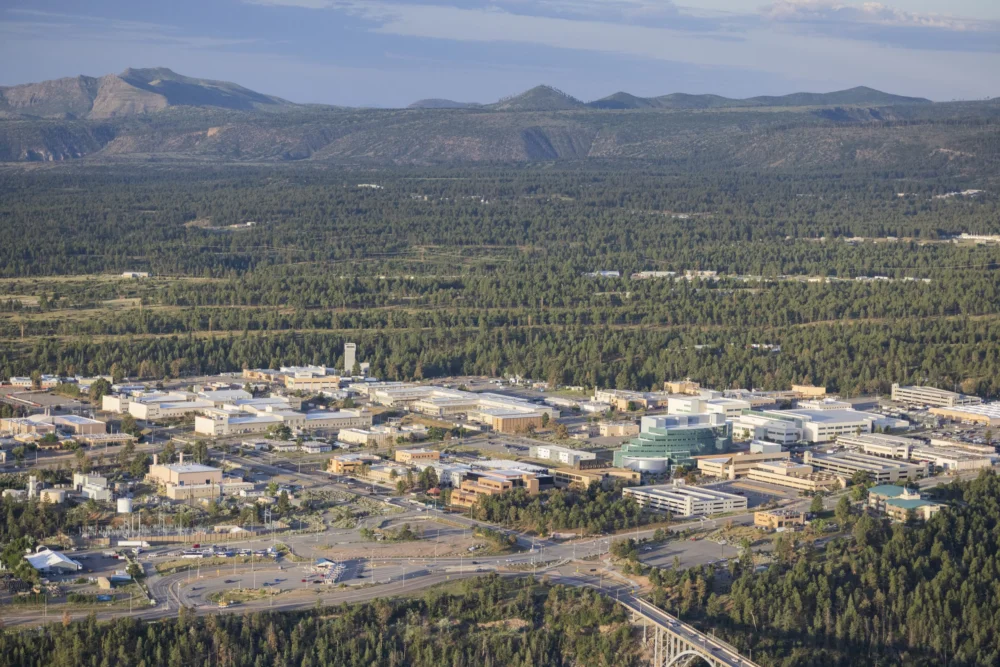
New Mexico’s environmental regulators delivered a forceful ultimatum to the U.S. Department of Energy (DOE) on Wednesday, demanding an immediate acceleration of the long-overdue cleanup of hazardous and nuclear waste at the Los Alamos National Laboratory (LANL), the historic site where the atomic bomb was conceived. This decisive action, following years of missed deadlines and mounting frustration, includes the imposition of civil penalties reaching up to $16 million against the federal agency for persistent violations of groundwater safety standards within the vicinity of the sprawling laboratory. The New Mexico Environment Department (NMED) underscored the gravity of the situation in a stark statement, asserting that "the continued presence of a large volume of unremedied hazardous and radioactive waste demonstrates a longstanding lack of urgency by the U.S. Department of Energy, and elevates the risk of waste storage failures" at the northern New Mexico facility.
This escalating confrontation between state and federal authorities unfolds against a backdrop of heightened global anxieties surrounding a potential new nuclear arms race. Just days prior to New Mexico’s announcement, the New START treaty, the last remaining bilateral arms control agreement between the United States and Russia, formally expired, effectively removing crucial limitations on the nuclear arsenals of the world’s two foremost nuclear powers. In this evolving geopolitical landscape, Los Alamos occupies a pivotal role, currently engaged in the critical production of plutonium bomb cores, also known as "pits," making the laboratory the cornerstone of a sweeping $1.7 trillion federal initiative aimed at modernizing the nation’s nuclear weapons infrastructure. This modernization drive, however, inadvertently exacerbates the existing environmental challenges, as the laboratory generates new streams of radioactive and hazardous waste even as dangerous byproducts from the Cold War era, often containing plutonium, uranium, and a cocktail of other radioactive and chemical contaminants, remain unmitigated, posing significant and enduring risks to both environmental integrity and human health. James Kenney, who leads the New Mexico Environment Department, concisely articulated the pervasive problem, stating, "It’s a legacy of failed legacy waste cleanups."
In response to the state’s rigorous enforcement actions, a spokesperson for the Energy Department affirmed the agency’s "commitment to public safety, efficiency, and transparency" and confirmed that the DOE was actively reviewing the regulatory measures initiated by New Mexico. The concerns articulated by state regulators are not new; they echo decades of environmental negligence stemming from Los Alamos’s early operations. During its formative years, and throughout the Cold War, the laboratory routinely disposed of nuclear and hazardous waste by burying it in unlined landfills, septic tanks, and even former firing sites. Today, the DOE estimates that an staggering volume of approximately 500,000 cubic meters of this "legacy waste"—an amount equivalent to the capacity of roughly 200 Olympic-sized swimming pools—still contaminates the lab’s extensive campus.
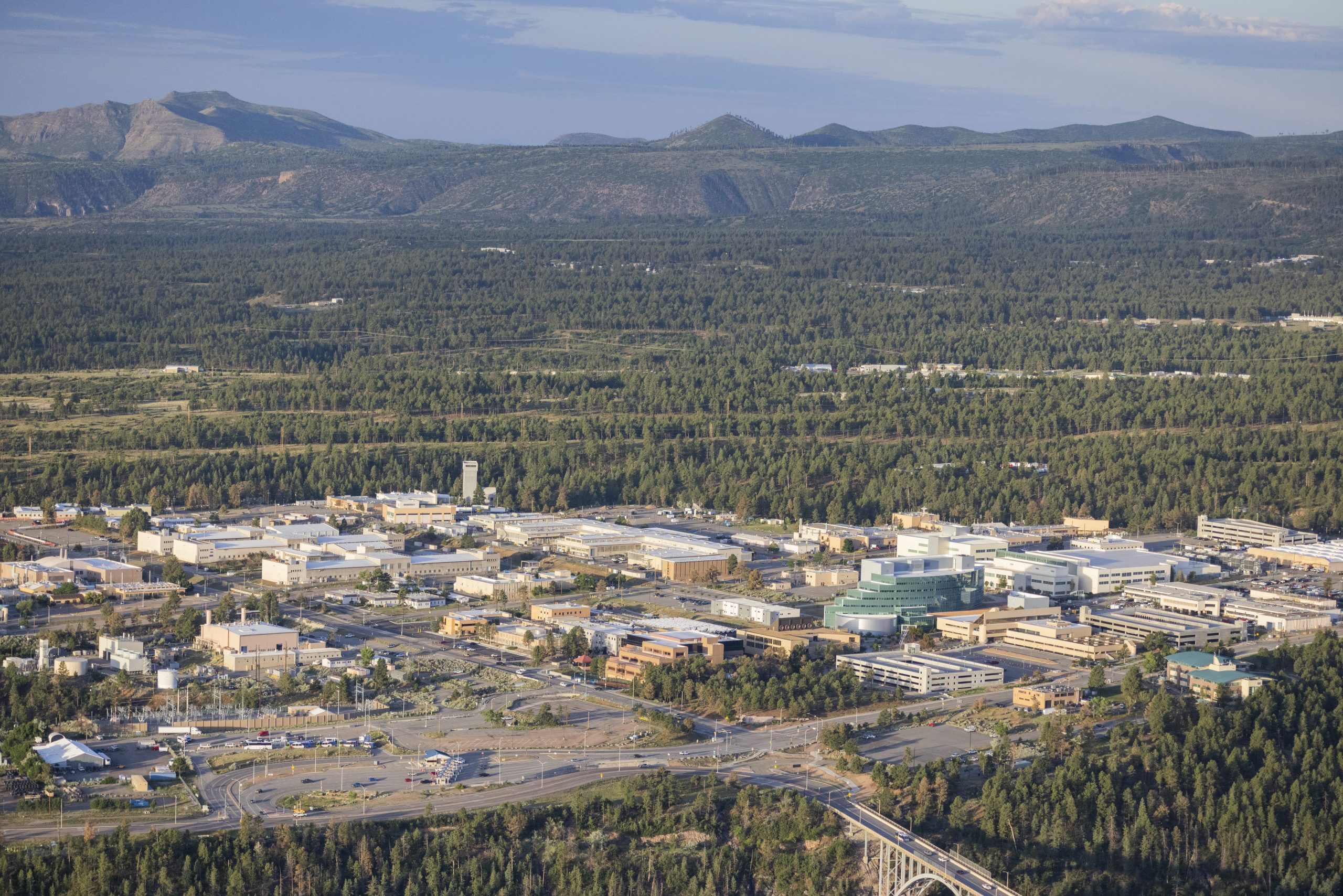
One of the most pressing and long-standing environmental threats emanates from the pervasive hexavalent chromium plume. Between 1956 and 1972, workers at LANL released water contaminated with this highly toxic chemical, a heavy metal and a known carcinogen, from the lab’s cooling towers directly into a nearby canyon. This contaminated effluent subsequently drained into the ground, infiltrating and polluting the regional aquifer. The insidious plume remained undetected until its discovery in 2005, initiating a complex and protracted cleanup effort. More recently, in November 2025, the chemical was definitively detected beyond the lab’s eastern boundary, migrating into the groundwater beneath the San Ildefonso Pueblo, a sovereign Native American community. The detected levels were alarmingly high, reaching concentrations up to 140% above New Mexico’s stringent groundwater safety standards. While both state and federal authorities have maintained that drinking water drawn from the affected aquifer remains safe for consumption, the presence of such elevated contaminant levels understandably fuels deep-seated community apprehension and distrust.
The protracted disagreements over waste cleanup and disposal are endemic to the relationship between the Energy Department and New Mexico. The state bears a unique and disproportionate burden as the nation’s only "cradle-to-grave" participant in the nuclear fuel cycle. Its history encompasses uranium mining, the production of crucial weapon components, and the long-term storage of transuranic waste at the Waste Isolation Pilot Plant (WIPP) near Carlsbad. WIPP, a deep geologic repository carved into a stable salt mine 2,000 feet underground, has served for over 25 years as the United States’ sole operational facility for the permanent disposal of Cold War-era nuclear waste generated by federal weapons production and research sites across the country.
While WIPP operates under federal oversight and through a contractor, New Mexico retains a critical permitting authority over certain aspects of its waste disposal operations. Over the years, the Energy Department has entered into various agreements with other states, such as Idaho, prioritizing the removal of their legacy waste to WIPP. Much of Idaho’s waste, for instance, originated from the now-closed Rocky Flats Plant near Denver, which produced bomb cores during the Cold War. However, New Mexico regulators contend that these inter-state arrangements were brokered without their meaningful input and, crucially, without commensurate progress on the cleanup of legacy waste at Los Alamos itself—the only facility in the nation currently engaged in the production of new plutonium pits. This imbalance raises serious questions about the DOE’s capacity to meet its commitments to individual states while simultaneously accepting new waste streams, a concern echoed by the Government Accountability Office (GAO), a federal watchdog, in a report to Congress which indicated that the department may be overstretching its capabilities.
Analysis of recent shipment records to WIPP reveals that the Idaho National Laboratory has historically been the top shipper, accounting for over 70% of the annual total waste. Los Alamos contributed 30% in 2023, but this figure dropped to just 14% last year, with less than half of that being legacy waste. The Savannah River Site in South Carolina also remains a significant contributor. In light of these figures, New Mexico is vociferously advocating for a policy shift that would prioritize the disposal of LANL’s legacy waste over newly generated waste. This year alone, more than 500 containers filled with the remnants of 34 "glove boxes"—protective workstations essential for handling radioactive materials—were removed from Los Alamos’s plutonium facility to make space for new ones. While these containers are slated for transport to WIPP this spring, after compaction at a facility in Idaho, as of January, only a single glove box had actually arrived in Idaho, highlighting the persistent logistical and operational hurdles.

Jessica Kunkle, the head of environmental management at Los Alamos, has publicly asserted in recent forums that legacy waste remains a priority for shipment, citing efforts such as the excavation and removal of 158 corrugated metal pipes containing radioactive waste from an unlined landfill in 1986 as evidence of commitment. However, these assurances are met with skepticism by state regulators and citizen groups, particularly given observed reductions in federal funding allocated for legacy cleanup and the slow pace of progress on the ground. A palpable concern revolves around Material Disposal Area G (MDA G), a 63-acre section of the lab’s campus where more than 2,000 drums of waste are currently stored in temporary tents. Local citizen groups express profound fears that this area could become highly combustible "fodder for wildfire," especially in a region prone to drought and intense wildfires. While the lab states it has established a "defensible perimeter," the sheer volume of stored waste remains a significant vulnerability.
Another critical point of contention is Material Disposal Area C (MDA C), an unlined landfill that was closed in 1974. This site remains uncleaned, holding a dangerous cocktail of chemicals, sludge from waste treatment plants, and objects contaminated with highly radioactive plutonium and uranium. New Mexico had previously pushed for the comprehensive, full cleanup of Area C, rather than opting for cheaper alternatives like capping and covering the waste in place, as part of a consent order with the Energy Department. However, in a significant setback, the department announced in July that it would indefinitely defer the cleanup of MDA C, citing its proximity to the lab’s active plutonium handling facility and the logistical challenges posed by heavy car and foot traffic in the area. Ms. Kunkle reiterated in December that the site was in a "safe and stable configuration," a claim that fails to mollify state regulators. The NMED views this deferral as a clear violation of the existing consent order and, in Wednesday’s enforcement actions, is now formally requiring the federal government to submit comprehensive supporting documentation justifying the indefinite delay. Adding to the urgency, regulatory documents from 2023 explicitly state that contaminants emanating from the MDA C landfill "have been detected at concentrations that pose a risk to groundwater," a vital resource relied upon by local communities for their drinking water supply. The escalating tensions underscore the profound challenge of balancing national security imperatives with the fundamental responsibility to protect public health and the environment, leaving the fate of New Mexico’s land and water, and the legacy of its nuclear past, hanging in a precarious balance.