Johny Prima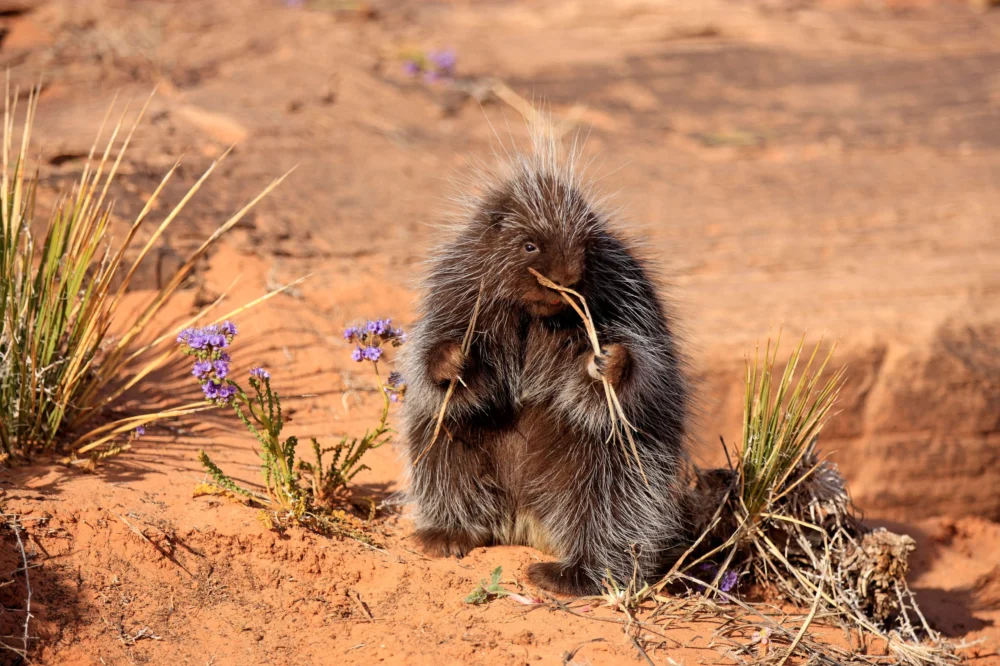
The North American porcupine (Erethizon dorsatum), a creature instantly recognizable by its formidable quilled defense, paradoxically remains one of the most elusive animals in the wild, its presence fading across vast swathes of its historic range. For many, a fleeting glimpse of this nocturnal rodent becomes a treasured memory, a testament to its increasing rarity. Emilio Tripp, a dedicated wildlife manager and citizen of the Karuk Tribe in Northern California, vividly recalls a spectral silhouette that flashed past his car window during a late-night drive with his father in the late 1990s. Decades later, the 43-year-old still holds onto that indistinct memory, unsure if it was truly a kaschiip, the Karuk word for porcupine, but it remains his sole potential encounter.
Tripp’s experience mirrors a profound shift observed within his community. Porcupine sightings among the Karuk are now exceptionally rare, mostly confined to the recollections of elders who fondly remember an era of abundance before the turn of the 21st century. Today, each new sighting – a carcass on a remote road, a fleeting midnight encounter – echoes from a rapidly receding past, fueling a collective concern: where have the porcupines gone? "Everyone’s concerned," Tripp emphasizes, highlighting the stark absence of observations that would typically signal a healthy population.
This alarming decline is not an isolated phenomenon in Northern California; it represents a widespread vanishing act across the entire Western United States. Wildlife scientists, alarmed by the anecdotal evidence and preliminary data, are now racing against time to locate remaining porcupine populations and unravel the complex web of factors driving their disappearance. Simultaneously, indigenous communities like the Karuk Tribe are forging ambitious plans, driven by cultural imperative and ecological necessity, to restore these unique creatures to their ancestral forests.
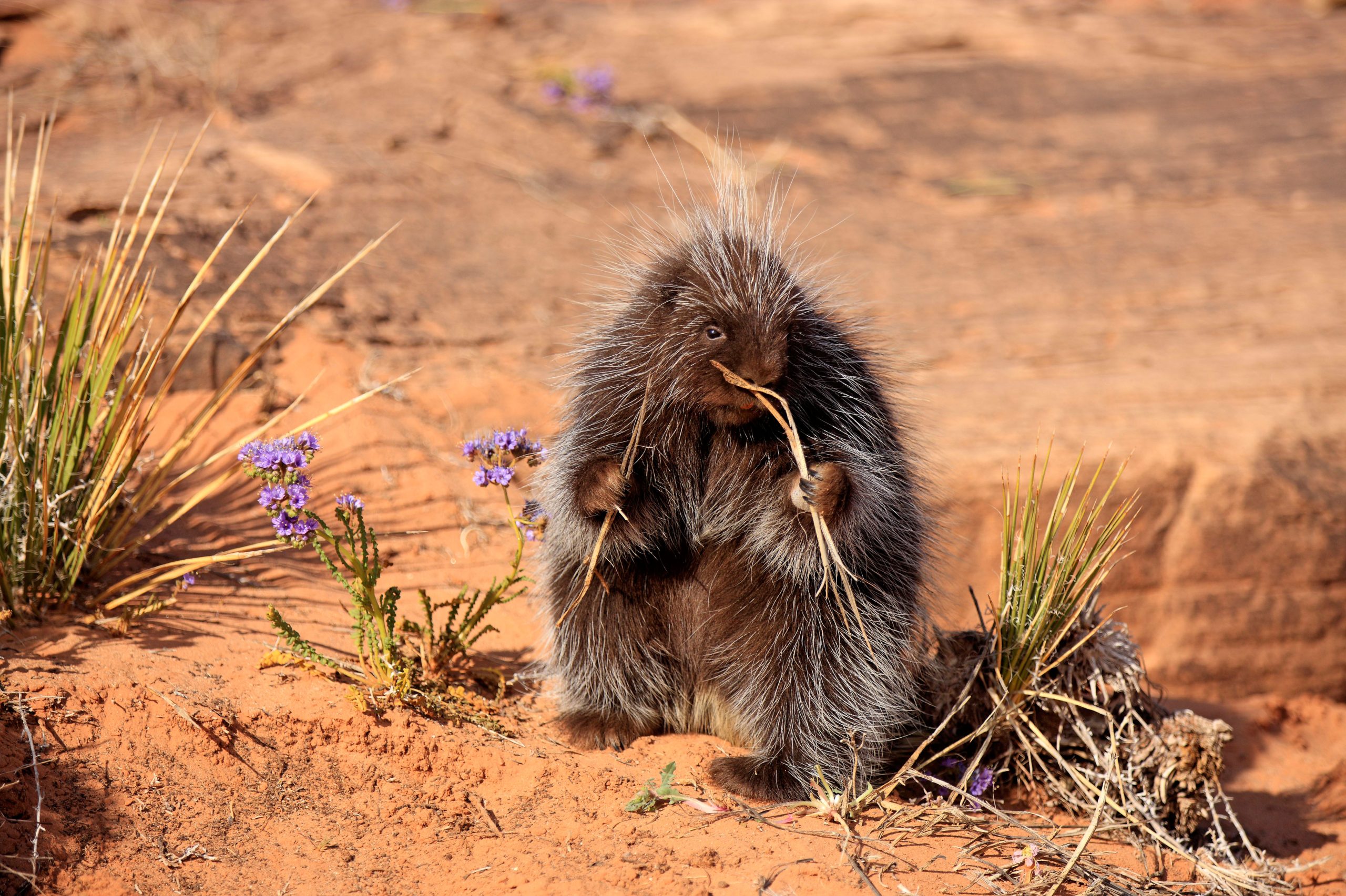
Porcupines are, at their core, walking pincushions, adorned with approximately 30,000 specialized quills that serve as a potent defense mechanism. Yet, this formidable armor can sometimes prove to be a liability, as these robust rodents are known to occasionally quill themselves. "They’re big and dopey and slow," observes Tim Bean, an ecologist at California Polytechnic State University, whose research has involved collaring porcupines. Their deliberate, waddling gait makes them vulnerable, particularly during their nocturnal excursions to forage on foliage or the nutrient-rich inner bark of trees. This bark-stripping behavior, while vital to their diet, historically placed them in direct conflict with the burgeoning timber industry, which regarded them as destructive pests.
Throughout much of the 20th century, porcupines faced relentless persecution. Widespread poisoning and hunting campaigns, often sanctioned by state and federal agencies, aimed to eradicate them. Vermont, for instance, orchestrated the massacre of over 10,800 porcupines between 1957 and 1959. In California, Forest Service officials declared an "open season" on porcupines in 1950, asserting that the species posed an existential threat to pine forests. While state bounty programs finally ceased by 1979, the damage was profound, and porcupine numbers have never fully rebounded.
The lack of comprehensive, historical population monitoring further complicates current conservation efforts. Scientists grapple with determining whether populations are still actively declining or simply struggling to recover from decades of systematic extermination. However, a growing body of anecdotal evidence provides a stark picture of scarcity. Veterinarians across the West report a significant reduction in cases of pets injured by porcupine quills. Longtime rural residents note fewer porcupines lurking in their backyards, a common sight in previous generations. Even hikers, venturing deep into wilderness areas, find these once-common forest inhabitants increasingly difficult to spot.
The ecological ripple effects of this decline are already manifesting. In the high-elevation forests of the Sierra Nevada, an endangered member of the weasel family, the fisher (Pekania pennanti), is suffering directly from the loss of a crucial protein source that porcupines once provided. Consequently, fisher populations in the Sierras exhibit poorer health, with individuals being scrawnier and producing smaller litters compared to their counterparts in regions where porcupines remain more prevalent. This highlights the porcupine’s often underappreciated role as a keystone species, influencing the health and balance of its forest ecosystem. Their absence can disrupt food webs, impact forest regeneration patterns through altered herbivory, and reduce cavity availability in trees, which porcupines often create and other species subsequently use.

For the Karuk Tribe, the porcupine’s cultural significance transcends ecological function. Porcupine quills are integral to traditional basketry and ceremonial items, embodying a deep connection to their homelands. Yet, the scarcity means the tribe now often imports quills rather than harvesting them locally. This inability to gather quills from their ancestral lands represents more than a logistical inconvenience; it signifies a profound severing of a cultural and spiritual bond. "It’s important for (porcupines) to be a part of our landscape. That’s part of why they’re chosen to be part of this ceremonial item," Tripp explains, underscoring the spiritual and practical importance of the kaschiip to Karuk identity and heritage.
Erik Beever, an ecologist with the U.S. Geological Survey, views the porcupine’s vanishing act as a poignant symptom of a much broader global crisis. Across the United States and indeed worldwide, biodiversity is experiencing an unprecedented decline, often at a pace that outstrips scientific monitoring capabilities. Beever describes this phenomenon as a "silent erosion of animal abundance," where species disappear unnoticed, their absence only becoming apparent years or decades later. This lack of baseline data and real-time monitoring means that, in many cases, "We’re wondering whether the species is either increasing or declining without anybody even knowing," he states, emphasizing the urgent need for robust ecological surveillance.
To address this critical knowledge gap, scientists like Tim Bean and his team have embarked on extensive research. They meticulously combed through a century of public records, including roadkill databases, wildlife agency reports, and citizen science observations, to map porcupine distribution patterns across the Pacific Northwest. Their findings reveal a perplexing trend: porcupines are dwindling in traditional conifer forests but are increasingly observed in "nontraditional" habitats, such as deserts and grasslands. This habitat shift suggests a potential response to environmental pressures, resource availability, or changing predator dynamics, demanding further investigation. Beever is now spearheading a similar, comprehensive study across the entire Western U.S. to gain a more complete regional picture.
Concerned scientists are exploring several theories to explain why porcupine populations have failed to recover and continue to decline. One significant factor is the proliferation of illegal marijuana cultivation sites, often hidden deep within remote forests. These illicit farms frequently employ highly toxic rodenticides, particularly anticoagulant rodenticides (ARs), to protect crops. These poisons not only directly kill porcupines but also enter the food chain, leading to secondary poisoning of their predators, such as mountain lions, bobcats, and coyotes, further disrupting ecosystem balance.

Another theory posits that increased protections for apex predators, like mountain lions, which have seen population rebounds in some areas, might be inadvertently contributing to porcupine declines. While beneficial for predator populations, a restored natural balance could mean increased predation pressure on porcupines, especially if other stressors (like habitat degradation or rodenticides) have already weakened their numbers. Porcupines, despite their quills, are prey for a range of predators that have developed strategies to overcome their defenses. Furthermore, their inherently low reproduction rates, typically birthing only a single offspring at a time, make them particularly vulnerable to population shocks and slow to recover, even when threats are mitigated. Beyond these direct threats, broader environmental changes such as increased frequency and intensity of wildfires, prolonged droughts, and habitat fragmentation due to human development undoubtedly play a role, impacting food sources, denning sites, and overall survival.
Understanding porcupine distribution and population dynamics presents significant challenges for researchers. As generalist herbivores, they inhabit a wide variety of forest types, making it difficult to pinpoint optimal survey locations. Moreover, their dietary habits make them notoriously difficult to bait for camera traps, a common tool in wildlife monitoring. Scientists have experimented with various lures, including brine-soaked wood blocks, peanut butter, and even porcupine urine, but with only limited success. The Central Sierra Environmental Resource Center, for instance, has conducted 34 years of camera surveys in the Sierra Nevada, both baited and unbaited, and has recorded porcupines only three times. "It’s a mystery," concedes John Buckley, the center’s executive director, expressing bewilderment at their continued absence even in protected, minimally disturbed habitats like Yosemite National Park.
Despite these scientific hurdles and the discouraging trends, the Karuk Tribe remains steadfast in its commitment to bringing the kaschiip back. Their initial camera trap surveys yielded sparse results, with one area considered a "hotspot" photographing a single porcupine. "That’s how rare they are," Tripp laments. Undeterred, Karuk biologists are exploring innovative, non-invasive methods, including deploying trained dogs for scat surveys, which can provide invaluable genetic and dietary information without direct animal contact.
Reintroducing a species like the porcupine is a delicate and complex undertaking. It necessitates identifying healthy source populations that can afford to lose individuals for translocation, ensuring genetic diversity, and carefully preparing recipient habitats for their arrival. The long-term success of such programs hinges on addressing the underlying causes of the original decline and fostering conditions conducive to self-sustaining populations. For Tripp, however, the urgency is paramount. "Things don’t seem to be getting better in over the course of my lifetime," he reflects, indicating that passive waiting is no longer an option. The ecosystem, in his view, requires active human intervention and restoration.

In a poignant display of enduring hope, Tripp, his wife, and daughter continue to participate in basket-weaving events that incorporate quills, diligently upholding the Karuk’s age-old traditions that honor the porcupine. This unwavering commitment is a small but powerful act of resilience and optimism – a belief that, with concerted effort and respect for the intricate balance of nature, the tribe will one day be able to welcome the porcupine home, signifying not only the return of a species but the healing of a landscape and a vital reconnection to cultural heritage. The porcupine’s journey from elusive forest dweller to a symbol of ecological recovery serves as a critical reminder of the interconnectedness of all life and humanity’s profound responsibility to protect it.