Joko Susilo
In late 2019, a seemingly localized dispute between two Montana ranchers and the U.S. Forest Service (USFS) escalated into a prolonged confrontation, exposing a broader pattern of political intervention that frequently thwarts federal efforts to enforce environmental regulations on public lands across the vast American West. The initial catalyst was a series of permit violations: Forest Service staff observed the ranchers’ cattle four times in September of that year grazing in unauthorized areas, discovered neglected fences, and found mineral-rich salt licks—essential for cattle health—placed too close to sensitive creeks and springs, drawing livestock into critical riparian habitats. These violations prompted the agency to issue a "notice of noncompliance," asserting a "willful and intentional violation" of their grazing permit and warning of potential revocation for future transgressions.
Despite their relatively modest scale within the extensive public lands grazing system, these ranchers quickly garnered powerful allies. Believing they had been treated unfairly, they articulated their frustration to the agency, stating, "The Forest Service needs to work with us and understand that grazing on the Forest is not black and white." Conversely, the acting district ranger maintained that his staff had "gone above and beyond" to facilitate the ranchers’ compliance. This local standoff soon attracted the attention of higher political echelons, illustrating a deeply entrenched dynamic where ranching interests, often backed by influential political figures, push back against federal oversight.
Leveraging assistance from a former Forest Service employee, the ranchers contacted their congressional representatives in early 2020. Staffers for then-Representative Greg Gianforte and Senator Steve Daines, both Republicans representing Montana, swiftly intervened. This marked the beginning of over a year of sustained pressure and correspondence between Senator Daines’ office and Forest Service officials, as revealed by public records. This intense political engagement prompted an internal Forest Service official to remark in a 2021 email to colleagues that ranchers, upon hearing "something they don’t like," habitually "run to the forest supervisor and the senator’s office to get what they want." This sentiment underscores a pervasive challenge faced by federal land managers, where the specter of political backlash can overshadow ecological imperatives.
Public-lands ranching represents one of the most significant land uses in many Western states, including Montana, where livestock populations often outnumber human residents. This economic and cultural prominence translates into considerable political clout. Ranchers cited for violations or resistant to regulations frequently mobilize a network of support, including pro-grazing lawyers, powerful trade group lobbyists, and sympathetic politicians ranging from county commissioners to state legislators and U.S. senators. These allies, some of whom have ascended to influential positions within administrations, have consistently advocated for loosened environmental regulations and diminished consequences for permit violators. This pattern creates a challenging environment for federal agencies like the Bureau of Land Management (BLM) and the Forest Service, whose employees often report significant obstacles to effective enforcement.
Multiple current and former BLM and Forest Service personnel have spoken out, often anonymously due to fears of retaliation, about how powerful political allies of ranchers can seriously impede the enforcement of grazing regulations. When faced with such formidable pushback, regulators frequently find themselves compelled to concede. One anonymous BLM employee articulated this dilemma, stating, "If we do anything anti-grazing, there’s at least a decent chance of politicians being involved. We want to avoid that, so we don’t do anything that would bring that about." This reluctance to act, driven by the desire to avoid political entanglements, can lead to inconsistent application of regulations and a de facto weakening of environmental protections.

Mary Jo Rugwell, a former director of the BLM’s Wyoming state office, acknowledged that while most public-lands ranchers adhere to regulations, a problematic minority "break the rules and go above and around you to try to get what they want or think they deserve." She emphasized that ranching interests "can be very closely tied to folks that are in power," highlighting the deeply interwoven relationship between Western politics and the agricultural sector. Since 2020, congressional members from both major parties have engaged the BLM and Forest Service on grazing issues more than 20 times, according to agency communication logs obtained through public records requests. These communications, from figures such as Senator Daines, Representative Gianforte, Representative Paul Gosar (R-Ariz.), former Representative Yvette Herrell (R-N.M.), former Senator Dianne Feinstein (D-Calif.), and Senator Mike Lee (R-Utah), addressed matters like "Request for Flexibility with Grazing Permits" and the "Public Lands Rule Impact on Ranchers and Rural Communities."
The political pressure on federal agencies is not solely one-sided. Rick Danvir, a long-time wildlife manager, noted that the BLM also faces intense scrutiny and litigation from environmental organizations that oppose public-lands grazing. "Everyone is always kicking them," he said, observing that the agency, wary of costly lawsuits, often adopts a defensive posture. However, the direct intervention of elected officials in specific permit disputes introduces a unique dynamic, often leading to unequal application of the law. In the Montana case, Senator Daines’ office maintained a steady stream of emails to Forest Service officials from March 2020 through February 2021, demanding detailed information about the agency’s interactions with the ranchers. A Daines staffer even appeared unannounced at a meeting between the ranchers and the Forest Service in April 2021, though they were turned away. Nevertheless, these interventions clearly impacted the agency’s handling of the situation.
Local Forest Service officials involved in the Montana dispute openly expressed their frustration, acknowledging that external political forces were compelling them to grant special treatment. One official wrote in 2020, "If this issue was solely between the (ranger district) and the permittee, we should administer the permit and end the discussion there. Unfortunately, we have regional, state and national oversight from others that deters us from administering the permit like we would for others." This official lamented the unfairness to compliant operators and concluded that what the ranchers perceived as political targeting had become "a mandate that we make accommodations outside the terms of a mediated permit." Another agency official echoed this sentiment, finding it galling to be "expected to hold all other permittees to the terms of their permits/forest plan/forest handbook… yet be told to continually let it go with another."

The ramifications of this political interference quickly became apparent. By June 2020, the acting district ranger expressed willingness to "cut (the ranchers) some slack" to improve relations. Despite finding the ranchers in violation again in December 2020, with evidence of overgrazing that threatened vegetation and soil health, the agency opted against issuing another formal notice of noncompliance. By late 2022, the Montana ranchers had been in violation for four consecutive years, warranting another notice, but agency staff remained hesitant, anticipating renewed conflict. Ultimately, the Forest Service declined to officially recommend a citation in its year-end report for 2022, despite widespread signs of overuse on the grazing land. As one agency official dryly noted amidst the years-long squabble, "the drama continues." A spokesperson for Senator Daines affirmed that the senator "advocates tirelessly on behalf of his constituents to federal agencies" and "was glad to be able to advocate" for the ranchers, while the Forest Service, the ranchers, and Representative Gianforte’s office did not respond to requests for comment.
The current political landscape, particularly under the Trump administration, has further empowered ranchers seeking to challenge what they perceive as government overreach. This administration has actively championed a shift in public lands policy, emphasizing resource utilization over conservation. Key appointments reflect this philosophy: Karen Budd-Falen, a self-described "cowboy lawyer" with a history of suing the federal government over grazing regulations, was appointed to a high-level post at the U.S. Department of the Interior. Her past legal actions, including an attempt to use anti-corruption RICO law against individual BLM staffers, underscore her adversarial stance toward federal land management. Additionally, President Donald Trump nominated Michael Boren, a tech entrepreneur and rancher with a contentious history with the Forest Service, to oversee the agency as Undersecretary of Agriculture for Natural Resources and Environment. Boren, whose company faced a cease-and-desist order for allegedly clearing national forest land and building a private cabin, was confirmed to his USDA position, signaling a clear direction for federal land policy.
The administration wasted no time in dismantling Biden-era reforms designed to strengthen environmental protections for public rangelands. In September, the Trump administration proposed rescinding the Public Lands Rule, a measure finalized in May 2024 that aimed to elevate the protection and restoration of wildlife habitat and clean water to equal footing with traditional economic uses like oil drilling, mining, and grazing on federal land. This rule would have introduced novel conservation leases and strengthened environmental impact analysis processes for grazing. Furthermore, the administration effectively nullified a Biden-era BLM memo that prioritized environmental review for degraded grazing lands and sensitive wildlife habitats. The Interior Department and BLM, in a statement, maintained that "any policy decisions are made in accordance with federal law and are designed to balance economic opportunity with conservation responsibilities across the nation’s public lands."

Beyond rolling back regulations, the administration is actively pursuing a broad initiative to open vacant federal grazing lands, positioning "grazing as a central element of federal land management." This drive seeks to refill an estimated 24 million acres of vacant allotments nationwide, many of which were left fallow to recover from wildfires, lacked sufficient water or forage, or awaited invasive species removal. In May, Forest Service Chief Tom Schultz reportedly gave staff just two weeks to compile lists of unused grazing allotments for rapid refilling. Such policies directly cater to powerful lobbying groups like the Public Lands Council, which advocates for swiftly reoccupying vacant allotments, though the council did not respond to requests for comment. A USDA spokesperson clarified that "vacant grazing allotments have always been open and available to permitted grazing," yet the urgency and emphasis on this initiative highlight a clear policy shift.
While the Trump administration has generally aligned with ranching interests, occasional friction has emerged, such as when ranching groups criticized the administration in October for increasing beef imports from Argentina amidst rising consumer prices. Historically, presidential administrations attempting to raise grazing fees or strengthen regulations have faced fierce resistance from ranching interests. In the mid-1990s, the Clinton administration retreated from a proposal to raise fees following widespread outcry from public-lands ranchers and their Republican allies, who viewed the reforms as an existential threat. One rancher at a hearing on the failed fee hike articulated this sentiment: "The government is trying to take our livelihood, our rights and our dignity. We can’t live with it."
The financial might of ranching industry groups in lobbying Congress may not rival that of pharmaceuticals or oil and gas, but their influence is undeniably potent. J.R. Simplot Co., the largest holder of BLM grazing permits, spent approximately $610,000 lobbying Congress between 2020 and 2025. The company recently hired the Bernhardt Group, founded by David Bernhardt, former Interior Secretary during the first Trump administration, to lobby on its behalf. Smaller permittees often rely on trade groups like the National Cattlemen’s Beef Association (NCBA), which boasts affiliates in 40 states. The NCBA and its allies have engaged in extensive legal battles, suing the Environmental Protection Agency over Biden-era water regulations and the Interior Department over endangered species protections for the lesser prairie chicken. A federal judge in August vacated protections for the imperiled species at the Trump administration’s request, and the administration has also moved to roll back the water regulations contested by the NCBA.

The NCBA, representing both public-lands ranchers and the broader beef industry, expended nearly $2 million on lobbying in Washington, D.C., over the past five years and contributed over $2 million to federal candidates and political action committees in the last two election cycles, with more than 90% of those contributions directed to Republicans in the 2024 cycle. The association vociferously opposed the Public Lands Rule, even filing a lawsuit to halt its implementation before the Trump administration moved to rescind it. Mark Eisele, then-president of the NCBA, labeled the rule "a stepping stone to removing livestock grazing from our nation’s public lands." Nada Culver, a deputy director of the BLM during the Biden administration, noted that the political influence of ranchers extends beyond their lobbying and donations; "It is tied to their cultural power," she explained, "They are icons of the American West."
The influence of state and local officials, from legislators to county commissioners and sheriffs, further amplifies the challenges faced by federal land managers. In June 2019, amidst a dispute in Utah’s Fishlake National Forest, a forest supervisor recounted a rancher’s ominous response to being told he would receive a citation for non-compliance. The rancher "became really angry, said there were two ways this could go, and he wasn’t going to court because the courts are all stacked in our favor." He then allegedly added, "if anyone in his family got hurt by this, remember I have a family and they can get hurt too," a statement the supervisor interpreted as a threat. The rancher declined to comment on the incident.
This dispute highlights a disturbing trend where local officials have openly sided with ranchers, sometimes even against federal authority. Minutes from a January 2016 meeting of the Piute County Commission in Utah record the local sheriff declaring he "will not allow this to be a Bundy situation," referring to the infamous 2014 armed standoff between rancher Cliven Bundy and the BLM in Bunkerville, Nevada. The sheriff reportedly added, "If that entails jailing the forest service he will do it!!!" Though the sheriff later claimed his comments were taken out of context, such statements underscore the intense local resistance federal agencies can encounter. In a few extreme cases, ranchers who violate grazing regulations have resorted to armed confrontation without losing support from elected officials.

The Cliven Bundy standoff exemplified this. After two decades of chronic trespassing and accumulating over $1 million in grazing fines and unpaid fees, Bundy maintained, without evidence, that the U.S. government held no jurisdiction over public lands grazing in Nevada. When federal agents attempted to round up his trespassing cattle under a court order, Bundy and armed supporters engaged in a standoff, ultimately forcing the agents to retreat. "I’ll be damned if I’m going to honor a federal court that has no jurisdiction or authority or arresting power over we the people," Bundy famously stated in 2014. Throughout this prolonged dispute, the Bundy family received unwavering support from political figures across the region. Nye County, Nevada, commissioners passed a resolution denouncing "armed federal bureaucrats… operating outside their lawful delegated authority," and at least one commissioner traveled to Bunkerville. Michele Fiore, then a member of the Nevada Legislature, voiced support, and several Arizona legislators also journeyed to Nevada after the standoff. The Bundys’ ties to powerful officials have only deepened; Celeste Maloy, Bundy’s niece, was elected to represent Utah’s 2nd Congressional District in 2023. During her tenure, Maloy has advocated for the sale of federal lands and sponsored legislation to ease access to vacant grazing allotments during droughts, receiving $20,000 in campaign contributions from the National Cattlemen’s Beef Association during the 2024 election cycle. Maloy’s office did not respond to requests for comment.
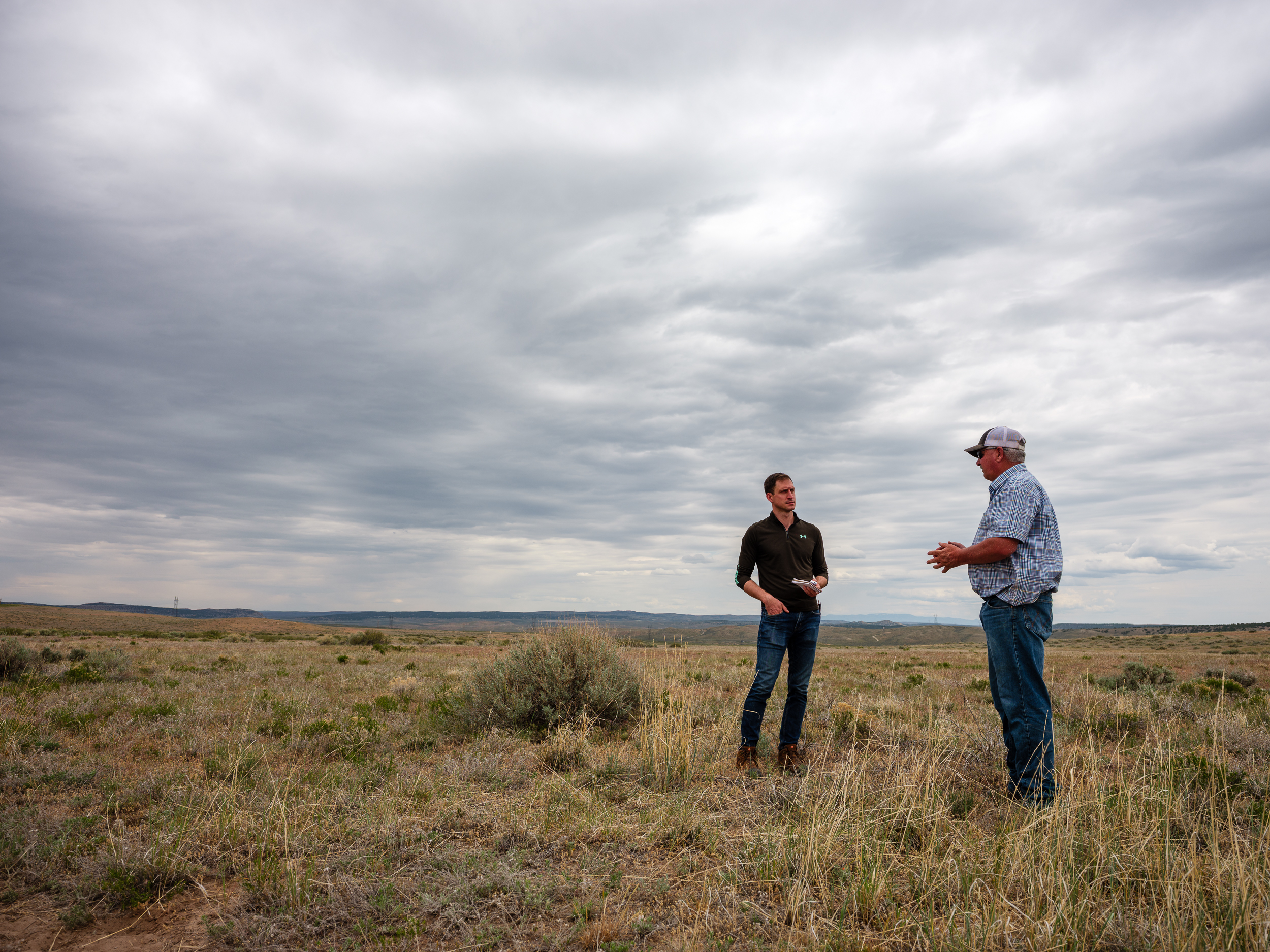
Wayne Werkmeister, a long-time BLM employee who retired in 2022 after a career overseeing federal grazing lands, candidly described the immense difficulty of enforcing public-lands protections. "When you have everything stacked against you, when you’ve got political pressure on you, when you’ve got management who doesn’t want to hear it, when you’ve got a rancher who’s trying to prove himself, it’s nearly impossible," he reflected. He recounted a personal experience from 2017 near Grand Junction, Colorado, where he and his colleagues documented extensive habitat damage from approximately 500 cattle grazing across a 90,000-acre allotment. Werkmeister pushed to reduce cattle numbers to allow the land to recover. In response, the ranchers hired former BLM employees to argue their case, accusing the agency of "agenda driven bullying," and copied then-U.S. Senator Cory Gardner, a Colorado Republican, on their correspondence with the BLM. Werkmeister found himself having to justify the agency’s scientific findings to the senator’s aides.
In October 2018, Werkmeister’s office received a letter from the Budd-Falen Law Offices, representing the two Colorado ranchers, asserting that the BLM’s actions "could potentially and unnecessarily force them out of business." The firm also sent the letter to local county commissioners. Werkmeister’s superiors subsequently ordered him back into the field to gather more data, despite years of existing documentation on the allotment’s condition, precipitation patterns, and grazing history. The ranchers continued to dispute the agency’s findings. Ultimately, Werkmeister was unable to sufficiently reduce grazing pressure to allow the allotment to recover. As recently as 2024, agency records confirm the BLM reapproved grazing there. The ranchers, their attorney, and Gardner did not respond to requests for comment. Werkmeister considers this inability to restore the parcel’s ecological health among his biggest failures, pointing to the denuded ground and remnants of native bunchgrasses amidst invasive cheatgrass during a recent visit. "Overgrazed to the point of gone," he concluded, a stark testament to the ongoing challenges facing federal land managers caught between scientific evidence and powerful political forces in the American West.