Roger Danuarta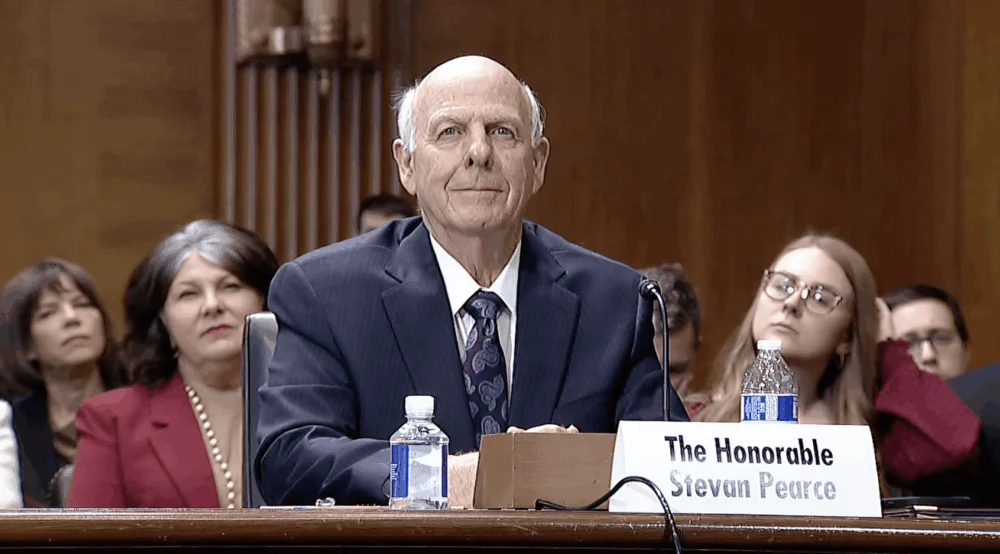
The nomination of former Republican Congressman Steve Pearce to lead the Bureau of Land Management (BLM) has ignited a firestorm of controversy, culminating in a contentious Senate Energy and Natural Resources Committee hearing where his past advocacy for federal land sell-offs clashed with his assurances of limited power as agency head. Pearce, a long-time political figure from New Mexico, offered what many viewed as contradictory explanations regarding his established record, fueling widespread opposition from a diverse coalition of environmental groups, conservation organizations, and hunting and angling advocates who fear a fundamental shift in the management of America’s vast public domain.
At the heart of the debate lies the very essence of the Bureau of Land Management’s mission. The BLM is responsible for overseeing nearly 250 million acres of federal land, primarily in 12 Western states, making it the largest land manager in the United States. Its mandate, often described as "multiple use and sustained yield," requires balancing diverse interests, from energy development, grazing, and mining to outdoor recreation, wildlife conservation, and the preservation of cultural and historical sites. A leader of this agency wields immense influence over the future of these lands, impacting everything from the availability of hiking trails and hunting grounds to the expansion of oil and gas drilling and renewable energy projects.
During the rigorous questioning from critical senators, Pearce largely sidestepped direct repudiation of his previous calls for divesting federal lands. When pressed by Senator Ron Wyden (D-Ore.) about his long-standing public land record, Pearce stated, "I’m not so sure that I’ve changed." Yet, in the same breath, he sought to reassure lawmakers by asserting, "I do not believe that we’re going to go out and wholesale land from the federal government," citing statutory limitations on the BLM’s authority to initiate such sales unilaterally. This apparent dichotomy left many observers questioning the nominee’s true intentions and understanding of the agency he sought to lead.
Pearce’s strategy throughout the hearing appeared to be one of deflection, repeatedly emphasizing the limits of his potential role. He suggested that the designation of national monuments, a significant tool for public land protection, was solely within the purview of the White House. Similarly, when challenged on the broader question of selling off major swaths of federal land, he redirected inquiries to Interior Secretary Doug Burgum, framing such decisions as falling outside the BLM director’s direct control. While technically true that the director does not unilaterally set policy for land sales or monument designations, the agency head’s philosophy and recommendations profoundly influence the administration’s direction and the day-to-day management of these crucial resources.
Senators from across the political spectrum, particularly those representing Western states, highlighted the fervent opposition from their constituents to any notion of public land sales. Senator James Risch (R-Idaho) delivered a blunt message: "Idahoans do not want their public lands sold, period, full stop." This sentiment resonates deeply across the Western United States, where federal lands are not just economic engines but also integral to cultural identity, recreational pursuits, and a way of life. A recent Colorado College poll of Western state residents underscored this widespread consensus, revealing that 76% opposed selling public land for housing development, and a nearly identical 74% rejected sales for oil, gas, or mining. These figures demonstrate a powerful, bipartisan commitment to maintaining public ownership and access, a reality that any prospective BLM director must confront.

The lion’s share of direct criticism at the hearing emanated from Democratic members of the committee, with Senator Martin Heinrich (D-NM) expressing significant reservations. In his opening statement, Heinrich noted Pearce’s historical advocacy for land sales, stating, "That makes it challenging for me to view his potential tenure at the BLM as one of stewardship." This concern reflects a deeper anxiety among conservationists and outdoor enthusiasts that a leader with a history of favoring divestment could fundamentally undermine the agency’s protective mandates.
Notably, the hearing was surprisingly devoid of extensive questioning regarding Pearce’s extensive ties to the fossil fuel industry, an omission that drew sharp criticism from watchdog groups. Pearce, a former head of the New Mexico State Republican Party, built a significant portion of his wealth in the oil-and-gas sector. His business interests include Trinity Industries, an oilfield services company he reportedly plans to transfer control of to his wife if confirmed. Furthermore, he holds interests in several oil leases within the highly productive Permian Basin and maintains sizable investments in various fossil fuel and energy companies. If confirmed, federal ethics regulations would mandate the divestment of many of these assets to prevent direct conflicts of interest. However, even after divestment, the perception of a director with such a deep background in resource extraction overseeing an agency responsible for oil and gas leasing on public lands raises significant ethical questions and concerns about potential regulatory capture. His campaign coffers also benefited substantially from the oil and gas lobby, receiving over $2 million in contributions during his congressional runs.
Despite these connections, Pearce attempted to strike a conciliatory tone by sharing personal anecdotes about the value of public lands. He spoke fondly of childhood vacations on Forest Service land, cherished moments with his granddaughter on federal lands near Tucson, Arizona, and the "healing serenity" he found backpacking in wilderness areas after returning from Vietnam. While these personal reflections might aim to soften his image, they contrast sharply with his legislative record and public statements, leaving critics to wonder whether his stated appreciation for public lands aligns with his policy positions.
Another point of contention arose when Senator Angus King (D-Maine) questioned Pearce about his familiarity with a recent directive from Interior Secretary Doug Burgum. This directive requires Burgum’s personal sign-off for all renewable energy projects on public lands, a policy that has drawn scrutiny for potentially slowing down the nation’s transition to clean energy. Pearce’s response—that he was not familiar enough with the policy to weigh in—was immediately seized upon by critics. Aaron Weiss, deputy director of the Colorado-based Center for Western Priorities, issued a scathing statement, asserting that "Based solely on his feigned ignorance of energy policy, Steve Pearce is unqualified to lead the Bureau of Land Management." Weiss further highlighted concerns about Pearce’s "woefully inadequate ethics forms," suggesting they leave ample room for significant conflicts of interest should he be confirmed.
Pearce’s nomination itself followed a turbulent path. He was not President Trump’s initial choice for the BLM directorship. Kathleen Sgamma, a long-time oil and gas lobbyist, abruptly withdrew her nomination just hours before her scheduled confirmation hearing earlier in the year. Her withdrawal came after a watchdog group unearthed a private memo in which Sgamma had condemned Trump’s role in the January 6, 2021, attack on the U.S. Capitol, a politically damaging revelation that made her confirmation untenable within the administration.
In stark contrast to Sgamma, Pearce has remained an unwavering and vocal supporter of former President Trump. He staunchly defended Trump in the aftermath of January 6th against accusations of inciting violence. In a now-deleted social media post days after the riot, Pearce famously declared that Trump "will be our President FOREVER and no one can take that away from us." This history of fierce loyalty to the former president, coupled with his contentious record on public lands and deep ties to the fossil fuel industry, positions Pearce as a highly polarizing figure for a role that demands consensus-building and a balanced approach to managing America’s natural heritage. The Senate Energy and Natural Resources Committee concluded the hearing without a vote on Pearce’s nomination, leaving his fate, and by extension, the future direction of public land management, in an uncertain state.