Johny Prima
For many, the sight of a porcupine in its natural habitat is a rare and almost mythical encounter, a testament to the creature’s elusive nature despite its distinctive appearance. Emilio Tripp, a dedicated wildlife manager and a revered citizen of the Karuk Tribe in Northern California, vividly recalls a fleeting glimpse in the late 1990s—a ghostly silhouette against the night, a memory he clutches like a precious charm, though he cannot definitively confirm it was a kaschiip, the Karuk word for porcupine. Decades have passed since that singular moment, and the 43-year-old has not witnessed another porcupine. This scarcity echoes across his tribe, where such sightings have become the exclusive domain of elders, who recount a bygone era when porcupines were abundant until the cusp of the 21st century. Today, each report—a roadside carcass, a nocturnal encounter—serves as a poignant echo from the past, fueling a pervasive question: Where have the porcupines gone?
"Everyone’s concerned," Tripp articulated, underscoring the collective apprehension. "If there were more observations, we’d hear about it." This local concern in Northern California reflects a far broader and more troubling trend across the entire Western United States, where these spiny rodents are disappearing at an alarming rate. Wildlife scientists are now engaged in a critical race to pinpoint existing populations and unravel the complex reasons behind their precipitous decline. Concurrently, Indigenous communities like the Karuk Tribe are not merely observing but are actively charting ambitious and deeply meaningful plans to restore these culturally significant animals to their ancestral forests.
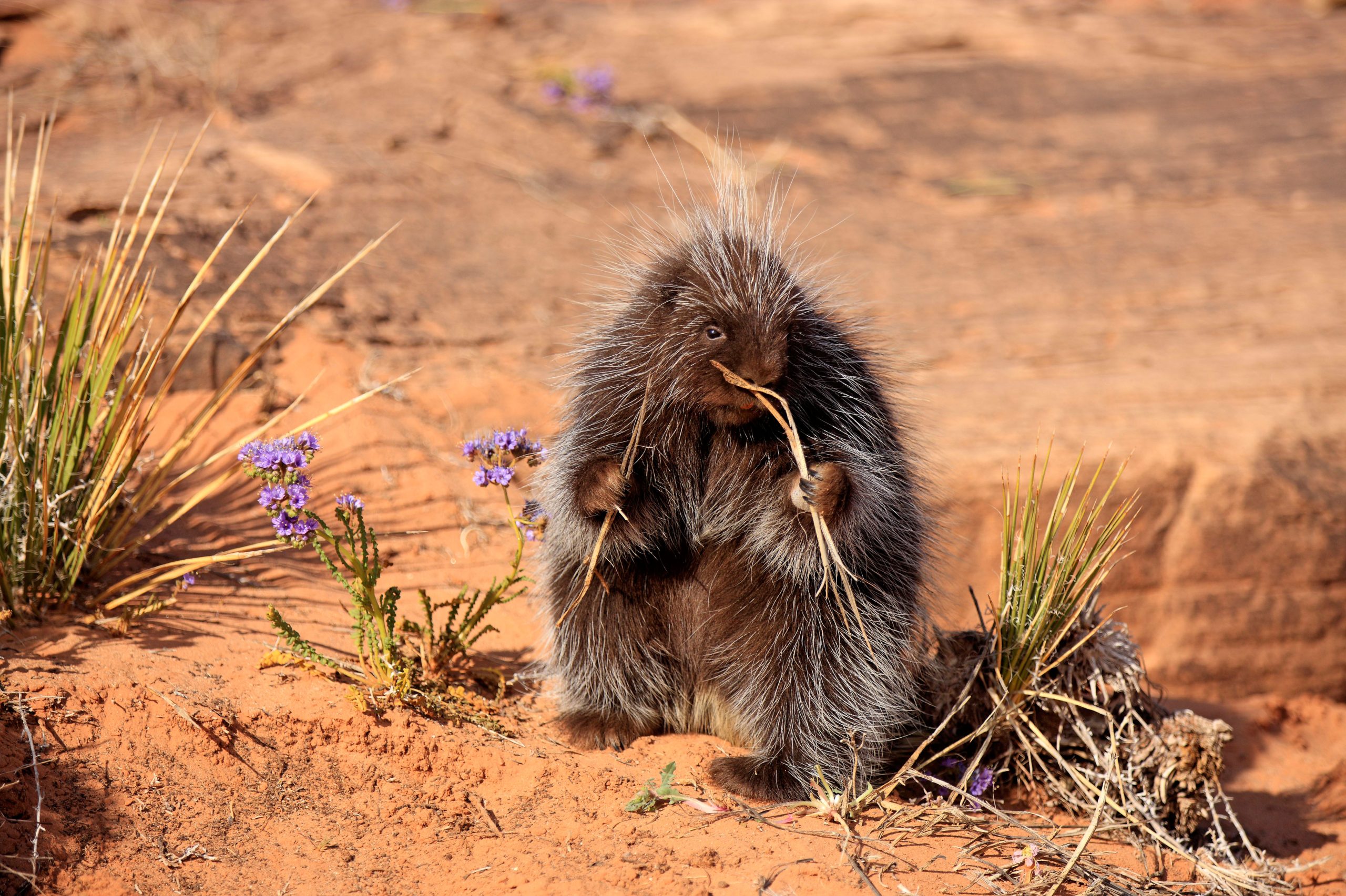
The North American porcupine (Erethizon dorsatum), a large, slow-moving rodent, is instantly recognizable by its formidable defense: a dense coat of some 30,000 barbed quills, each a sharp, hollow hair designed to deter predators. While an effective deterrent, this natural armor can sometimes prove to be a liability, as porcupines are known to inadvertently quill themselves. Tim Bean, an ecologist at California Polytechnic State University who has closely studied porcupines, describes them as "big and dopey and slow," typically nocturnal creatures that waddle deliberately from tree to tree, foraging on foliage or the nutrient-rich inner bark, particularly during leaner winter months. Their diet, while crucial for their survival, has historically put them at odds with human interests.
These unique herbivores have long faced persecution. The timber industry, in particular, viewed their bark-gnawing habits as a direct threat to lumber production, leading to extensive and aggressive poisoning and hunting campaigns throughout the 20th century across the U.S. Vermont, for instance, documented the systematic killing of over 10,800 porcupines between 1957 and 1959 alone. In California, Forest Service officials declared an "open season" on porcupines in 1950, operating under the misguided belief that the species posed an existential threat to pine forests. Although official state bounty programs for porcupines largely ceased by 1979, the populations never fully rebounded.
Contemporary surveys conducted by researchers in diverse regions including British Columbia, Arizona, western Montana, and Northern California consistently indicate that porcupines remain scarce. The absence of comprehensive historical monitoring data makes it challenging for scientists to definitively determine whether populations are still actively declining or if they simply failed to recover from decades of intense persecution. Nevertheless, the anecdotal accounts from those who remember a time of porcupine abundance serve as potent alarm bells. A consistent pattern emerges across the West: veterinarians report treating fewer pets for quill injuries, long-time rural residents notice a marked absence of the creatures in their backyards, and hikers describe the porcupine as increasingly difficult to find.

The ripple effects of this disappearance are already evident within various forest ecosystems. In California’s majestic Sierra Nevada, the endangered Pacific fisher (Pekania pennanti), a member of the weasel family, is experiencing significant nutritional deficiencies due to the scarcity of porcupines, which historically provided a crucial, high-protein food source. This dietary void has resulted in scrawnier fishers and smaller litter sizes in the Sierras compared to other regions where porcupine populations are more robust, highlighting the intricate dependencies within a healthy food web.
Beyond their ecological role, porcupines hold profound cultural significance for the Karuk Tribe. Their quills are integral to traditional basketry and ceremonial items, embodying a deep connection to the land and its resources. However, the current scarcity means the tribe now frequently imports quills from outside their ancestral lands, rather than gathering them locally. This inability to source quills from their homelands represents more than just an inconvenience; it signifies a palpable loss of connection between tribal members and their ancestral territories, severing a vital thread in their cultural fabric. "It’s important for porcupines to be a part of our landscape," Tripp affirmed, emphasizing their intrinsic value. "That’s part of why they’re chosen to be part of this ceremonial item."
The "silent erosion of animal abundance," a term coined by Erik Beever, an ecologist at the U.S. Geological Survey, captures the broader implications of the porcupine’s vanishing act. Beever warns that this phenomenon is part of a larger, accelerating global biodiversity crisis, where species are disappearing faster than scientists can even track them. The porcupine, therefore, might be a critical indicator species, signaling a deeper malaise within ecosystems. "We’re wondering whether the species is either increasing or declining without anybody even knowing," Beever lamented, underscoring the vast knowledge gaps that hinder effective conservation.

In response, scientists are urgently working to bridge these critical knowledge gaps. Tim Bean and his team, for instance, meticulously sifted through a century’s worth of public records to map porcupine distribution patterns across the Pacific Northwest. Their research, drawing on roadkill databases, wildlife agency reports, and citizen science contributions, revealed a concerning trend: porcupines are dwindling in traditional conifer forest habitats but are paradoxically appearing in non-traditional environments like deserts and grasslands. Erik Beever is now spearheading a similar, comprehensive study across the entire Western U.S. to gain a more complete understanding.
Concerned researchers have put forth several theories to explain why porcupine populations have failed to recover and return to their historical ranges. One significant factor is the proliferation of illegal marijuana farms, often hidden deep within forest ecosystems, which frequently employ highly toxic rodenticides. These poisons, indiscriminately applied, kill a wide range of animals, including porcupines, and can also lead to secondary poisoning of their predators. Another theory suggests that increased conservation protections for apex predators, such as mountain lions (Puma concolor), might have inadvertently contributed to the porcupine’s decline by reducing predation pressure on the porcupine’s own predators. Porcupines also possess inherently low reproduction rates, typically birthing only a single offspring, known as a porcupette, at a time. This biological characteristic makes them inherently vulnerable to population shocks and slower to recover from declines compared to more prolific species.
Understanding porcupine distribution and population dynamics is inherently complex. As generalist herbivores, they inhabit a wide variety of forest types, making it challenging for researchers to know precisely where to focus their efforts. Furthermore, porcupines are notoriously difficult to bait. Scientists have experimented with various attractants, from brine-soaked wood blocks to peanut butter and even porcupine urine, in attempts to lure these cautious creatures towards camera traps, but with only mixed success. The Central Sierra Environmental Resource Center, for example, has conducted 34 years of camera surveys, both baited and unbaited, in the Sierra Nevada, yet porcupines have appeared in only three instances. "It’s a mystery," admitted John Buckley, the center’s executive director, expressing profound perplexity. "We still don’t understand why they’re not reproducing and filling back in where there’s very little disturbance of their habitat, like Yosemite National Park."

The Karuk Tribe, however, is not content to merely ponder the mystery; they are actively committed to bringing porcupines back to their lands. Their own extensive camera trap surveys have yielded minimal evidence, with one area considered a "hotspot" recording a mere single porcupine sighting. "That’s how rare they are," Tripp emphasized. Consequently, Karuk biologists are exploring innovative methods, including the deployment of trained detection dogs to conduct scat surveys, which offer a non-invasive and potentially more effective way to locate elusive populations.
Reintroducing the species would necessitate a delicate and meticulously planned balancing act. Given the already scarce nature of porcupine populations, there is concern whether existing small source populations could withstand the removal of individuals for reintroduction elsewhere without jeopardizing their own stability. Despite these challenges, Tripp feels an urgent imperative to act, recognizing that the ecosystem does not appear to be healing spontaneously. "Things don’t seem to be getting better over the course of my lifetime," he observed, highlighting the generational witness to this environmental degradation. Yet, a deep-seated optimism still permeates his actions. Tripp, alongside his wife and daughter, continues to regularly participate in basket-weaving events that incorporate quills, diligently upholding the Karuk’s age-old traditions that honor and celebrate the porcupine. It is a small but powerful act of persistent hope—a belief that, perhaps in the not-too-distant future, the tribe will once again be able to welcome the porcupine home, restoring a vital ecological and cultural link to their ancestral lands.