Johny Prima
The North American porcupine, a creature easily recognized by its formidable coat of quills yet notoriously difficult to spot in its natural habitat, is mysteriously vanishing across the Western United States, prompting concern among Indigenous communities and wildlife scientists alike. For generations, the porcupine, known as kaschiip to the Karuk Tribe of Northern California, was an integral part of the forest ecosystem and a vital component of tribal culture, but today, direct sightings are so rare they have become a cherished memory, often relegated to the recollections of elders. Emilio Tripp, a 43-year-old wildlife manager and Karuk tribal citizen, recounts a fleeting glimpse of a shadowy form on a nighttime drive with his father decades ago, a moment he still holds onto as his sole potential encounter with a wild porcupine. This anecdotal evidence, repeated across the vast landscapes of the West, paints a troubling picture: a once-common species is quietly disappearing, leaving behind an ecological void and a cultural ache.
The precipitous decline of porcupine populations is not confined to the ancestral lands of the Karuk Tribe in Northern California; it represents a broader, alarming trend observed throughout the American West. From the dense conifer forests of the Pacific Northwest to the arid plains of Arizona and the rugged mountains of Montana, the prickly rodents are becoming increasingly scarce. Wildlife scientists are now in a desperate race against time, striving to pinpoint remaining populations, understand the complex drivers behind their disappearance, and formulate effective conservation strategies. Concurrently, Indigenous nations like the Karuk Tribe are moving beyond mere observation, charting ambitious plans to actively restore porcupines to their traditional forest homelands, recognizing both the ecological necessity and the deep cultural significance of their return.
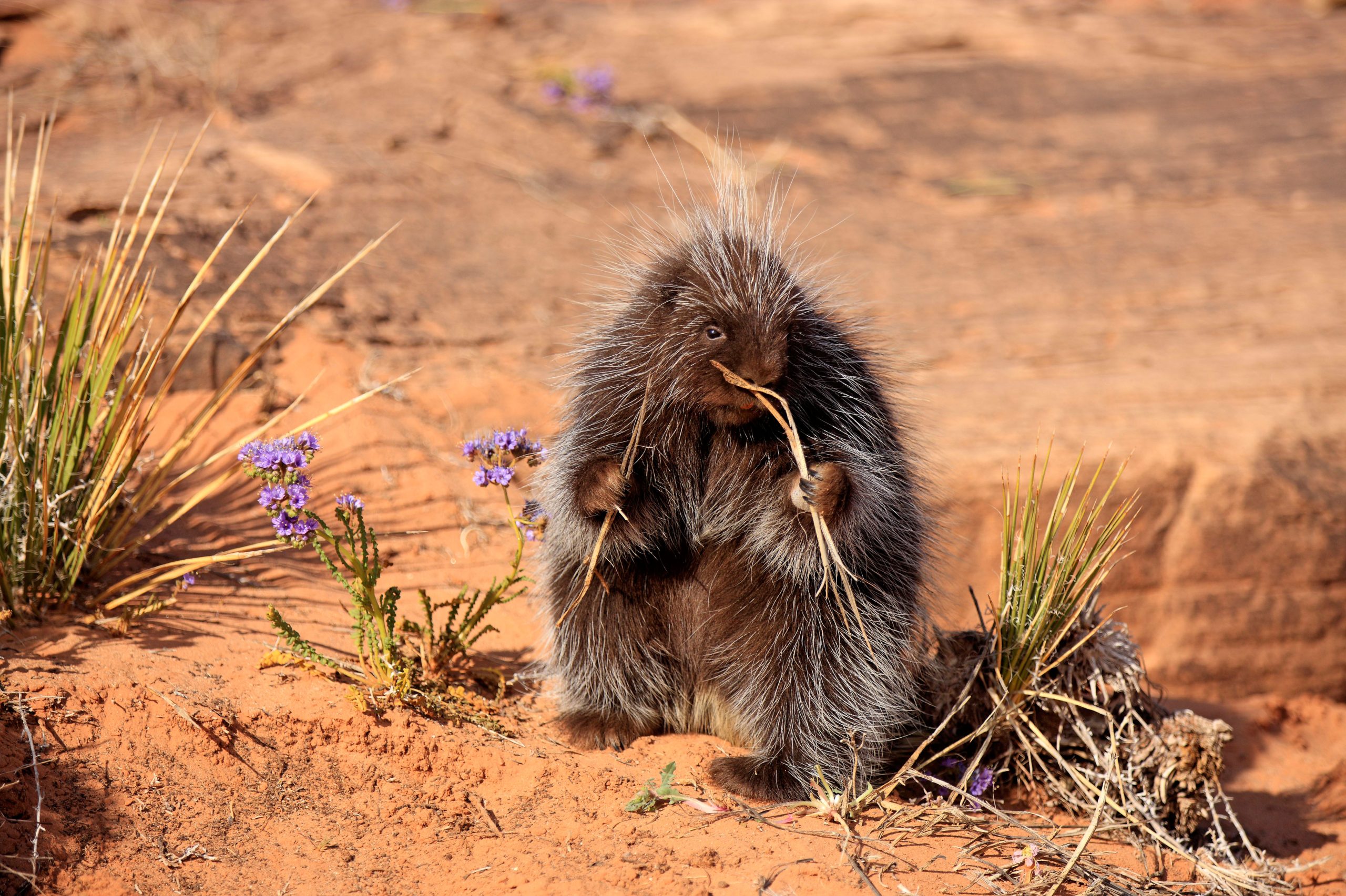
Porcupines (Erethizon dorsatum), easily identified by their approximately 30,000 barbed quills, possess a unique defense mechanism that also paradoxically contributes to their somewhat clumsy reputation. These large, slow-moving rodents, often weighing between 15 to 30 pounds, navigate their environment with a deliberate waddle, primarily under the cover of night. Their diet, consisting mainly of tree foliage, twigs, and the nutrient-rich inner bark of trees, makes them essential herbivores in forest ecosystems, influencing forest structure and health. However, their arboreal feeding habits, particularly their gnawing on valuable timber trees, earned them the ire of the burgeoning timber industry in the 20th century. This perception led to extensive and brutal persecution campaigns across the United States. During the mid-1900s, porcupines were actively targeted through widespread poisoning and organized hunting initiatives, with bounties often offered for their eradication. For instance, Vermont alone recorded the mass killing of over 10,800 porcupines between 1957 and 1959. In California, Forest Service officials declared "open season" on porcupines as early as 1950, convinced that the species posed an existential threat to pine forests.
While official state bounty programs largely ceased by 1979, the recovery of porcupine populations has been conspicuously absent. Modern ecological surveys conducted by researchers in diverse regions, including British Columbia, Arizona, western Montana, and Northern California, consistently reveal that porcupines remain scarce. The lack of comprehensive, long-term monitoring data prior to these declines presents a significant challenge for scientists, making it difficult to definitively ascertain whether current numbers reflect a continued downward spiral or merely a failure to rebound from decades of intense persecution. Nevertheless, the growing body of anecdotal evidence from those who once knew these creatures well serves as a powerful alarm bell. Veterinarians across the West report a noticeable reduction in cases of pets injured by porcupine quills, a once-common occurrence. Longtime rural residents observe fewer porcupines in their backyards, and hikers, who once might have stumbled upon them in the wilderness, now find them exceptionally elusive.
The ecological repercussions of this silent disappearance are already manifesting in critical ways. In the delicate ecosystems of the Sierra Nevada, the endangered fisher (Pekania pennanti), a member of the weasel family and a specialized predator, is suffering directly from the porcupine’s absence. Porcupines historically provided a crucial, high-protein food source for fishers, which are among the few predators capable of overcoming a porcupine’s quilled defenses. With this vital food source diminished, fisher populations in the Sierras exhibit signs of malnutrition, producing smaller litters and displaying reduced body mass compared to their counterparts in regions where porcupines are still present. This disruption highlights the intricate interconnectedness of ecosystems and how the loss of even a single species can trigger cascading effects throughout the food web, impacting predator populations and broader biodiversity.

For the Karuk Tribe, the decline of the kaschiip represents more than just an ecological imbalance; it signifies a profound cultural loss. Porcupine quills are traditionally woven into intricate baskets and incorporated into various ceremonial items, serving as tangible links to ancestral practices and spiritual beliefs. Today, the tribe often finds itself compelled to import quills from distant regions, a practice that severs a fundamental connection between tribal members and their ancestral lands. Emilio Tripp emphasizes that the porcupine’s presence is not merely a convenience but a deeply embedded part of their cultural landscape and identity, stating, "It’s important for (porcupines) to be a part of our landscape. That’s part of why they’re chosen to be part of this ceremonial item." This forced detachment from traditional resource gathering underscores a broader issue faced by Indigenous communities globally, where environmental degradation directly impacts cultural continuity and well-being.
The vanishing porcupine acts as a stark indicator of a more pervasive environmental crisis. Erik Beever, an ecologist with the U.S. Geological Survey, views the porcupine’s plight as emblematic of a "silent erosion of animal abundance" occurring across the nation. This erosion often goes unnoticed because it affects species that are not charismatic megafauna or those that are inherently difficult to monitor. The global biodiversity crisis, characterized by unprecedented rates of species extinction and population decline, is frequently driven by such subtle, unquantified losses. Beever’s concern resonates with conservationists worldwide: "We’re wondering whether the species is either increasing or declining without anybody even knowing." The sheer scale of biodiversity loss often outpaces scientific capacity to track and understand it, leaving critical gaps in knowledge that hinder effective intervention.
Scientists are now working diligently to bridge these knowledge gaps. Tim Bean, an ecologist at California Polytechnic State University, and his team undertook an exhaustive review of a century’s worth of public records, including roadkill databases, wildlife agency reports, and citizen science submissions, to reconstruct historical and current porcupine distribution patterns in the Pacific Northwest. Their research reveals a concerning shift: porcupines are dwindling in their traditional conifer forest habitats but are increasingly observed in less typical environments, such as deserts and grasslands. This habitat displacement suggests a complex interplay of environmental pressures. Building on this foundational work, Erik Beever is currently spearheading a more extensive study encompassing the entire Western U.S., aiming to provide a comprehensive understanding of the porcupine’s current status and movements.

Several compelling theories attempt to explain why porcupine populations have failed to recover, or continue to decline, despite the cessation of bounty programs. One significant factor emerging in recent years is the proliferation of illegal marijuana cultivation sites hidden deep within remote forest areas. These illicit operations often employ highly toxic rodenticides, chemicals designed to protect crops from pests, but which indiscriminately poison a wide array of wildlife, including porcupines, leading to their direct mortality or secondary poisoning of their predators. Another complex theory posits an unintended consequence of successful conservation efforts for apex predators. Increased protections and rebounding populations of predators like mountain lions, which are natural hunters of porcupines, may exert greater predatory pressure on already vulnerable porcupine populations. Compounding these external pressures is the porcupine’s inherent biological vulnerability: they have a very low reproductive rate, typically birthing only a single offspring, or "porcupette," at a time. This slow reproductive cycle makes populations particularly susceptible to decline from increased mortality rates, as they struggle to replenish their numbers. Other contributing factors under investigation include habitat fragmentation, increased road mortality due to expanding human infrastructure, and potential impacts of climate change on their preferred food sources and habitats.
Studying porcupines presents formidable challenges for researchers. As generalist herbivores, they inhabit a broad spectrum of forest types, making it difficult to predict their exact locations. Their nocturnal habits and cautious nature further complicate direct observation. Scientists have experimented with various baiting techniques, including brine-soaked wood blocks, peanut butter, and even porcupine urine, in attempts to lure them towards camera traps, but success has been consistently mixed. John Buckley, executive director of the Central Sierra Environmental Resource Center, highlights the difficulty, noting that in 34 years of extensive camera trap surveys in the Sierra Nevada, porcupines have appeared only three times. This profound elusiveness means that even in seemingly undisturbed habitats like Yosemite National Park, their absence remains a perplexing "mystery," hindering efforts to understand why they are not reproducing and recolonizing former ranges.
Despite these scientific complexities and the species’ scarcity, the Karuk Tribe remains resolute in its commitment to bringing porcupines back. The initial phase of their ambitious restoration plan involves identifying any existing healthy populations that could serve as a source for reintroduction. However, years of camera trap surveys on tribal lands have yielded scant evidence; what Emilio Tripp considers a "hotspot" for porcupine activity has, at best, photographed a single individual, underscoring their extreme rarity. To overcome the limitations of traditional survey methods, Karuk biologists are exploring innovative approaches, including the use of highly trained scat detection dogs, which can identify porcupine presence through their droppings more effectively than visual surveys.

Reintroducing a species as vulnerable as the porcupine demands a delicate and meticulously planned approach. The ethical considerations are paramount: whether already small, isolated source populations can afford to lose individuals for translocation without jeopardizing their own stability remains a critical question. However, for Emilio Tripp and the Karuk Tribe, the urgency of the situation outweighs the formidable challenges. The ecosystem, he observes, shows no signs of healing on its own. "Things don’t seem to be getting better in over the course of my lifetime," Tripp states, reflecting a sentiment shared by many Indigenous communities witnessing the degradation of their ancestral lands. Yet, a deep, resilient optimism persists within the tribe. Tripp, alongside his wife and daughter, continues to participate in basket-weaving events that incorporate quills, upholding the Karuk’s age-old traditions and honoring the porcupine’s enduring cultural significance. This steadfast dedication represents a powerful act of hope—a collective belief that, through sustained effort and collaboration between traditional ecological knowledge and modern science, the Karuk Tribe will one day be able to truly welcome the kaschiip home, restoring not only a species but also a vital connection to their land and heritage.