Roger Danuarta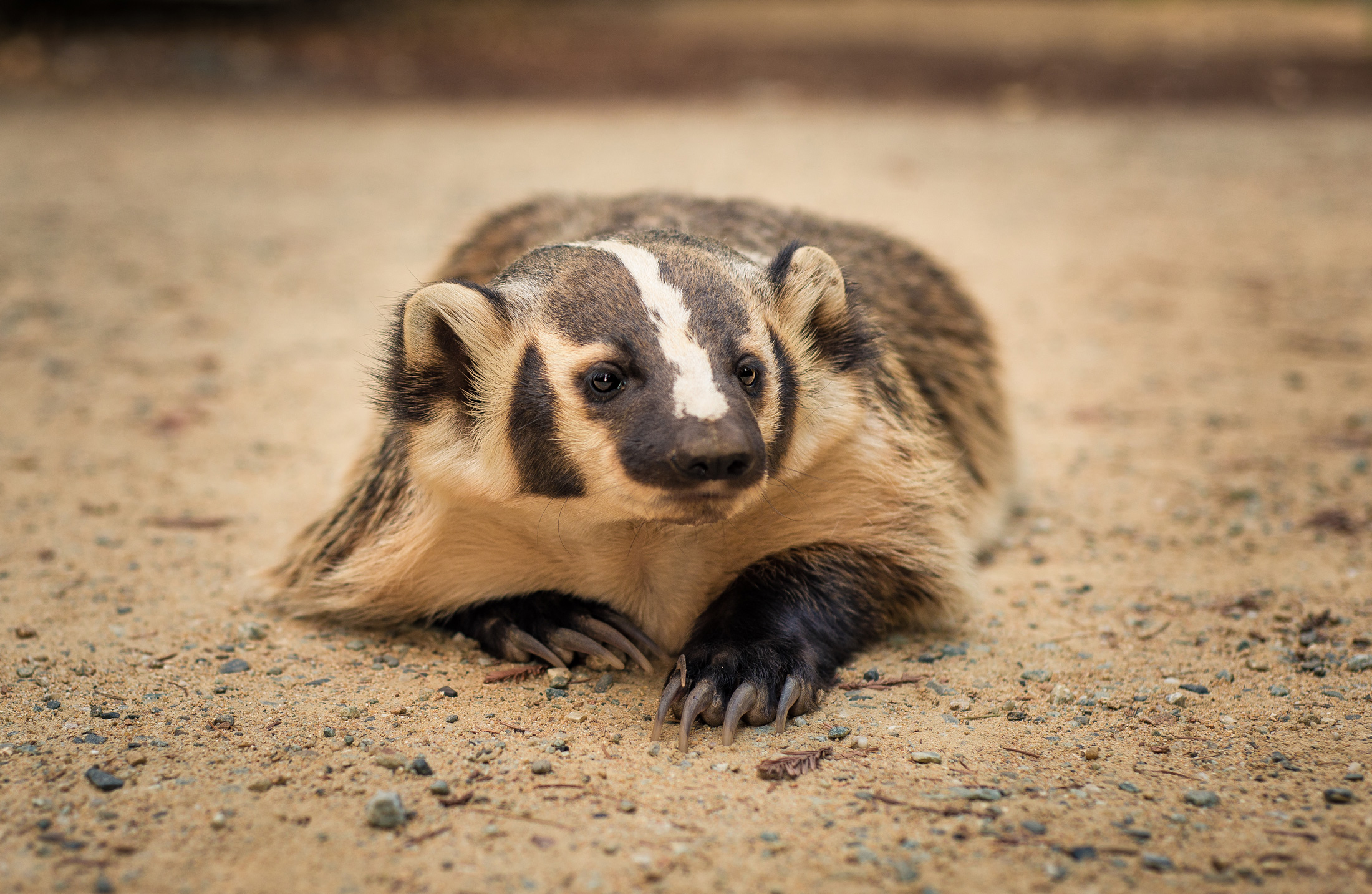
The elusive American badger (Taxidea taxus), a creature of powerful subterranean industry, rarely makes a conspicuous appearance, yet its presence profoundly shapes the landscapes it inhabits, mirroring an ancient philosophical tenet that posits a deep interconnectedness between different realms of existence. These solitary mustelids, known for their formidable digging capabilities, spend the vast majority of their lives beneath the earth’s surface, carving intricate tunnel systems that serve as both home and hunting grounds. However, their nocturnal forays above ground are critical to their survival, demonstrating a delicate balance between the unseen and the visible, the hidden and the revealed. This duality evokes the timeless wisdom attributed to Hermes Trismegistus, often summarized as, "As above, so below; as within, so without; as the universe, so the soul." This mantra, passed down through generations, finds a tangible echo in the very lifeways of the badger, whose subsurface endeavors directly impact the surface ecology.
Recent observations in Castle Valley, Utah, vividly illustrate this principle. During a visit with my brother Hank, a trek through the region’s distinctive red rock washes revealed striking evidence of badger activity. These washes, dynamic arteries of the arid landscape, are increasingly sculpted by flash floods, a phenomenon growing in frequency and intensity, a clear indicator of shifting climate patterns in the American West. The erosive power of these increasingly common deluges carves deeper ravines, transforming the topography with each event. As we navigated the sandy, high-walled channels, Hank’s keen eye spotted unmistakable badger tracks — broad, five-toed impressions — leading to fresh imprints of their powerful, downcurved claws pressed into the red dirt walls. Dozens of these "handprints" adorned the sandy cliffs, marking the entrances to newly excavated dens, some large enough to suggest recent and active occupation. The sheer scale of these subterranean excavations underscores the badger’s role as a true ecosystem engineer, their digging activities aerating soil, enhancing water penetration, and creating habitats for a myriad of other species, from rodents to reptiles.
This encounter brought to mind a previous, equally memorable sighting in the Book Cliffs, a vast and wild expanse north of our location, beyond the Colorado River and east of the Green River. This remote, rugged country holds significant, often contentious, ecological and economic value. Years prior, my partner Brooke and I had purchased 1,120 acres of oil and gas leases from the Bureau of Land Management for a symbolic $1.50 an acre in 2016. This acquisition was not for development, but a deliberate act of environmental stewardship, a public declaration: "We will not develop our leases until science can show us that oil and gas is worth more aboveground than below given the cost to climate." This stance reflects a growing global awareness of the profound environmental implications of fossil fuel extraction and the urgent need to transition to sustainable energy sources. The land itself, sparsely populated and largely undisturbed by human infrastructure, became a poignant backdrop for encountering one of its native inhabitants.
Miles beyond where the dirt track finally surrendered to untamed wilderness, we spotted a low-slung, grey, black, and white form moving across the terrain – a badger. Its presence in such a remote, ecologically sensitive area highlighted the intrinsic value of preserving these landscapes. As we froze, observing the creature, it met our gaze with its broad, distinctive face, momentarily still atop a mound of earth. Then, with an almost supernatural swiftness characteristic of its species, it vanished, dissolving into the very ground it had just been resting upon, disappearing into a burrow without a trace. This sudden disappearance underscored the badger’s mastery of its subterranean world and its inherent wariness of human presence.
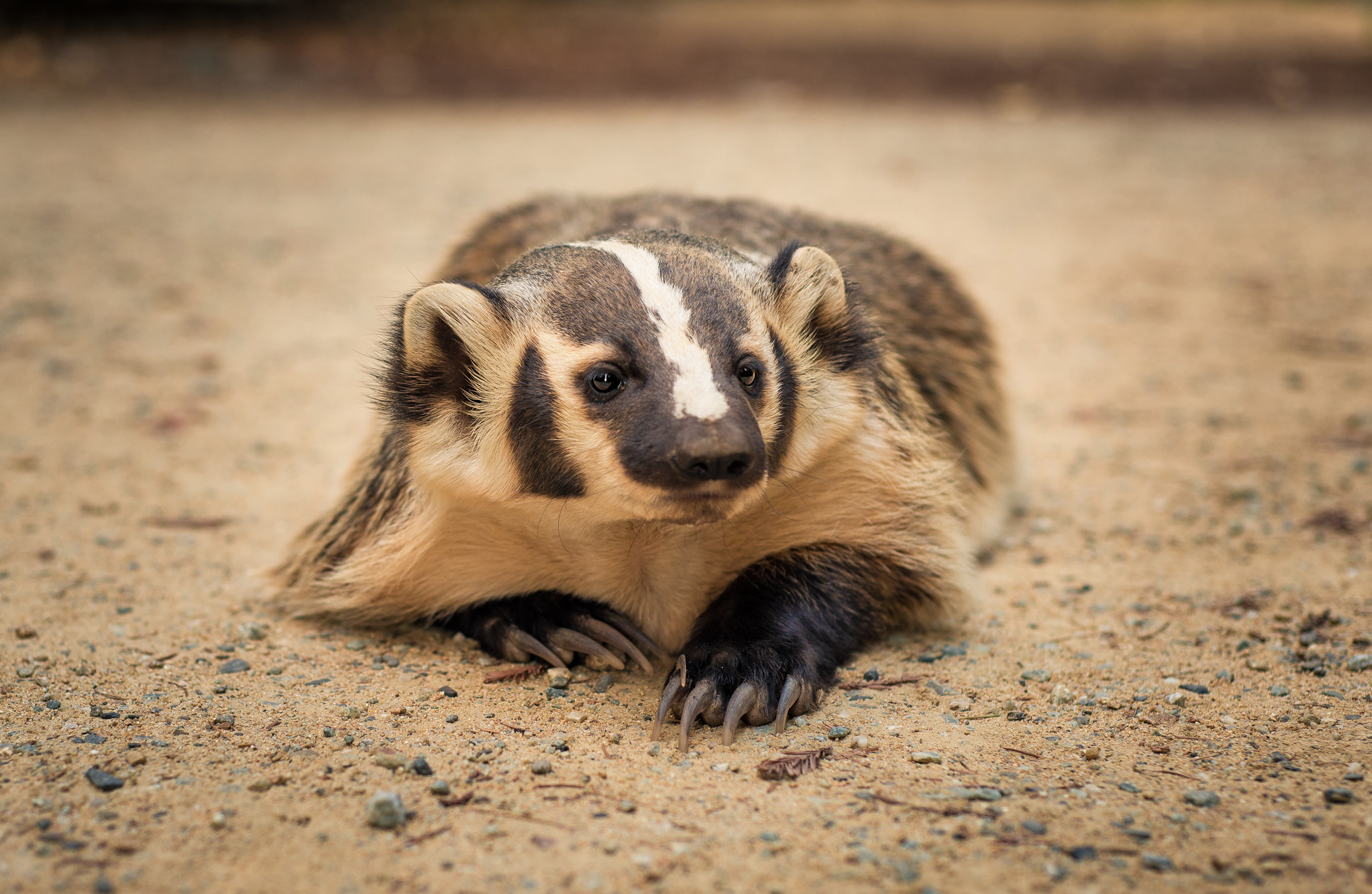
Badgers, despite their relatively small stature, command immense respect in the wild. Old-timers in the American West affectionately, yet cautiously, refer to them as "Little Bears," a testament to their formidable nature. While not typically aggressive, they are fiercely defensive when threatened. Their loose, thick skin allows them an astonishing degree of maneuverability within their own hide, giving the impression they can "shape-shift" to evade a predator’s grip. Should a coyote, wolf, or even a larger predator persist, a badger can pivot with surprising speed and lunge, revealing glistening, sharp canines and a threatening snarl. This intense, unyielding defense mechanism, reminiscent of their more northern relatives, the wolverines, serves as a powerful reminder of nature’s raw resilience and the survival instincts honed over millennia.
The profound impression left by these encounters, particularly the recent one in the wash, lingered. A few weeks later, amidst the somber backdrop of the global pandemic, a period that prompted widespread contemplation of mortality, Brooke and I found ourselves discussing a seemingly macabre, yet ultimately grounding, task: selecting burial plots. The small cemetery in our community, just two roads from our home, was steadily filling. "How will we know which gravesite should be ours?" Brooke asked, perhaps reflecting a human desire for a sense of order even in the face of the unknown. "We’ll know," I responded, with a conviction born of an unexpected intuition, "There will be a sign."
Our journey led us to the Castle Valley graveyard, a tranquil plot of land delineated by a simple barbed wire fence. Within its bounds lay perhaps fifty gravestones, each a unique testament to lives lived, marked by creative epitaphs and distinctive artistry. One beloved boatman, for instance, had eschewed the conventional "Born" and "Died" for the more evocative "PUT IN" and "TAKE OUT," a final nautical flourish. Our prior discussions about final arrangements had seen Brooke leaning towards scattering his ashes in a cherished canyon, a desire for dispersal into the wild. My own preference was for a natural return to the earth, to be simply wrapped in a Pendleton blanket and laid directly into the red soil, allowing my body to be naturally reabsorbed by the desert ecosystem, providing sustenance for insects, animals, and perhaps even the ravens – a complete cycle of reciprocity.
Brooke and I share a deep appreciation for the natural world and a good view, though our approaches differ; I often find comfort on the edge of things, while Brooke thrives in the center. As we walked toward the cemetery’s northeast corner, the "sign" we had discussed revealed itself with startling clarity. There, in plots 3 and 4 according to the cemetery map, lay two distinct depressions, two holes already dug by a family of badgers. It was an uncanny, almost mystical, affirmation. I knelt, sifting the soft, red backfill excavated by their powerful claws. "It’s good to know where we will be when we’re dead," I mused to Brooke, a sentiment that felt both somber and strangely comforting. Brooke, ever practical, replied, "Not sure it will matter, but the view is great while we’re alive."

The discovery prompted a deeper reflection. While the exact timing or circumstances of our passing remain unknown, and Brooke began to ponder burial over cremation in light of this revelation, one certainty emerged: the soft, red sandy soil of these plots was already inhabited, already part of a vibrant, unseen ecosystem. When death comes, we know our place, and we know who our caretakers will be – not in some ethereal afterlife, but in the tangible, active world of the underground. This realization connects us directly to the natural cycles of decomposition and renewal, a profound sense of belonging to the earth even in our final resting place.
We respectfully departed the badger haunt, mindful of their solitary nature. A graveyard, rarely disturbed by human activity and featuring an abundance of loose, diggable soil, would indeed be an ideal sanctuary for these creatures. Such a location would offer a rich bounty of food sources: the usual fare of insects, mice, rabbits, and lizards, along with hibernating snakes – and, perhaps, the ultimate irony, a "couple of bodies" eventually, contributing to the very ecosystem they help maintain. More than enough, certainly, to raise one’s kin, and to participate in the grand, continuous recycling of life and matter, fostering the health of the earth itself, if not literally raising the dead.
In our county, the option exists for a "clean" burial, free from the embalming chemicals traditionally pumped into bodies. This choice aligns with a growing movement towards green burials globally, minimizing environmental impact and allowing for a natural return to the earth. There is a deep comfort in knowing that just as we were consumed in life by the intensity of our relationships and experiences, so too will we naturally be consumed in death, becoming an integral part of the earth’s ongoing processes. This fundamental principle of reciprocity, a give-and-take with the natural world, is not merely hoped for; it is ensured. The badger, the master of the underground, stands as a potent symbol of this unbreakable bond between the realms above and below, reminding us of our own inseparable connection to the living, breathing planet.