Rocky Gerung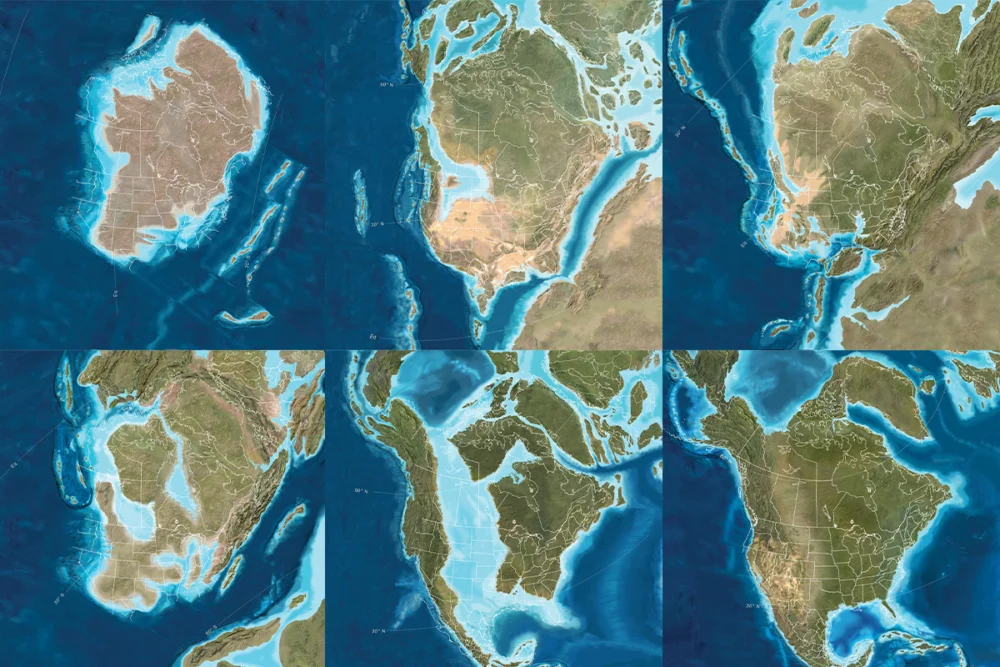
The ever-shifting dunes of the Gran Desierto de Altar, a vast expanse just east of the Colorado River’s former delta in the Gulf of California, offer a tangible, slow-motion illustration of geological processes. As sand grains are lifted by the wind up the gentle slopes only to tumble down the other side, the dunes creep inexorably forward. This present-day dynamism mirrors the ancient winds that sculpted formations like the Coconino sandstone in the Grand Canyon, whose sweeping diagonal lines bear witness to wind patterns from 280 million years ago, embodying the geological adage that "the present is the key to the past." However, the Earth’s rock record also chronicles events of far greater magnitude, including the "Big Five" mass extinctions that fundamentally reshaped our planet and dictated the trajectory of life that followed. Understanding this deep past, with its blend of gradual change and cataclysmic events, provides crucial insights into our present circumstances and potential futures. To truly grasp the narratives embedded in the rocks, one must learn to comprehend how geological formations spanning vast areas, such as the Coconino sandstone, were deposited over immense timescales, venturing into the concept of "deep time." This exploration of Earth’s ancient history can profoundly enhance our understanding of the long-term consequences of contemporary decisions. Three seminal books offer compelling journeys into this geologic past.
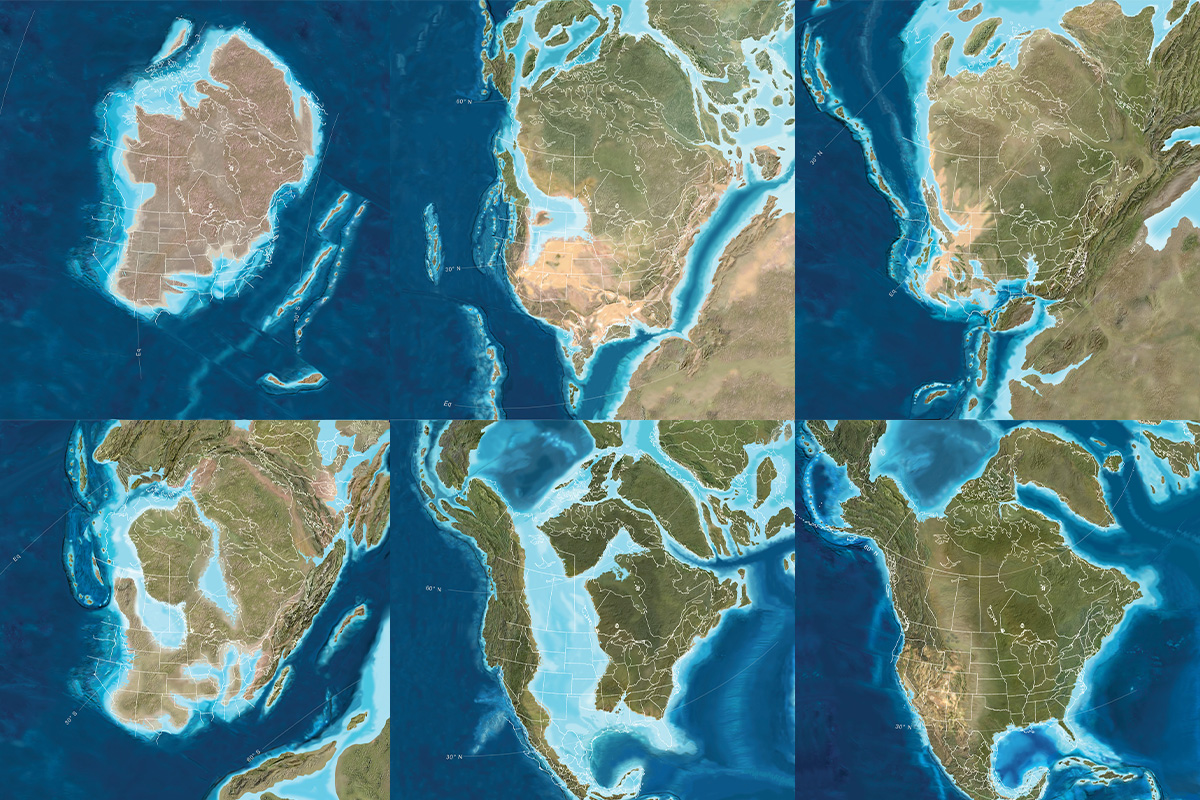
The concept of "deep time" gained prominence through the seminal work of John McPhee, a longtime staff writer for The New Yorker. His 1981 book, Basin and Range, marked his initial exploration of Earth sciences. For contemporary readers, the lightly updated version found within his 1999 Pulitzer Prize-winning anthology, Annals of the Former World, is highly recommended. While Basin and Range was originally published during the Reagan administration and later revised in the Clinton era, with some scientific data and concepts having evolved since, McPhee’s narrative artistry and the fundamental geological stories he conveys retain remarkable relevance. McPhee embarked on a mission to illuminate what he considered the most captivating aspects of North America’s billions of years of history, focusing on "describing events and landscapes that geologists see written in rocks." His method involved accompanying geologists on their cross-continental journeys along Interstate 80, from New Jersey to Nevada, where the book ultimately concludes.
In the landscapes of Utah and Nevada, McPhee delves into the formation of the distinctive patterns of long mountain chains, known as ranges, separated by equally elongated valleys, or basins. This recurring range-and-basin topography is a fundamental feature of the region. A geologist explains to McPhee that these basins were formed by "faulting," with subsequent sedimentation filling them in – a simplified but accurate depiction of a geological process that, while younger than the age of dinosaurs, still represents millions of years of Earth’s history. McPhee further explores how the North American continent, between the Rocky Mountains and the Sierra Nevada, is "being literally pulled to pieces." This geological stretching and tearing is not a novel event; one of McPhee’s guides reveals that a similar rifting occurred approximately 200 million years ago when the supercontinent Pangea began to break apart, eventually allowing the Atlantic Ocean to form. This historical context raises a speculative question: will the geography of the future see Nevadans looking across a new sea towards Californians?

McPhee’s narrative frequently takes captivating detours, such as his visit with a geologist to an abandoned silver mine in Nevada. Their journey involves navigating a precarious road that overlooks a valley of profound significance to the indigenous Paiute people, akin to the sacred status of the Black Hills for the Sioux. Within the mine, McPhee learns about the legacy of 19th-century miners who extracted the richest silver veins but, in doing so, left behind potentially millions of dollars worth of ore discarded as waste. McPhee also grapples with the sheer immensity of geologic time, observing that human perception is typically limited to a few generations – "two ahead, two behind – with heavy concentration on the one in the middle." He highlights the geologists’ ability to measure deep time, yet acknowledges the inherent human difficulty in truly comprehending the passage of millions of years. McPhee’s book serves as an essential primer, an accessible introduction to the world of rocks and a guide to understanding how geologists can "inhabit scenes that no one ever saw… archipelagos of aching beauty rising in volcanic violence to settle down quietly and then forever disappear— almost disappear."
Science journalist Laura Poppick, in her book Strata: Stories from Deep Time, published in July 2025, traverses similar historical terrain with a meticulous attention to detail that echoes McPhee’s style. However, Poppick’s approach is distinct, weaving together meditative prose with a chronological structure that divides deep time into thematic chapters: air, ice, mud, and heat. Rocks dating back between 2 and 3 billion years hold vital clues about the initial emergence and evolution of oxygen in Earth’s atmosphere. Poppick travels to Minnesota to examine iron-rich rocks from this ancient period of global anoxia, a time when Earth’s atmosphere contained virtually no free oxygen. The existence of such iron deposits indicates a prolonged era—spanning roughly half of Earth’s history—before oxygen became a significant component of the atmosphere. The composition of the ancient air laid the groundwork for our own existence and the way we live today, enabling the formation of the iron essential for everything from "steel cars and kitchen appliances and medical devices and airplanes," as Poppick observes.

Approximately 540 million years ago, the planet witnessed the "Cambrian explosion," a pivotal period when nearly every major animal group present today first appeared. Paleontologists meticulously study the fossilized remnants within rocks to trace this evolutionary burst and to understand the extent of life’s obliteration during subsequent mass extinction events. Poppick details two of the "Big Five" major mass extinctions: one occurring 250 million years ago, and the next approximately 50 million years later. Unlike the later extinction event that famously wiped out the dinosaurs, believed to be caused by an asteroid impact, these earlier die-offs appear to have been triggered by colossal volcanic eruptions in unfortunate geological locations. Poppick explains that "the magma that welled up from the mantle sat directly beneath massive reservoirs of oil, gas and coal." As this magma ascended to the Earth’s surface, it ignited these fossil fuels, releasing not only carbon dioxide but also a cocktail of toxic compounds, including butanes and benzenes, alongside ozone-depleting gases. This historical narrative of ancient planetary catastrophes offers a potent parallel to contemporary concerns about climate change, providing a framework for understanding our "sweltering future" and potentially identifying pathways to mitigation.
Climate modeling suggests that the Jurassic period, often characterized as a seemingly endless summer during which dinosaurs reigned, was significantly warmer than the present day, with temperatures exceeding current averages by 14 to 25 degrees Celsius (25 to 45 degrees Fahrenheit). Poppick accompanied scientists to a secluded site in Wyoming, seeking evidence of the largest terrestrial animals ever to inhabit the Earth – the long-necked, long-tailed sauropods such as Diplodocus, Brontosaurus, and Apatosaurus. Beyond the fossilized bones themselves, these scientists are deeply interested in the environmental conditions that supported these enormous herbivores and how these ecosystems, along with their inhabitants, evolved over time. Their research focuses on the Morrison Formation, a series of sedimentary rock layers stretching from New Mexico to Montana and beyond, which has yielded "more dinosaur bones than any other rock formation on the continent." The deposition of these rocks took approximately 9 million years, thus preserving 9 million years of dinosaurian history. Poppick aptly notes, "By way of comparison, just twelve million years or so of evolution produced humans, gorillas and chimps from the same common ancestor."

By studying the various layers within the Morrison Formation, scientists are working to unravel how sauropods and other dinosaurs thrived in the warmth of the Jurassic era. Poppick writes, "As we inch closer to a clearer picture (of that time), we deepen the intimacy with which we know Earth and its capacity to withstand heat." To truly immerse oneself in the Morrison Formation’s ancient world, however, one might turn to Riley Black’s book, When the Earth Was Green, published in February 2025. Black, a science writer and paleontologist, skillfully blends scientific data with artistic prose, inviting readers to experience what ancient ecosystems might have felt like. Each chapter unfolds as a vivid vignette, supplemented by an appendix that details "what we think we know, what we might guess at, and what simply struck (the writer’s) fancy."
In Black’s portrayal of Utah 150 million years ago, readers are transported beyond the Jurassic remnants studied by Poppick in Wyoming, embarking on a journey through time. Black vividly describes an Apatosaurus feeding in a vast woodland, consuming dense carpets of horsetail and the ancient ancestor of today’s distinctively pungent ginkgo tree. The dinosaur’s remarkably long and muscular neck allows it to reach high into the canopy and forage on the ground, while its immense size offers significant protection from predators. "The fact that she exists at all is a testament to the strange nature of her habitat," Black observes, referring to an environment characterized by towering conifers rising from a verdant sea of ferns and cycads. This abundant flora was essential for the growth of sauropods, representing what Black terms "an evolutionary dance between herbivores and plants." Black’s previous work, The Last Days of the Dinosaurs, meticulously detailed the fifth of the Big Five mass extinctions, examining its catastrophic effects over seconds, minutes, hours, days, and years. In contrast, When the Earth Was Green shifts focus from cataclysm to the intricate daily lives of creatures and plants, illustrating their co-evolutionary interplay and the enduring stories they leave imprinted in the rock record.

Reading McPhee is akin to joining a road trip in the 1970s alongside a journalist and an eccentric geologist uncle, complete with exclamations of "Shazam!" at the sight of remarkable rock formations; while not every jest may be immediately understood, the journey itself is exhilarating. Poppick’s book invites readers into deep time by accompanying them on field trips, immersing them in scientific research, and guiding them through laboratories, revealing the engaging process of scientific discovery. Black, meanwhile, transports readers into almost dreamlike landscapes with her evocative descriptions of long-vanished worlds, employing her imagination and scientific knowledge to create an experiential understanding of deep time. As Poppick aptly states, "Our planet seems to be telling us to take a look back." Each of these books serves as a valuable guide, navigating the vast expanse of deep time and prompting contemplation of our own place within its immense narrative.