Rocky Gerung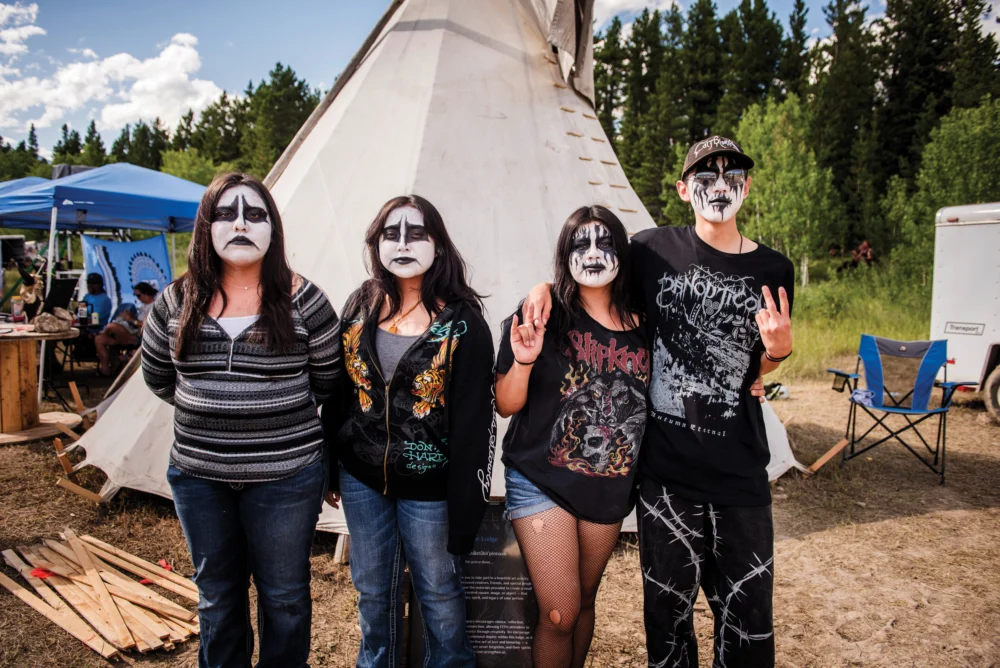
The harsh realities of life on the Blackfeet Nation, marked by profound isolation and a tragic surge in youth suicides, have found an unlikely sanctuary and a powerful outlet in the visceral energy of heavy metal music. This past summer, the Fire in the Mountains festival, held on the ancestral lands of the Piikunii people, transcended its typical role as a gathering of music enthusiasts to become a profound cultural exchange, a therapeutic space, and a beacon of hope for a community grappling with immense hardship. The event, a collaborative effort spearheaded by educators and community leaders, aimed to harness the raw power of metal not just for entertainment, but as a tool for connection, resilience, and healing.

At the heart of this initiative is Buffalo Hide Academy, an alternative public high school in Browning, Montana, where a unique semester-long symposium dedicated to heavy music has taken root. Spearheaded by Charlie Speicher, a clinical counselor and the school’s director, the heavy music symposium delves into the diverse subgenres of metal and hardcore, exploring their historical roots, cultural impact, and, crucially, their therapeutic benefits. Speicher, who sports a battle vest adorned with the iconic artwork from Converge’s "Jane Doe" album, envisions the class as a safe harbor for students who might feel isolated or drawn to darker, more aggressive art forms. The symposium, which began with a modest enrollment, quickly gained traction, with students from other classes seeking to join, drawn by the promise of a space that acknowledged and validated their experiences.
Speicher’s approach is multifaceted, weaving together academic exploration with practical application. Students analyze the intricate musicality of bands like The Dillinger Escape Plan, dissecting the interplay between instruments and the raw emotion conveyed through vocals. They explore the geographical and cultural influences on different metal subgenres, linking the bleakness of black metal to frozen forests and the aggression of death metal to alligator swamps. But beyond the musicology, the curriculum emphasizes the profound cathartic and communal aspects of heavy music. Speicher teaches that "heavy music teaches us things such as we’re not alone; when life is dark, we do something about it. We’re not just a prisoner to that darkness." This message resonates deeply in a community that has been disproportionately affected by suicide, a crisis that has touched nearly every family in Browning.

The genesis of this unique intersection between heavy music and Indigenous community well-being can be traced back to the devastating wave of youth suicides that swept through the Blackfeet Nation in 2020. In the wake of this tragedy, a group of dedicated individuals, including Speicher, Buffalo Hide Academy teacher Robert Hall (Piikunii), and others, formed the Firekeeper Alliance. Their mission was to create a protective "fire" for the youth, offering support and avenues for emotional expression. This alliance found a natural partner in the Fire in the Mountains festival, a music event that, after being displaced from its original location, was seeking a new home. The vision was to integrate the festival with educational and vocational opportunities for the students, creating internships and pathways within the music industry.
Gaining the support of the Blackfeet Tribal Business Council was a crucial step. While the council has historically championed youth through athletics, extending support to the arts, particularly the unconventional realm of metal, was a new frontier. Councilman Everett Armstrong expressed his support, stating, "Let’s try to go a different route to give our youth something that they can open our minds to, open our hearts to, find themselves." Beyond the immediate benefits for the youth, the festival also held economic promise for the reservation, which lies adjacent to the lucrative Glacier National Park. Councilman Armstrong noted the need to "tap into that and try to get some revenue back into the Blackfeet Reservation," aiming to address the pervasive poverty that contributes to the community’s struggles.

Securing headline acts capable of drawing a significant audience was paramount. In a pivotal moment, the Firekeepers traveled to Colorado to meet with the acclaimed Norwegian folk band Wardruna. Their meeting with Wardruna’s lead singer, Einar Selvik, revealed an immediate and profound connection. Selvik expressed his enthusiasm for the project, seeing it as "a chance to stand with (the) Indigenous in a constructive, powerful way, and a chance to visit a beautiful place and to do something that is more than just a festival, more than just a concert." This endorsement from a globally recognized act was a major coup, solidifying the festival’s potential.
As July arrived, a throng of metal enthusiasts descended upon East Glacier Park, Montana, ready for the inaugural Fire in the Mountains festival on Indigenous land. The atmosphere was electric, tempered by a collective awareness of the responsibility that came with hosting such an event on sacred ground. The festival kicked off not with a standard land acknowledgement, but with a vibrant welcome from the Piikunii people themselves, featuring a traditional powwow. This opening ceremony, with its colorful regalia, intricate drumming, and diverse dance styles, served as a powerful introduction to Indigenous culture for many festival-goers, fostering an environment of mutual respect and learning. Robert Hall, acting as emcee, infused the event with humor and warmth, bridging the gap between the metal community and the local culture.

The festival’s commitment to a cultural exchange was evident in its alcohol-free policy, a significant departure from typical metal festival norms. This deliberate choice aimed to create a more mindful and inclusive experience, allowing the music and community to take center stage. Throughout the weekend, musicians and fans mingled, participating in workshops on Indigenous sovereignty, ethnobotany, and the therapeutic power of music. This created an unprecedented level of interaction, breaking down barriers and fostering genuine connections between diverse individuals united by a shared appreciation for heavy music and a desire for healing.
The lineup showcased a potent blend of established and emerging artists, with a notable emphasis on Indigenous talent. Sage Bond, a rising acoustic metal singer-songwriter from the Navajo Nation, captivated the audience with her powerful vocals. Blackbraid, a Native black metal outfit, delivered a performance that resonated deeply with attendees, drawing parallels between the raw intensity of black metal and Indigenous spiritual traditions. Heather Jordan, of the Navajo Nation blackened doomgaze duo Liíith, expressed her gratitude for the opportunity to perform at a festival that celebrated "the Native side of things." The presence of bands like Pan-Amerikan Native Front, whose music explores Indigenous themes, further underscored the festival’s commitment to showcasing Native voices within the metal scene.

The festival’s spiritual dimension was a recurring theme, with many artists and fans drawing parallels between the reverence for nature and ancient traditions found in certain metal subgenres and Indigenous worldviews. Jon Krieger of Blackbraid articulated this connection, noting that while black metal is often associated with Scandinavian culture, its core values, such as a spirit of anti-Christianity and a connection to the primal, align with Indigenous sensibilities. This resonance fostered a sense of belonging for many Native attendees who felt that metal provided an outlet for processing historical trauma and contemporary struggles.
As the festival progressed, the music transcended mere entertainment, becoming a vehicle for profound emotional release and shared experience. The mosh pit during Converge’s set, a maelstrom of bodies colliding and supporting one another, was described by Robert Hall as "consensual fucking violence," a chaotic yet purifying ritual that allowed participants to confront and release pent-up energy and emotion. This catharsis was palpable, with fans describing the music as a "strange road to joy," a means of navigating darkness to find solace and strength.

A dramatic shift occurred on the final evening when a sudden thunderstorm plunged the festival into darkness. Instead of succumbing to the disruption, the metal community rallied. As the power flickered back on, the iconic strains of Black Sabbath’s "War Pigs" filled the air, a collective homage to the recently deceased Ozzy Osbourne. The impromptu singalong, with Piikunii high schoolers joining the band on stage, transformed the moment into a powerful display of unity and resilience. The storm, rather than halting the festivities, amplified the raw, untamed spirit of metal, reminding everyone of the elemental forces that inspire the genre.
In the aftermath of the storm, attendees found refuge and camaraderie, sharing stories and anxieties within a musician’s yurt. The shared experience of weathering the elements, coupled with the music’s ability to process difficult emotions, forged even deeper bonds. The festival’s resilience mirrored the spirit of the Firekeeper Alliance and the young people they sought to support.

The success of Fire in the Mountains extended beyond the musical performances. The festival fostered a sense of belonging and understanding, with fans and artists alike expressing profound gratitude for the unique atmosphere. Social media buzzed with testimonials of "pure magic," "transformational" experiences, and "life-changing" moments. Many noted that the absence of alcohol enhanced the event, leading to clearer memories and deeper connections. For many, it was an eye-opening introduction to Indigenous culture, and for the Blackfeet Nation, it represented a step towards economic revitalization and a new avenue for youth engagement.
The event served as a powerful testament to the universal language of music and its capacity to heal, connect, and empower. As Einar Selvik of Wardruna reflected, "It was like our ancestors held ceremony together and their meeting is rippling as we speak." The Fire in the Mountains festival not only provided a platform for heavy music but also illuminated a path toward collective healing and a brighter future for the Blackfeet Nation, proving that even in the darkest of sounds, there can be profound light.