Rocky Gerung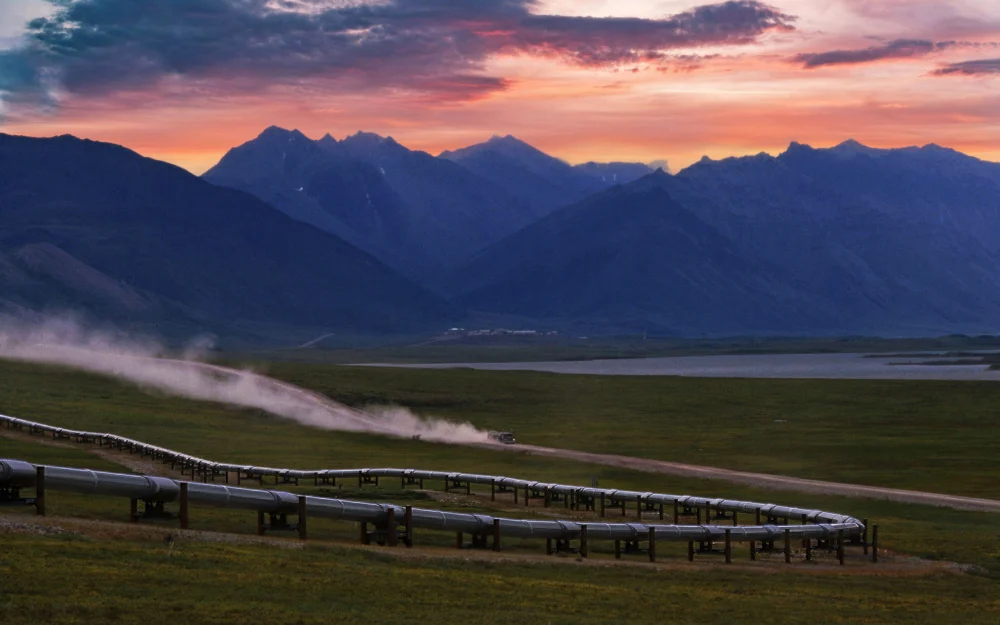
A surge of high-profile development proposals across Alaska, spanning oil fields, mining roads, and timber projects, has intensified a national debate over balancing energy production with environmental conservation, placing the Last Frontier at the center of a complex national conversation. These ambitious projects have reignited long-standing tensions regarding the intended purpose of the state’s vast public lands and the ultimate beneficiaries of their exploitation. The federal government has historically viewed Alaska as a treasure trove of natural resources, a posture that has become particularly pronounced under the current administration. Following a meeting with President Trump in 2018, Governor Mike Dunleavy famously characterized Alaska as "America’s natural resource warehouse."
According to Philip Wight, an Arctic energy historian at the University of Alaska Fairbanks, Alaska has not occupied such a prominent position in national energy and conservation discussions since the late 1970s, during the intricate negotiations that led to the Alaska National Interest Lands Conservation Act. Wight notes that the current landscape differs significantly due to a unified federal government actively pursuing multiple contentious development projects simultaneously. He further observes a dwindling number of moderate Republicans willing to oppose these initiatives, while environmental conservation organizations face systemic funding challenges and coordinated political opposition.
Wight acknowledges Alaska’s rich history as a resource-rich territory, but he points out that this wealth has often disproportionately benefited outside corporations, failing to translate into long-term welfare for Alaskans themselves. Compounding this issue, Alaskans continue to grapple with some of the highest energy costs in the nation, while the accelerating impacts of climate change pose a growing threat to both existing and proposed infrastructure. "While Alaska has much to gain from developing our resources, we also have much to lose," Wight emphasizes, encapsulating the dual nature of this unfolding situation.

Logging the Tongass National Forest
Last summer, the U.S. Department of Agriculture announced its intention to rescind the Roadless Rule, a pivotal regulation that safeguards over 9 million acres of the Tongass National Forest from road-building, logging, and other forms of development. This rule, originally established to protect tens of millions of acres of national forest lands nationwide, had its restrictions previously rolled back in 2020 during the Trump administration’s first term before being reinstated by the Biden administration in 2023. The Tongass National Forest, spanning nearly 17 million acres, stands as the largest national forest in the United States and the most extensive temperate rainforest globally. "People depend on it for subsistence, for hunting, for fishing, for a tourism economy, for recreation," explains Nathan Newcomer, an advocate for the Tongass with the Southeast Alaska Conservation Council. Newcomer anticipates that a draft environmental impact statement from the U.S. Department of Agriculture could be released by March 2026, with the objective of finalizing new rulemaking by the end of the following year. In parallel, there are efforts underway to reopen the international market for timber harvested from the Tongass.
Development in the Arctic National Wildlife Refuge
America’s largest and northernmost wildlife refuge, the Arctic National Wildlife Refuge (ANWR), encompasses 19 million acres situated between the state’s Prudhoe Bay oil fields and the Canadian border. The U.S. Geological Survey estimates that its coastal plain holds substantial oil reserves, potentially ranging from 4.3 to 11.8 billion barrels, along with significant quantities of natural gas. However, a complex web of geopolitical, economic, environmental, and legal obstacles continues to impede the feasibility of extracting these resources. During his presidency, Donald Trump opened the refuge’s 1.57 million-acre coastal plain – a critical habitat for wildlife, including caribou and polar bears – to oil and gas leasing. This led to two lease sales: the first in January 2021, where leases were awarded to the Alaska Industrial Development and Export Authority (AIDEA), a state-owned public resource development corporation. However, a subsequent sale in January 2025 saw no bids. While the Biden administration attempted to cancel AIDEA’s leases, a federal court ultimately reinstated them in March 2025. In a January 20 executive order titled "Unleashing Alaska’s Extraordinary Resource Potential," President Trump directed the Secretary of the Interior to "take all necessary steps" to facilitate additional coastal plain lease sales. More recently, in October 2025, a new Record of Decision was issued, effectively opening the entire coastal plain to development. Furthermore, just last month, Congress voted to overturn the Biden-era land-management plan, which had restricted drilling to a small section of the refuge to protect its wildlife.

Oil Exploration in the National Petroleum Reserve – Alaska (NPR-A)
The National Petroleum Reserve in Alaska (NPR-A) is an expansive region in the northernmost part of the state, located west of the Prudhoe Bay oil fields. In October, the Bureau of Land Management initiated the process of accepting nominations for areas suitable for future oil and gas lease sales within the NPR-A. These proposed sales coincide with the rollback of protections in the region, which could open up more than 18.5 million acres to leasing, including areas vital for migratory birds and calving grounds for the Teshekpuk caribou herd. Earlier this month, President Trump signed Senate Joint Resolution 80 into law, effectively stripping away restrictions implemented by the Biden administration in 2022 that were designed to shield ecologically sensitive areas within the NPR-A from development. Simultaneously, construction is well underway for ConocoPhillips’ massive Willow project, the first major development in the reserve. Approved under the Biden administration, oil production from this project is anticipated before 2030.
The Road to King Cove
For half a century, the remote community of King Cove, with its population of 750 residents, has advocated for the construction of a road connecting to the Cold Bay airport. In late October, the Department of the Interior executed a land exchange agreement intended to facilitate the creation of an 18-mile, single-lane gravel road that would primarily traverse the Izembek National Wildlife Refuge. This land swap involves transferring less than 500 acres of refuge land to the King Cove Corporation, an Alaska Native corporation, which in turn will sell 1,739 acres of its own land to be incorporated into the refuge. Proponents of this exchange argue that it addresses long-standing public safety concerns and enhances subsistence access for local residents. However, in November, several tribal governments, including the Native Village of Paimiut, Native Village of Hooper Bay, and Chevak Native Village, alongside environmental groups, filed a lawsuit seeking to block the land trade, citing concerns for critical bird habitats. Chief Edgar Tall Sr. of the Native Village of Hooper Bay articulated these concerns in a November 12 press release, stating, "If the Izembek road happens, it will cause a lot of chaos for Alaska Native people in my region who still live off the land and sea. The birds we hunt may not be able to survive."

Building the Ambler Road
For years, the proposed construction of the 211-mile industrial road to the Ambler Mining District remained mired in litigation. In 2024, President Biden rejected the road plan due to its anticipated significant impacts on wildlife habitat and waterways. Environmental analyses indicated that the project would necessitate over 3,000 stream crossings, potentially affecting sheefish populations and the already declining Western Arctic caribou herd, both of which are crucial subsistence resources for the indigenous communities in the Brooks Range region of Northern Alaska. However, on October 6, President Trump approved an appeal submitted by AIDEA, granting federal agencies the authority to reissue permits for the road. He also announced a partnership between the U.S. and Trilogy Metals, involving a $35.6 million investment to support exploration in the area, making the federal government a 10% shareholder in the company. Later that month, the AIDEA board authorized the allocation of $50 million towards the road’s construction. This road is poised to unlock access to a remote region rich in deposits of copper, silver, gold, lead, cobalt, and other valuable metals.