Roger Danuarta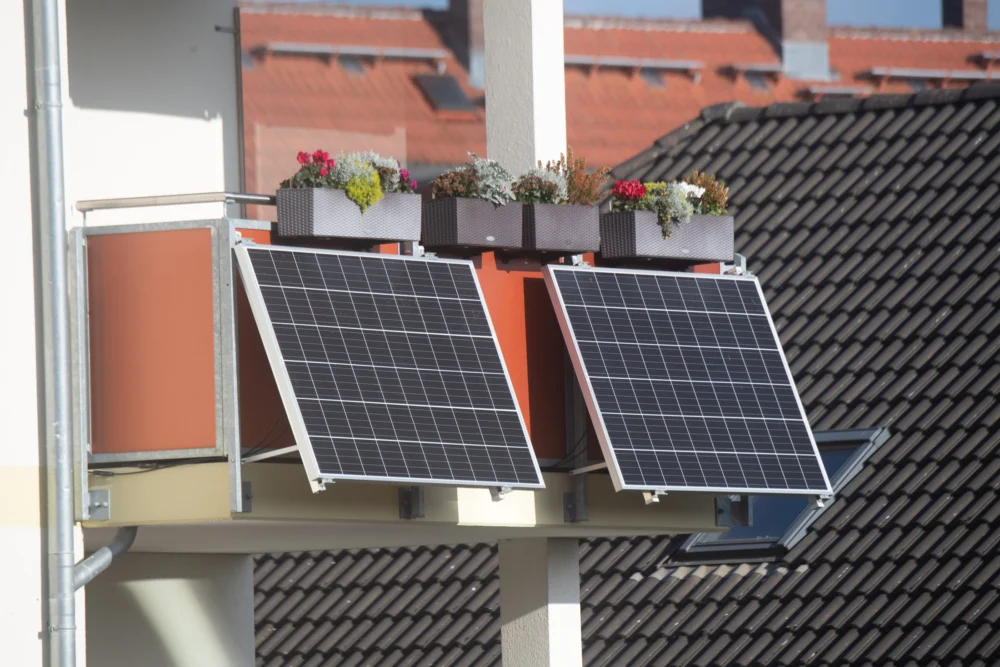
A quiet revolution in home energy generation, long flourishing in Europe, is now gaining significant traction across the United States, promising to empower ordinary citizens with accessible clean power. This transformative shift was perhaps best encapsulated by Colorado state Representative Lesley Smith’s observation last October while visiting her husband’s family in Germany. Amidst a stroll through her sister-in-law’s neighborhood, a sight she had never encountered before — a solar panel gracefully affixed to an apartment building balcony — sparked a profound realization: "Oh, my goodness, look at that," Smith recalled thinking, a sentiment that would soon inspire her legislative efforts back home.
In Germany, the concept of small-scale household solar, often referred to as balcony or plug-in solar, is far from novel. An estimated four million units have been installed across the nation, forming a vital component of its ambitious Energiewende, or energy transition. The premise is elegantly simple: individuals acquire one or two compact solar panels, integrate them with a microinverter, and plug the system directly into any standard household electrical outlet. These panels, typically placed on a patio, balcony, or even a garden shed, possess the capacity to generate sufficient power to offset approximately 15% to 20% of a household’s total energy consumption. With an initial investment typically ranging from several hundred dollars, this technology democratizes access to clean energy, making cost savings and climate benefits attainable for both homeowners and renters, irrespective of property size or ownership.
Despite its widespread success and simplicity in European markets, where countries like Austria and the Netherlands are also seeing burgeoning adoption, the United States has historically lagged due to a complex web of regulatory hurdles and market constraints. This intricate labyrinth of permitting requirements, utility interconnection rules, and a nascent domestic product market has largely stifled the widespread embrace of plug-in solar technology, leaving American consumers on the sidelines of a global energy trend.
However, the tide is demonstrably turning. This year, lawmakers in an impressive 27 states, spurred by growing consumer demand and a clearer understanding of the technology’s potential, have introduced legislation aimed at enabling the broad adoption of plug-in solar. Among these pioneering legislators is Colorado’s Rep. Smith, whose German experience ignited her passion for the cause. Advocates highlight the immense potential for plug-in solar, particularly in the vast, sun-drenched Western United States, where it offers a compelling solution to harness abundant solar resources and mitigate the impact of steadily rising electricity costs. Cora Stryker, co-founder of Bright Saver, a leading advocacy group for this technology, underscores this dual benefit, noting its capacity to provide both economic relief and environmental stewardship. While legislative efforts have spanned states like Alaska, Washington, Oregon, Idaho, Wyoming, California, Arizona, Colorado, and New Mexico, some early bills in Washington, Arizona, Wyoming, and New Mexico faced initial setbacks by late February, underscoring the legislative journey’s inherent challenges.
The Western states have, in fact, emerged as a vanguard in championing balcony solar. Many of the current legislative proposals, including Rep. Smith’s, draw direct inspiration from a landmark, first-in-the-nation plug-in solar law enacted unanimously in Utah last year. This pivotal legislation was designed to dismantle significant barriers to adoption by exempting the technology from the often-onerous and costly permitting requirements typically associated with rooftop solar installations, such as registering an interconnection agreement with the local utility company. Furthermore, Utah’s law established clear power wattage limits for these systems, delineated responsibilities by removing liability for utilities when individuals install certified devices on their own property, and crucially, mandated that all units adhere to a recognized national electrical safety standard.
The philosophical underpinning of Utah’s groundbreaking legislation, as articulated by Republican state Representative Raymond Ward, who championed the bill, was rooted in a straightforward principle: governments should not impede individuals’ ability to embrace beneficial technologies. "Everybody that wants one should be able to buy one," Ward asserted, capturing the essence of the bill’s intent to empower consumers. He further highlighted the compelling economic advantages, noting that in Germany, users typically recoup their initial investment in approximately five years through energy savings. In US states grappling with particularly high electricity prices, such as Alaska and California, Ward projected that the payback period could be significantly shorter, making the financial incentive even more attractive.

Rep. Smith, a Democrat, shares an optimistic vision for the future, anticipating that as state-level regulations progressively fall into place, the market will respond with a surge in the development and availability of plug-in solar products. This, she believes, will allow residents to readily purchase and set up the technology, much like any other household appliance. "Right now, one cannot go to a Costco or Home Depot and get their own system," she lamented, despite acknowledging a palpable eagerness among constituents, some of whom are already resorting to purchasing components online or even "DIYing" their own plug-in kits. "Our feeling is, if we pass the bill in Colorado, and especially if bills similar to this start passing across the U.S., then it would just open up the market," Smith explained, envisioning a scenario where robust demand drives retail accessibility and innovation.
A critical factor contributing to the widespread, often bipartisan, appeal of this year’s legislative efforts is the inherent market-driven nature of the solution. As Cora Stryker pointed out, these bills generally do not necessitate public subsidies or direct governmental funding, a feature that broadens their political viability. "This is a market-driven solution," Stryker affirmed. "We really just have to strip down regulations, make them make sense for these little systems, and then market forces will drive this." This approach resonates across the political spectrum, appealing to principles of free markets, consumer choice, and reduced bureaucratic interference.
While the legislative push addresses the immediate hurdle of permitting regulations, another significant challenge looms: the need for a universally accepted and mature product safety standard. In the United States, national standards for household electrical products are meticulously developed and issued by UL Solutions, a globally recognized safety science company. UL’s certifications are paramount, ensuring that thousands of devices can be utilized safely in homes and businesses without posing undue risks of fire, electrical shock, or other hazards.
When Utah’s pioneering law passed last year, a specific UL standard tailored for plug-in solar devices did not yet exist, presenting a significant gap in the regulatory framework. However, a crucial development occurred in January of this year when UL Solutions unveiled a preliminary standard, UL 1741 SA, specifically outlining safety and certification criteria for plug-in solar systems. This new standard, while still in its draft form and subject to refinement, represents a vital step forward for all pending plug-in solar bills across the nation, nearly all of which explicitly reference adherence to a UL or equivalent national safety standard. Ken Boyce, vice president of principal engineering at UL Solutions, confirmed that while no plug-in solar products have yet achieved certification under this nascent standard, manufacturers are now empowered to submit their products for testing and certification, paving the way for market entry.
Despite the progress, the current iteration of the UL standard has not been without its critics. Rep. Ward and other advocates express concern that, in its present form, the standard may be overly restrictive, potentially hindering the very market expansion it aims to facilitate. Ward specifically highlighted UL’s requirement for an electrician to assist with product installation, arguing that this provision fundamentally undermines one of the core tenets of the legislation he championed: enabling consumers to simply plug in and operate the device with the same ease as a mini-fridge or similar appliance. This stipulation, critics contend, reintroduces complexity and cost that the legislative reforms sought to eliminate. Ken Hutchings of CraftStrom, a Houston-based plug-in solar company, further critiqued aspects of the standard, including its proposed limits on home battery capacity, which he believes could stifle innovation and practical application. While CraftStrom intends to seek certification under the finalized standard, Hutchings noted that the company is currently certifying its component parts, such as inverters, under existing, broader standards.
Hutchings articulated the delicate balance that the UL standard must strike: "Done well, (the UL standard) could give regulators and utilities a clear framework and reduce uncertainty." Conversely, he cautioned, "Done poorly, it could constrain useful storage capacity and add cost and friction in ways that slow adoption of otherwise safe plug-in solar solutions." The ongoing dialogue between safety experts, industry innovators, and policymakers will be critical in shaping a final standard that effectively balances robust safety protocols with the imperative of fostering an accessible and thriving market for distributed renewable energy. As this dialogue unfolds and legislative momentum continues to build, the vision of widespread plug-in solar systems transforming the American energy landscape appears increasingly within reach, promising a future of greater energy independence and environmental sustainability.