Johny Prima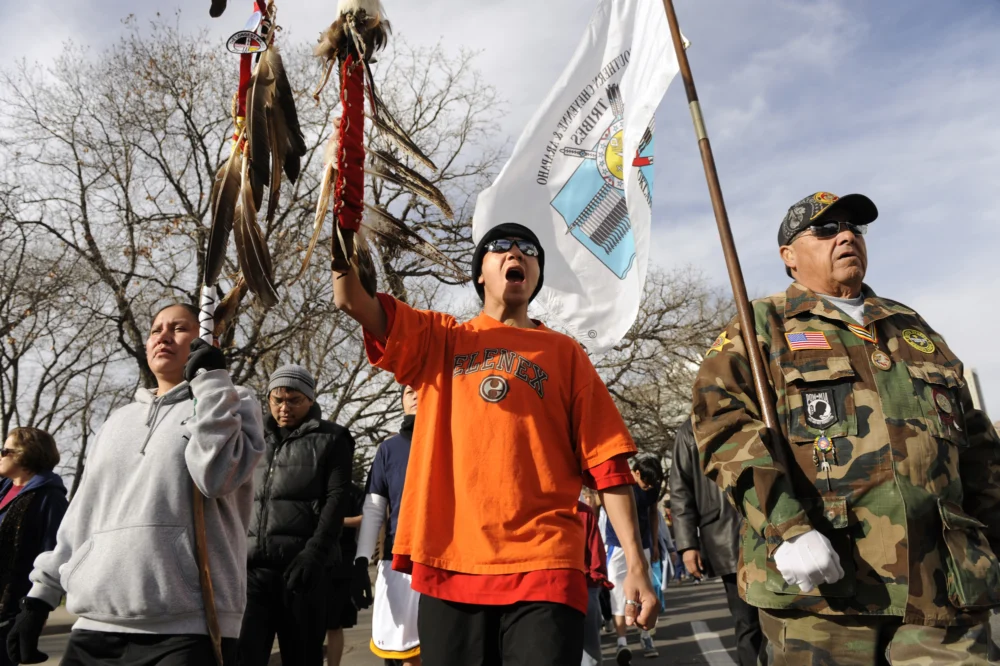
The profound and unaddressed wounds of history do not simply dissipate with the passage of time; they demand deliberate and compassionate tending. This enduring truth resonates deeply with the descendants of the Sand Creek Massacre, who annually conclude their Spiritual Healing Run at the very steps of the Colorado State Capitol, the symbolic heart of the state’s governance. As an individual connected to this lineage, the sight of the empty pedestal on the Capitol’s west plaza serves as a stark reminder that Colorado’s most pivotal stride towards genuine reconciliation remains an aspiration yet to be fully realized.
On that fateful day, November 29, 1864, a scene of unimaginable horror unfolded in southeastern Colorado. A peaceful encampment of Cheyenne and Arapaho people, who had been explicitly assured of U.S. military protection and were flying both American and white flags of peace, found themselves brutally attacked. Colonel John Chivington’s volunteer troops, driven by a volatile mix of expansionist fervor, racial prejudice, and a desire for martial glory, descended upon the unsuspecting villagers. More than 200 lives were extinguished in the brutal onslaught, a disproportionate majority comprising women, children, and elders. The massacre represented an act of betrayal so profound, so heinous, that its reverberations continue to echo across generations, leaving an indelible scar on the collective memory of the affected tribal nations and the historical conscience of the United States. While military and congressional investigations swiftly and unequivocally condemned the atrocity as a massacre, Colorado, for far too long, paradoxically celebrated it as a triumphant victory, a dark chapter of historical revisionism that persisted for decades.
This fundamental distortion of truth was physically embodied by a bronze plaque, proudly displayed on a monument on the Capitol grounds, which erroneously listed the Sand Creek Massacre among Colorado’s Civil War battles. This narrative, crafted to glorify the perpetrators and diminish the victims, stood as a stark symbol of a state unwilling to confront its foundational violence. Its removal, a recent and significant act, has left a void—a space now reserved for a far more truthful and necessary replacement: the "Peace Keepers" memorial. This forthcoming bronze sculpture is conceived not merely as a decorative piece but as a powerful tribute, designed to honor the courageous and peace-seeking Cheyenne and Arapaho leaders, such as the venerable Chief Black Kettle and Chief Left Hand, who clung to the promise of peace even as they faced their final, brutal moments. It will also commemorate the remarkable resilience of individuals like Medicine Woman, who miraculously survived the massacre despite enduring eight bullet wounds, carrying the physical and spiritual scars of that day.

In a landmark decision in 2025, the Colorado Legislature, alongside Governor Jared Polis, took a critical and unanimous step forward by endorsing the creation of this monument. This act was not merely a legislative formality; it was a profound affirmation that the unvarnished truth about Sand Creek can no longer be suppressed or obscured. This bipartisan consensus represents a historic commitment to remembrance, an implicit call for governmental acknowledgment of the institutional betrayals of the past, and a public declaration to honor the innocent lives so cruelly lost. It signals a shift from denial to acceptance, from obfuscation to clarity, laying groundwork for future healing.
However, the real and most arduous work lies beyond legislative endorsements and bronze castings—it resides in the complex and ongoing process of healing. Healing, in this context, is not about conveniently forgetting the past or achieving a superficial, comfortable closure. Instead, it demands a deep recognition that the trauma inflicted by events like the Sand Creek Massacre is not confined to the annals of history; it manifests in the present, continuing to shape the lives of the Cheyenne and Arapaho people today. The profound soul wound of this atrocity has contributed to intergenerational trauma, impacting cultural continuity, spiritual well-being, and socio-economic outcomes for descendants. The "Peace Keepers" memorial, therefore, transcends the role of a mere statue; it is envisioned as a sacred space, an invitation for all Coloradans—Indigenous and non-Indigenous alike—to collectively confront this trauma, understand its enduring legacy, and actively participate in repairing the foundational trust that underpins the state’s social fabric. It becomes a focal point for difficult but essential conversations about justice, memory, and shared responsibility.
The history of Sand Creek, viewed through the lens of its underlying causes, emerges as a potent and immediate cautionary tale for our current global moment. The massacre was not an isolated incident but the tragic culmination of a toxic brew: rampant fear, manufactured hysteria, and the willful rejection of moral conscience. Colonel Chivington’s brutal attack was explicitly fueled by a political climate and a sensationalist press that systematically dehumanized Indigenous tribes, portraying them as obstacles to progress and justifying violence against them. Diplomatic engagement and peaceful coexistence were deliberately sidelined in favor of brute force and treachery, setting a dangerous precedent for how differences could be resolved.
Today, across national and international discourse, we observe alarmingly similar dangerous conditions taking root. The pervasive political polarization, the strategic and often malicious spread of fear and disinformation through various media channels, and the increasing temptation to demonize political opponents as existential threats rather than fellow citizens with whom negotiation is possible, all echo the preconditions of 1864. When societies replace thoughtful dialogue with inflammatory demagoguery, and reasoned diplomacy with dismissive contempt, they are unwittingly constructing the very same volatile groundwork that permitted the Sand Creek Massacre to occur. This historical parallel serves as a stark warning about the fragility of peace and the imperative of ethical leadership in preventing societal breakdowns rooted in fear and prejudice.

The narrative of the "Peace Keepers" chiefs offers a profound counter-narrative and a powerful call to action. Despite enduring relentless violence and dehumanization, these Cheyenne and Arapaho leaders steadfastly chose the path of peace, embodying a profound commitment to humanity even in the face of its brutal denial. Their sacrifice implores all of us, irrespective of our backgrounds, to champion humanity, uphold truth, and foster constructive dialogue, especially when the prevailing national and global atmosphere tempts us towards anger, division, and the dehumanization of others. Their legacy is a beacon for moral courage and resilience.
This commitment to truth and reconciliation faces a crucial deadline. The "Peace Keepers" memorial is slated for its dedication on November 29, 2026, a date deliberately chosen to coincide with Colorado’s 150th anniversary of statehood. This confluence presents Colorado with an unparalleled opportunity to declare, at the highest echelons of government and public consciousness, what kind of history it chooses to commemorate and, by extension, what kind of future its citizens aspire to build. It is a moment to publicly affirm a narrative of integrity over convenient omission.
The Sand Creek Massacre Memorial Committee is diligently working to secure the final funds necessary for the bronze casting and installation of this vital monument. The recent acquisition of a generous matching gift underscores a growing community readiness to stand in solidarity with this crucial initiative. Should this symbolically potent pedestal remain empty for another year due to lack of support, it would send an unequivocal signal that Colorado’s commitment to historical truth and reconciliation is, at best, theoretical and, at worst, an empty gesture. By actively supporting the immediate completion of the "Peace Keepers" memorial, the state and its citizens are declaring, with tangible action, that healing is not merely a concept but a tangible, urgent priority. This act of collective commitment will fill the void left by a false and violent past with a permanent, visible testament to the unwavering courage, profound peace, and indomitable human spirit of the Cheyenne and Arapaho people. It is a decision that not only honors the past with integrity but also lays an essential foundation for the future health, healing, and moral clarity of the state of Colorado.