Joko Susilo
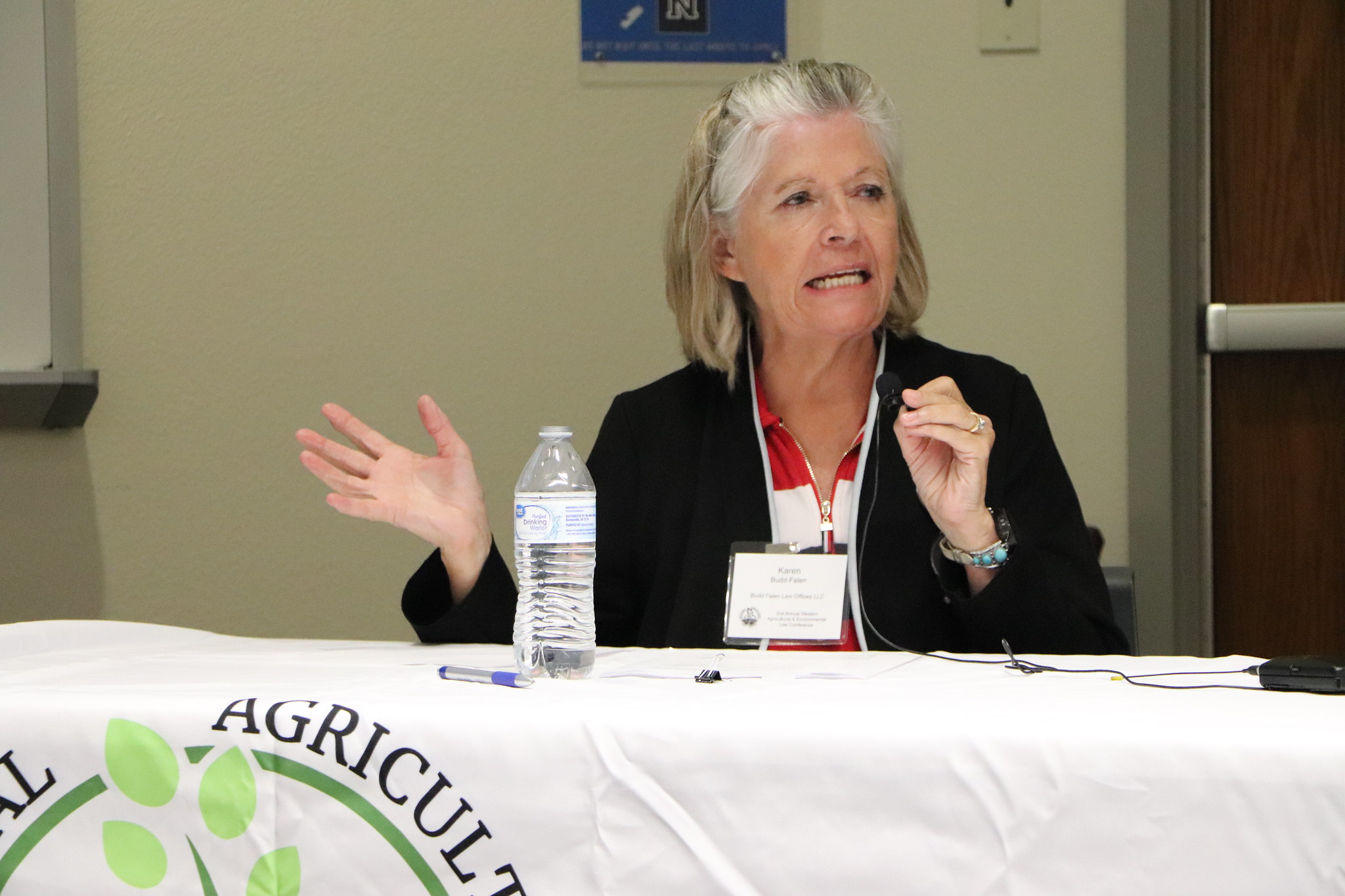
The United States Department of the Interior is currently facing heightened scrutiny over its handling of ethics disclosures for Karen Budd-Falen, a high-ranking appointee who served in the Trump administration, amidst growing calls for a comprehensive investigation into her financial connections to the controversial Thacker Pass lithium mining project in Nevada. Recent releases of ethics documents, marred by heavy redactions and initial denials, have only amplified concerns from conservation groups and government watchdogs, who allege potential conflicts of interest and a lack of transparency that could undermine public trust in federal land management decisions.
The latest development saw the Interior Department’s Office of the Solicitor release 91 pages of ethics documents pertaining to Budd-Falen’s tenure under the Trump administration to the Center for Western Priorities, a Colorado-based conservation advocacy group. This release followed an initial assertion by the department that no such records existed, a claim later retracted. However, the documents provided contained significant redactions, obscuring crucial information, some of which has been previously detailed in public reports, while simultaneously raising fresh questions about Budd-Falen’s personal financial stake in the massive lithium mine endeavor. This irregular and disjointed disclosure process for what are typically routine public records has sparked outrage, especially as Budd-Falen faces increasing examination over a lucrative water rights sale in the water-stressed American Southwest. Standard ethics guidance and recusal agreements are fundamental requirements for executive branch appointees, serving to meticulously outline the necessary steps public servants must undertake to prevent conflicts of interest and maintain impartiality in their official duties.
Aaron Weiss, deputy director of the Center for Western Priorities, expressed grave concerns, stating, "These documents suggest a massive problem at the Interior ethics office. If Karen Budd-Falen still hasn’t received updated ethics agreements or waivers, then the ethics office is failing at its job. These documents, even in their highly-redacted forms, show that the Inspector General needs to launch an urgent investigation into Karen Budd-Falen and Interior ethics officials." His remarks underscore the perceived systemic failures within the department’s ethics framework during the period in question.
The core of the controversy centers on Budd-Falen’s deep financial ties to the Thacker Pass lithium mine project, which the Trump administration actively championed for years. In 2018, shortly after Budd-Falen, a Wyoming-based lawyer specializing in public lands and natural resources law, assumed a senior legal role at the Interior Department, her husband entered into an agreement to sell crucial water rights. This transaction involved Home Ranch, LLC, one of the family’s ranching operations, and Lithium Nevada Corp., the developer behind the contentious Thacker Pass mine. Alarmingly, Budd-Falen’s annual financial disclosure forms, reviewed by watchdog groups, reportedly contained no public mention of this significant water rights sale, raising serious questions about her adherence to federal ethics guidelines.
The Interior Department, when initially confronted with these allegations, had previously dismissed Budd-Falen’s financial entanglement with Lithium Nevada as "baseless accusations," offering no further explanation or details. More recently, the agency declined to provide specific answers regarding the newly released ethics documents, stating only that "Non-PAS appointees get guidance and recusal memos which have been supplied," a practice they claimed was "constant from one administration to the next." However, the documents released last week notably lacked any updated recusal memos or guidance, leaving open the question of whether the existing, older agreements remained binding or if they were ever adequately updated to reflect new financial interests.
The released documents reveal a critical timeline: On November 5, 2018, the Interior Department’s ethics director granted Budd-Falen a partial waiver, allowing her to retain her financial interests in Home Ranch and other family ranching operations. On that same day, Budd-Falen signed a written statement explicitly acknowledging that this waiver "does not authorize me to participate in either particular matters involving, or in matters that to my knowledge have a direct and predictable effect on the financial interests involving" Home Ranch and other related entities. A separate ethics recusal, also dated November 5, 2018, included her notation that her husband, Frank Falen, "does not actively manage Home Ranch, LLC." Yet, less than a month later, Home Ranch, LLC finalized the deal to sell water rights to Lithium Nevada. The Securities and Exchange Commission (SEC) filing detailing this agreement bears the signature of Frank Falen, explicitly listing him as the ranch manager. Furthermore, approximately a year into her tenure in the first Trump administration, Budd-Falen’s official agency calendar shows she held meetings with Lithium Nevada executives, adding another layer of complexity to the perceived conflict.
Aaron Weiss of the Center for Western Priorities characterized the unfolding situation as "stunning." He emphasized, "She had an obligation to disclose it. It appears she did not disclose it. And therefore everything else here is tainted. The lack of disclosure to begin with should invalidate the rest of the ethics agreements, because without accurate information about her conflicts, ethics officials have no way to give her good advice." This viewpoint highlights the foundational requirement for accurate and complete disclosures to enable proper ethics guidance.
The financial magnitude of the water deal underscores its significance. Following initial investigations into Budd-Falen’s financial connections, reports revealed that Lithium Nevada paid $3.5 million for the ranch’s water rights. Crucially, this agreement was contingent upon federal regulators granting approval for the mine project. In a move that drew considerable attention in the final weeks of Trump’s first term in office, the Bureau of Land Management (BLM) ultimately approved the Thacker Pass project. This approval encompassed approximately 5,700 acres of public land, a domain that Budd-Falen, in her capacity as a top legal official, was charged with helping oversee, thereby intensifying the appearance of a direct conflict.
Government affairs lobbyist Craig Holman, from the progressive watchdog group Public Citizen, has indicated that Budd-Falen’s actions may constitute a violation of federal ethics laws, including the Ethics in Government Act of 1978. This landmark legislation empowers executive branch employees to face both civil and criminal penalties for falsifying or failing to report required information on their financial disclosures. Holman stressed that individuals who intentionally mislead agency ethics officials can be held personally liable for any resulting violations, emphasizing the seriousness of the allegations.

The protracted and often opaque process of obtaining these documents has been a recurring issue. For weeks, various journalists and watchdog organizations, including those originally reporting on this story, sought Budd-Falen’s ethics agreement and any waivers she received during her appointments. The Interior Department initially struggled to locate these records, with a FOIA officer in the Solicitor’s Office explicitly stating in response to requests that, "After a thorough search of our files, the Office of the Solicitor did not locate records responsive to your request." This claim was later reversed after direct inquiries to the department’s press office, which then promised to address the "false information" provided. Eventually, the Center for Western Priorities received the documents, with the FOIA officer admitting his earlier letters were "erroneous." This mirrors a previous incident where the Interior ethics office initially failed to include Budd-Falen’s financial disclosure in response to a records request, later attributing it to an "inadvertent oversight."
The documents finally obtained by the Center for Western Priorities, and subsequently shared, notably did not include an updated ethics recusal for any subsequent tenure Budd-Falen might have had. Instead, they comprised boilerplate guidance material from early in her initial tenure and a heavily redacted, "draft" list of her former clients. This redaction stands in stark contrast to her publicly available financial disclosure, which lists a dozen legal clients she represented in the year preceding her government service. Furthermore, every single entity on Budd-Falen’s recusal list from the first Trump administration was redacted. The agency justified these redactions by citing "personal fiduciary information," arguing that individuals had a "substantial privacy interest in withholding it," and that the harm to personal privacy outweighed any public interest in disclosure.
In response to the mounting evidence and reporting, particularly from the initial investigations, Democrats on the House Natural Resources Committee formally requested last month that the Interior Department’s acting Inspector General launch an ethics probe into Budd-Falen. This congressional action underscores the gravity of the allegations and the perceived need for an independent investigation.
The current controversy also casts a shadow on past claims of ethics reform within the Interior Department. During the first Trump administration, David Bernhardt, who served as Interior Deputy Secretary and later as Secretary, repeatedly championed his efforts to bolster the department’s ethics program. In an August 2020 statement, he boldly declared, "The rotten stench from the blatant failure of the prior administration to invest in the ethics program has been replaced with a culture of ethical compliance. Our employees are now seeking and receiving ethics guidance." Ironically, by that very time, the Budd-Falen family ranch was already reportedly receiving payments from Lithium Nevada, directly contradicting the spirit of transparency and ethical compliance Bernhardt espoused.
The broader context of this controversy highlights critical issues facing the United States, particularly the push for domestic sourcing of critical minerals like lithium, vital for electric vehicle batteries and the global energy transition. The Thacker Pass project, located in an arid region, represents a significant undertaking with profound implications for water resources, environmental conservation, and indigenous land rights. The ethical lapses alleged against a high-ranking official overseeing public lands in such a sensitive area underscore the paramount importance of transparent governance and rigorous adherence to conflict-of-interest rules to maintain public trust and ensure that decisions regarding invaluable national resources are made solely in the public’s best interest. The ongoing questions surrounding Karen Budd-Falen’s disclosures and the Interior Department’s handling of these records serve as a potent reminder of the constant vigilance required to uphold ethical standards in government.