Rocky Gerung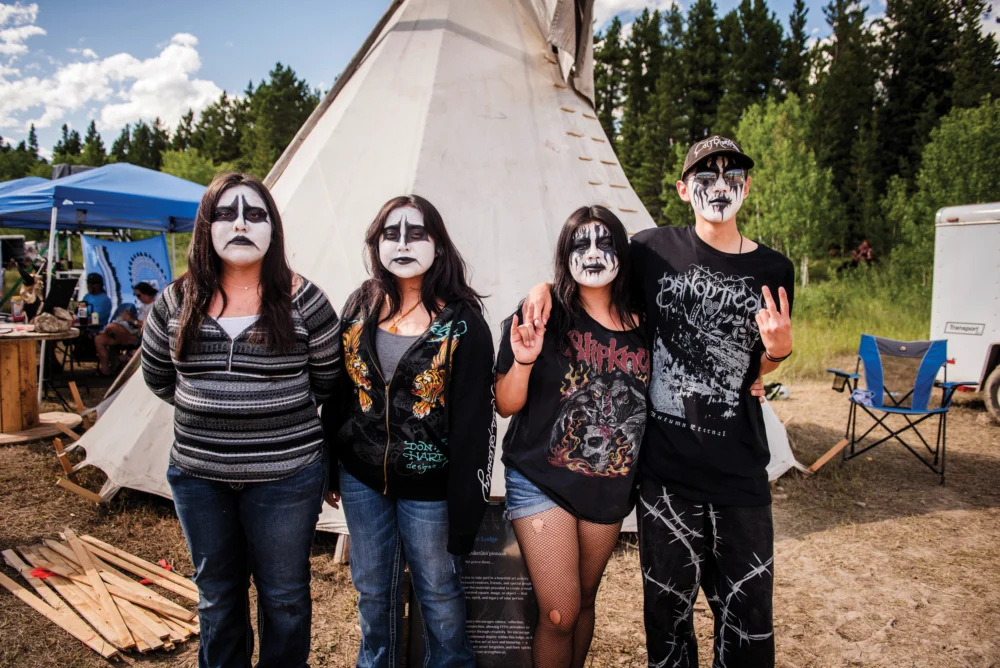
In the heart of Montana, amidst the sweeping landscapes of the Blackfeet Nation, a unique cultural convergence is unfolding, driven by the raw power of heavy music and a profound commitment to community healing. What began as an unconventional educational initiative has blossomed into a celebrated music festival, drawing thousands and forging vital connections between Indigenous youth, the global metal scene, and a shared struggle against despair. This burgeoning movement underscores the universal language of music and its capacity to transcend boundaries, offering solace, community, and a powerful outlet for expression in the face of adversity.

The journey toward this vibrant intersection of cultures began within the walls of Buffalo Hide Academy, an alternative public high school in Browning, Montana. Here, amid the dust and quiet resilience of the Blackfeet Nation, educators recognized a deep-seated need for engagement and support among their students. Robert Hall, a Piikunii teacher and a passionate advocate for the arts, described Browning as a place that "doesn’t turn away from the darkness," acknowledging the town’s struggles alongside its "immense beauty." It was this raw, unvarnished reality that inspired Charlie Speicher, a clinical counselor and the school’s director, to launch a groundbreaking semester-long symposium. Dedicated to the study of heavy metal and hardcore music, this course aimed to provide a sanctuary for students who might feel isolated or drawn to more aggressive forms of artistic expression.
Speicher, a non-Native himself, embraced the distinctive aesthetic of metal culture, often sporting a "battle vest" adorned with band patches, a symbol of belonging and shared identity. His vision extended beyond mere musical appreciation; he sought to cultivate a sense of safety and protection, particularly from suicidal distress, a challenge that has tragically impacted every family in Browning. The symposium delved into the diverse subgenres of metal, exploring their sonic landscapes, lyrical themes, and cultural origins. Students analyzed music videos, debated the separation of art from artist, and connected the aggressive sounds of bands like Black Sabbath to historical events such as the Vietnam War. The curriculum wasn’t just about appreciating heavy music; it was about understanding its power as a tool for emotional processing, community building, and navigating life’s darkest moments.

The initiative gained significant momentum with the formation of the Firekeeper Alliance, a collective of educators and artists who banded together in the wake of a devastating wave of suicides that swept through the Blackfeet Nation in 2020. Spearheaded by Speicher, Hall, and Steve Von Till, a musician and writer known for his work with Neurosis, the alliance aimed to create a protective "fire" for the youth. Their efforts converged with the aspirations of the "Fire in the Mountains" festival, a pagan-themed event that had been displaced from its original location. The Firekeepers saw an opportunity to bring the festival to the Blackfeet Nation, integrating educational internships and fostering economic development within the community.
Securing approval from the Blackfeet Tribal Business Council was a crucial step. While the council had a history of supporting youth through athletics, venturing into the realm of heavy music represented uncharted territory. However, Councilman Everett Armstrong recognized the potential to offer young people new avenues for self-discovery and connection. He also saw the economic possibilities, noting the stark contrast between the wealth generated by nearby Glacier National Park and the persistent poverty on the reservation, a contributing factor to the disproportionate rates of suicidal distress among Native communities. Bringing a major festival to the reservation promised to inject vital revenue and cultural visibility into the area.

The Firekeepers then embarked on a mission to attract significant musical talent. Their journey led them to Boulder, Colorado, to meet with the acclaimed Norwegian folk band Wardruna. The band’s frontman, Einar Selvik, expressed immediate enthusiasm for the project, seeing it as an opportunity to connect with Indigenous cultures and contribute to something more profound than a typical festival. Wardruna’s participation was a major coup, signaling the festival’s potential to be a truly impactful cultural exchange.
As July 2025 arrived, the "Fire in the Mountains" festival officially opened its gates on the Blackfeet Nation, near East Glacier Park, Montana. The atmosphere was electric, a blend of anticipation and trepidation, as no festival of this magnitude had ever been held on a reservation before. Fortunately, the week’s rain cleared, ushering in perfect festival weather. Approximately 2,400 attendees, a significant portion of whom were Native, converged from across the continent. The festival’s opening was marked not by a perfunctory land acknowledgment, but by a vibrant welcome from the land’s Indigenous stewards. A traditional powwow commenced, featuring various dance styles, a powerful display of cultural pride and artistry.

Robert Hall, serving as the master of ceremonies, injected levity and energy into the proceedings, while Piikunii youth beat drums in unison with the dancers. For many festival-goers, this was their first encounter with Indigenous culture, a transformative experience that opened hearts and minds. The event culminated in an intertribal dance, an invitation for all to participate. Initially hesitant, metalheads soon joined the circle, their black denim and bandanas a stark contrast to the vibrant regalia, yet united in movement and mutual respect. This inclusive dance symbolized the festival’s core mission: a cultural exchange between the Piikunii people and the global metal community.
The absence of alcohol, a deliberate choice by the organizers, was a notable departure from typical metal festivals, fostering a more mindful and connected experience. Attendees engaged in workshops and panels addressing critical issues such as Indigenous sovereignty, environmental stewardship, and the epidemic of missing and murdered Indigenous people, alongside discussions on the therapeutic aspects of heavy music.

The sentiment that Native and metalhead communities share a common ground as "fringe" elements of society resonated deeply. Logan Mason, who traveled from Spokane and had personally experienced the loss of family members to suicide, found solace in metal music during his youth. He noted the scarcity of others who shared his musical tastes on his reservation, highlighting the sense of isolation that many metal fans, and indeed many Indigenous people, experience. This shared feeling of being on the margins, of navigating societal norms from the outside, creates a powerful bond.
The music itself, with its raw intensity and often cathartic themes, seemed to speak directly to these experiences. Meg Skyum, attending from Ontario, observed that genres like atmospheric black metal, with its focus on nature, resonated with Indigenous appreciation for the land. Tomas Falomir, of Ojibwe, Hopi, and Zuni Pueblo descent, described the metal community as inherently welcoming, attracting individuals who have faced struggles and found healing in the music’s powerful embrace. He noted a sonic kinship, suggesting that the driving rhythms and intense vocals of metal could be seen as a modern echo of traditional Indigenous music.

The festival provided a platform for numerous Indigenous artists, including Sage Bond, a rising acoustic metal singer-songwriter from the Navajo Nation, whose performance captivated the audience. Navajo Nation’s own blackened doomgaze duo, Liíth, fronted by Heather Jordan, delivered a powerful set, emphasizing the festival’s focus on Native artists. The festival also featured Blackbraid, a Native black metal project that gained viral fame, whose music draws deeply from spiritual and cultural themes, finding common ground with the anti-establishment ethos often found in black metal.
The performance by the influential metal band Converge became a focal point of the festival’s communal spirit. As they launched into their set, a massive mosh pit formed, a maelstrom of energy and physical expression. This "consensual violence," as described by one organizer, was not about aggression but about shared catharsis and mutual support, with participants helping each other up when they fell. During their performance of "Dark Horse," frontman Jacob Bannon invited a Piikunii youth to join him on stage, a symbolic gesture of shared power and voice.

As the festival progressed, a dramatic thunderstorm descended, momentarily plunging the grounds into darkness and forcing an evacuation. Yet, even amidst the chaos, the spirit of resilience and camaraderie shone through. As power was restored, the iconic opening chords of Black Sabbath’s "War Pigs" rang out, a spontaneous tribute to the recently deceased Ozzy Osbourne, unifying the crowd in a powerful, shared moment of remembrance and defiance. The storm, rather than dampening spirits, seemed to amplify the raw, elemental power of the music and the collective experience.
The festival concluded with a performance by Old Man’s Child, a Norwegian black metal band making their U.S. debut. Their set, shrouded in fog and intense lighting, felt like a ritualistic exorcism of personal and collective demons, perfectly encapsulating the festival’s transformative potential.

In the aftermath, social media buzzed with testimonials of "pure magic," "transformational experiences," and "life-changing moments." Attendees, both Native and non-Native, spoke of unexpected tears, profound healing, and a deep sense of connection. The lack of alcohol was widely credited with enhancing the experience, fostering a more present and engaged atmosphere. Frank Godla, co-founder of Metal Injection, noted learning more about Native culture at the festival than from any other source. Wardruna expressed gratitude to the Blackfeet Nation, emphasizing the profound solidarity felt with Indigenous peoples and their struggles, viewing the event as a "ceremony" where ancestors’ spirits connected.
The sentiment of shared humanity and the power of music to bridge divides was echoed by Tribal Chairman Rodney "Minnow" Gervais, who commended the metalheads for their respect and cleanliness. He highlighted music’s ability to transcend differences in religion, color, and background, bringing people together. Councilman Armstrong, initially apprehensive about the appearance of metalheads, was struck by their kindness and welcoming nature, opening the door for the tribe to consider hosting events of other genres in the future.

For many, including Mason, the festival represented a full-circle moment, a convergence of beloved music, Indigenous culture, and a vital cause. The young attendees who interned at the festival found inspiration, with some considering careers in the music industry and continuing their own musical pursuits. As the festival drew to a close, the shared experience left an indelible mark, fostering hope and a deeper understanding of music’s capacity for healing and connection. The journey from the raw energy of metal to the quiet wisdom of Indigenous traditions, all set against the breathtaking backdrop of the Blackfeet Nation, proved to be a powerful testament to the enduring human need for community, expression, and a place to belong.