Roger Danuarta
In an era increasingly defined by ecological precarity and a profound sense of human disjunction, the resonant voice of poet D.A. Powell, through his powerful work "Spell for Binding the Center to a Center," offers a vital meditation on humanity’s intrinsic and often neglected relationship with the Earth. This evocative piece serves as a poignant reminder of our deep-seated need for grounding, particularly as global challenges intensify and the spiritual landscape mirrors the environmental one, leaving many feeling parched and adrift. Powell’s words arrive at a moment when reconnecting with the fundamental essence of our planet is not merely an aesthetic pursuit but an imperative for survival and well-being.
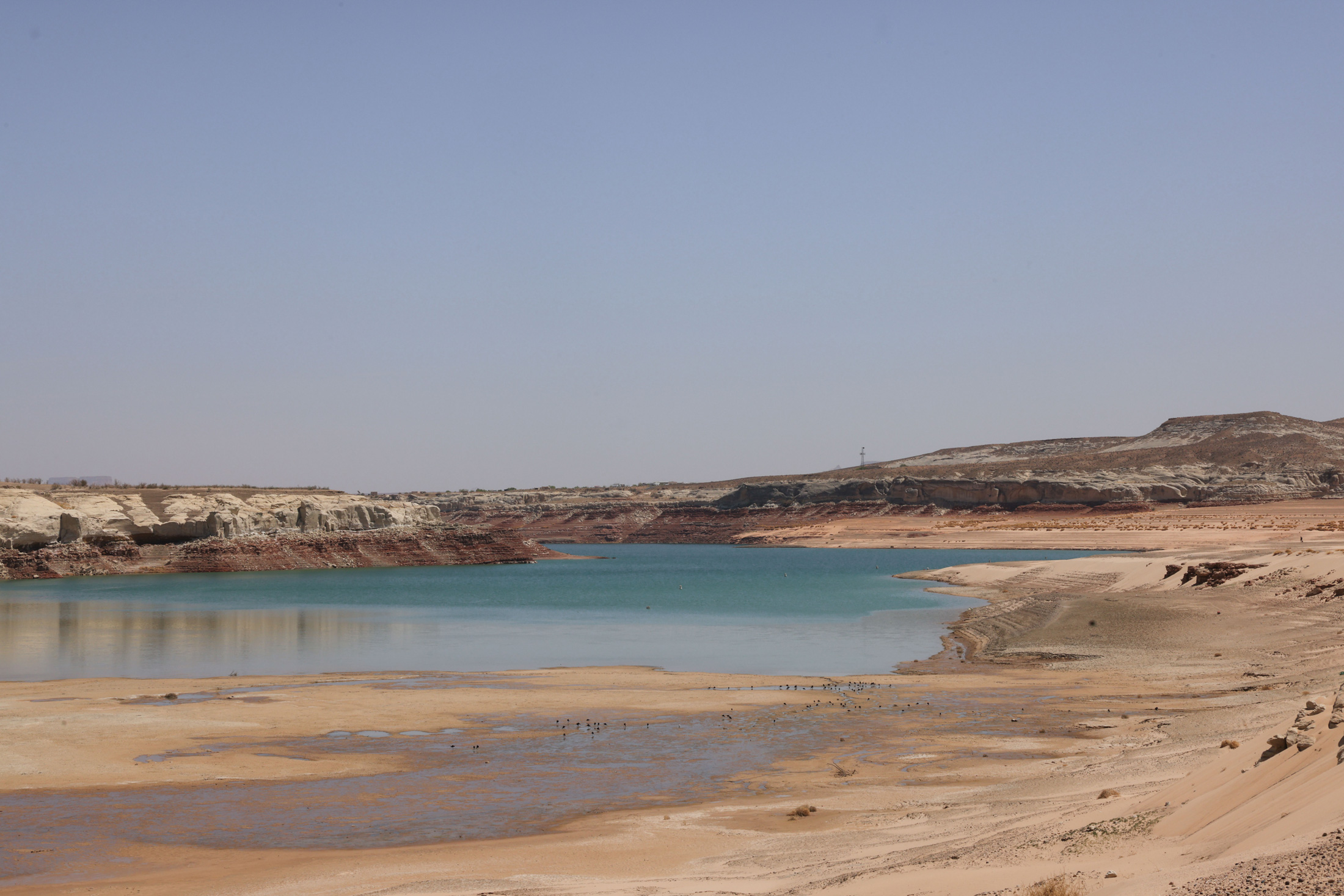
The poem opens with an arresting image: "And when spiritually we are parched like the air in fire season, laden with the things of this world caught flame and heaved up into the atmosphere." This metaphor acutely captures the contemporary human condition, where pervasive anxieties—fueled by climate change, social upheaval, and the relentless pace of modern life—leave individuals feeling desiccated and overwhelmed. The "fire season" conjures images of intensifying wildfires globally, from the American West to Australia and the Amazon, symbolic of both literal environmental destruction and the burning pressures on human psyche. The "things of this world caught flame" speak to the fleeting nature of material possessions and societal constructs when faced with elemental forces, suggesting a collective spiritual exhaustion from the weight of our own creation and consumption.
Against this backdrop of spiritual drought and material overload, Powell posits the Earth as the ultimate source of grounding. He enumerates the myriad forms of soil, not just as inert matter but as the very fabric of existence: "our dam material, our plant medium, our brick paste, our fortress against dying, our mother’s greens plucked in winter and served in soup, our fodder and feed lots, our field of unknowing and enfolding." This expansive list moves beyond mere description, imbuing soil with both practical utility and profound metaphorical significance. It is the foundation of our infrastructure, the source of our sustenance, and paradoxically, a "field of unknowing," inviting humility and a recognition of nature’s vast mysteries. From the "dirt of churchyards and sideyards" to the "loam, the sod, the clod, the gravel, the mud, the muck, the groot, the grit, the ground," the poem meticulously reclaims the dignity of earth, urging a recognition of its ubiquitous and foundational presence in every aspect of life. This emphasis resonates deeply with growing scientific understanding of soil health as critical for global food security, biodiversity, and carbon sequestration, highlighting its role as a living, breathing component of our planet’s life support system.

Powell then shifts from observation to an active invocation, urging readers to affirm their connection: "Say, ‘I am my earth in the way I want to see it, from the hot core to the frigid reaches, large at the equator where it’s luscious and wrapped in silky clouds, puffy thunderheads, belts of rain and snow. I am my earth that nurtures. I am my earth abundant. I am my earth in a sheath of green and blue raincoat.’" This profound declaration encourages a radical empathy, dissolving the perceived boundary between self and planet. It is a call to internalize the Earth’s vastness, its cycles of nurturing and abundance, and its protective layers. Such an affirmation aligns with philosophies of ecocentrism, which advocate for placing the Earth’s well-being at the center of human concerns, moving beyond an anthropocentric view that often treats nature merely as a resource. This shift in perspective is crucial for fostering genuine environmental stewardship, recognizing that harming the Earth is, in essence, harming oneself.
The poem further deepens this connection by advocating for a tactile, sensory engagement: "Hunker down in your earth. Listen to the death in your earth. The life. Listen to the earth under your feet. Sit down in a field. Feel the way your ass is supported by the earth. Stretch out against it. Let your legs sprawl over the soft earth. Lie down on the hard earth and press against it. Touch its dirt the way you would touch a lover." This segment is a powerful antidote to the alienation of modern life, which often keeps individuals indoors, disconnected from natural rhythms. The act of "hunkering down" and physically interacting with the soil is presented as a primal act of grounding, offering both solace and revelation. The instruction to "Listen to the death in your earth. The life" acknowledges the cyclical nature of ecosystems—decay feeding new growth—and invites a holistic understanding of nature’s processes, free from sentimentalism. This physical and emotional immersion is increasingly recognized in therapeutic practices, such as "forest bathing" (Shinrin-yoku) and other forms of nature therapy, which demonstrate tangible benefits for mental health, stress reduction, and overall well-being. The intimate language, comparing touching dirt to touching a lover, elevates this connection to one of profound reverence, suggesting a relationship built on trust, vulnerability, and mutual care.
Finally, Powell’s poem culminates in a plea for reconciliation and commitment: "Speak your secrets in the dust. Talk about how long you’ve been together and how you’ve both tried to save each other. Save each other. Every day come back to the earth and tell it you’re sorry, you’ll do better, you’ll bring your child, your lover, your mother back to visit this spot, this place where you remembered for once, like your papa always told you, you remembered where you came from and how good it felt to be at home in the world today." This passage encapsulates the profound ethical responsibility humanity bears towards the planet. The act of confession and apology signals an acknowledgment of past transgressions—the exploitation, pollution, and degradation—and a commitment to future betterment. The intergenerational aspect, bringing "child, lover, mother," emphasizes the legacy we leave and the collective responsibility to educate and inspire future generations to foster this vital bond. Remembering "where you came from" taps into deep evolutionary and cultural roots, echoing indigenous wisdom traditions that view humans as inseparable from the land, not its masters. This sense of being "at home in the world" is perhaps the ultimate gift of reconnection, a feeling of belonging and peace that transcends the anxieties of the contemporary age.
In a global context marked by rapid urbanization, technological immersion, and increasing detachment from natural environments, Powell’s "Spell for Binding the Center to a Center" serves as a crucial reminder. It underscores that our spiritual and physical well-being remains inextricably linked to the health and vitality of the Earth. As nations grapple with complex environmental policies, economic transitions, and social justice issues, the poem offers a foundational truth: genuine progress and sustainable existence begin with a renewed, intimate connection to the very ground beneath our feet. It is a call to action, not just for policy makers or scientists, but for every individual to cultivate a daily practice of gratitude, humility, and active participation in the Earth’s ongoing story of life.