Rocky Gerung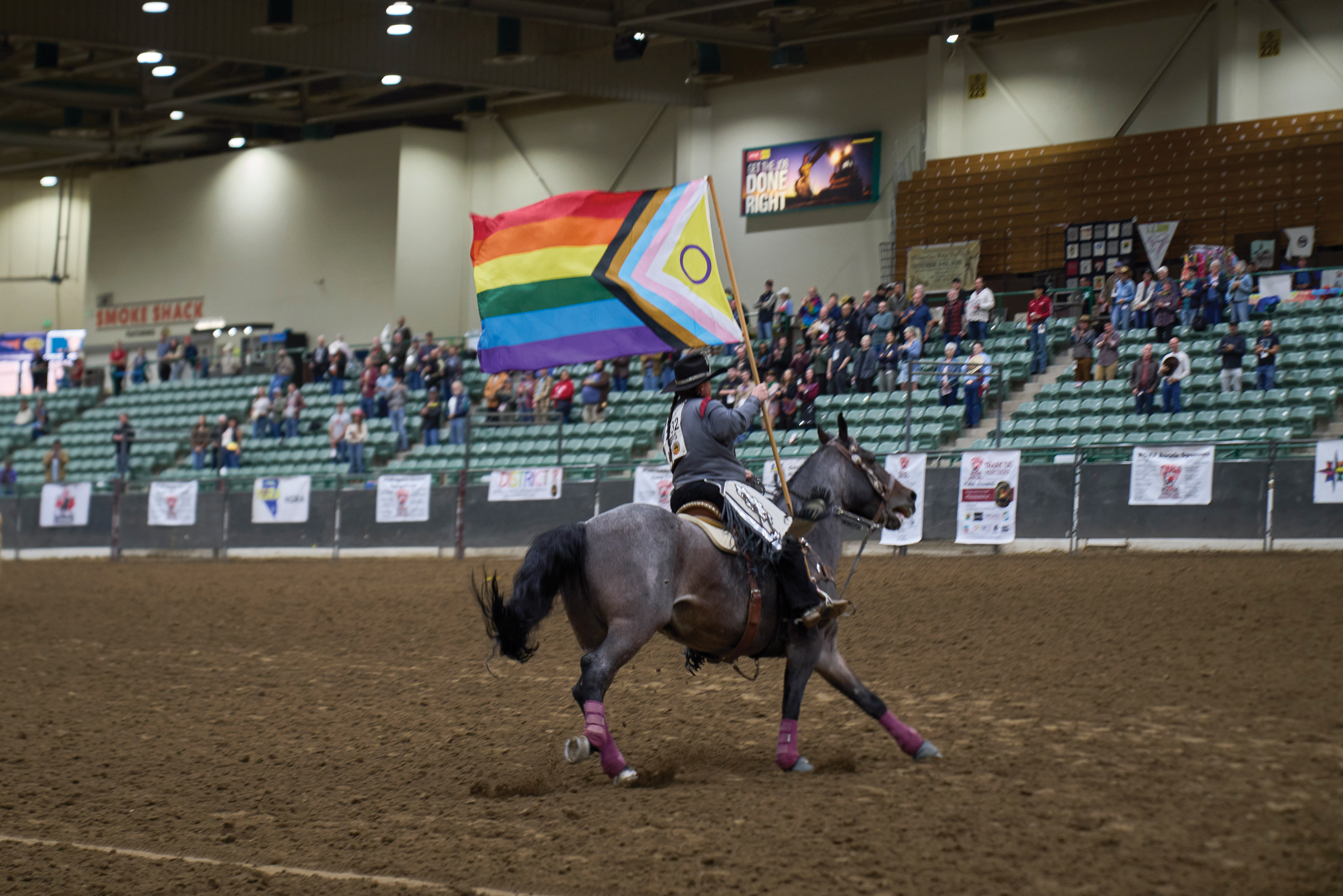
Fifty miles east of Reno, Nevada, on the dusty outskirts of Fallon, a small agricultural and military town, John King stood by a noisy highway, his gaze fixed on the ranch where a legendary rodeo never took place. Thirty-seven years prior, in October 1988, contestants and organizers of that year’s Gay Rodeo Finals found themselves barred from the ranch, confronted by then-Churchill County Sheriff Bill Lawry. "It was the first time I’d seen raw, undeniable hate," King recounted, recalling the tense hours that followed. A judge’s injunction, a stark symbol of opposition, hung on the ranch gate, while the sheriff, flanked by deputies and his shotgun, stood as a formidable barrier between the hopeful rodeo participants and their horses. King vividly remembers the crowd’s determined advance, met with heated threats of violence, before they were eventually permitted to load their animals and depart, the event a casualty of prejudice. "It was our Stonewall," King declared, drawing a powerful parallel to a pivotal moment in LGBTQ+ history.
The 1988 standoff in Fallon was the dramatic climax of a months-long struggle between the International Gay Rodeo Association (IGRA), its venue hosts, and a coalition of anti-gay activists who had mobilized to disrupt that year’s finals. Initially slated for Reno, the birthplace of gay rodeo, the event was forced to seek an alternative venue. The decision to relocate to private land in Fallon proved futile, as they were ultimately denied access. While gay rodeo did not falter, its finals were subsequently dispersed across several cities, leaving a somber imprint on northern Nevada’s collective memory.

This mid-October, a poignant full-circle moment unfolded as the Gay Rodeo Finals returned to Reno, coinciding with the 50th anniversary of the first such event. Just days before the competition, attendees embarked on a bus tour to Fallon, making a pilgrimage to the site of the historic standoff. Amidst the solemn reflection, Andy Siekkinen, the rodeo’s press liaison and a competitor, tall and distinguished in a wide-brimmed hat and sporting a handlebar mustache, stood alongside this reporter. Brian Helander, the president of IGRA, approached, extending a hand in a gesture of camaraderie. "We’re not out here in anger," Helander stated, his voice measured. "It’s about understanding and closure." Siekkinen, with a subtle smile, added, "And triumph," a sentiment echoed by Helander, who affirmed, "We’re still here."
On the roadside directly opposite the fateful ranch gate, organizer Brian Rodgers held aloft a poster-sized replica of the injunction that had thwarted the 1988 rodeo. Around fifty individuals joined him in a resonant declaration: "We remember, we honor, we continue." Rodgers then meticulously rolled up the document, a tangible symbol of bigotry and pain, and secured it with rainbow-patterned duct tape, an act that visually encapsulated the sealing of that painful chapter in history. As the group boarded the bus, a collective sense of relief and anticipation filled the air, punctuated by the clinking of beer cans. "Thanks to everybody who came," Rodgers called out from the aisle, his voice carrying a spirit of festivity. "Drink your beers. Let’s rodeo!" The Georgia Satellites’ anthem, "Keep Your Hands to Yourself," provided a spirited soundtrack as the bus journeyed back to Reno.
Two days later, the Reno Livestock Events Center buzzed with excited chatter beneath its high metal ceiling. As spectators trickled in before noon, they found seats, the opening event afoot: calf roping on foot. The attire varied, from the classic Western ensemble of blue jeans and snap-button shirts to more flamboyant expressions of fringe, bolo ties, and denim jackets adorned with intricate Western scenes. The distinct aromas of fresh arena dirt and horses mingled with the tempting scents emanating from the snack stand – a blend of deep fryer and lukewarm coffee. Contestants positioned themselves near the calf chutes, their lassos twirling in anticipation. As the gate swung open, a calf emerged, ideally to be met by the perfectly cast loop of a waiting rope. Murmur Tuckness, a veteran of the 1988 standoff and a bull riding competitor since 1981, demonstrated her prowess, securing the fastest time in the women’s category with a near-instantaneous catch.

The Grand Entry, the rodeo’s ceremonial commencement, saw the vibrant display of the Canadian, U.S., and Nevada state flags, carried by riders on horseback, joined at a full gallop by the inclusive Pride flag. Rodeo royalty and representatives from various regional gay rodeo associations paraded from the roping to the bucking chutes, a testament to the sport’s growing reach and acceptance. The individual events were thoughtfully segregated by gender, with registration based on self-identification. Notably, nonbinary and trans athletes are welcomed to compete within their chosen gender categories, positioning IGRA as a rare sporting organization that actively champions trans participation. In a departure from traditional rodeo norms, women are permitted to compete in bronc, steer, and bull riding, and mixed-gender teams vie for victory in the roping events, fostering an environment of inclusivity and shared passion.
The atmosphere behind the chutes, a stark contrast to the steely, competitive intensity often observed in more conventional rodeo settings, was characterized by infectious camaraderie. Goofy smiles, encouraging pep talks, and flashes of flamboyant showmanship replaced the nervous, fearful glares. "It’s a level playing field," remarked Mark Allen Smith, an athlete and rodeo royalty contender in the nonbinary category, his attire a simple light denim shirt complemented by a trim gray goatee. "I can walk out there with my rodeo partner Jen and compete on the same events." Later that day, Smith, after experiencing a spirited encounter with a steer in the steer-decorating event, headed to the Silver Legacy casino for the second part of the Gay Rodeo: a Western dance competition and a royalty contest, where the coveted titles of Ms., Miss, Mr., Mx., and MsTer International Gay Rodeo Association would be bestowed.
The carpeted casino basement throbbed with energy, packed with a diverse crowd – burly men in cowboy hats, confident cowgirls, dazzling drag queens, and everyone in between. The audience offered enthusiastic cheers and hoots for their friends performing on stage. Smith, transformed for the competition, appeared with full makeup, a brunette wig, a flowing skirt, his signature goatee, and a black sash. As the clock in the casino sportsbook struck midnight, Smith claimed the title of Mx. International Gay Rodeo Association, a crown of honor he would wear for the next year. Following the sash presentations, the celebration continued with spirited line dancing, energetic clogging, and lively two-stepping that extended late into the night.

The genesis of gay rodeo traces back to 1976 in Reno, where Phil Ragsdale, a pioneering figure in the local chapter of the Imperial Court System, a grassroots network of LGBTQ+ organizations, organized the first event. His objective was to raise funds for the Senior Citizens Thanksgiving Feed, and in true Nevada fashion, a rodeo was the chosen platform. What began with 125 attendees in 1976 blossomed into a spectacle drawing 10,000 by 1980. By 1988, the International Gay Rodeo Association had established chapters nationwide, and the Gay Rodeo Finals were scheduled to be held at the University of Nevada, Reno’s Lawlor Events Center. Amidst the devastating impact of the AIDS crisis on the LGBTQ+ community and a burgeoning wave of conservative Christian activism disseminating harmful stereotypes about the disease, local activists in Reno exerted pressure on politicians to cancel the event.
Rather than an outright cancellation, the university cited contractual disputes as grounds for withdrawing their support. While the ACLU vigorously contested this decision, the IGRA ultimately opted for an alternative venue: a private rodeo arena in Fallon. However, this move precipitated a secondary cascade of legal challenges. District Court Judge Archie E. Blake issued an injunction prohibiting the event, asserting that the private venue was not permitted for rodeo use, despite having hosted similar events without incident, according to Rodgers. This unfortunate episode effectively severed Reno’s claim as the originator and host of the Gay Rodeo. Growing up in the area, knowledge of this significant event remained elusive, as if it had been systematically erased from the city’s historical narrative. In 1988, Reno missed a profound opportunity; it could have embraced and celebrated something truly special, fostering a vibrant community of creative individuals who had pioneered a unique form of expression. Instead, they were driven away.
Reno, a city I hold dear, possesses a self-destructive tendency to pursue fleeting promises of wealth or influence, often at the expense of its inherent, homegrown strengths. This penchant for "double or nothing" gambles, even when facing a losing hand, can lead to the neglect or even sabotage of its authentic cultural assets in pursuit of distant, illusory gains.

On Sunday, the final day of the rodeo, the Nevada sky was a brilliant cerulean, the sunlight sharp and invigorating—a perfect autumn day. Gay rodeo shares many similarities with its traditional counterpart, but is distinguished by the inclusion of "camp events," such as goat dressing, a crowd favorite where contestants race to don underwear on a goat, and steer decorating, where teams work to briefly subdue a steer to tie a ribbon on its tail. The Wild Drag Race stands out as perhaps the most chaotic and entertaining camp event. Each three-person team comprises one man, one woman, and one drag queen, referred to simply as "drag." The drag participant positions themselves on a chalk line 70 feet from the chutes. One teammate receives a rope attached to a steer, and upon the chute’s opening, the other two team members endeavor to guide the steer past the chalk line and halt its momentum. Once stopped, the drag contestant mounts the steer’s back and must ride it back across the line to secure victory. This often results in the drag performer being bucked off, with one of the other teammates dragging along the dirt, desperately clinging to the rope.
Between events, I explored the concourse, where an array of vendors offered Western wear, cowboy boots, tie-dyed shirts, and novelty items. One exhibit meticulously chronicled the history of Gay Rodeo, featuring posters, plaques, medals, ropes, and photo albums that illuminated the sport’s journey and evolution. Observing it all, I envisioned an alternate reality where the annual Reno Gay Rodeo had become an integral part of the city’s identity, a beloved and celebrated spectacle that served as a bulwark against condescending commentary from outsiders. Reno, a city that also cherishes second chances, might still find an opportunity to reclaim this vibrant legacy. The rodeo concluded with a thrilling final bull ride, accompanied by the pulsating beats of Lil Jon’s "Turn Down For What." The rider successfully maintained their seat for the full six seconds. As the event drew to a close, the announcers offered their thanks, and the classic strains of Roy Rogers and Dale Evans’ "Happy Trails" filled the air. The arena slowly emptied into the gathering dusk. Somewhere within the venue, an organizer carefully placed the rolled-up injunction into a box, destined to join the rest of the archival collection—a tangible artifact of a bygone era.