Johny Prima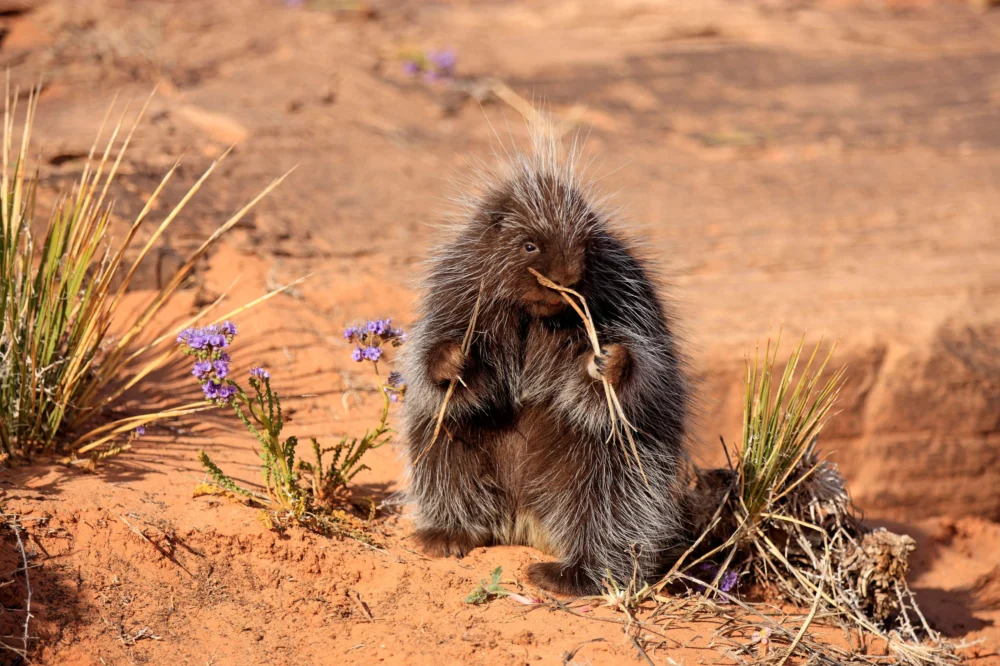
For generations, the North American porcupine (Erethizon dorsatum), with its unmistakable defensive armor of thousands of barbed quills, has been an iconic, if elusive, resident of Western forests. Yet, for many today, a sighting remains a rare, almost mythical event, a stark contrast to the memories of an earlier era. Emilio Tripp, a dedicated wildlife manager and a citizen of the Karuk Tribe in Northern California, vividly recalls what might have been his sole encounter with a kaschiip, the Karuk word for porcupine. It was a fleeting silhouette during a late-night drive with his father in the late 1990s, a memory he clutches like a precious talisman, still uncertain if it was indeed the quilled creature. Now 43, Tripp has not seen another porcupine since, a common lament among his tribe. Elders speak of a time when porcupines were abundant, their presence a natural part of the forest soundscape, until the turn of this century. Today, each sporadic report — a carcass on a roadside, a fleeting glimpse in the dark — echoes a deeper concern: a collective wonder about where these unique creatures have gone.
“Everyone’s concerned,” Tripp states, articulating a sentiment that resonates far beyond his tribal lands. “If there were more (observations), we’d hear about it.” This profound concern is not isolated to Northern California; it represents a troubling trend observed across the vast landscapes of the American West. Wildlife scientists are now engaged in a critical race against time, striving to pinpoint where viable porcupine populations persist and, more urgently, to unravel the complex web of factors driving their decline. Concurrently, communities like the Karuk Tribe are not waiting idly; they are already laying the groundwork for ambitious restoration plans, envisioning a future where porcupines once again thrive in their ancestral forests.
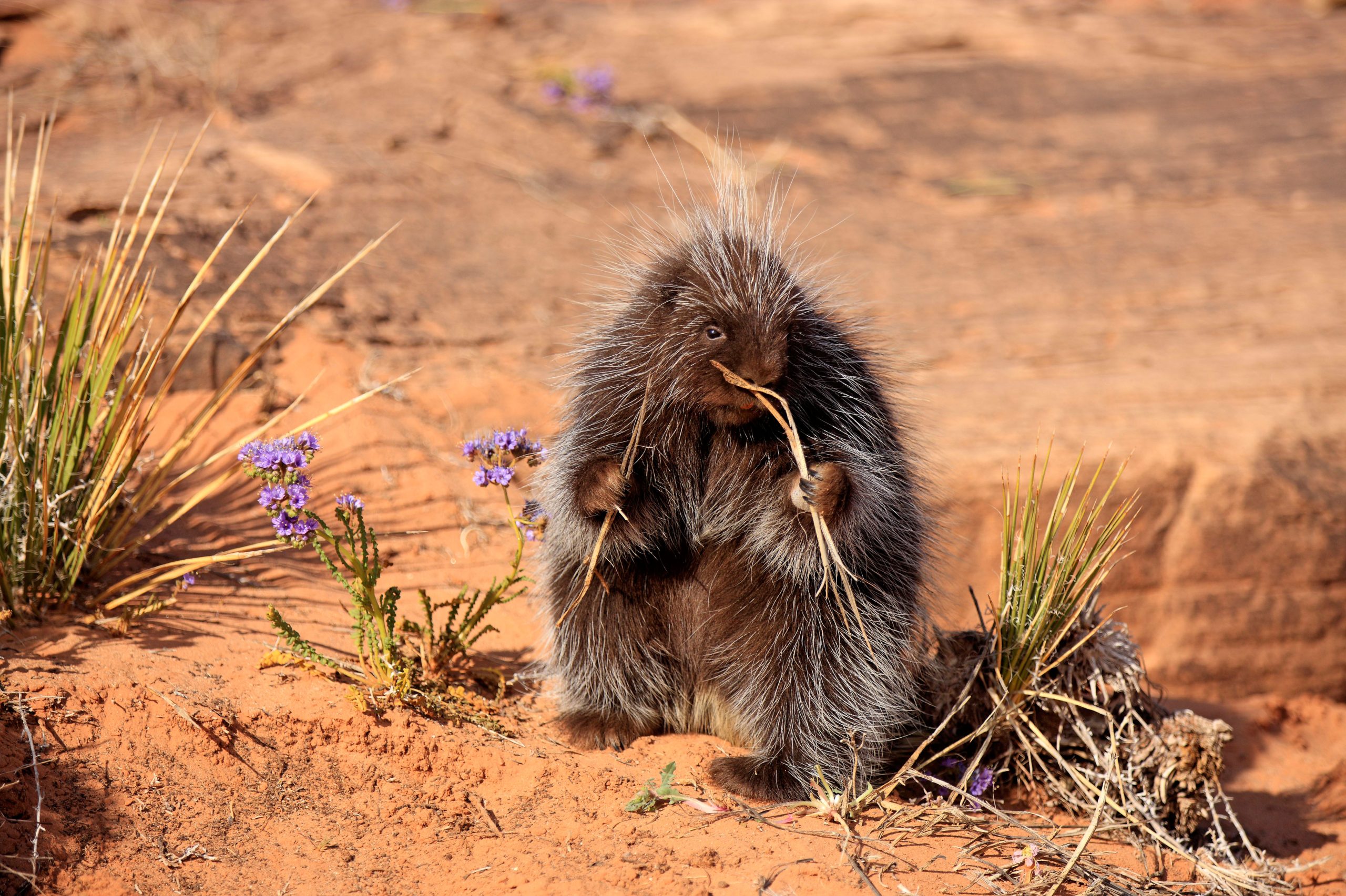
The North American porcupine, the only porcupine species native to the continent, stands out among rodents, not least for its formidable defense mechanism. Its approximately 30,000 quills, each tipped with microscopic barbs, offer a potent deterrent against most predators. Despite this impressive body armor, the porcupine is often characterized by ecologists like Tim Bean of California Polytechnic State University, who has extensively studied these animals, as “big and dopey and slow.” These nocturnal herbivores navigate their arboreal world with a characteristic waddle, primarily foraging on leaves, buds, and the nutrient-rich inner bark of trees, particularly during the leaner winter months.
However, these tree-gnawing habits, while vital to their survival, have historically placed porcupines in direct conflict with human interests, particularly the burgeoning timber industry of the 20th century. Viewed as destructive pests capable of damaging valuable lumber, porcupines faced widespread persecution. Throughout the 1900s, government-sanctioned poisoning and hunting campaigns systematically targeted porcupine populations across the United States. Vermont, for instance, recorded the eradication of over 10,800 porcupines between 1957 and 1959 alone. In 1950, California Forest Service officials went as far as declaring "open season" on porcupines, asserting that their unchecked presence threatened the very existence of pine forests, an alarming perspective that fueled decades of intense population control.
Although official state bounty programs largely ceased by 1979, the damage was profound and long-lasting. Decades later, porcupine numbers have failed to rebound to historical levels. Contemporary research from diverse regions, including British Columbia, Arizona, western Montana, and Northern California, consistently indicates that porcupines remain scarce. A significant challenge for scientists lies in the historical lack of consistent population monitoring, making it difficult to definitively ascertain whether current populations are still actively declining or simply struggling to recover from the cumulative impact of past persecution and ongoing threats. This absence of reliable baseline data creates what conservationists term a "shifting baseline syndrome," where current generations perceive the depleted state as normal, obscuring the true extent of biodiversity loss.

Nonetheless, a wealth of anecdotal evidence strongly suggests a sustained decline, raising critical alarm bells. Veterinarians across the West report a noticeable reduction in cases of pets arriving with porcupine quills embedded, a once common occurrence. Longtime rural residents and homesteaders observe far fewer porcupines in their backyards and surrounding woodlands, where they were once a familiar, if prickly, sight. Even experienced hikers and outdoor enthusiasts now find encounters with porcupines increasingly rare, a testament to their dwindling numbers. The ecological ramifications of this disappearance are already manifesting, disrupting delicate food webs. In California’s Sierra Nevada, for example, the endangered fisher (Pekania pennanti), a member of the weasel family, relies heavily on porcupines as a crucial protein source. The scarcity of porcupines has led to a significant decline in fisher health, with individuals in the Sierras exhibiting scrawnier physiques and producing smaller litters compared to their counterparts in regions where porcupines are still more prevalent. This trophic cascade illustrates how the removal of even a single species can send ripples of instability throughout an entire ecosystem, impacting multiple interconnected populations.
Beyond their ecological role, porcupines hold profound cultural significance for Indigenous communities like the Karuk Tribe. Their quills are meticulously woven into traditional baskets and other ceremonial items, embodying a deep connection to the land and ancestral practices. Today, however, the scarcity of local porcupines forces the tribe to import quills, a practice that, while practical, represents more than just an inconvenience. It symbolizes a tangible severance of connection between tribal members and their ancestral homelands, diminishing opportunities to engage in traditional gathering practices and transmit cultural knowledge directly tied to the local environment. "It’s important for (porcupines) to be a part of our landscape," Tripp emphasizes, highlighting that their presence is integral to the cultural fabric and the very identity of the Karuk people, influencing why they are chosen for sacred ceremonial items.
This localized porcupine vanishing act, ecologists fear, is a microcosm of a much larger, more ominous trend. Erik Beever, an ecologist at the U.S. Geological Survey, warns that the porcupine’s plight is symptomatic of a "silent erosion of animal abundance" occurring across the globe. Biodiversity is declining at an unprecedented rate, often faster than scientists can track, making species like the porcupine inadvertent sentinels of broader environmental degradation. The insidious nature of this "silent erosion" is particularly concerning because populations can dwindle significantly without widespread public or even scientific awareness. Beever notes the unsettling uncertainty: “We’re wondering whether the species is either increasing or declining without anybody even knowing.” This lack of foundational knowledge underscores the urgent need for comprehensive ecological monitoring.

To bridge this critical knowledge gap, scientists are mobilizing with innovative research strategies. Tim Bean and his team undertook an exhaustive review of a century’s worth of public records, from historical trapper logs to modern roadkill databases and citizen science reports, to meticulously map porcupine distribution patterns across the Pacific Northwest. Their findings revealed a concerning shift: while porcupines are dwindling in their traditional conifer forest habitats, they are surprisingly appearing in non-traditional environments such as deserts and grasslands. This potential habitat shift raises questions about adaptation to changing environmental conditions or displacement from preferred areas. Building on this regional effort, Erik Beever is now spearheading a more expansive study across the entire Western U.S., aiming to provide a comprehensive continental perspective on the porcupine’s status.
Researchers have put forth several theories to explain why porcupine populations have failed to recover and return to their historical ranges. One significant, and often overlooked, factor is the proliferation of illegal marijuana cultivation sites deep within remote forest lands. These clandestine operations frequently employ highly toxic rodenticides, not only targeting unwanted pests but inadvertently poisoning a wide array of wildlife, including porcupines, which can consume tainted bait or prey on affected animals. Another complex theory posits that increased protections for apex predators, such as mountain lions, while crucial for predator populations, may have inadvertently increased predation pressure on porcupines in some areas, shifting ecological balances. Furthermore, the inherent biology of porcupines contributes to their vulnerability; they are slow to reproduce, typically birthing only a single offspring, known as a porcupette, after a relatively long gestation period. This low reproductive rate makes populations inherently less resilient to stressors and slower to recover from declines compared to species with higher fecundity.
Adding to the complexity of conservation is the inherent difficulty in studying porcupines. As generalist herbivores capable of inhabiting a wide variety of forest types, locating them is challenging. Unlike some omnivores or carnivores, porcupines are not easily lured by traditional baits. Scientists have experimented with various attractants, including brine-soaked wood blocks, peanut butter, and even porcupine urine, in attempts to draw the cautious creatures towards camera traps, but with only mixed success. The results highlight their elusiveness: in 34 years of both baited and unbaited camera surveys conducted by the Central Sierra Environmental Resource Center in the Sierra Nevada, porcupines have appeared on camera only three times. "It’s a mystery," admits John Buckley, the center’s executive director, encapsulating the perplexing nature of their disappearance. "We still don’t understand (why) they’re not reproducing and filling back in where there’s very little disturbance of their habitat, like Yosemite National Park."

Despite these formidable challenges, the Karuk Tribe remains steadfast in its commitment to bringing porcupines back to its ancestral lands. The initial phase of any reintroduction effort necessitates identifying where healthy source populations might still exist. Years of diligent camera trap surveys on Karuk lands have yielded only scant evidence of the creature’s presence; even a designated "hotspot" area, as described by Emilio Tripp, has only ever photographed a single porcupine. "That’s how rare they are," Tripp underscores, highlighting the depth of the challenge. Consequently, Karuk biologists are exploring alternative, more targeted methods, including employing trained dogs specifically to conduct scat surveys, an effective technique for detecting elusive species.
The prospect of reintroducing porcupines demands a delicate and carefully orchestrated balancing act. Given the current scarcity of the species across the West, it remains unclear whether existing, already diminished source populations can afford to lose individuals for translocation to other areas without jeopardizing their own long-term viability. Yet, Emilio Tripp feels an acute sense of urgency, observing that the ecosystem does not appear to be healing or restoring itself naturally. "Things don’t seem to be getting better in over the course of my lifetime," he reflects, a sentiment that fuels the tribe’s proactive stance.
Despite the daunting nature of the task, Tripp’s actions betray a persistent, quiet optimism. He, his wife, and their daughter continue to regularly participate in basket-weaving events that incorporate quills, diligently upholding the Karuk Tribe’s age-old traditions that honor the porcupine. This dedication is a small, yet profound, act of stubborn hope — a belief that, perhaps in the not-too-distant future, through sustained effort and collaboration between Indigenous wisdom and Western science, the Karuk Tribe will once again be able to genuinely welcome the porcupine home, restoring a vital thread in the tapestry of their culture and their landscape.