Johny Prima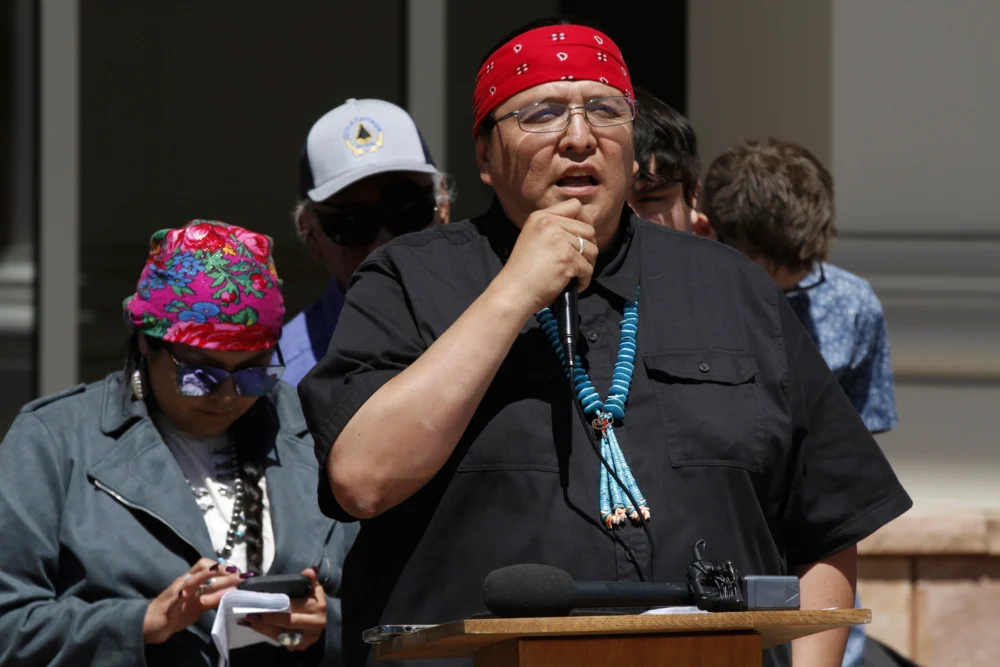
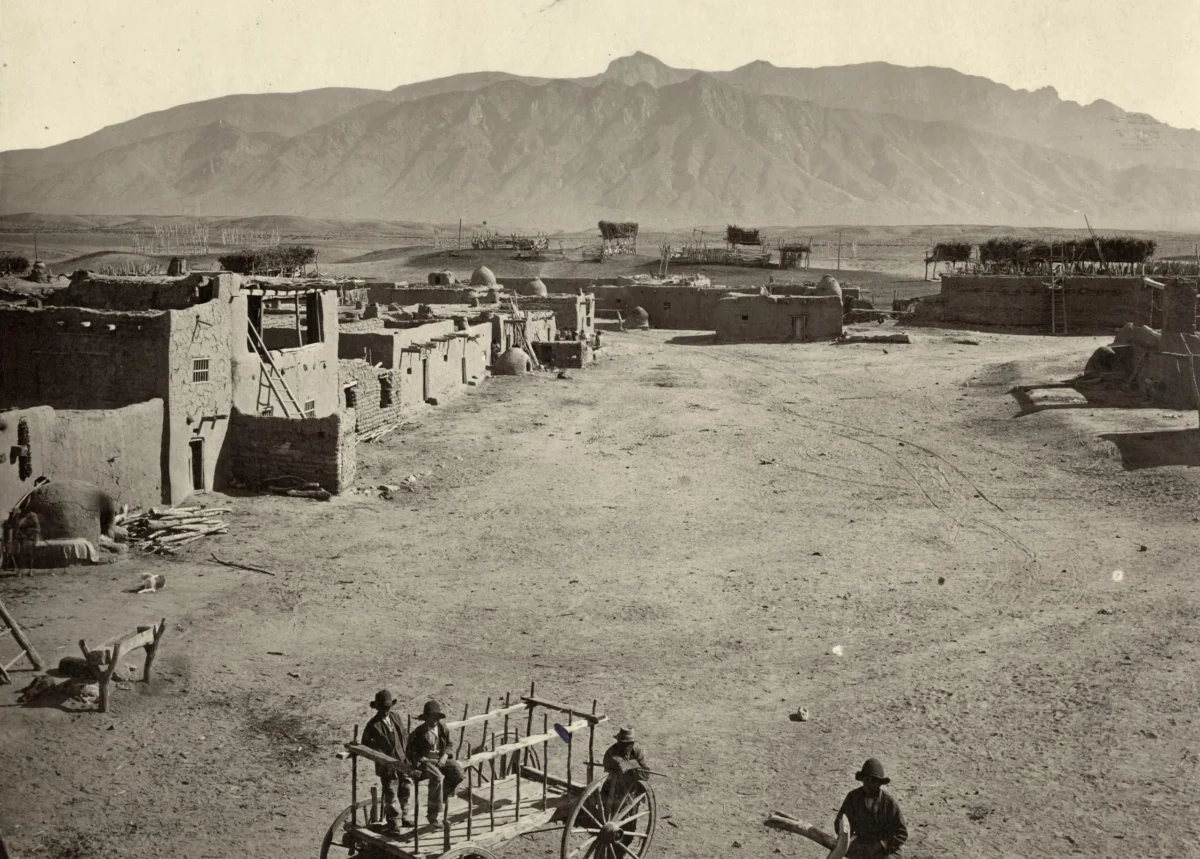
Mario Atencio (Diné) once cherished the tranquil, verdant landscape surrounding his grandmother’s home in Counselor, New Mexico, a place he remembers as embodying a simple, peaceful Navajo lifestyle amid thriving wildlife and traditional medicinal plants. This idyllic existence, deeply rooted in ancestral traditions and connection to the land, began to unravel in 2015 with the aggressive expansion of oil and gas fracking operations across the state’s revered northwest corner, known globally as the Greater Chaco Landscape. This region, a UNESCO World Heritage site and a nexus of ancient Pueblo and Navajo cultures, rapidly transformed from a sanctuary into a heavily industrialized zone, its serene quietude replaced by the incessant hum of machinery and the acrid scent of industrial emissions.
By 2019, the environmental assault culminated in catastrophic spills that unleashed thousands of gallons of oil, poisoning both the surface land and the vital underground water sources Atencio’s grandmother and community relied upon. The once-abundant flora, including precious medicinal herbs integral to Diné culture and healing practices, vanished, and the diverse wildlife that once roamed freely began to disappear, signaling a profound ecological collapse. This direct, tangible destruction of his ancestral homeland spurred Atencio to action, leading him to become the principal plaintiff in a potentially groundbreaking climate litigation case that could redefine environmental governance in New Mexico and beyond.
Filed two years ago, the lawsuit, Atencio v. State of New Mexico, levels a serious accusation against the New Mexico Legislature and its various state agencies: a systemic failure to uphold their constitutional duty to prevent harmful pollution, thereby actively endangering Indigenous communities. Atencio powerfully articulates the core grievance, stating, "The rights that we have as Indigenous people to free, informed, prior consent are being violated. We’ve never had people from the government come and say, ‘This is what’s going to happen to your land and water.’" This statement underscores a profound violation of Indigenous sovereignty and the internationally recognized principle of Free, Prior, and Informed Consent (FPIC), a cornerstone of Indigenous human rights often overlooked in resource extraction projects.

After navigating the complexities of the lower courts, the case has ascended to the highest judicial body in the state, with the New Mexico Supreme Court agreeing this month to hear the arguments. A favorable ruling for Atencio would position this case among a growing cohort of landmark climate decisions, notably Held v. Montana. In that pivotal 2023 case, young plaintiffs successfully argued that Montana had violated their constitutional right to a healthy environment by failing to adequately regulate greenhouse gas emissions, marking a significant victory for youth climate advocacy. Similarly, in Hawaiʻi, young Indigenous climate advocates recently secured a victory against the state’s Department of Transportation, compelling action to decarbonize its transportation sector by 2045, despite the department’s previous support for highway expansion projects. These cases collectively signify an escalating global trend where citizens, particularly younger generations and frontline communities, are turning to the judiciary to compel governmental climate action in the face of legislative inertia.
Margaret Barry, a prominent expert tracking climate litigation at Columbia University’s Sabin Center for Climate Change Law, notes that similar environmental protection lawsuits have emerged in every U.S. state, yielding a handful of successes over the past decade. Barry highlights that many state constitutions explicitly enshrine a proactive duty for governments to protect residents’ environmental rights, though the specific strength and interpretation of these protections vary considerably. This disparity was starkly illustrated in Alaska’s Sagoonick v. State of Alaska case, where a group of young people sought to halt a liquified natural gas project, contending that the state constitution’s protection of natural resources for the public implicitly mandated a livable climate. The Alaska Supreme Court, however, rejected this interpretation in March, underscoring the legal challenges inherent in defining and enforcing constitutional environmental rights.
New Mexico’s constitutional framework, however, presents a more explicit foundation for Atencio’s claims. In 1971, voters overwhelmingly adopted a constitutional amendment that unequivocally directs the state government to "provide for control of pollution and control of despoilment of the air, water and other natural resources." Gail Evans, the Center for Biological Diversity attorney spearheading Atencio’s case, asserts that the state has demonstrably failed to fulfill these clear responsibilities. Evans draws a compelling parallel to New Mexico’s constitutional obligation to adequately fund public education, which necessitates providing resources for teachers and curriculum development. In stark contrast, she argues, when it comes to regulating oil and gas pollution, New Mexico has "just utterly failed" to equip itself with the necessary tools and resources to safeguard public and environmental health. The lawsuit meticulously details how lax enforcement mechanisms and a proliferation of regulatory loopholes effectively allow the industry to pollute with minimal accountability, disproportionately impacting vulnerable communities like the Diné.
Supporting these allegations, data from the environmental watchdog group Earthworks reveals a stark reality: in 2023, the New Mexico Environment Department employed a mere two full-time inspectors to oversee and investigate complaints across an astounding 56,000 oil and gas facilities statewide. This severe understaffing forces the industry into a largely self-reporting system for its emissions of harmful air pollutants and potent greenhouse gases like methane, creating a significant oversight vacuum. The lawsuit further highlights the experiences of another Diné plaintiff, Kendra Pinto, who personally documented a significant methane leak near her home, even after the Environment Department had assured her that no such leaks were detected, exposing a critical disconnect between official assurances and ground-level realities. Methane, a greenhouse gas many times more potent than carbon dioxide over a shorter timeframe, contributes significantly to climate change, and its unchecked leakage from oil and gas operations represents a major environmental threat.

Evans criticizes the state’s permitting process as being dangerously permissive: "You can get a permit to frack simply for asking. The state doesn’t do any type of environmental or public health overview or consideration before granting that permit." This permissive approach is particularly alarming given that in the Permian Basin, one of the world’s largest oil and gas fields spanning parts of New Mexico and Texas, ambient air quality readings frequently exceed federal standards, yet new wells continue to be permitted, exacerbating pollution levels and public health risks in an already overburdened region. New Mexico’s status as the nation’s second-largest fossil fuel producer underscores the immense economic and political pressures influencing these regulatory decisions.
A victory in Atencio v. State of New Mexico could compel the state, a major player in global fossil fuel production, to implement stringent environmental safeguards. However, leveraging similar legal victories at the federal level remains considerably more challenging, as Margaret Barry explains. The U.S. Constitution, in its foundational design, primarily aims to limit governmental power in restricting civil liberties, such as free speech, rather than proactively granting rights like a healthy environment, a distinction that sets it apart from many state constitutions. This divergence was evident in October when a federal judge in Montana dismissed Lighthiser v. Trump. This case, which included several plaintiffs from the successful Held v. Montana state case, sought to expand climate protections by challenging the Trump administration’s executive orders that rolled back environmental regulations and boosted fossil fuel production. While the judge acknowledged the plaintiffs were indeed harmed by climate change, the court ultimately ruled that federal courts lacked the authority to compel the government to alter its course on climate policy.
If the New Mexico Supreme Court rules in his favor, Atencio articulates a clear vision for the future: he hopes the state will be legally obligated to comprehensively document the devastating health and environmental impacts of oil and gas pollution on Indigenous communities and their sacred lands. This documentation, he believes, must then serve as the imperative for decisive protective action. Such measures could include a moratorium on new oil and gas development until verifiable emissions reductions are achieved, the closure of existing legal loopholes that enable operators to pollute with impunity, a substantial increase in funding for environmental enforcement, and the establishment of significantly larger buffer zones between drilling sites and residential areas, schools, and other sensitive community spaces.
Evans challenges the industry’s often-repeated claim that stringent environmental regulations would cripple their operations. "What’s so shocking to me is that the industry will come forward and say, ‘If you do what the plaintiffs are asking for, you’ll put us out of business,’" Evans states, adding, "So you can’t operate in a way that doesn’t harm people’s health and environment? Because that’s what we’re asking for." This direct confrontation highlights the fundamental tension between economic interests and the imperative of environmental and public health protection, a tension that the New Mexico Supreme Court now faces in a case that carries profound implications for environmental justice and the future of climate governance in the United States.