Rocky Gerung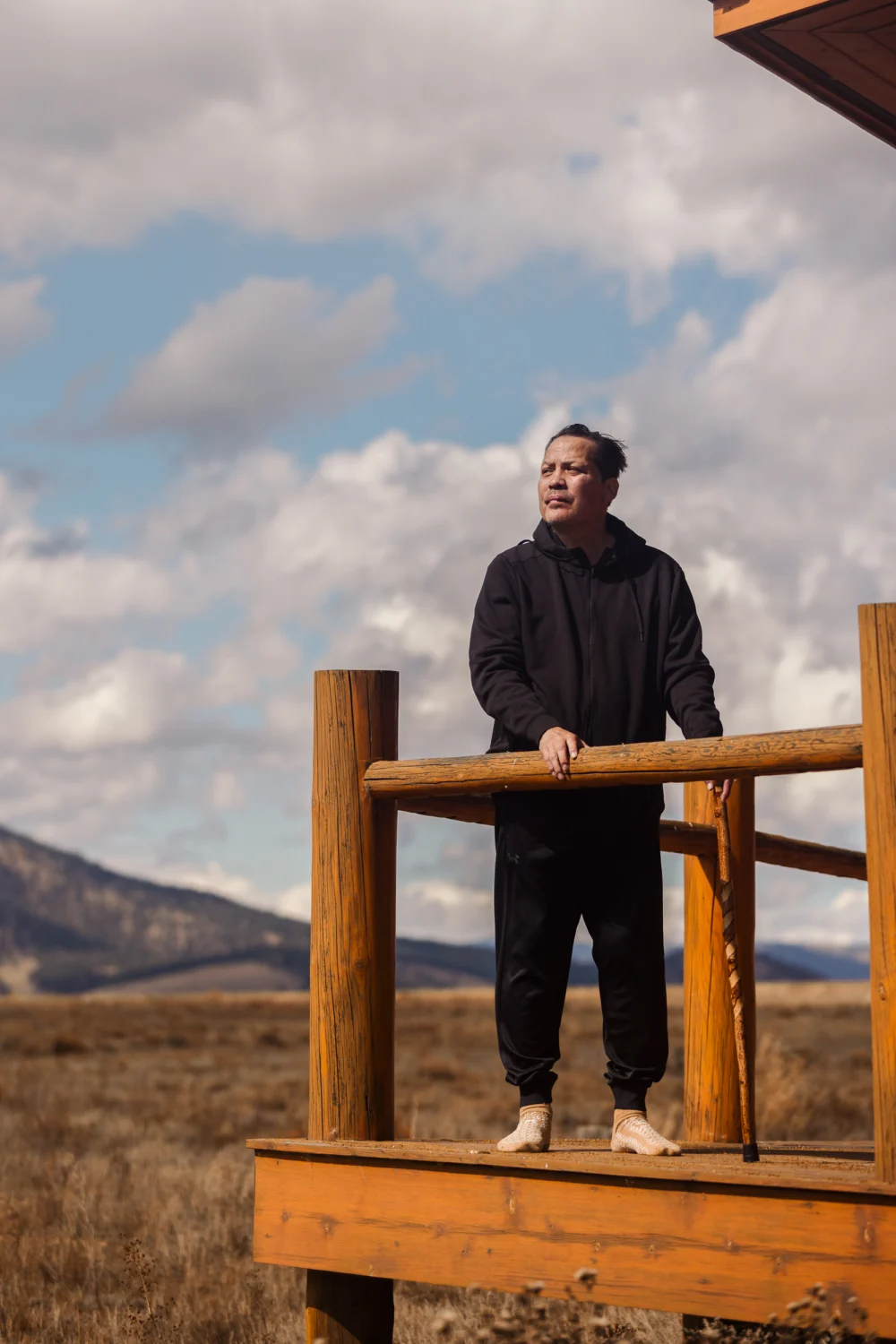
The Santa Fe premiere of the short film Following Enchantment’s Line offered a rare glimpse of Jock Soto, the esteemed Diné and Puerto Rican ballet dancer, in motion beneath the expansive New Mexico skies, a poignant prelude to an evening dedicated to his illustrious career. As the final credits rolled and the lights ascended within the historic Lensic Performing Arts Center, a dramatic summer monsoon cracked the sky with lightning, its thunderous echo resonating through the theater as Soto commenced a live rehearsal with dancers from Ballet Taos, accompanied by the evocative classical music of his friend Laura Ortman. This event underscored Soto’s profound commitment to sharing the artistry and discipline he meticulously cultivated over a remarkable 24-year tenure with the New York City Ballet.
Soto’s artistic genesis was deeply rooted in cultural traditions, beginning with hoop dancing alongside his mother. "I started hoop dancing with my mother," Soto shared, "and I continued hoop dancing until I discovered ballet. And ballet was just my life. That’s all I wanted to do." His early passion led his parents to seek out the sole local ballet school in Phoenix, Arizona, a significant distance from their home. "So my dad would drive there every day, and I got a full scholarship because I was the only guy in the class," he recalled, highlighting the early recognition of his exceptional talent.

The trajectory from a small town in Arizona to the demanding world of New York City ballet was a monumental undertaking, particularly for a young man of Diné and Puerto Rican heritage, the son of Josephine Towne and José Soto. Music, a constant presence in his upbringing, played a crucial role in shaping his artistic sensibilities. "My dad loved salsa. He loved the Beach Boys, all that kind of stuff. That’s what I remember listening to," Soto reminisced. "And I always got a warm feeling when I heard salsa or drums from the reservation. My heart jumps when I hear thump, thump, thump. And I always felt like, oh, God, I want to do this. I want to do this." This deep-seated desire fueled his ambition, transcending the geographical and cultural distances that separated him from his aspirations.
It is a familiar narrative, often observed, that individuals from smaller, more isolated communities must venture far from home to pursue their most ambitious dreams, especially when those dreams lie within the highly specialized and competitive realm of classical ballet. For Soto, this meant leaving his formal education behind. "And so, at 13, Soto dropped out of school and left for New York." Now 60 years old and retired from the demanding physical career of a principal dancer, Soto has dedicated himself to a new mission: sharing his story and the transformative power of dance with tribal communities across the nation.
As the evening in Santa Fe drew to a close, the rain subsided, mirroring the calm that followed the storm of emotions evoked by the film and rehearsal. Soto and his husband, Luis Fuentes, expressed their eagerness to return to their home nestled in the northern New Mexico mountains. Before their departure, they posed for photographs beneath the illuminated marquee of the Lensic, which proudly proclaimed: "INT MUSEUM OF DANCE & CD: AN EVENING WITH JOCK SOTO." Soto’s quiet satisfaction was palpable: "I’m liking the marquee saying my name." Joel Aalberts, executive director of the Lensic, responded with warmth and affirmation, "We can arrange that anytime."

The premiere marked a significant moment in Soto’s ongoing efforts to preserve and share his legacy. While preparing for an interview in the theater lobby, the interviewer grappled with the pronunciation of his name, humorously likening him to a "jock" in the vein of athletic legends, a persona that resonated with Soto’s own clear sense of identity. When his name was inadvertently misspelled in the Navajo Times art section, Soto’s response was characteristically gracious yet firm; he corrected the error with a black Sharpie, transforming the "A" into an "O," and kept the marked newspaper as a testament to the local pride and engagement, despite the minor oversight. The article itself highlighted a vital initiative: the International Museum of Dance’s creation of a digital archive dedicated to his career, aptly titled "Jock Soto: The Dancer and His Life."
Observing Soto walk, a subtle physicality emerged, reminiscent of basketball legends like Bill Russell and Kareem Abdul-Jabbar, whose movements bore the imprint of decades of athletic exertion. This profound physical toll of a ballet career was something Soto himself acknowledged with candor. "It’s not an easy career at all," Soto told the audience from his seated position on stage. "You know, it’s often painful. Like, I can’t even get out of this chair if I want to right now." This frank admission underscored the urgency behind his collaboration with the International Museum of Dance, a partnership aimed at safeguarding his life’s work for public access and inspiring future generations of dancers.
The digital archives being developed by the museum serve a critical function: preserving dance legacies and vital educational programs for posterity. A similar undertaking with the Dance Theater of Harlem resulted in a comprehensive history book chronicling the company’s profound influence on Black ballet dancers, demonstrating the archival project’s potential to illuminate underrepresented narratives within the dance world. Beyond the digital realm, the museum harbors a more ambitious vision: the establishment of a physical space, anticipated to open in 2026, which will serve as a hub for artist residencies, performances, and public programming. While a definitive location is still being sought, the digital archives are currently housed within a cloud-based platform managed by ChromaDiverse, a nonprofit arts organization dedicated to unearthing and cataloging invaluable historical materials, including forgotten photographs, videos, posters, and press clippings related to the careers of dancers like Soto. This comprehensive digital repository offers an immediate and immersive portal into Soto’s life as a dancer and also supports the Moving Memories Fund, which established the Jock Soto Scholarship, a vital initiative that has already benefited its first recipient, Chickasaw dancer Heloha Tate.

Soto’s journey into the world of ballet began at the tender age of 12 when he secured a full scholarship to the prestigious School of American Ballet in New York City. This pivotal opportunity allowed his innate talent to flourish amidst a highly competitive environment, where male dancers vied for limited roles. "I felt amazing, because (in Phoenix) I was in the class with all girls. And when I got to New York, I was in a class with all men – 40 men," Soto recounted. "That was my competition, or the way that I evolved." His exceptional skill quickly caught the attention of the legendary choreographer George Balanchine, who invited Soto to join the New York City Ballet at the age of 16. Within four years, Soto ascended to the rank of principal dancer, a position that represents the pinnacle of achievement in the ballet world. This rapid ascent demanded immense dedication and maturity. "I became an adult very quickly," Soto reflected. "I became very good friends with a couple of the guys. We lived in an apartment together. We had no money, but we would go buy hot dogs on the street or eat pizza and stuff like that. We lived three blocks from the school, so we spent all day till 7 every night, dancing. That’s all we did." This intense focus and camaraderie forged during his formative years laid the foundation for his enduring career.
Soto’s mastery of the male role in ballet was particularly evident in his pas de deux performances, where he exhibited an extraordinary ability to partner female dancers. He consistently elevated his partners, often taking the lead while ensuring their prominence onstage, embodying what the ballet world recognizes as a "natural partner." This approach to partnering was deeply informed by his upbringing, reflecting the graceful way his mother had taught him to dance, emphasizing beauty and respect in movement. His mother was his initial partner in the powwow circles of the Southwest, where he learned the intricate dynamics of leading and following, understanding the significance of each dancer’s role. In ballet, he perfected the masculine role, a tradition he now upholds as an educator, emphasizing the importance of traditional gender roles for a successful performance.
As a teacher and an openly gay man, Soto guides his students to embrace traditional gender roles on stage. "I try to teach the dancers that a man is a man onstage," he explained. "And if I see anything other than that, I correct it right away. And I’m like, ‘No, no, you’re behind a ballerina, you’re a man. Don’t act like the ballerina.’ So that’s what I try to teach. Masculine is masculine. It’s not that hard to teach, but it can be a lot." His Diné heritage, inherited from his mother, belongs to the Tódích’íi’nii clan, meaning "water flowing together," a phrase that also lends its name to a 2007 documentary film chronicling his life. Born in Gallup, New Mexico, at the nearest Indian Health Services Hospital, just 90 minutes from his home in Chinle, Arizona, Soto attributes much of his resilience and spirit to his mother. "My mother was my strength. She was my strength, and my dad was such a macho Puerto Rican, you know," Soto shared. While he waited until he was 30 to reveal his identity as a gay man, his parents were remarkably accepting. "They said it was OK to be gay. And I didn’t tell them until I was 30. My mom laughed so hard on the phone. She said, ‘We’ve known that ever since you were 18.’"

The New York City Ballet boasts an alumni roster of over 700 dancers, yet only a select few men have attained the esteemed status of principal dancer, a testament to Soto’s exceptional talent and dedication. His mastery of elite ballet technique and performance is a rare gift. While Soto possesses deep ancestral ties to the Navajo Nation, his ascent to the exclusive echelons of classical ballet sometimes created a sense of distance from his Indigenous community. Today, a concerted effort is underway to bridge that gap, encouraging state lawmakers and education reformers to collaborate with local ballet theaters to expand arts programming within Native communities and schools. ChromaDiverse aims to make Soto’s digital archive accessible in New Mexico public schools within the next year. This initiative aligns with New Mexico’s significant investments in education reform since 2018, driven by a state court order mandating improved educational opportunities for Indigenous students, English language learners, and those with disabilities. The prospect of making Soto’s career archive readily available has generated considerable enthusiasm among lawmakers, including Shannon Pinto, who attended Soto’s premiere and met the dancer for the first time. "We need to make sure that the arts are something we bring forward with some funding, at least, because we know it’s been on the back burner," Pinto stated, emphasizing the critical need for financial support for arts education.
The long-term impact of integrating Soto’s archive into educational curricula in New Mexico and beyond remains to be seen. However, his presence has already sparked meaningful conversations and inspired tangible gestures of appreciation. Jicarilla Apache President Adrian Notsinneh encountered Soto and his work for the first time at the Lensic. During the ceremony, Notsinneh presented Soto with a blanket, a traditional gift honoring his support for Jicarilla Apache ballet dancers. Reflecting on Soto’s influence, Notsinneh drew a powerful analogy: "As it jumps across, it causes ripples. Each time it hits the surface, it radiates. So what I’m seeing from this type of person that’s standing here with me is a type of person that causes that ripple effect. Within his lifetime, he’s caused so much of this effect. And I want to thank you for being that type of person."
This ripple effect was profoundly evident in the audience’s enthusiastic response to the evening’s proceedings. Blythe Mariano, a Diné calligraphy artist from Church Rock, New Mexico, shared her emotional reaction: "To know that somebody from where I’m from made it all the way to New York is like, oh my God, I’m getting overwhelmed." Mariano, who was born in Gallup at the same hospital as Soto, found deep inspiration in his journey. As the event concluded, Soto’s face lit up when asked if he had noticed the significant presence of young Indigenous people in attendance. "I loved it, I loved it. It’s inspiring!" he exclaimed, echoing the sentiment he had shared on stage: "You have to be inspired." His words, coupled with the palpable excitement in the room, underscored the profound impact of his story and the enduring legacy he continues to build, inspiring a new generation to pursue their dreams, no matter how far they may lead.