

 Joko Susilo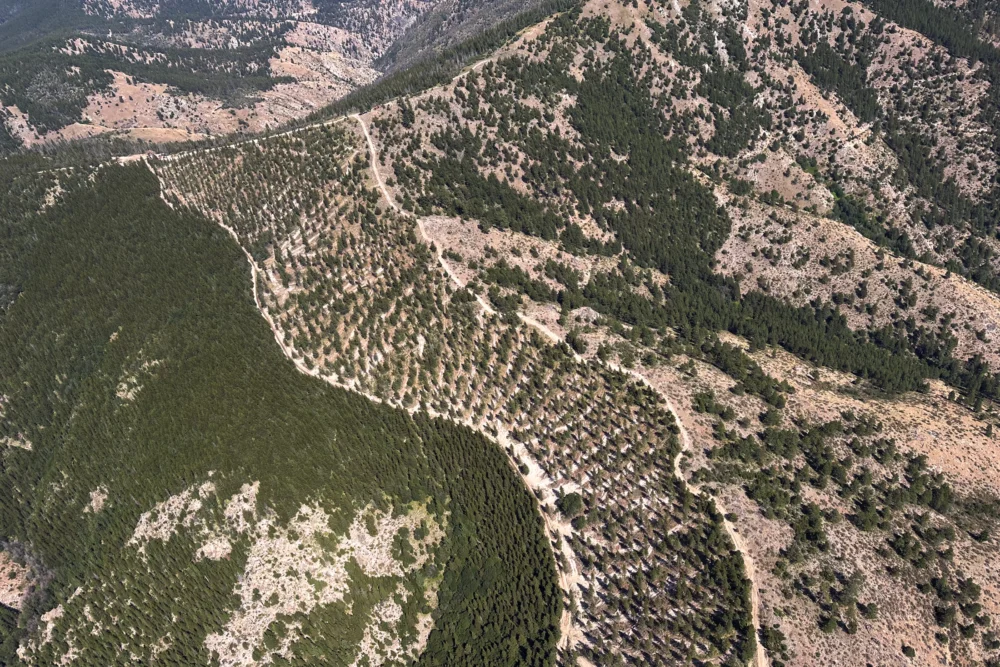
The "Fix Our Forests Act," a landmark piece of legislation, stands on the precipice of becoming law after securing broad bipartisan support in both the House and Senate, promising to fundamentally reshape how the U.S. federal government approaches the thinning, burning, and overall stewardship of its vast 200 million acres of national forests. This critical initiative, spearheaded by a bipartisan quartet of U.S. Senators—John Hickenlooper (D-Colo.), John Curtis (R-Utah), Tim Sheehy (R-Mont.), and Alex Padilla (D-Calif.)—recently sailed through a key Senate committee vote with an impressive 18 senators in favor and only five opposed, signaling a rare consensus on an issue of mounting national urgency. Senator Hickenlooper underscored the gravity of the situation, stating in a news release, "There is a wildfire crisis across much of the country – our communities need action now. Wildfires won’t wait."
This proposed legislation marks the first significant congressional effort in recent memory to comprehensively address the escalating wildfire threat that has plagued the American West and increasingly other regions. At its core, the bill advocates for proactive measures, including the promotion of prescribed burning and targeted forest thinning in fire-prone landscapes. It also emphasizes the crucial need to collaborate with local communities to establish defensible spaces around vulnerable homes and infrastructure, a strategy proven to reduce wildfire impact. Beyond direct intervention, the act formally acknowledges the ecological role of wetlands as natural buffers against wildfires and champions the development of cross-boundary programs, fostering cooperation among counties, states, and tribal nations in managing shared landscapes. A cornerstone of the bill’s restorative potential lies in its reauthorization of the 2009 Collaborative Forest Landscape Restoration Program (CFLRP), a vital initiative that provides financial backing for diverse groups working collaboratively on fire mitigation and broader forest health objectives. Michael O’Casey, public-lands director for the Theodore Roosevelt Conservation Partnership, observed that many Western forests are visibly "too thick and ready for fire," a sentiment echoed by countless outdoor enthusiasts and land managers.
The current dire state of U.S. forests is a complex legacy, exacerbated by over a century of aggressive fire suppression policies. Historically, forest management prioritized extinguishing all fires, leading to an unnatural accumulation of dense undergrowth and fuel loads. This historical approach, combined with the intensifying pressures of prolonged droughts, the overarching impacts of climate change, and increased susceptibility to disease and insect outbreaks, has left many forests in a dangerously weakened and overcrowded condition. O’Casey highlighted the urgent need for intervention, expressing hope that the "Fix Our Forests Act" can stem the tide of increasingly frequent and destructive megafires that have ravaged the West, leaving behind immense ecological and economic devastation. The scale of the challenge is daunting; the U.S. Forest Service currently treats approximately 4 million acres annually, a mere fraction of the nation’s 193 million acres of federal forestland. Proponents argue that the bill will empower forest managers to act with greater agility and focus resources "where it’s needed most," thereby facilitating more effective management practices that prioritize the long-term health and resilience of these vital ecosystems.

However, the bill is not without its detractors, who voice significant concerns about certain provisions designed to streamline project implementation. While proponents argue these measures are essential to cut through bureaucratic red tape and accelerate critical interventions, critics contend they risk undermining bedrock environmental laws and public oversight. Currently, the Forest Service operates under the National Environmental Policy Act (NEPA), which mandates public comment periods and rigorous environmental reviews before logging, burning, or other landscape alterations can proceed. Exemptions to this process, known as categorical exclusions, are typically reserved for relatively small projects deemed to have no "significant effect on the human environment," usually capped at 2,000 to 3,000 acres. A contentious aspect of the new bill is its proposal to dramatically raise this threshold to 10,000 acres, allowing much larger projects to bypass full environmental scrutiny.
Further escalating concerns is another provision that would permit the Forest Service to undertake extensive logging and landscape modification within designated "fireshed management areas"—vast regions that can span up to 250,000 acres, comparable in size to many Western national forest ranger districts—without prior consultation with tribal nations or the public, and without undergoing the full NEPA environmental review process. Anna Medema of the Sierra Club and Blaine Miller-McFeeley, a legislative representative with Earth Justice, argue that these provisions grant the Forest Service unprecedented authority to initiate massive projects with minimal public accountability, potentially leading to unintended environmental consequences. Conversely, O’Casey asserts that these changes are necessary to enable the agency to respond quickly and effectively to an urgent crisis, preventing critical projects from becoming bogged down in protracted administrative and legal challenges.
The bill also introduces significant limitations on judicial review, a mechanism often employed by environmental groups to ensure compliance with environmental statutes. It proposes reducing the statute of limitations for lawsuits challenging Forest Service decisions from six years to a mere 150 days, drastically shortening the window for legal recourse. Moreover, the legislation seeks to modify existing requirements, stipulating that neither the Forest Service nor the Bureau of Land Management would be consistently obligated to consult with the U.S. Fish and Wildlife Service to update forest plans in response to newly listed endangered species or updated information on existing listed species. This particular change raises alarms among conservationists about potential impacts on biodiversity and the protection of vulnerable species.
Beyond these procedural changes, critics also highlight a critical omission: the bill appropriates no new funding for the essential work of forest thinning, prescribed burning, or the creation of defensible spaces around communities. This absence of dedicated financial resources is particularly concerning given the existing challenges faced by federal land management agencies. Susan Jane Brown, an Oregon-based staff attorney for Silvix Resources, a nonprofit environmental law firm, points out that the Forest Service is already severely underfunded and understaffed, having experienced the departure of thousands of employees from the Department of Agriculture. Miller-McFeeley further cautions that with the previous administration’s "Big Beautiful Bill" having mandated annual timber quotas, the remaining agency personnel might be pressured to prioritize commercial logging projects over ecological thinning, potentially exacerbating environmental concerns. He grimly concluded that the combination of streamlined processes, reduced oversight, and pressure for timber production could pose "an existential threat to our forests and communities that survive because of them."

O’Casey acknowledges the validity of some of these concerns, recognizing that any bipartisan legislative effort necessitates compromise. However, he firmly rejects the characterization of the bill as a "congressionally authorized logging free-for-all." He explains that many Western forests contain vast, thick stands of timber with low commercial value, such as ponderosa pine and juniper, which desperately need thinning to reduce fire risk and restore ecological balance. O’Casey maintains that the bill is designed to encourage this essential work, guided by the best available science, and ultimately believes it will yield long-term benefits for old-growth forests, critical water supplies, and communities living in fire-prone areas. Despite his optimism, he concedes that the lack of new appropriated funds means that local governments, tribal nations, states, and nonprofits will continue to bear the burden of lobbying for financial support for crucial projects like wetland restoration and community fire resiliency. This underlying funding challenge remains a significant hurdle to the bill’s full effectiveness.
The "Fix Our Forests Act" encapsulates a complex, ongoing global debate about how best to manage natural resources in an era of accelerating climate change and increased environmental pressures. While focused on U.S. federal lands, its implications resonate internationally, as nations worldwide grapple with similar challenges of escalating wildfires, biodiversity loss, and the need for adaptive land management strategies. From the bushfires in Australia and the Amazon rainforest to the heatwave-fueled blazes across Europe and Canada, the urgency of proactive forest management has never been clearer. This legislation attempts to strike a delicate balance between efficiency and environmental protection, a balance that will ultimately determine its success in safeguarding the nation’s invaluable forest ecosystems for future generations. For many, the bill represents a critical, albeit imperfect, step towards a more resilient future, while for others, it embodies a concerning shift away from established environmental safeguards. "There are a lot of people who are really afraid of the bill for what it could do rather than excited about what it could do," O’Casey remarked, encapsulating the deep divisions and high stakes surrounding this pivotal legislative effort.







